



Antique Corner Shelves
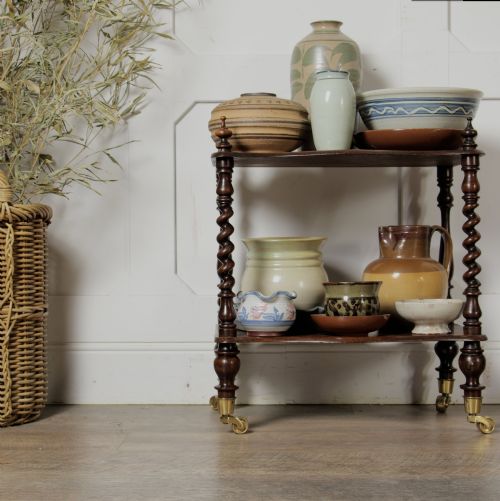
Antique corner shelves turn forgotten room angles into display space, offering tiered timber tiers built to hold porcelain, books, and curios.
Antique Corner Shelves
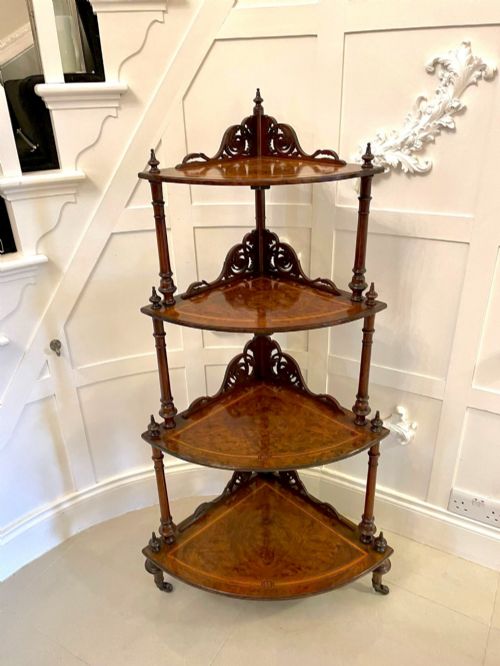
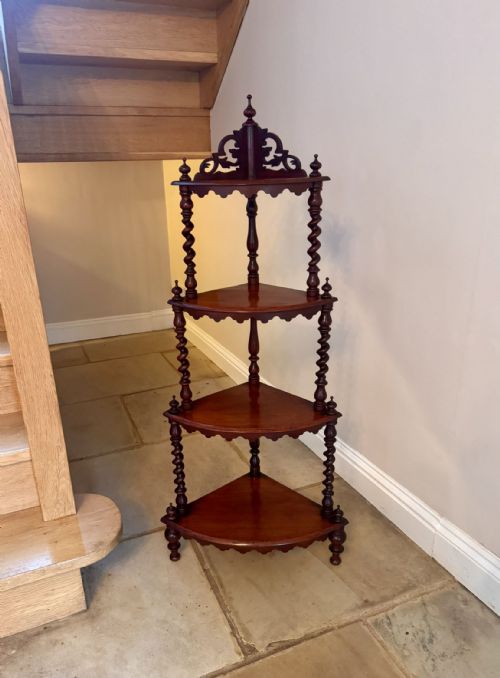
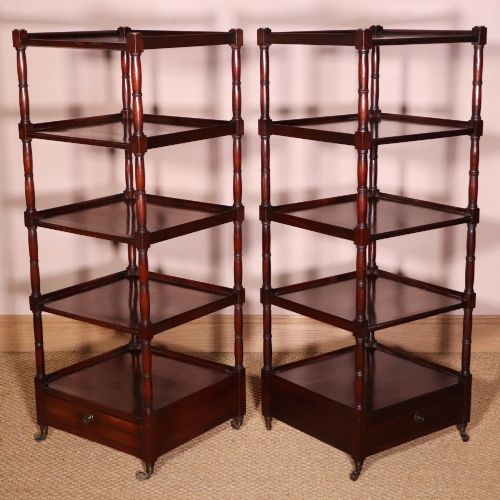
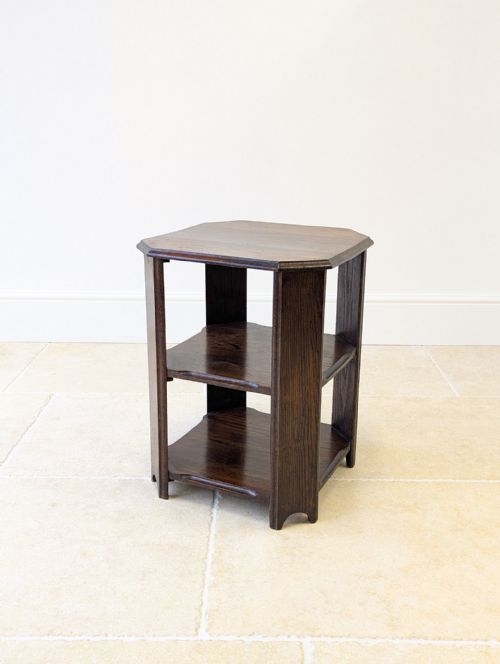
Antique corner shelves encompass tiered open frameworks, enclosed cabinets, and tall whatnots designed to fit snugly into the meeting point of two walls. These pieces make efficient use of unutilised room angles while providing practical display surfaces for everyday items.
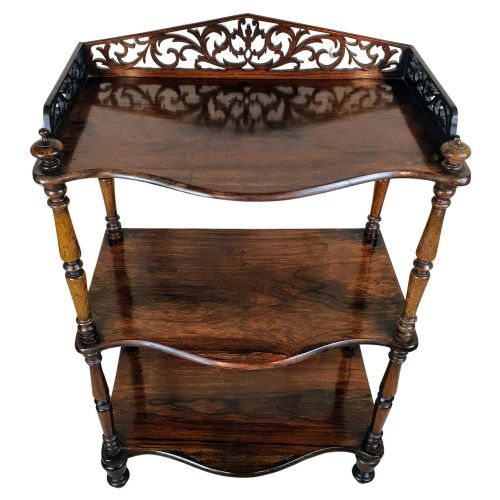
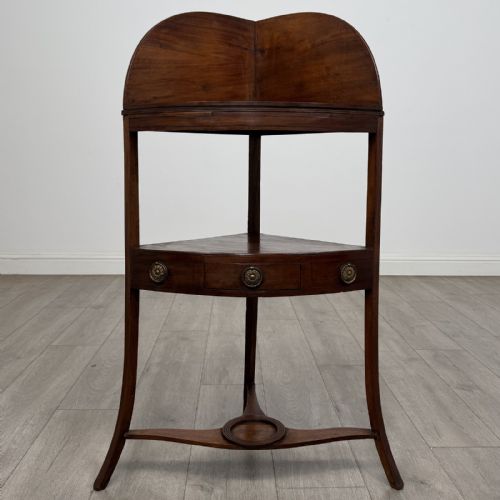
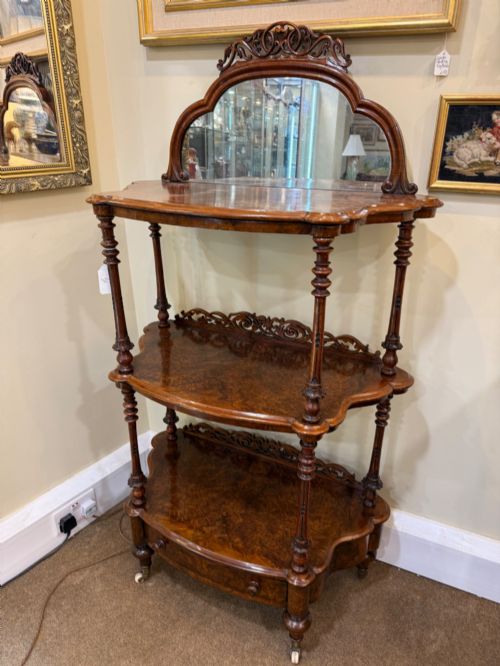
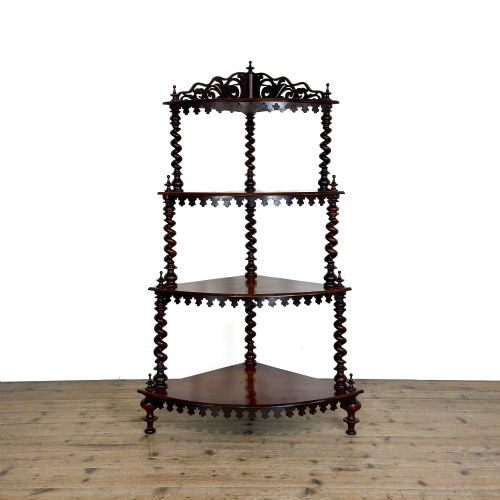
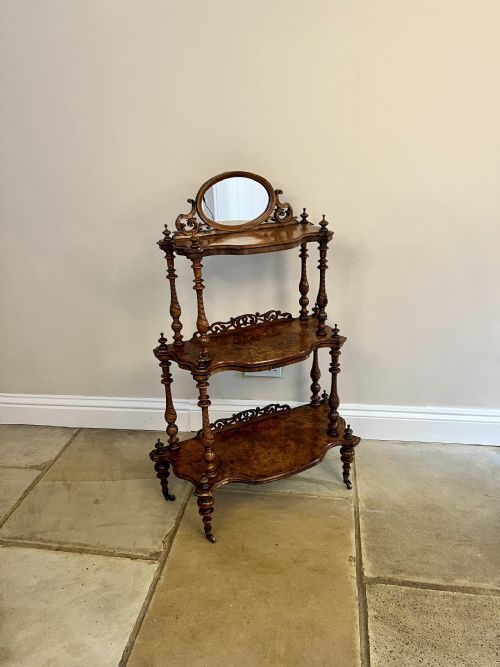
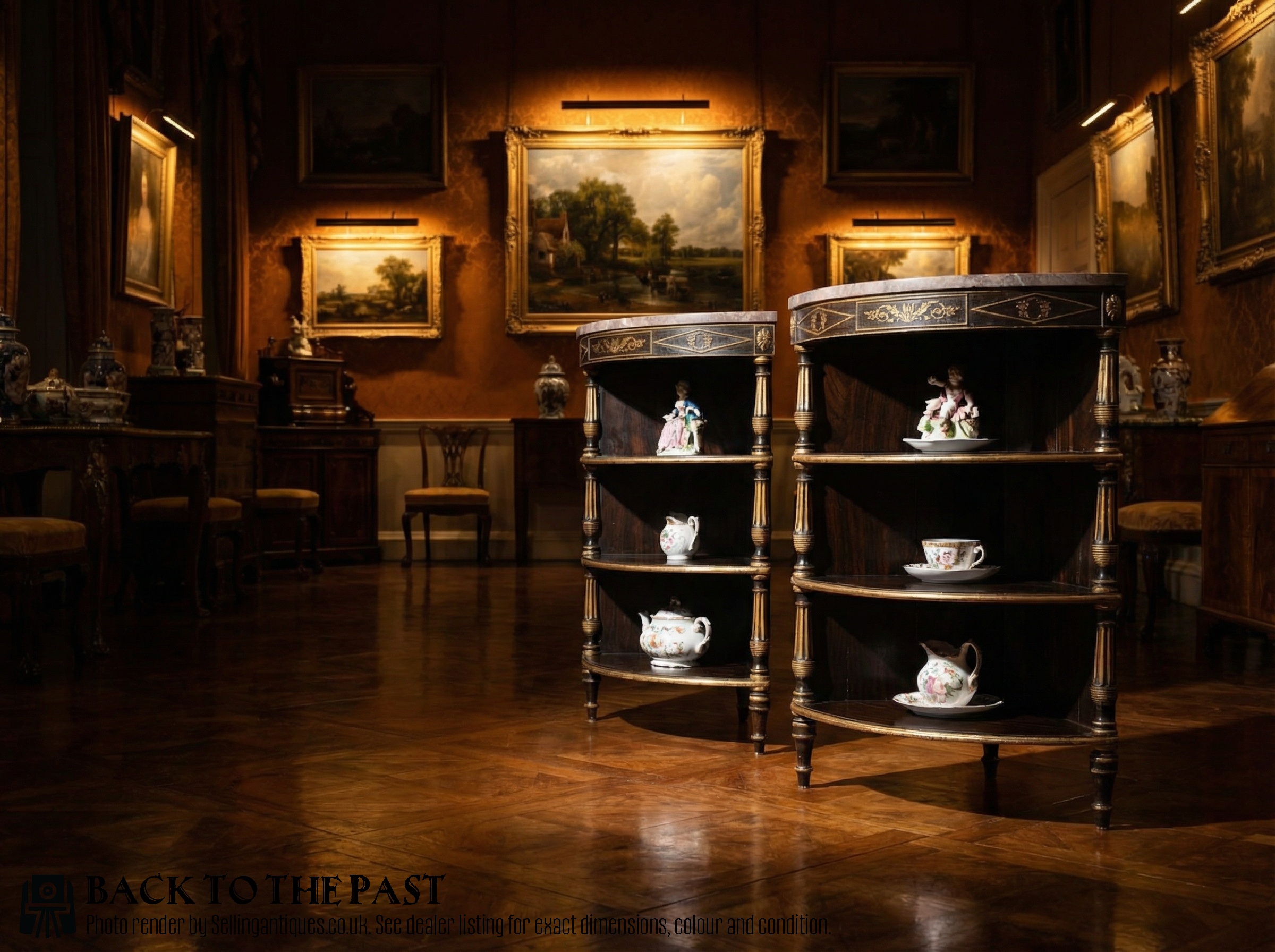
The selection ranges from Georgian mahogany bow fronted examples and Regency marble top corner cabinets to Victorian multi-tiered walnut whatnots. These forms vary from simple graduating open shelves to glazed cupboards and standing display stands.
Origins span British and continental workshops, incorporating styles from Georgian simplicity through to elaborate Victorian craftsmanship. Buyers encounter both open tiered stands suited for ornaments and closed cabinet versions intended for secure storage.
How they were made
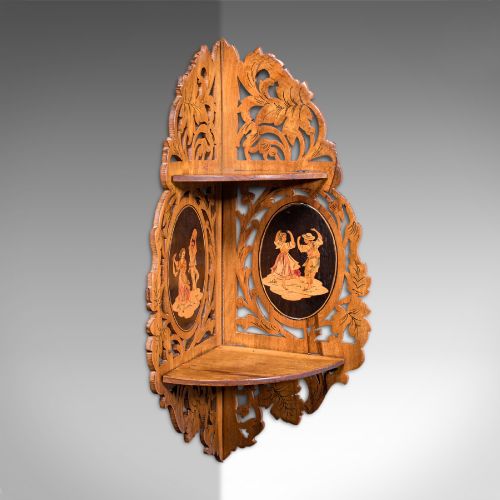
Construction relies upon solid and veneered timbers including mahogany, walnut, burr walnut, and oak, often paired with painted surfaces or ebonised finishes. Selected pieces incorporate decorative details such as marquetry inlay, brass mounts, and gold leaf.
Surfaces frequently feature inset marble tops or carefully turned supports connecting the individual tiers. Joinery methods reflect traditional cabinet-making practices suited to supporting weight within right-angled spaces.
Antique Corner Shelves Retail Price Guide 2026
Typical asking prices for corner shelves among the pieces listed under this phrase on Sellingantiques today, from the lower quarter to the upper quarter. They describe what is for sale here now, not the wider market.
Listings feature woods like mahogany and walnut alongside painted surfaces, marble tops, and marquetry inlay across Georgian and Victorian periods.
What varies in quality
Quality reveals itself in the choice of timber and the precision of decorative work, such as fine marquetry inlay and burr walnut figuring. Finer examples display balanced proportions and sophisticated handling of edge details and turning.
The integration of superior materials, like heavy marble tops and detailed brass fittings, elevates the status of a piece. Structural integrity in the upright supports and tiered platforms dictates how well a shelf handles daily display use.
The Antique Corner Shelves Glossary
- Whatnot
- A moveable set of open shelves used for displaying ornaments, books, or small objects, popular throughout the Victorian period.
- Marquetry
- Decorative veneer work formed by fitting together contrasting pieces of wood, shell, or ivory to create pictorial designs.
- Ebonised
- Timber treated with a dark stain or finish to simulate the appearance of solid ebony.
- Bow front
- A convex, curved front section characteristic of certain Georgian and later case furniture.
- Burr walnut
- Timber taken from a tree growth that yields highly figured, swirling grain patterns prized for decorative surfaces.
Antique Corner Shelves: Frequently Asked Questions
Where should I place corner shelves?
These pieces fit directly into the internal right angle of a room, transforming dead wall space into a functional focal point.
They work particularly well in reception rooms, hallways, or dining areas where floor space is at a premium.
Can these shelves hold heavy items?
Tiered open structures and standing whatnots are generally built to support moderate weights such as books, ceramics, and decorative objects.
Enclosed cabinets offer sturdier storage capabilities depending on the internal shelf construction and overall timber thickness.
How do I identify a Victorian whatnot?
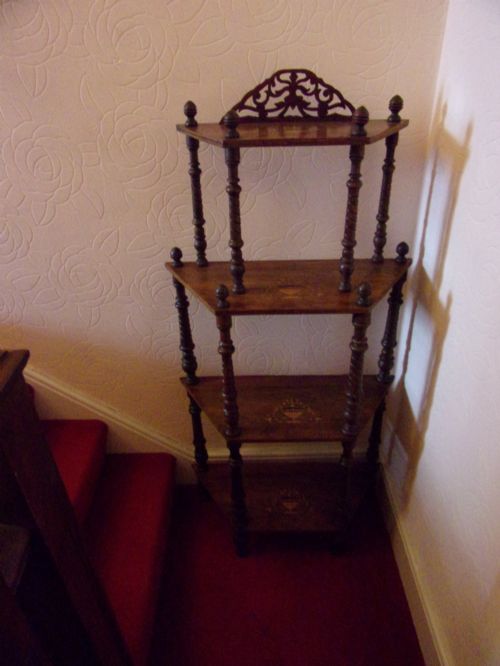
Victorian examples frequently feature multi-tiered open formats supported by turned uprights, often utilising walnut or mahogany.
Detailing on these pieces can include marquetry inlay, ebonised surfaces, or carved elements characteristic of nineteenth-century production.
What is the difference between a cabinet and open shelves?
Corner cabinets incorporate doors, frequently glazed or panelled, to keep contents enclosed and protected from dust.
Open shelves and whatnots provide unhindered access for displaying collections and ornaments in plain sight.