

Mid 19th Century Furniture
Mid 19th century furniture brings together dense hardwoods, rich veneers and functional forms spanning the Victorian era.
Mid 19th Century Furniture
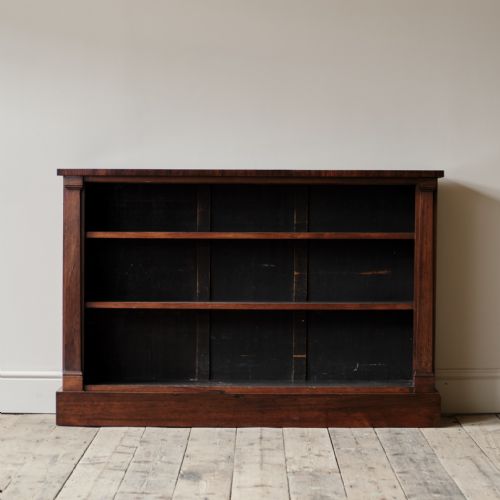
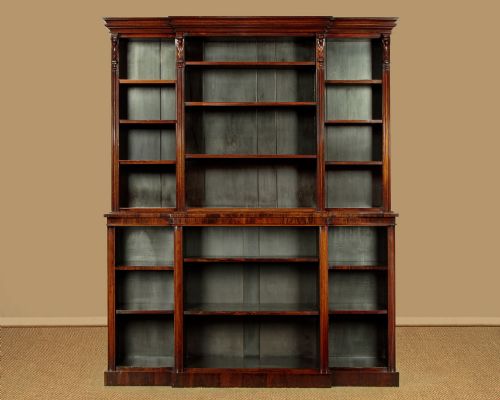
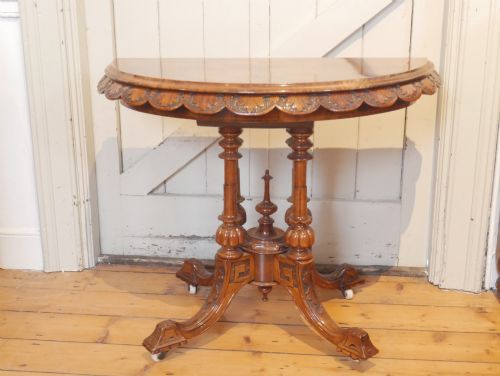
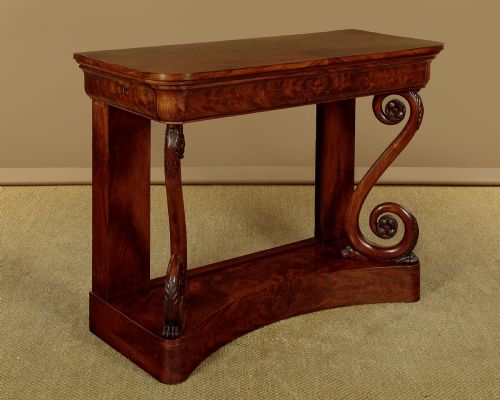
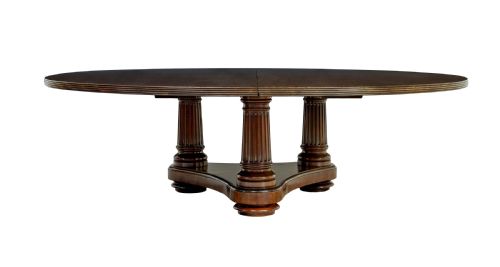
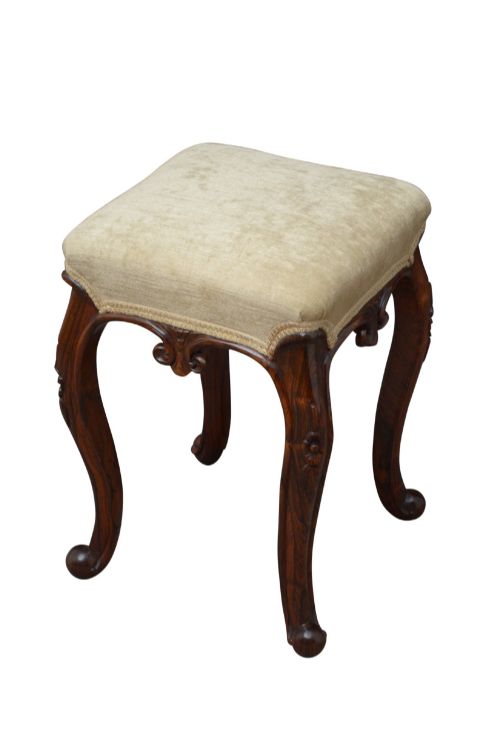
Mid 19th century furniture encompasses a diverse range of seating, storage, and tables created across British, continental European, and colonial workshops. Buyers seeking mid 19th century furniture encounter practical household articles such as chests of drawers, dining tables, and writing desks alongside decorative display pieces like étagères and whatnots.
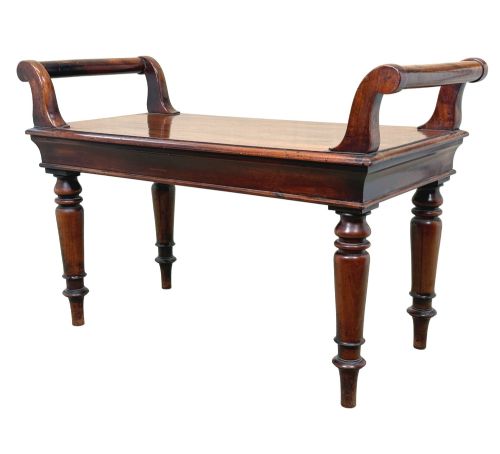
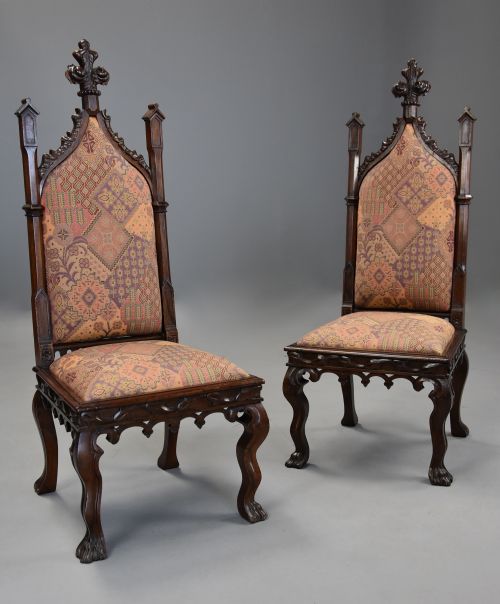
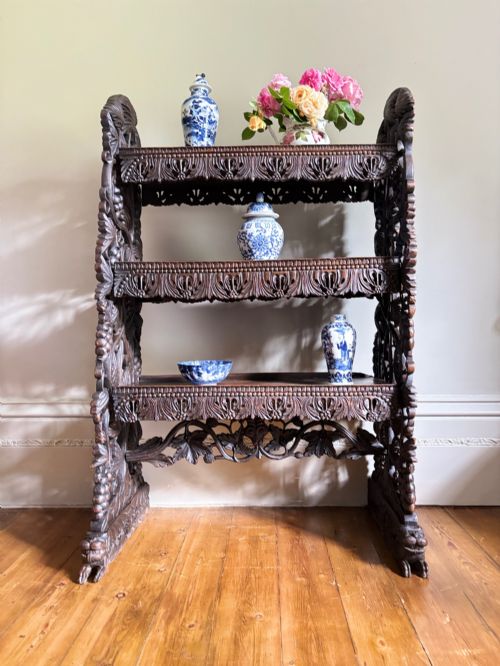
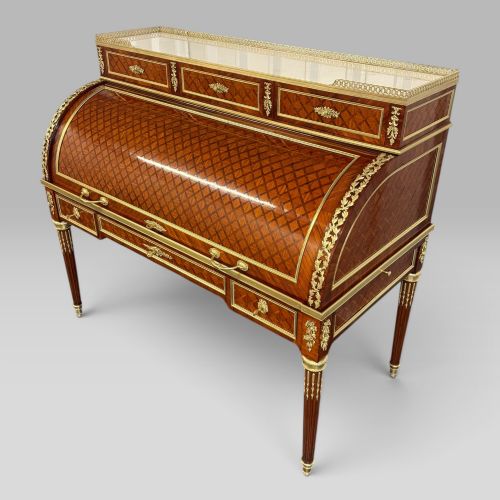
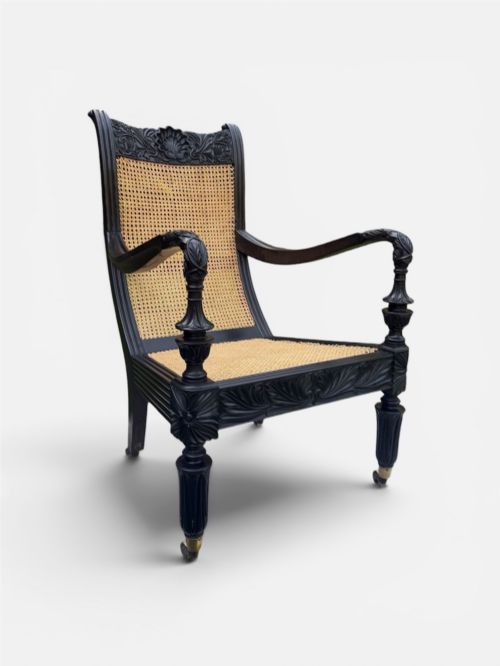
The selection on this page demonstrates the wide geographical reach of the period, featuring English country oak pieces, Swedish birch chests, Anglo-Indian padauk shelves, and French-influenced brass-mounted designs. Common forms include window seats, Davenport desks, Canterbury racks, and campaign furniture designed for travel.
Victorian and early Victorian periods dominate the domestic offerings, supplemented by specific regional styles such as Gothic revival, Louis XVI revival, and Swedish Biedermeier. These items served formal drawing rooms, libraries, and utilitarian spaces alike, reflecting the varied social demands of the era.
Materials and Construction
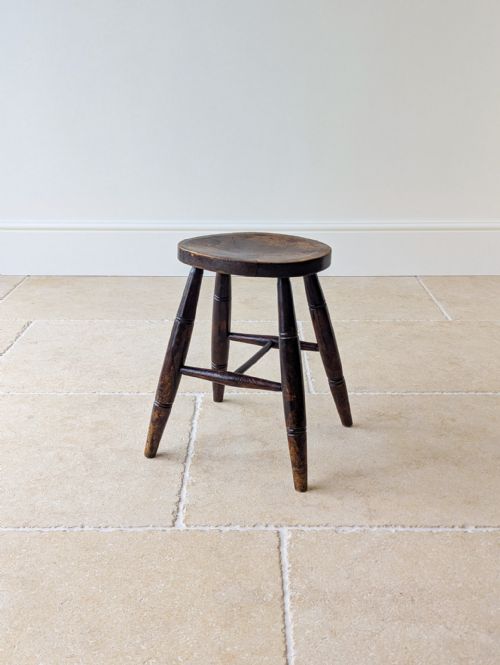
Cabinet makers relied heavily on dense tropical hardwoods like rosewood, mahogany, and padauk, often highlighting their natural figures through book-matching and veneering with burr walnut, burr birch, and amboyna. Solid native timbers such as oak, elm, ash, and pine provided sturdy frames for country stools, tavern tables, and chests of drawers.
Construction techniques incorporated functional metal elements including brass mounts, campaign handles, ormolu accents, and adjustable mechanisms for reading chairs and writing desks. Surfaces received elaborate detailing through parquetry, ebonisation, hand-carving, gilding, and traditional paint finishes.
An adventurous Welsh tavern table preserves its original red paint across an x-frame base.
Evaluating Execution
Quality in these pieces rests upon the selection of timber and the precision of decorative execution, visible in the choice of figured veneers like flame mahogany or burr walnut rather than plain stock. Superior examples demonstrate crisp carving, well-matched grain patterns across opening doors and drawer fronts, and intact original hardware.
The integration of secondary timbers within drawer linings and the stability of joints determine the structural integrity of tables, cabinets, and seating. Refined joinery, specialised inlays such as parquetry, and sophisticated mechanical components elevate utilitarian items into exceptional decorative works.
W A Willcocks
The Mid 19th Century Furniture Glossary
- Davenport
- A compact writing desk featuring a sloping lid lined with leather and a pedestal of drawers accessed from the side. The interior often contains small compartments and satinwood drawers.
- Étagère
- A set of open shelves used for displaying small ornaments and books, sometimes fitted with a single drawer at the base. These tiered units stand freely or fit into room corners.
- Canterbury
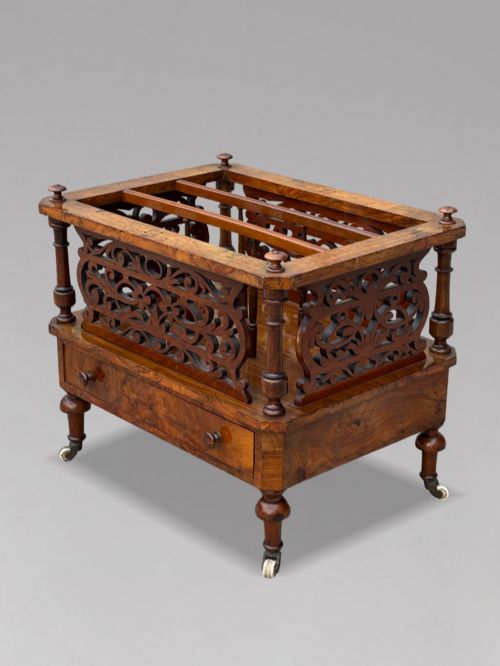
- A low, freestanding stand designed for holding sheet music or loose folios, typically featuring slatted dividers and a small drawer underneath. They often rest on castors for easy movement around a drawing room.
- Padauk
- A dense, heavy tropical hardwood showing reddish-brown tones, utilised extensively in Anglo-Indian furniture production. It resists warping and takes intricate hand-carving exceptionally well.
- Parquetry
- A geometric mosaic of wood pieces used for decorative surface inlay on tabletops and desk cylinders. Cabinet makers arranged contrasting timbers to create precise patterns.
Mid 19th Century Furniture: Frequently Asked Questions
What defines mid 19th century furniture?
This category spans items produced roughly between 1840 and 1870, capturing the height of the Victorian era alongside continental movements like Biedermeier and Louis XVI revival. It encompasses diverse materials from native pine to imported rosewood and padauk.
The aesthetic combines robust domestic practicality with ornate decorative detailing, including carved rosewood, brass mounts, and burr veneers. These pieces reflect the industrial and colonial expansion of the period through newly accessible materials and specialised mechanical furniture forms.
How do I identify campaign furniture?
Campaign furniture is distinguished by modular construction, designed to dismantle easily for military transport. Key indicators include brass corner brackets, recessed carrying handles, and two-part chest designs.
Woods like mahogany and teak predominate due to their durability in transit. Many examples feature clever folding mechanisms, removable legs, and secure locking drawers suited for officers on the move.
Where were etageres used in the home?
Étagères and whatnots served as open display shelving in Victorian drawing rooms and parlours. They held porcelain, small books, and decorative ornaments.
Their tiered structure allowed homeowners to exhibit collections without cluttering floor space. Corner whatnots specifically utilised neglected room angles for vertical storage.
What is burr walnut veneer?
Burr walnut refers to the highly figured wood taken from a tree growth or burl, displaying swirling, organic patterns. Cabinet makers sliced this timber into thin sheets to veneer primary carcases.
This technique decorated the surfaces of desks, chests of drawers, and tables. The resulting grain patterns provided a striking contrast to plain solid mouldings.