




Four Tier Corner Shelf
A four tier corner shelf puts neglected angles to work, offering stepped display space in polished mahogany, walnut, or rosewood.
Four Tier Corner Shelf
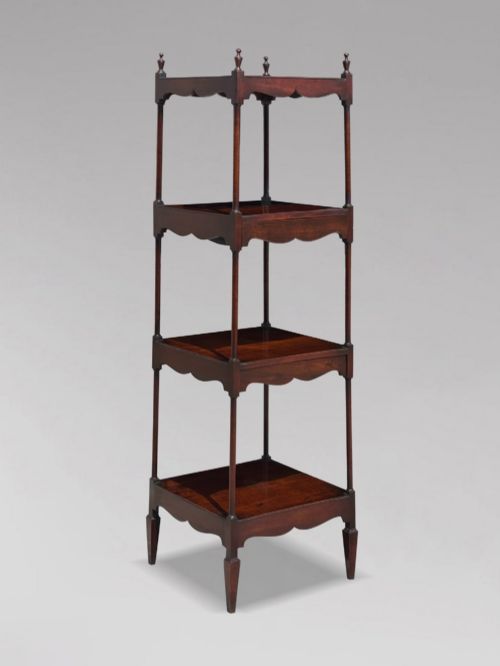
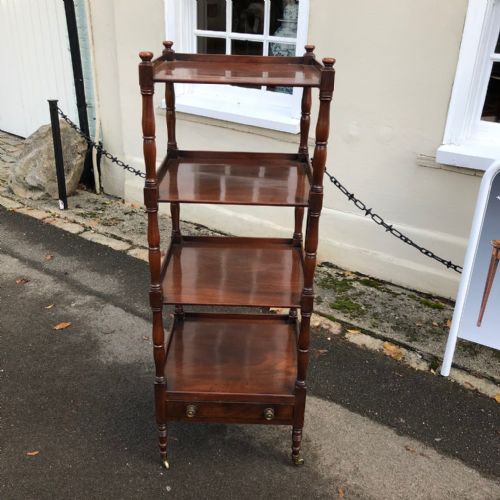
A four tier corner shelf, often catalogued in the trade as a whatnot or etagere, provides graduated display platforms designed to fit snugly into the intersection of two walls. These pieces emerge across the Georgian, Regency, and Victorian periods, serving as practical stages for ornaments, books, and collections.
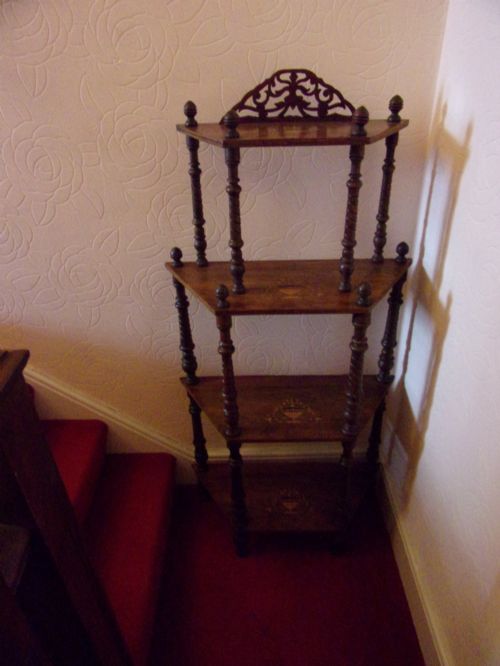
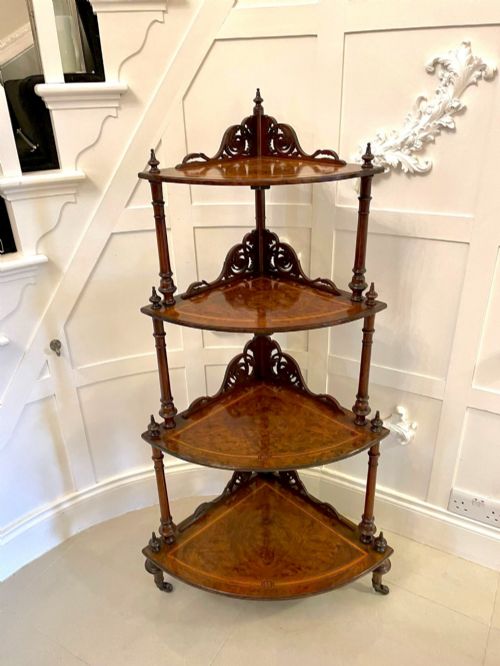
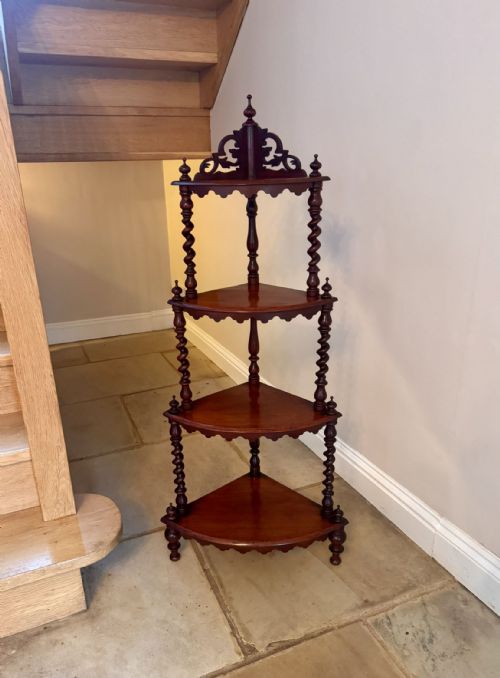
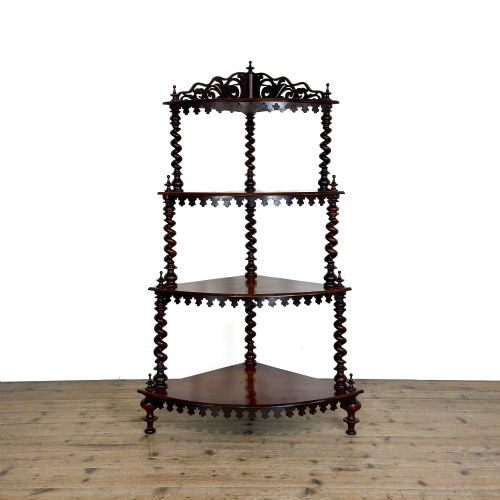
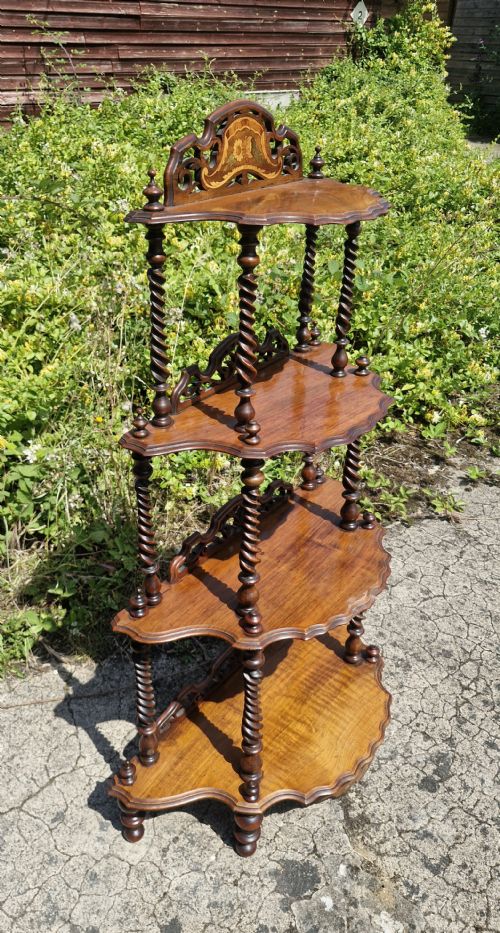
The version most commonly met on this page is the Victorian walnut or mahogany corner whatnot, frequently featuring four graduated tiers supported by turned columns or uprights. Examples span from the mid-nineteenth century through to the Edwardian era, sometimes incorporating marquetry inlay or wood inlay.
Makers and cabinetmakers produced these tiered stands to utilise awkward domestic spaces without blocking light or traffic flow. They appear in forms ranging from tapering stands to specific corner cabinets and freestanding etageres adapted for corner placement.
Materials and construction
Cabinetmakers utilised dense hardwoods like mahogany, burr walnut, and rosewood, selecting them for their rich grain and structural stability. Timber boards were shaped into graduated shelves and supported by turned wooden columns or delicate uprights.
Decoration often relied on precision wood inlay and marquetry inlay, embedding lighter woods into darker surfaces to form geometric or floral patterns. Brass components occasionally appeared in structural joints or gallery rails, adding contrast to the dark timber.
Four Tier Corner Shelf Retail Price Guide 2026
Typical asking prices for four tier corner shelf among the pieces listed under this phrase on Sellingantiques today, from the lower quarter to the upper quarter. They describe what is for sale here now, not the wider market.
Victorian households relied on these corner shelves to display everything from porcelain collections to stuffed owls out of the dog's reach.
Distinctions in quality
The grade of a four tier corner shelf depends heavily on the choice of timber and the precision of its grain matching. Finer examples employ figured burr walnut or dense, richly polished mahogany rather than plain, utilitarian stock.
Execution of inlay marks the division between standard production and superior workshop output. Crisp, flush marquetry and finely turned supports demonstrate greater cabinetmaking skill than stamped or hastily assembled substitutes.
Gillows
The Four Tier Corner Shelf Glossary
- Whatnot
- An open set of tiered shelves used for displaying ornaments and small objects. These pieces became popular in the eighteenth century and remained common through the Victorian period.
- Etagere
- A piece of furniture consisting of a number of open shelves for holding curiosities or books. The term is frequently interchanged with whatnot in period descriptions.
- Burr walnut
- A specialised wood veneer taken from the warted growths on walnut trees. It yields a swirling, highly decorative grain pattern prized in Victorian cabinetmaking.
- Marquetry inlay
- The art of applying pieces of veneer to a structure to form decorative patterns. Craftsmen utilised contrasting timbers to create pictorial or geometric designs.
- Tapering form
- A structural design where the uprights or overall footprint narrow towards the top. This proportion gives taller tier stands a lighter visual balance.
Four Tier Corner Shelf: Frequently Asked Questions
Where should I place a corner shelf?
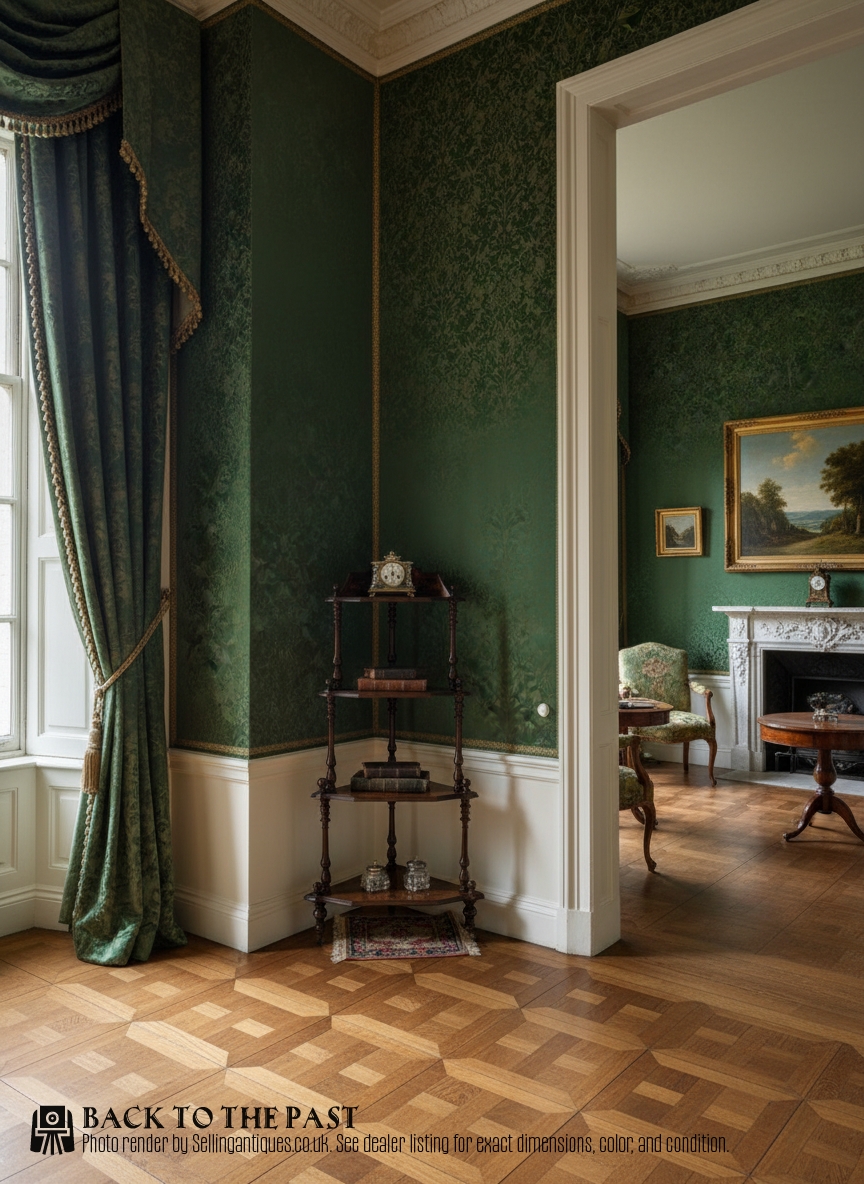
These units suit empty room angles where standard rectangular furniture creates awkward gaps. They sit effectively in drawing rooms, hallways, or studies to draw the eye upward.
Ensure the corner walls are reasonably square so the rear edges of the shelves sit flush against the plaster without rocking.
What is the difference between a whatnot and an etagere?
Both terms describe tiered shelving units designed for display, though etagere often implies a slightly more decorative French influence. In practical terms, nineteenth-century makers used both designations interchangeably for these stands.
Construction methods and tier counts remain similar across both labels in the historical record.
How do I care for walnut and mahogany tiers?
Maintain the timber by dusting with a dry, soft cloth and occasionally applying a traditional beeswax polish to nourish the grain. Avoid placing them in direct sunlight or near heat sources to prevent the veneer from lifting.
Check that heavy ornaments are distributed evenly across the shelves to avoid putting excessive strain on the supporting columns.
How can I tell a Victorian tier stand from an Edwardian one?
Victorian examples generally feature heavier timbers like solid mahogany or richly figured burr walnut with darker, deeper finishes. Edwardian pieces often display lighter walnut tones and more delicate inlay work reflecting changing interior tastes.
Turned supports on mid-nineteenth-century items tend to be more robust, whereas later variants lean towards slender uprights.