



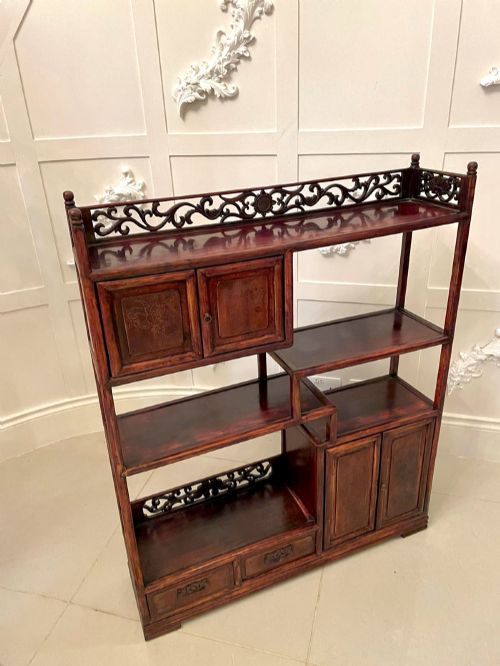

Antique Display Etagere
An antique display etagere brings tiered elegance to a room, offering open shelves designed to show off porcelain, books and collected objects.
Antique Display Etagere
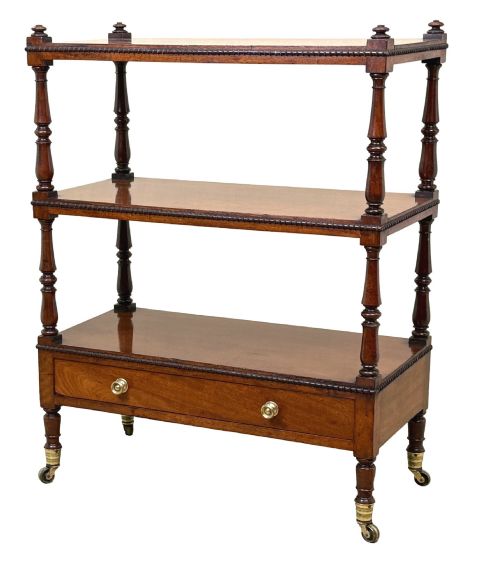
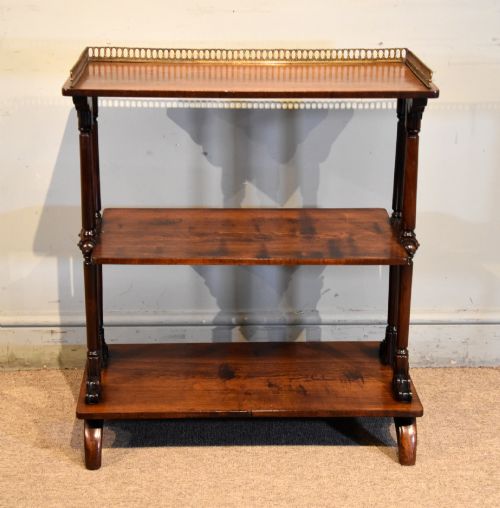
An antique display etagere search brings up tiered open shelving units, wall-mounted display shelves and multi-tier whatnots designed to hold ornaments and books. These pieces span the 18th, 19th and early 20th centuries, covering periods from George III and Regency through to Victorian and Edwardian reigns.
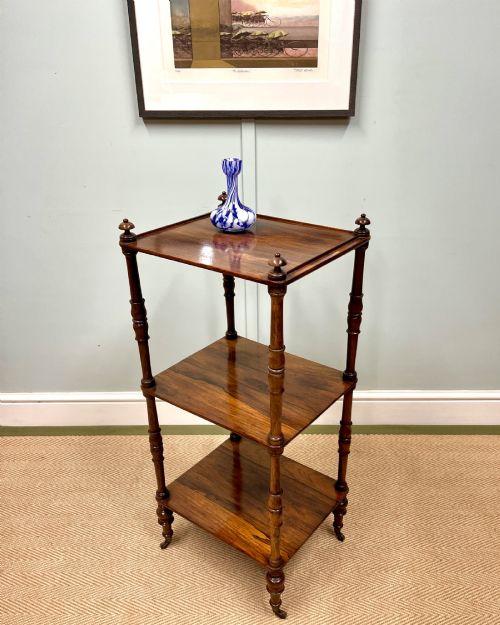
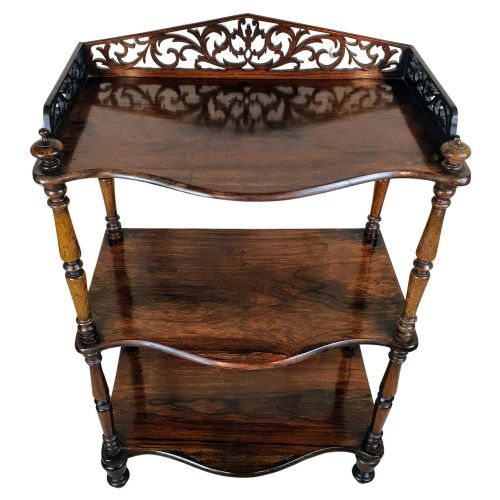
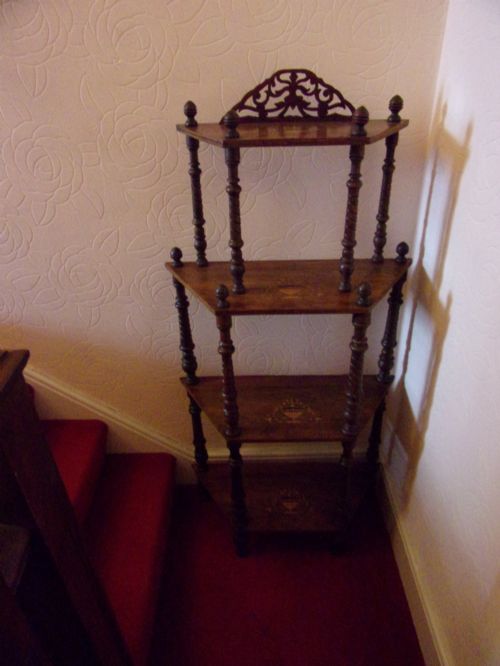
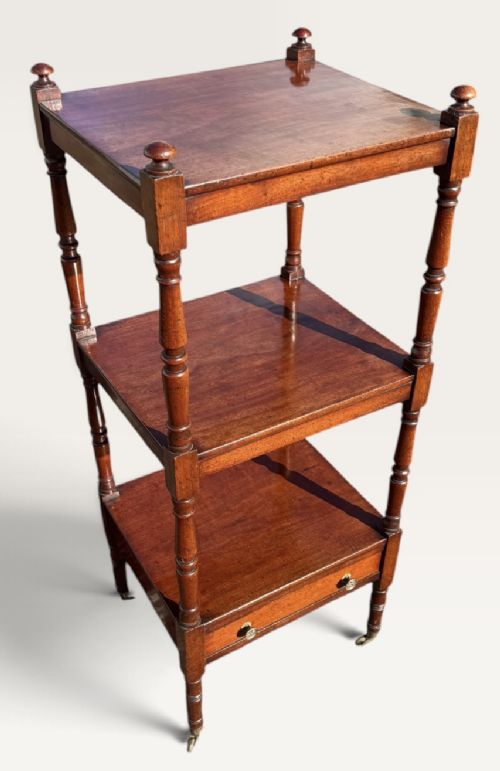
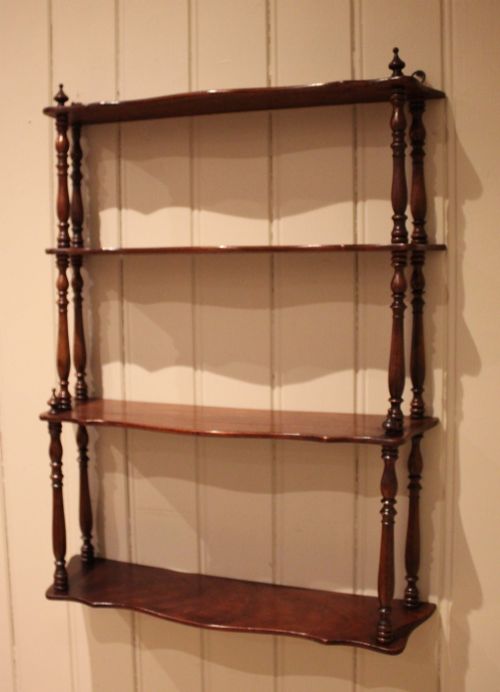
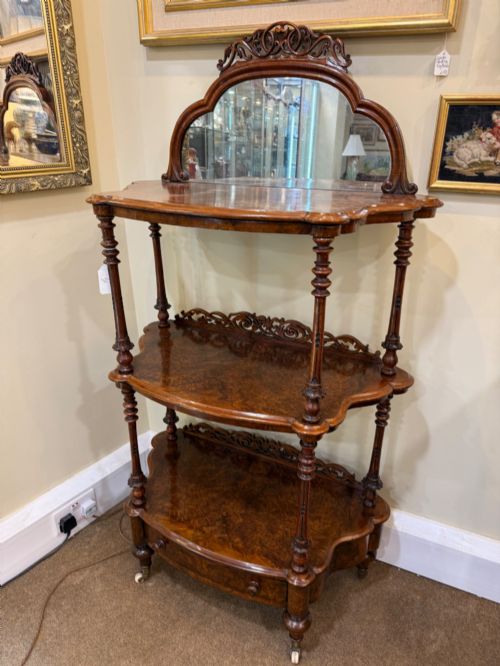
The version most commonly met on this page is the Victorian walnut or mahogany whatnot, often built with three or four tiers supported by turned columns or barley twist uprights. Alongside these, buyers encounter French-influenced marquetry pieces, corner cabinets, wall-hanging shelves and occasional table combinations.
Origins vary from English workshops and provincial cabinetmakers to French ateliers and Anglo-Indian makers using padauk. Pieces range from simple utilitarian side tables and buffets to highly decorative items featuring ebonised wood, brass details and intricate parquetry.
Materials and construction
Cabinetmakers built these tiered structures using dense hardwoods such as mahogany, walnut, burr walnut and rosewood, frequently applying decorative veneers to the surfaces. Some models incorporate ebonised wood, gilt highlights, bamboo, lacquer and painted finishes to achieve specific aesthetic styles like Japonisme or Chinoiserie.
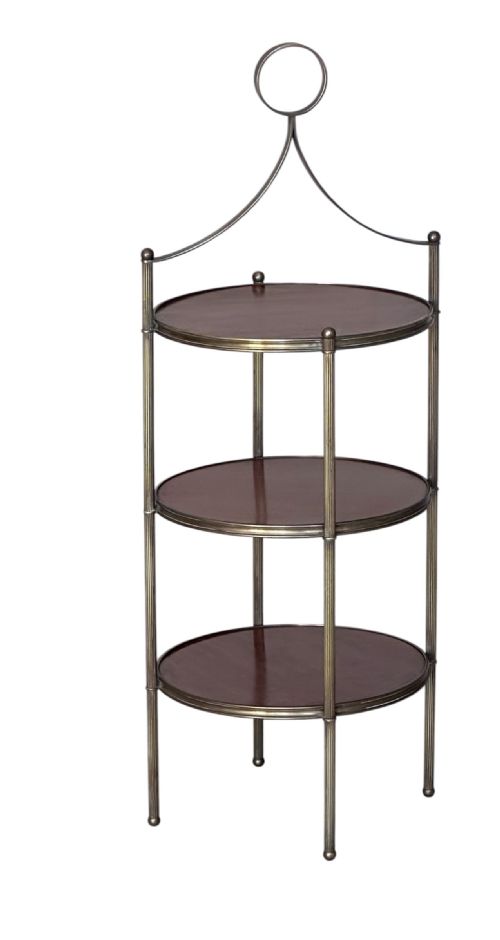
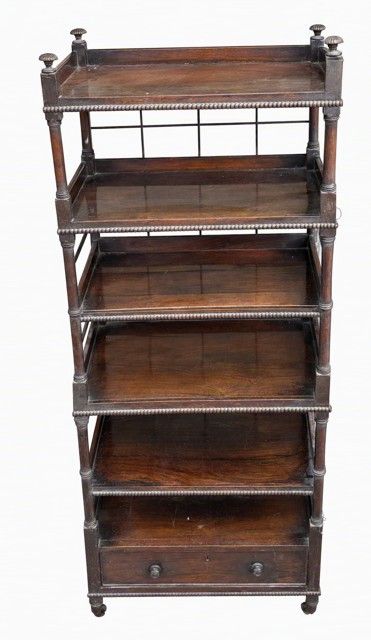
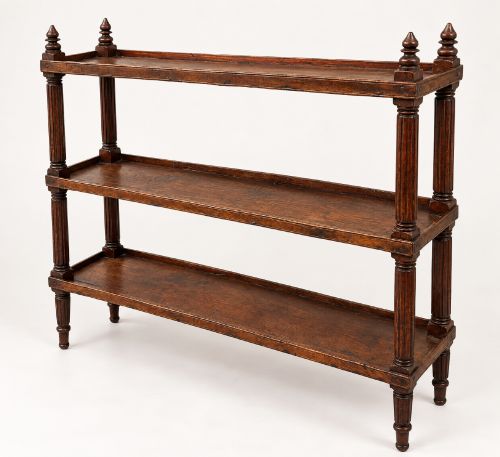
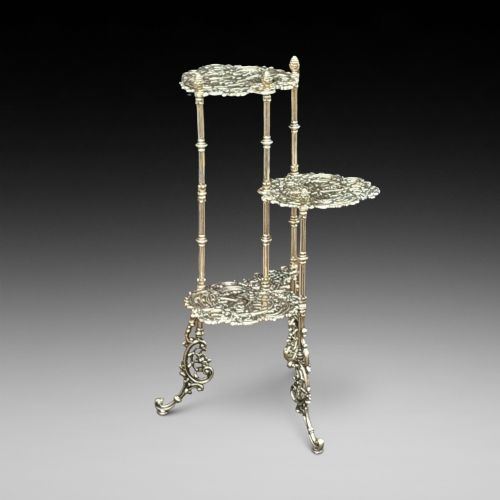
Structural support relied on turned wooden legs, barley twist columns, brass rods or wrought iron frames depending on the period and origin. Individual tiers connect securely to these uprights, sometimes supplemented by lower drawers, gallery rails or wall-mounting brackets for stability.
Antique Display Etagere Retail Price Guide 2026
Typical asking prices for display etagere among the pieces listed under this phrase on Sellingantiques today, from the lower quarter to the upper quarter. They describe what is for sale here now, not the wider market.
Periods represented span from George III and Regency eras through the Victorian and Edwardian decades.
Judging quality
Quality rests on the choice of timber and the handling of grain, particularly where burr walnut, rosewood or figured mahogany veneers meet the eye. Finer examples show careful matching of wood grains across the tiers and drawer fronts, alongside crisply turned uprights and precise joinery.
The distinction between standard utility items and superior pieces lies in the subtlety of decorative details, such as delicate parquetry, parcel gilding, brass gallery rails and well-fitted small drawers. Construction depth matters, as heavier timber thickness and solid internal framing separate enduring furniture from lighter, purely decorative items.
Gabriel Viardot·Gillows
The Antique Display Etagere Glossary
- Etagere
- A piece of furniture consisting of a set of open shelves for displaying small objects. Originating in France, these multi-tiered stands became popular in various stylistic revivals.
- Whatnot
- A tall, open set of standing shelves used for displaying ornaments or books. They typically feature three or more tiers held by vertical posts or columns.
- Burr walnut
- Wood taken from the burl growth of a walnut tree, yielding complex and swirling grain patterns. Cabinetmakers prized this material for high-end Victorian furniture surfaces.
- Barley twist
- A decorative turning technique resembling the spirals of a barley sugar stick. This form of upright column appears frequently on Victorian supports.
- Marquetry
- The art of applying pieces of veneer to a structure to form decorative patterns and pictures. French pieces frequently display floral or geometric marquetry work.
Antique Display Etagere: Frequently Asked Questions
What is an etagere used for?
These tiered shelving units served historically for holding ornaments, small porcelain items and books within parlours and drawing rooms.
Today, they function well in modern interiors for displaying collections while taking up minimal floor space.
How do I tell a whatnot from an etagere?
The terms often overlap in trade descriptions, though whatnot traditionally refers to multi-tier English shelving, while etagere points to French-influenced display furniture.
Both serve the primary purpose of open display across multiple horizontal surfaces.
Are these shelves sturdy enough for heavy books?
Most pieces were built to hold decorative ceramics, small trinkets and lighter volumes rather than heavy library books.
Wall-mounted versions and robust mahogany or walnut frames handle everyday decorative loads securely.
How do I date a Victorian tiered shelf?
Dating relies on timber choices, such as the heavy use of burr walnut in the mid-to-late nineteenth century, alongside turnings like barley twists.
Construction methods and secondary woods inside drawers also help narrow down the decade of manufacture.