


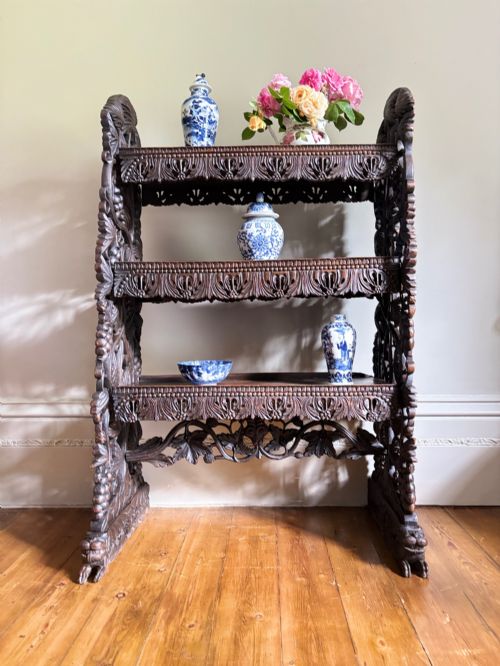
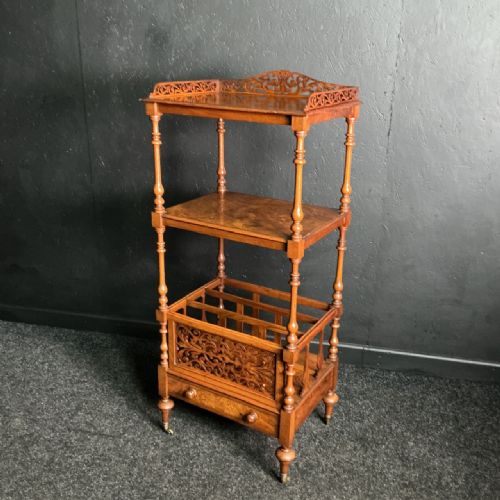
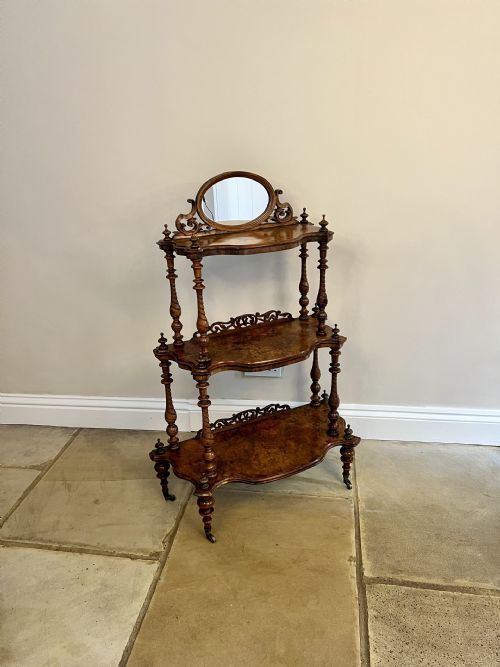

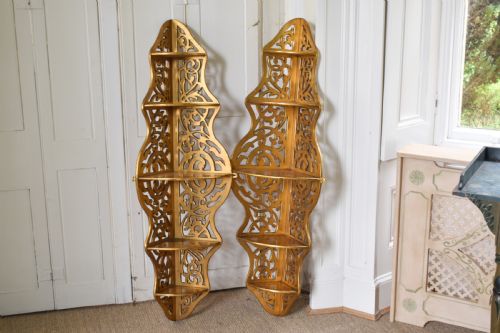
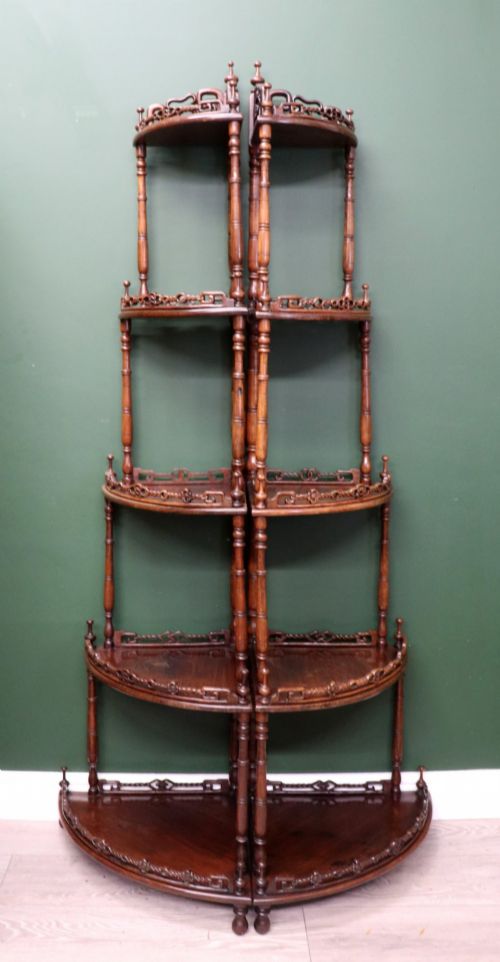
Victorian Carved Etagere
These walnut, mahogany and rosewood pieces provide tiered display surfaces for displaying decorative objects in the home.
Victorian Carved Etagere
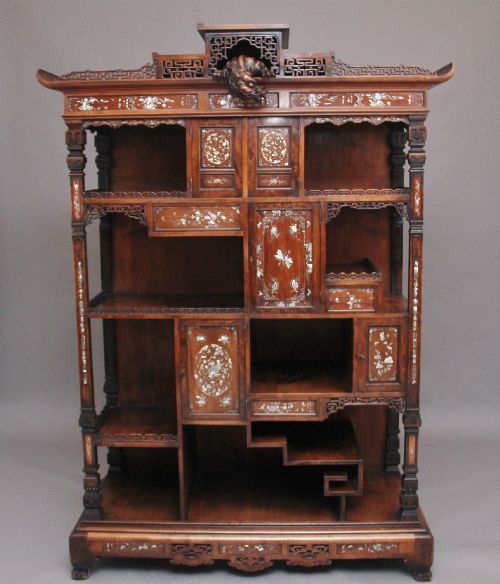
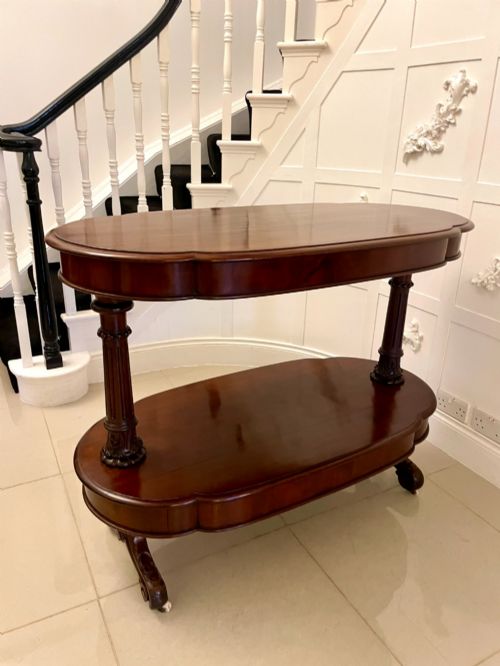
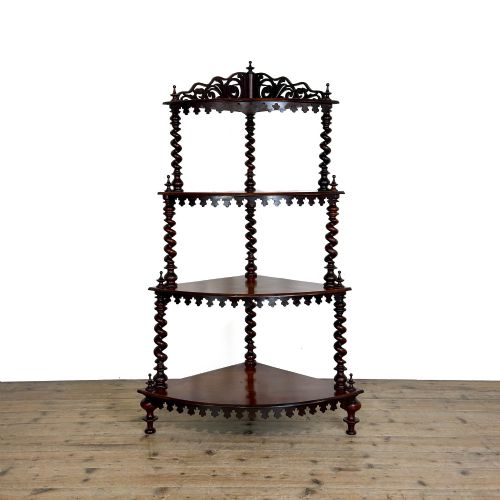
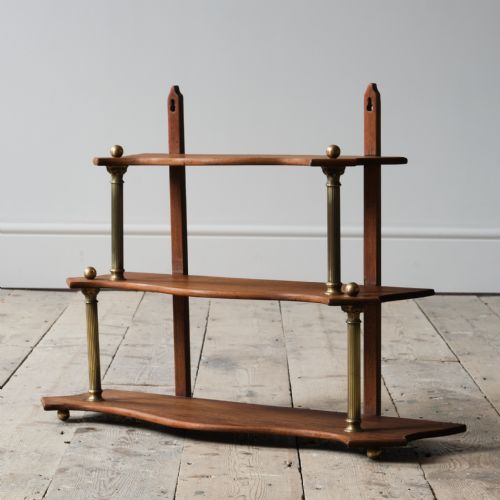
A victorian carved etagere provides multi-tiered open shelving for ornament and display within a room. The items on this page span the nineteenth century and incorporate related forms like whatnots, wall shelves, and corner units.
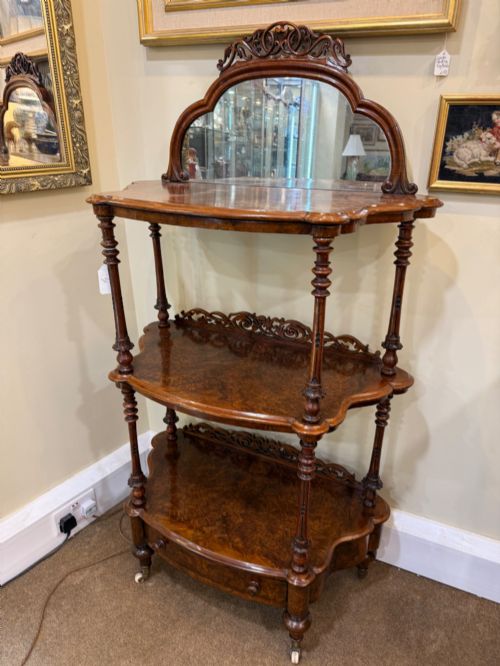
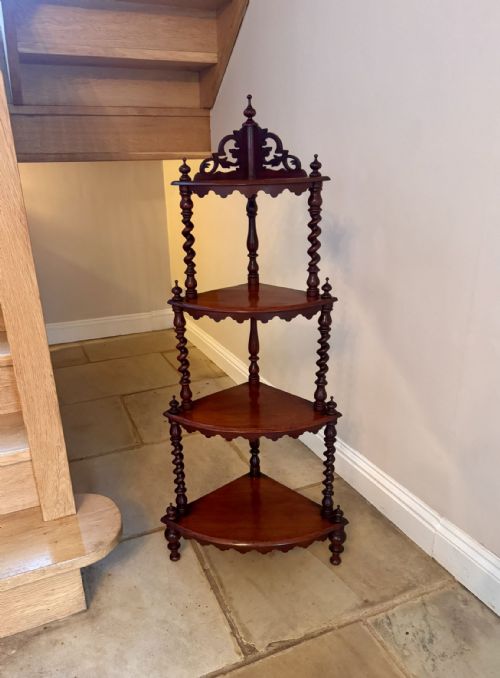
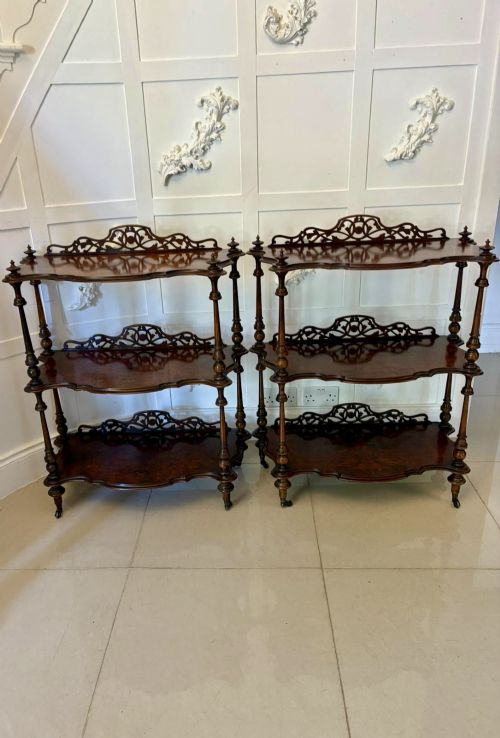
Burr walnut and mahogany appear most frequently alongside rosewood, satin birch, and oak. Pieces range from modest corner units to freestanding multi-tiered display stands with mirrors and drawers.
Alternative stylistic influences emerge through Anglo-Indian, Japonisme, and Gothic Revival variations. Buyers frequently encounter standard three-tier walnut whatnots alongside specialised music cabinets and console tables.
Materials and construction
Cabinet makers utilised dense hardwoods including mahogany, walnut, and burr walnut for structural framework and decorative veneer surfaces. Giltwood, brass, and teak also feature across specific nineteenth century examples.
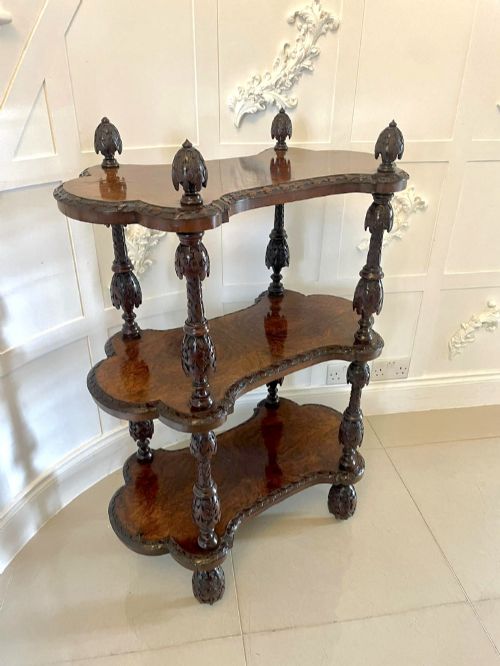
Carving techniques articulate structural supports, turnings, and friezes, while mirror glass integrates into backboards. Surface treatments include polished wood finishes and japanning.
One piece recorded is a music cabinet, proving that even Victorian sheet music deserved a decorative multi-tiered home.
Evaluating craftsmanship
The selection of timber grain, particularly burr walnut figures and figured mahogany, defines the visual hierarchy of these display pieces. Superior examples exhibit intricate carved detailing and balanced proportions across multiple tiers.
Makers integrated functional elements such as single drawers and mirrored backs with precise joinery. The inclusion of documented cabinet makers elevates specific nineteenth century examples above standard production items.
Gabriel Viardot·Edwards & Roberts
The Victorian Carved Etagere Glossary
- Etagere
- A piece of furniture consisting of a set of open shelves for displaying small ornaments. These tiered stands developed in France before becoming popular in Britain.
- Whatnot
- A multi-tiered shelving unit used for displaying objects, books, or china. This form became a staple of Victorian interior furnishing.
- Burr walnut
- Wood taken from a walnut tree growth featuring swirling, irregular grain patterns. Cabinet makers prized this material for high-status veneering.
- Japonisme
- The study of Japanese art and aesthetics that influenced nineteenth century design. This style appears on selected etageres and cabinets on the page.
- Japanning
- A European imitation of Japanese lacquer work applied to furniture surfaces. This decorative technique creates a dark, glossy finish.
Victorian Carved Etagere: Frequently Asked Questions
What is a Victorian etagere?
A Victorian etagere is a multi-tiered piece of furniture designed for displaying ornaments, ceramics, and small decorative objects.
These pieces typically feature open shelves supported by turned or carved uprights and date from the nineteenth century.
Where were etageres placed?
These shelving units stood against walls, in room corners, or functioned as freestanding central display pieces depending on their floor plan.
Corner models utilised empty angles while larger tiered units organised collections within reception rooms.
How do you style an etagere?
Living with these pieces involves populating the open shelves with balanced arrangements of books, ceramics, and small sculptures.
The tiered structure allows visible display from multiple angles within a traditional interior space.
What woods were used?
Nineteenth century cabinet makers constructed these items primarily from walnut, burr walnut, mahogany, and rosewood.
Less common examples incorporate satin birch, teak, oak, and padauk alongside decorative brass and mirror glass elements.