



Victorian Corner Display Shelf
A victorian corner display shelf brings vertical timber elegance and open tiered storage into tight interior angles.
Victorian Corner Display Shelf
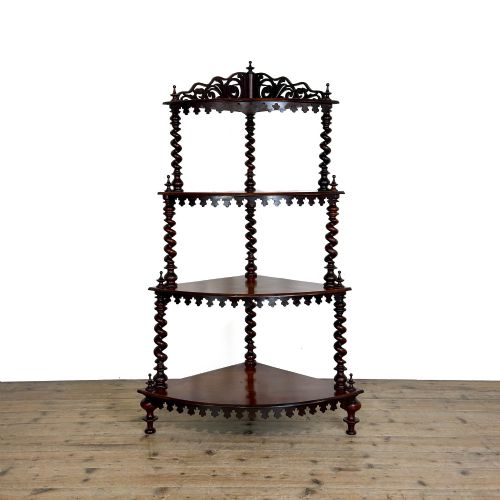
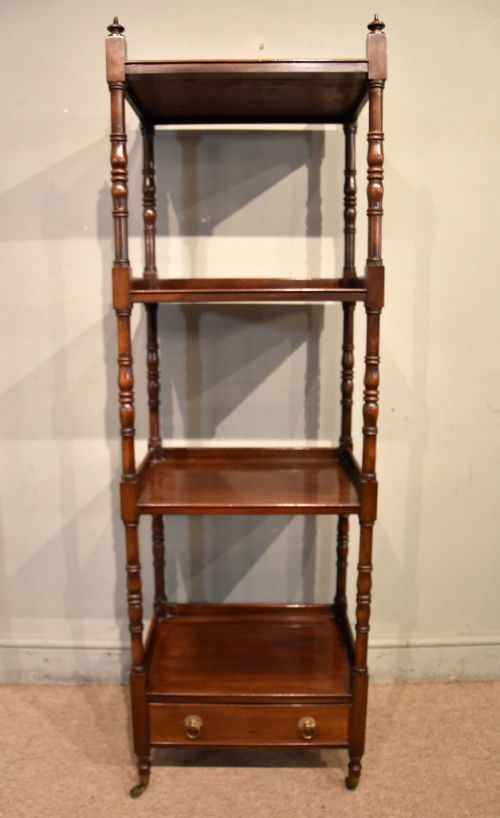
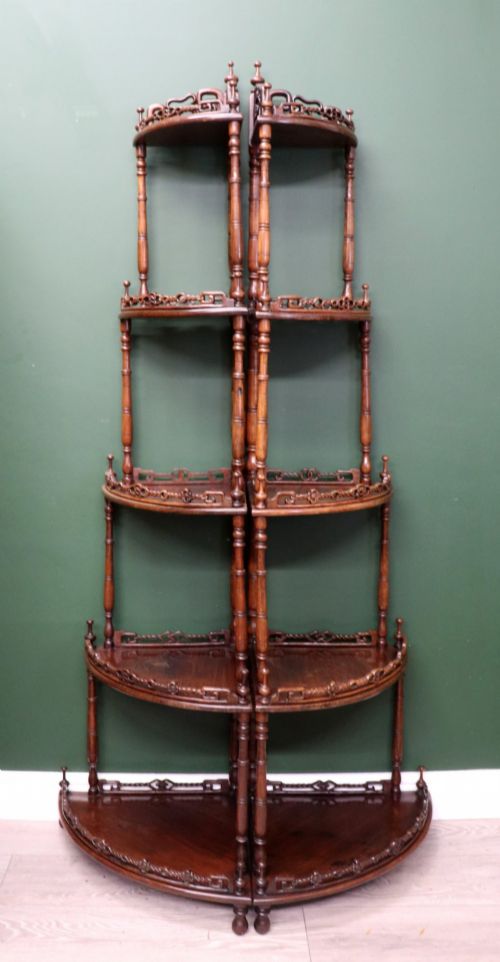
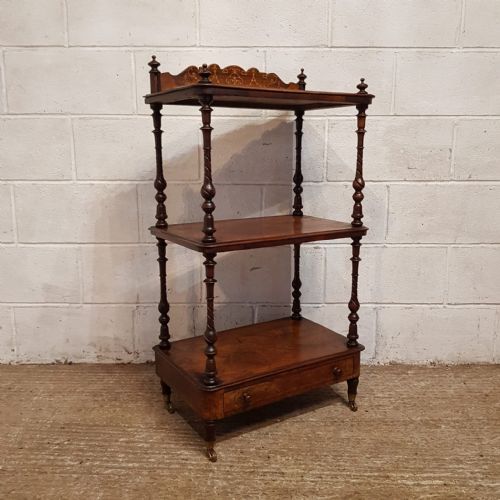
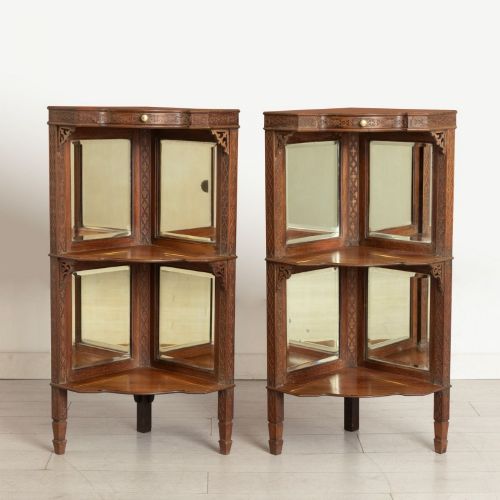
A victorian corner display shelf turns neglected wall angles into display space using tiered open shelves supported by slender columns or upright supports. These pieces appear frequently as multi-tiered whatnots, etageres, and dedicated corner cabinets originating across the nineteenth century.
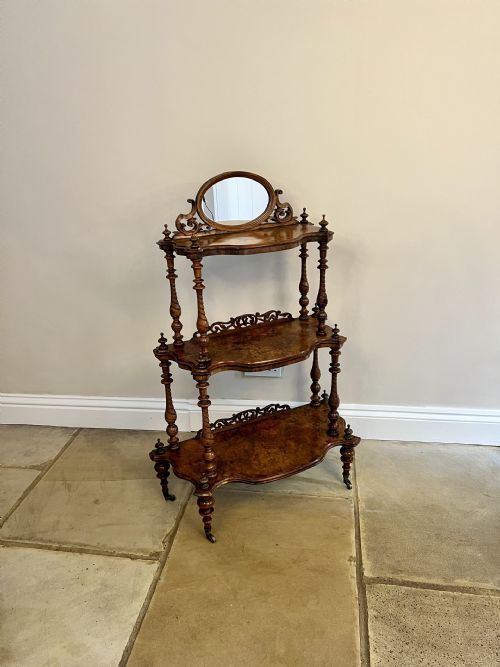
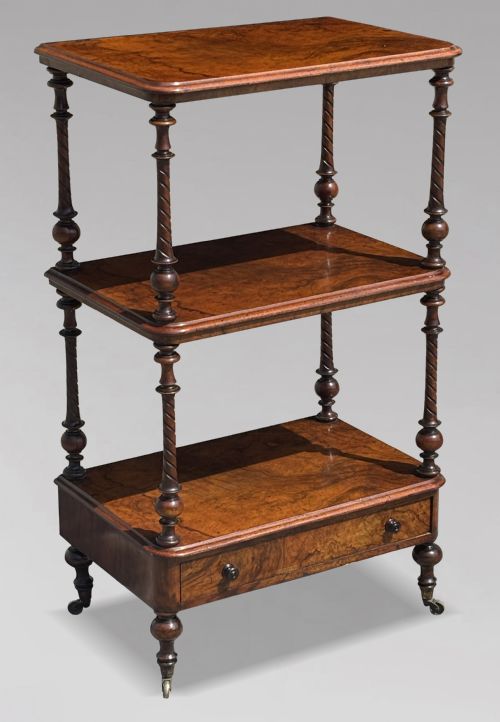
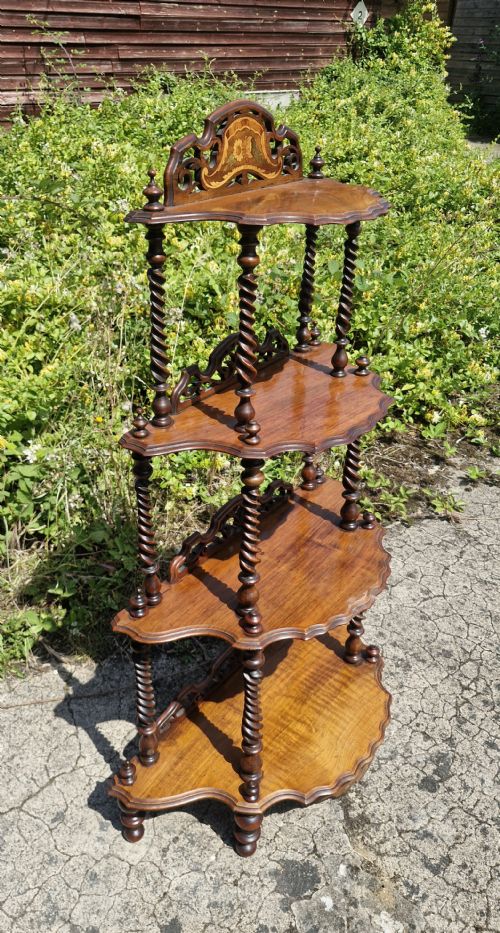
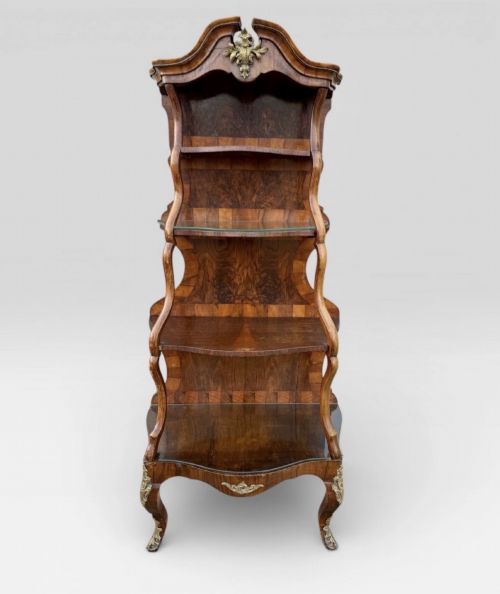
Makers constructed these units primarily for parlours and drawing rooms to display small ornaments, books, and ceramic collections. The forms range from simple three-tier mahogany structures to elaborate burr walnut and inlaid models spanning the victorian, aesthetic, and rococo revival styles.
Materials and construction
Cabinet makers relied heavily on rich timbers such as mahogany, walnut, burr walnut, and rosewood, often pairing solid frames with figured veneers. Detail work frequently incorporated brass mounts, gilt metal, glass doors, mirror backs, and intricate marquetry inlay.
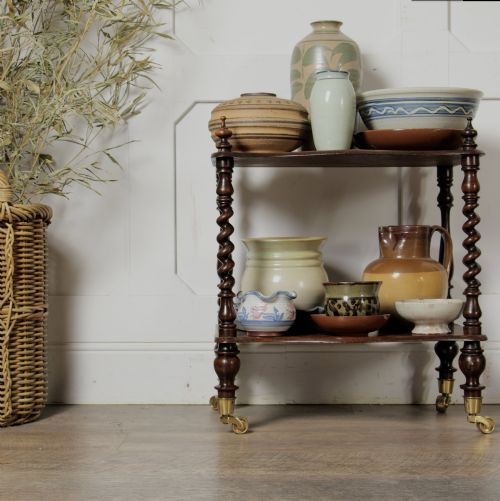
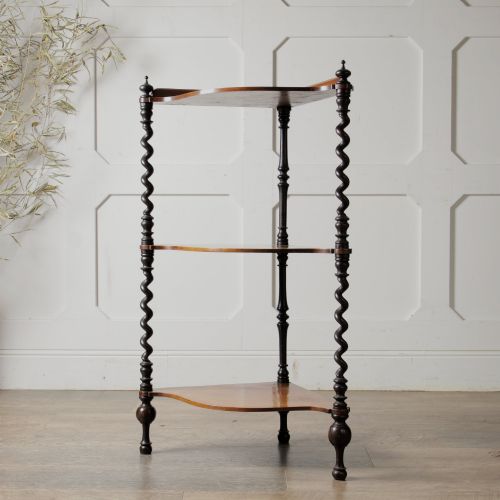
Structural uprights often utilised turned elements like barley twist columns to support multiple graduated shelves. Some variations introduced alternative materials including bamboo, wrought iron, and rustic pine alongside traditional joinery.
One remarkably honest maker opted for white painted wrought iron to ensure plants survived their watering routine indoors.
Judging quality
Quality rests in the choice of timber figure, such as richly patterned burr walnut or dense rosewood, rather than plain secondary woods. Finer examples display meticulous marquetry inlay, substantial brass hardware, and crisp turning on columns rather than mass-produced uniformity.
Structural integrity through well-fitted joints and stable tier supports distinguishes superior workshop output from simpler utilitarian pieces. Exhibition quality items often feature elaborate carving and superior timber selection intended for formal reception rooms.
Edwards & Roberts·John Stow Ltd of Bradford
The Victorian Corner Display Shelf Glossary
- Whatnot
- A set of open shelves used for displaying ornaments and small objects. These tiered stands date predominantly from the nineteenth century.
- Etagere
- A piece of furniture consisting of a number of open shelves for displaying articles. The French term describes similar tier-based display furniture to the whatnot.
- Burr Walnut
- Timber featuring distorted grain patterns formed from tree growths, highly prized for decorative veneer. Cabinet makers used this wood on prominent surfaces of luxury furniture.
- Barley Twist
- A turning style resembling a spiral rope, popular on upright supports during the period. Craftsmen shaped timber on a lathe to create these distinct helical columns.
- Inlay
- Decorative material set into the surface of a primary timber to form patterns. Typical examples employ contrasting woods or metal to adorn tabletops and shelf edges.
Victorian Corner Display Shelf: Frequently Asked Questions
What is a corner whatnot?
A corner whatnot is a multi-tiered shelving unit designed to fit neatly into ninety-degree room angles. It provides vertical display space for ceramics, books, and decorative objects without dominating floor area.
These pieces emerged strongly during the nineteenth century as drawing room staples. Their graduated shelves allow light to pass while holding varied collections.
How do I style a corner shelf?
Utilise the graduated tier depths by placing heavier ceramic or bronze pieces on the wider lower shelves. Lighter glass or porcelain items sit best on the narrower upper levels.
Keep arrangements balanced but uncluttered to let the timber grain and turning details remain visible. Avoid overcrowding so the structural form of the whatnot stands out.
Are these shelves sturdy?
Victorian corner units rely on properly secured wall fixings or stable tripod footprints to remain upright safely. The multi-tiered design distributes weight downward through turned columns or side panels.
Heavier items belong on the lowest tier to maintain a low centre of gravity. Regular checks on joint stability ensure the structure handles everyday ornament collections.
How do I date these pieces?
Dating relies on identifying timber choices, decorative motifs, and construction methods characteristic of specific decades. Burr walnut and heavy carving often point toward mid-nineteenth century production.
Lighter bamboo structures or ebonised finishes typically indicate late nineteenth-century aesthetic movement influences. Comparing turning styles and hardware helps narrow down the manufacturing era.