



Carved Mahogany Whatnot
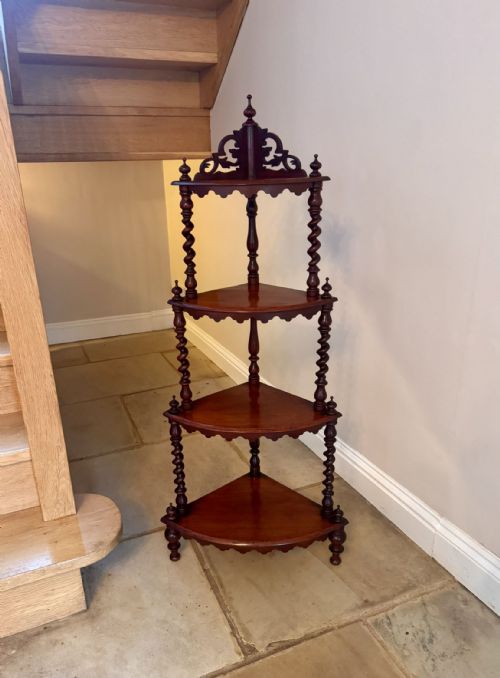
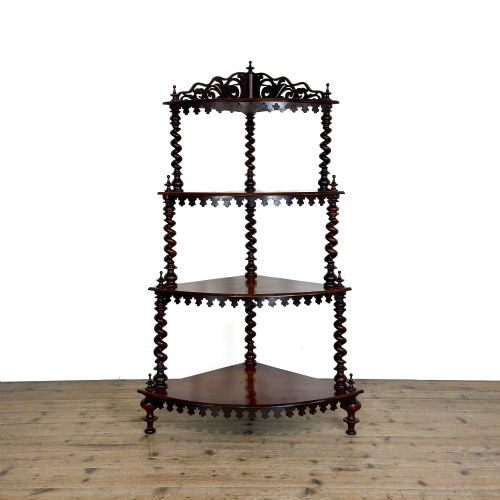
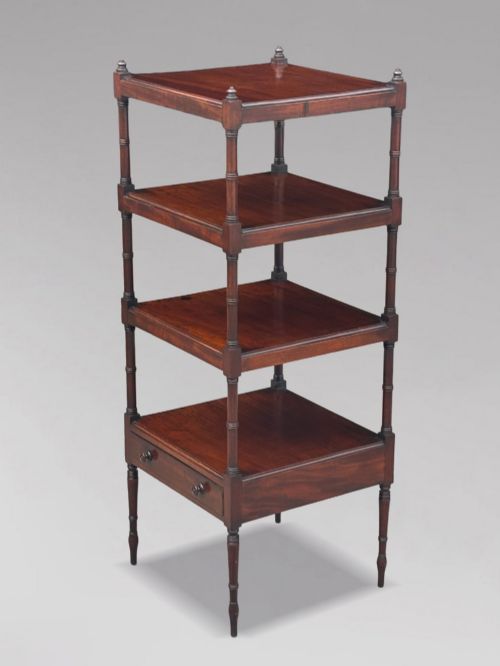
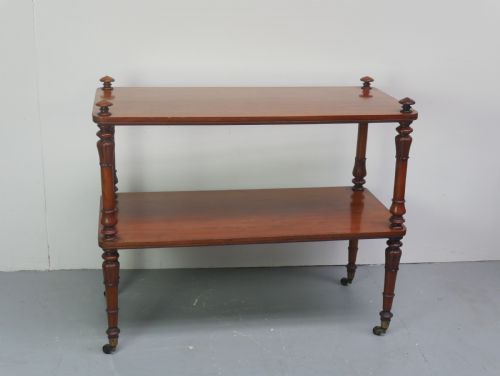
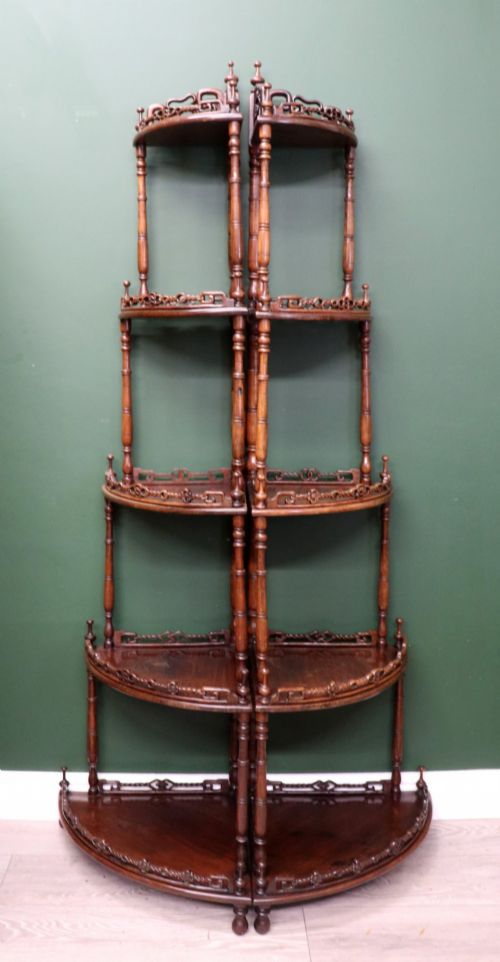
A carved mahogany whatnot bringstiered display space to a room, offering open shelves for books and ornaments with the warmth of rich timber.
Carved Mahogany Whatnot
When you search for a carved mahogany whatnot, you are looking at multi-tiered display furniture designed to hold books, sheet music, and ornaments in nineteenth-century interiors. These pieces appear in various configurations, from corner units and hanging shelves to large mirror-backed cabinets and multi-tiered étagères.
The version you are most likely to meet on this page is the Victorian tiered stand, often featuring carved supports or turned columns in rich mahogany. Makers of the nineteenth century also produced corner models and buffets incorporating walnut, rosewood, and inlaid details.
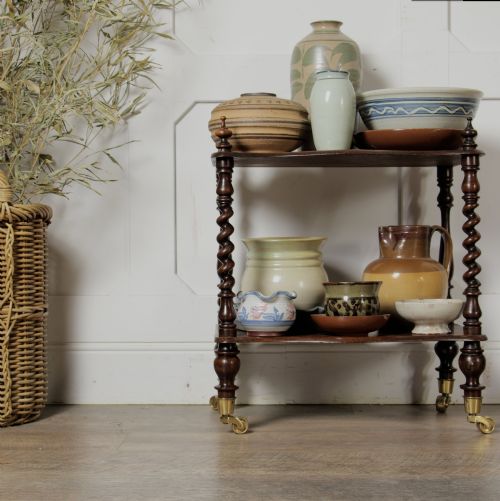
These stands served practical functions in drawing rooms and parlours where display space was at a premium. The open structure allowed owners to exhibit collections of ceramics and books while keeping floor footprints relatively modest.
How they were made
Cabinet makers utilised solid mahogany and veneers, frequently combining turned structural elements like barley twists with carved decorative motifs. Joints were typically assembled using traditional woodworking methods to support multiple stacked platforms.
Some examples incorporate subsidiary materials such as brass fittings, mirrored glass panels, and contrasting marquetry inlay in satinwood or walnut. Surfaces were polished to highlight the natural grain and deep colour of the primary timber.
Carved Mahogany Whatnot Retail Price Guide 2026
Typical asking prices for carved mahogany whatnot among the pieces listed under this phrase on Sellingantiques today, from the lower quarter to the upper quarter. They describe what is for sale here now, not the wider market.
Listings feature pieces spanning the Victorian, Edwardian, and Regency periods, utilising mahogany, walnut, rosewood, and brass.
What varies in quality
The standard of carving and turning distinguishes finer pieces from simpler utility items, with crisp detail in the woodwork marking superior workshops. The choice of timber grain and the complexity of the tiered architecture also signal higher workmanship.
Structural integrity across multiple levels determines how well a stand survives centuries of use, alongside the original condition of integrated mirrors or inlaid marquetry panels.
The Carved Mahogany Whatnot Glossary
- Whatnot
- A piece of furniture consisting of a set of open shelves for displaying small objects. They became popular in the nineteenth century for parlours and drawing rooms.
- Étagère
- A piece of furniture with a set of open shelves for displaying ornaments. The term is often used interchangeably with whatnot.
- Barley twist
- A type of turned wooden column resembling a twisted rope. It appears frequently on nineteenth-century stands and table supports.
- Marquetry inlay
- Decorative patterns formed by fitting small pieces of contrasting veneer into wood surfaces. This technique adds geometric or floral detail to tabletops and shelves.
Carved Mahogany Whatnot: Frequently Asked Questions
What was a whatnot used for?
These tiered stands held books, small ornaments, and decorative ceramics in nineteenth-century reception rooms.
They provided accessible display surfaces without taking up the floor space of larger cabinets.
Where should I place a corner whatnot?
Corner models fit neatly into unused angles of a room, making them practical for smaller spaces.
They utilise vertical wall junctions to display collections without obstructing movement.
What is the difference between an étagère and a whatnot?
Both terms describe multi-tiered shelving units designed for display, though étagère often implies a more decorative French-influenced design.
In nineteenth-century English inventories, the names were frequently used for similar multi-shelf stands.