



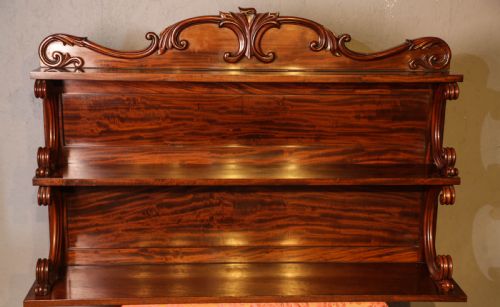


Mahogany Wall Shelf
These mahogany wall shelf pieces bring compact architectural interest to plain walls, offering practical display space without occupying floor room.
Mahogany Wall Shelf
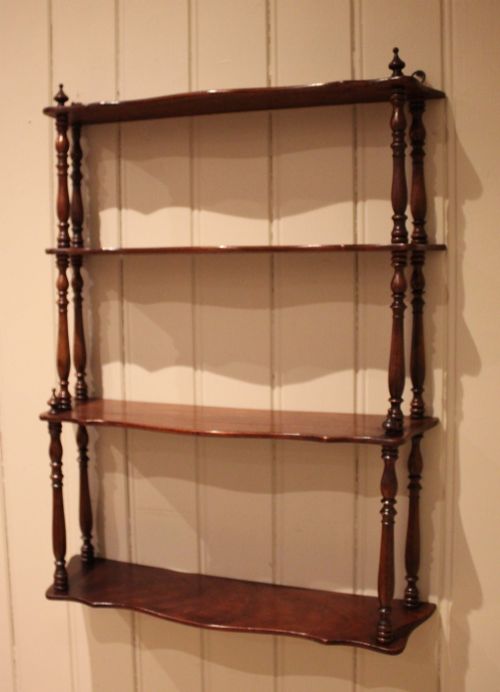
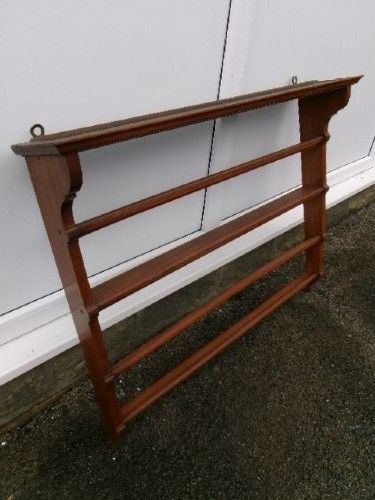
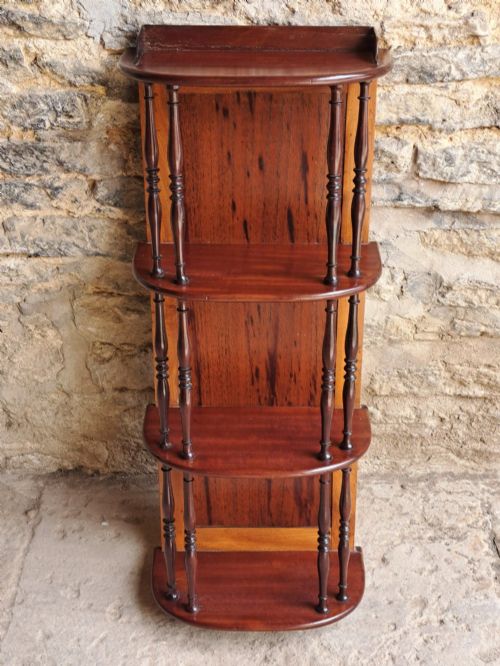
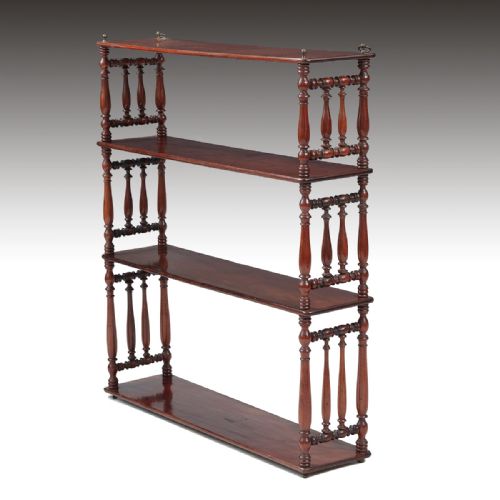
A mahogany wall shelf selection includes multi-tiered hanging bookshelves, corner brackets, and open display racks designed to mount directly onto vertical surfaces. Buyers searching for a mahogany wall shelf typically encounter multi-tier open shelving units, cascading waterfall designs, and enclosed cabinet variants originating from the Georgian, Regency, and Victorian periods.
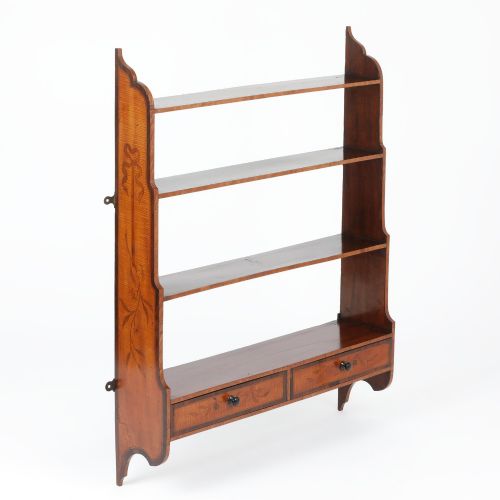
The objects serve varied functional domestic roles, appearing as small bookcase combinations, plate racks, and specialised compartments incorporating brass supports or fitted drawers. Examples range from simple two-tier open ledges to elaborate French Chateau and Sheraton inspired architectural forms with fretwork detailing.
Materials and construction
Cabinetmakers constructed these shelves primarily using solid mahogany and flame mahogany veneers over secondary timbers, frequently accentuating surfaces with contrasting satinwood or boxwood inlay. Structural integrity relied on dovetail joints, pegged joints, and wall-mounting brackets integrated into the backboards.
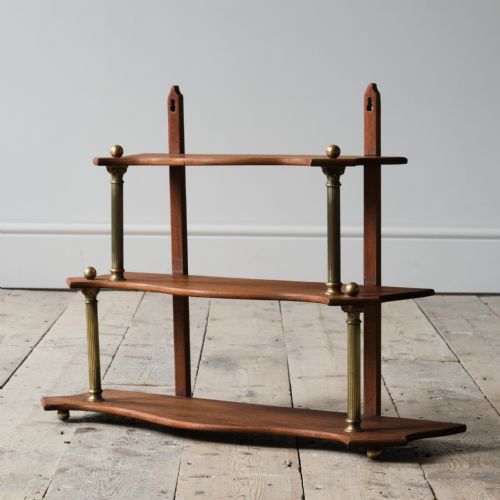
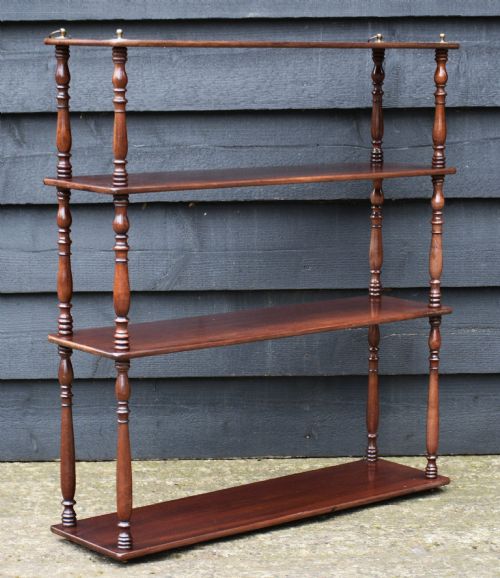
Many iterations incorporate decorative and functional subsidiary materials, utilising brass galleries, columns, finials, and hanging hooks alongside glass door panels for cabinet variants. Carved elements such as bobbin turnings, corbels, and fretwork panels appear across Victorian and Edwardian examples to add textural depth.
Mahogany Wall Shelf Retail Price Guide 2026
Typical asking prices for mahogany wall shelf among the pieces listed under this phrase on Sellingantiques today, from the lower quarter to the upper quarter. They describe what is for sale here now, not the wider market.
Markers of construction quality
Quality in a mahogany wall shelf rests upon the depth of the timber figuring, the crispness of any inlaid boxwood or satinwood stringing, and the integrity of the structural joints. Superior pieces exhibit tight joinery at the shelf junctions and substantial backboards capable of supporting sustained weight without sagging.
The refinement of auxiliary details further distinguishes the work, seen in well-turned brass supports, smoothly operating drawer construction where present, and cleanly executed fretwork or carving. The handling of the timber finish, whether retaining a deep natural patina or showing careful hand-polishing, marks the difference between utilitarian workshop production and master cabinetmaking.
The Mahogany Wall Shelf Glossary
- Waterfall shelves
- Graduated tiers of open shelving where each level steps back or forward from the one below, creating a cascading vertical profile. This form gained popularity during the Georgian and Victorian eras for displaying small books or ornaments.
- Fretwork
- Openwork ornamentation carved or pierced out of thin wood panels in geometric or scrolling patterns. It frequently appears on the side supports or crestings of late 19th-century shelves.
- Whatnot
- A freestanding or wall-mounted set of open shelves designed specifically for the display of ornaments and curiosities. The term emerged in the 19th century as these multi-tiered display pieces proliferated in domestic interiors.
- Tambour
- A flexible sliding shutter formed from narrow vertical strips of wood glued to a canvas or leather backing. This mechanism allowed makers to enclose small cupboard sections on corner wall units.
- Corbel
- A projecting bracket of stone, wood, or metal supporting a weight above it. In wall shelving, wooden corbels provide structural support beneath the lowest load-bearing shelf.
Mahogany Wall Shelf: Frequently Asked Questions
How were these shelves originally mounted?
Most hanging shelves incorporate structural keyhole plates, brass hanging loops, or sturdy backboard brackets designed to hook directly over heavy wall screws or masonry nails. These mounting points ensured the weight of books or ceramics pulled the piece flush against the wall surface.
Heavier cabinet variations and multi-tier bookcases required dual-point suspension to distribute the load safely across lath and plaster or wood-paneled walls.
Can these shelves support heavy books?
Smaller two or three-tier open ledges suit light display duties such as small volumes, plates, or porcelain figures rather than heavy folios. The structural capacity depends entirely on the thickness of the mahogany boards and the strength of the original wall fixings.
Robust Victorian and Georgian bookcase variants with substantial backboards and deep shelves handle standard book collections comfortably, provided they are anchored securely into wall studs.
How do I distinguish Regency from Victorian examples?
Regency pieces generally display restrained classical restraint, characterised by clean architectural lines, brass column supports, and rich flame mahogany veneers without excessive carving. They favor proportion and subtle contrast through inlaid stringing.
Victorian iterations tend to be heavier and more ornate, incorporating turned bobbin members, pierced fretwork, carved corbels, and multiple tiers designed for dense Victorian display habits.
Where should I hang a wall shelf?
These pieces excel in dead spaces such as narrow hallway passages, above bedroom chests of drawers, or flanking a fireplace where floor space is limited. Their compact vertical profile draws the eye upward while utilising under-occupied wall areas.
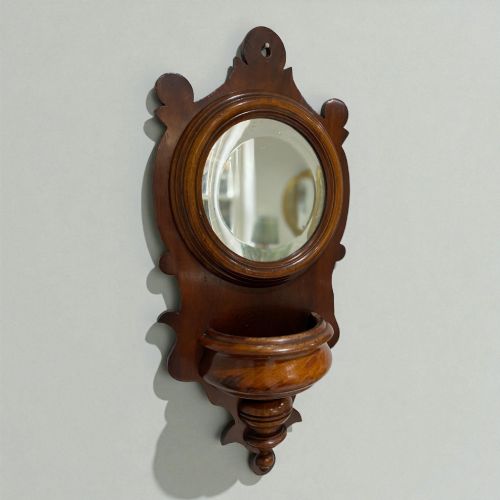
Bathrooms and kitchens also accommodate smaller cabinet and mirror-backed variants, provided humidity levels are kept stable to protect the antique timber and veneer.