






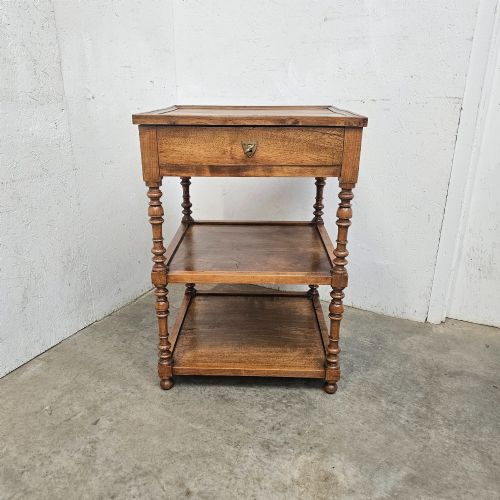
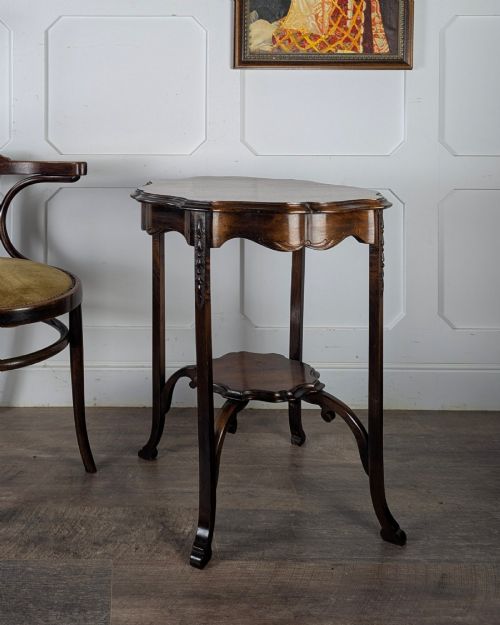
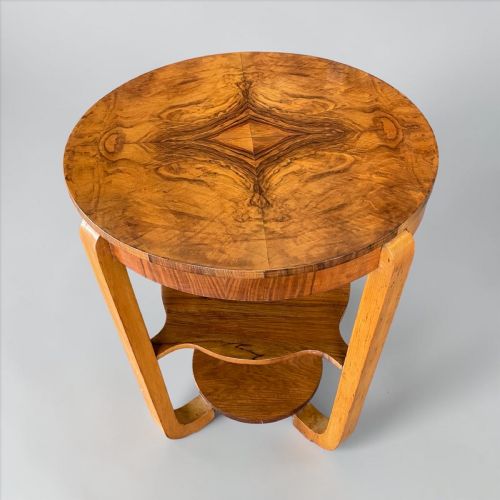
Walnut Tiered Stand
When you search for a walnut tiered stand, you are looking at multi-level display pieces ranging from Victorian whatnots to Edwardian side tables.
Walnut Tiered Stand
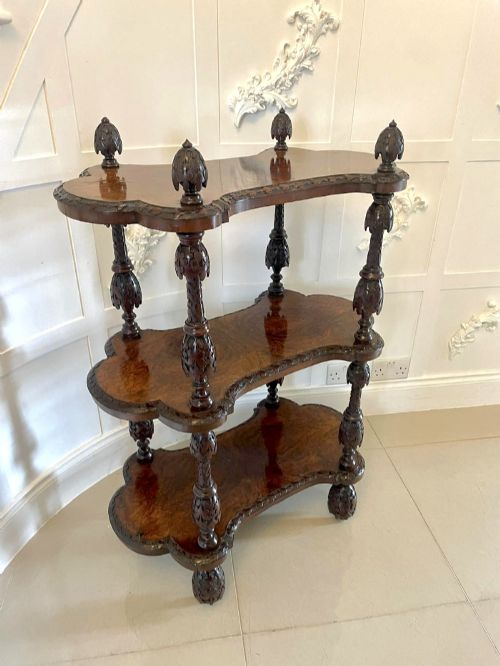
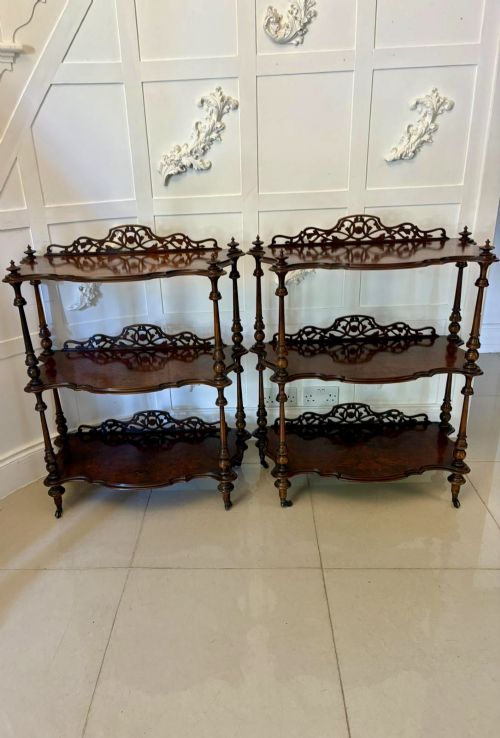
A walnut tiered stand encompasses multi-level display and storage furniture, appearing frequently as whatnots, etageres, and occasional tables. These forms serve to display objects or hold books across multiple shelves while occupying minimal floor space in a room.
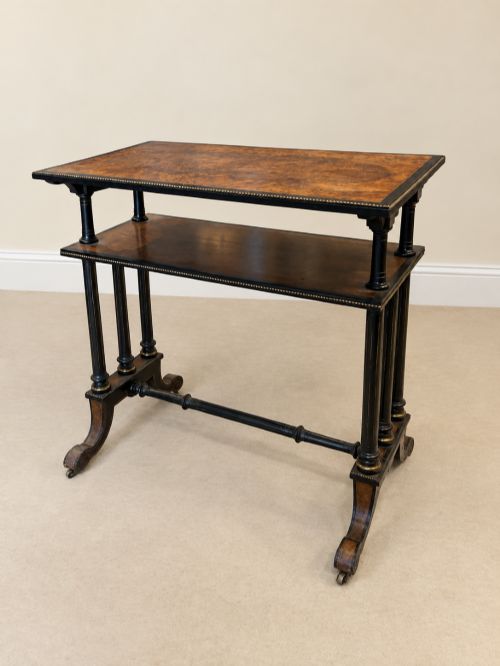
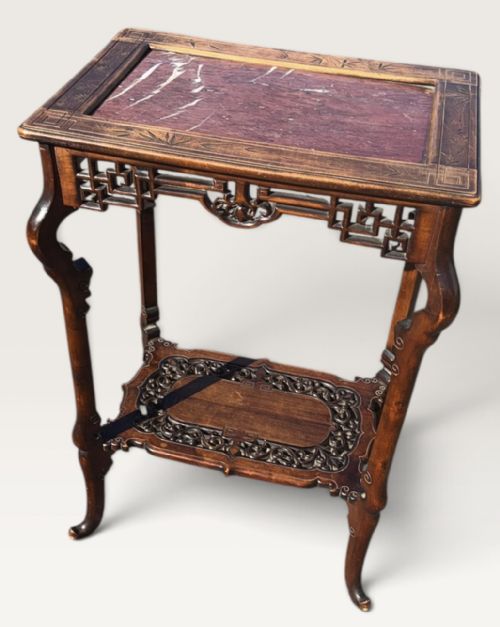
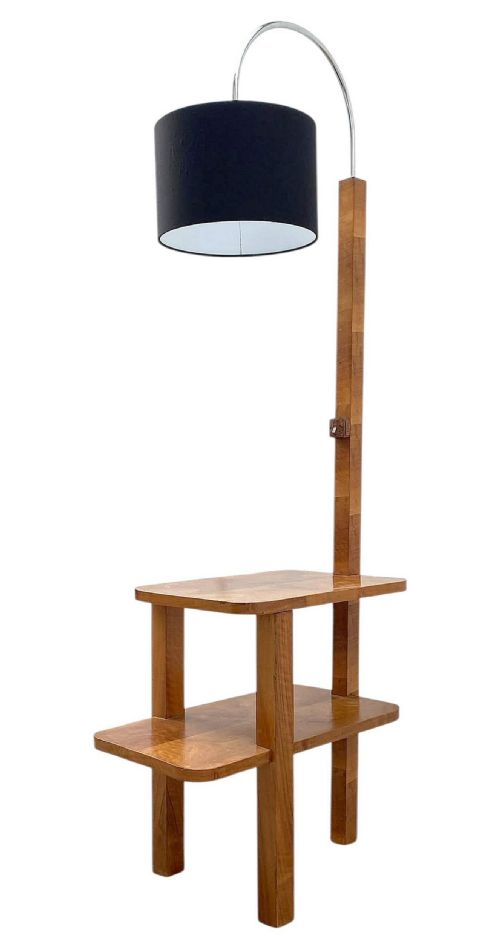
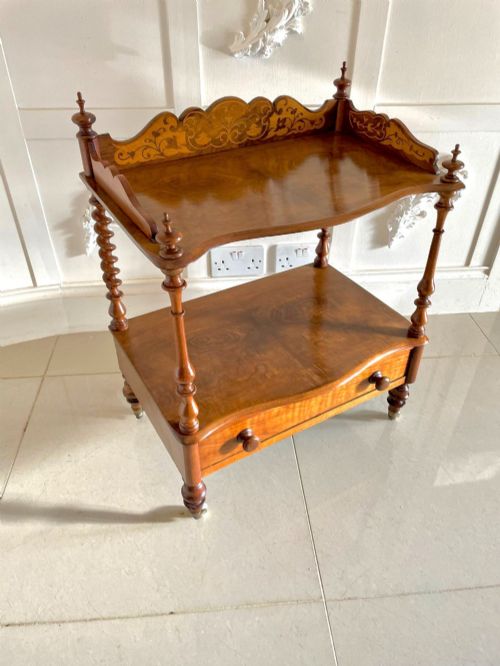
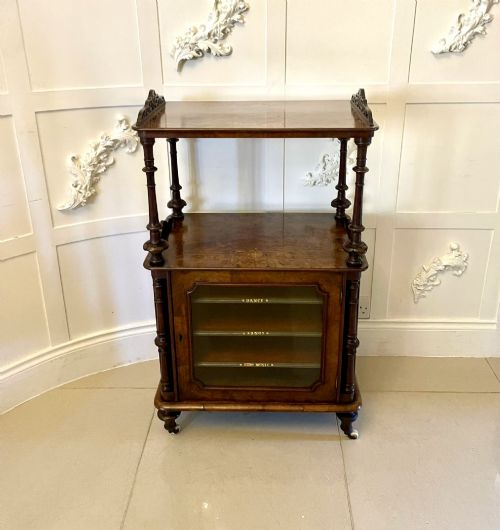
The pieces spanning this selection date primarily from the nineteenth century into the early twentieth century, covering the Victorian and Edwardian eras alongside Arts and Crafts and Art Deco periods. Forms include serpentine whatnots, corner shelves, side tables, and music cabinets with distinct tier arrangements.
Originating largely from British and French workshops, these tiered stands utilise domestic and imported timbers configured into freestanding or corner units. The variety reflects changing domestic needs for display surfaces in nineteenth and twentieth-century interiors.
Materials and construction
Makers built these pieces primarily using solid walnut and burr walnut veneers, often combining them with secondary woods such as mahogany. Burr walnut provided decorative patterned surfaces for tops and shelves, while straight-grained walnut formed the structural uprights and turned legs.
Constructors integrated brass mounts, ormolu, and gilt metal details to accentuate corners, edges, and gallery rails. Ebonised wood and glass also appear across specific aesthetic movement and art deco examples, adding contrast to the warm brown tones of the primary timber.
Walnut Tiered Stand Retail Price Guide 2026
Typical asking prices for walnut tiered stand among the pieces listed under this phrase on Sellingantiques today, from the lower quarter to the upper quarter. They describe what is for sale here now, not the wider market.
Some Victorian whatnots come with fully adjustable shelves, allowing owners to rearrange their tiered displays on a whim.
Distinctions in quality
Quality separates through the selection of timber veneers and the intricacy of carving, inlay, or marquetry work across the tiers. Superior examples employ highly figured burr walnut with matched grain patterns and precise corner turning.
Structural execution dictates longevity, visible in the stability of multi-tier uprights, the neatness of brass mounts, and the integration of adjustable elements or built-in cabinets. Finer items maintain rigid tier alignment and clean joinery under the shelves.
Liberty of London·William Birch
The Walnut Tiered Stand Glossary
- Whatnot
- A piece of furniture consisting of several open shelves for displaying small objects or books. It gained popularity during the Victorian period as a multi-tier stand.
- Etagere
- A French term for a piece of furniture with a tier of open shelves for displaying ornaments. These often feature turned legs and decorative mounts.
- Burr Walnut
- A veneer taken from the warted excrescence on a walnut tree, yielding a swirling and highly decorative grain pattern. It was widely used on Victorian table tops and cabinet fronts.
- Canterbury
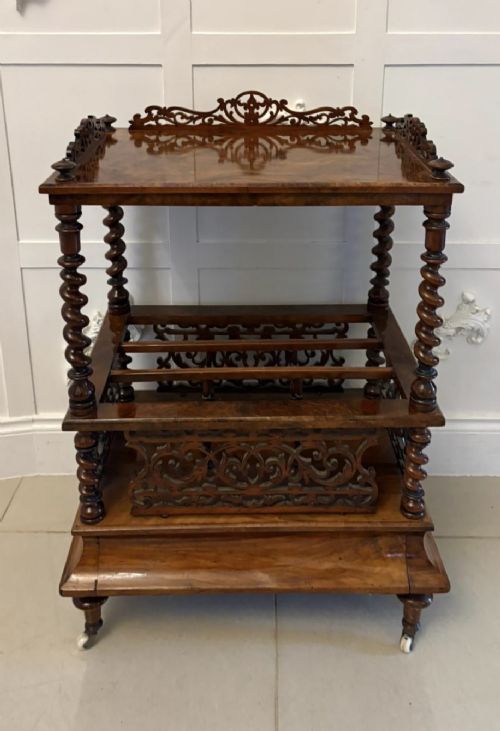
- A low, open-tiered stand originally designed for holding sheet music or books, frequently combined with a drawer or magazine rack section. Victorian examples often incorporate these compartments beneath display tiers.
- Aesthetic Movement
- A late nineteenth-century design style that emphasised visual beauty over narrative subject matter, often incorporating Anglo-Japanese forms and ebonised finishes.
Walnut Tiered Stand: Frequently Asked Questions
What is a walnut tiered stand used for?
These pieces function primarily as display furniture for ornaments, ceramics, and small books across multiple levels. They occupy corners or wall spaces to organise objects without cluttering a room.
Historically, specific variants like music cabinets and canterburys held sheet music and periodicals beside seating areas. Today they serve similar display and storage roles in domestic interiors.
How do I date a walnut tiered stand?
Dating relies on identifying stylistic markers associated with periods such as Victorian, Edwardian, or Art Deco. Victorian pieces often feature heavy turning, burr walnut veneers, and serpentine shapes.
Later Edwardian and 1920s examples tend toward lighter frames, simpler lines, or specific revival styles. Examining construction methods and hardware offers further clues to the decade of manufacture.
What is the difference between a whatnot and an etagere?
A whatnot is traditionally a British tiered shelving unit used for general display and storage, evolving through the nineteenth century. An etagere represents the French counterpart, often featuring lighter proportions and decorative brass or ormolu mounts.
In practice, the terms overlap significantly in antique inventories. Both describe multi-tiered furniture designed to hold decorative items.
How do I care for burr walnut furniture?
Burr walnut requires placement away from direct sunlight and heat sources to prevent the delicate veneer from drying or cracking. Regular dusting with a soft, dry cloth preserves the polished surface.
Occasional application of appropriate wax polish maintains the moisture and lustre of the timber. Avoid excessive moisture and harsh chemical cleaners on antique surfaces.