



Louis XV Style Etagere
A louis xv style etagere brings tiered French elegance and decorative display space to any room.
Louis XV Style Etagere
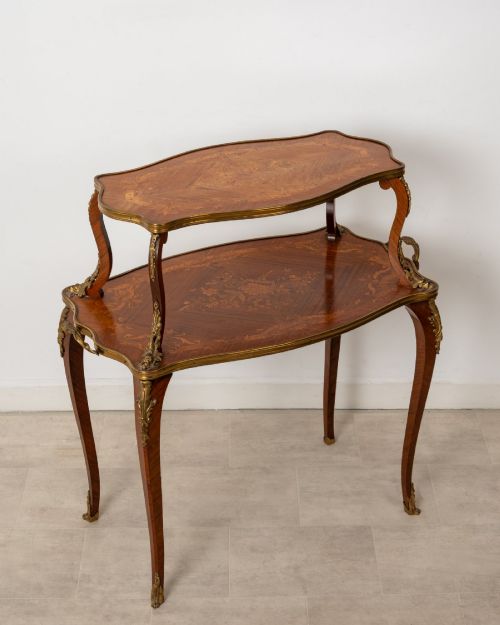
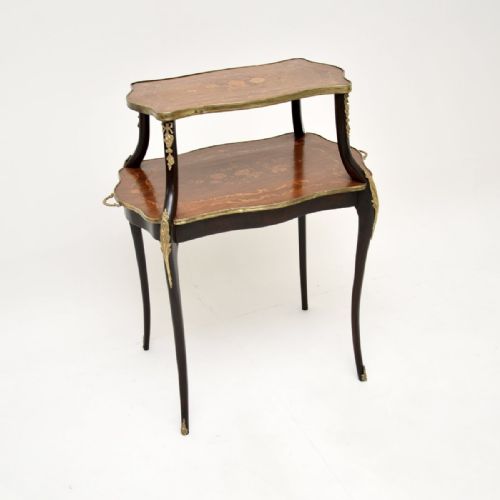
A louis xv style etagere offers multiple display tiers for ornaments, books and precious items while echoing the graceful curves of eighteenth century French furniture. These decorative pieces emerge primarily from nineteenth century revivals, spanning decades from the mid Victorian era through to the Edwardian period.
Buyers encounter distinct forms ranging from two tier side tables to taller tiered shelving units. The pieces carry unmistakable French styling, drawing directly upon Rococo and transitional design vocabularies.
How they were made
Cabinetmakers construct these etageres using timbers such as walnut, mahogany and exotic kingwood as a solid foundation. Carpenters apply delicate marquetry veneers and fruitwood inlay across the surfaces, creating intricate floral and geometric patterns.
Metalworkers mount the frames with cast brass and gilt bronze fittings, securing corners and framing shelves. Selected pieces integrate marble tops, combining weighty stone surfaces with lighter wooden frames and brass mounts.
Louis XV Style Etagere Retail Price Guide 2026
Typical asking prices for louis xv style etagere among the pieces listed under this phrase on Sellingantiques today, from the lower quarter to the upper quarter. They describe what is for sale here now, not the wider market.
Certain models arrive with tiny brass galleries designed to keep delicate porcelain teacups from sliding off during lively drawing room conversations.
What varies in quality
Quality reveals itself in the precision of the marquetry inlay and the selection of timber veneers. Superior examples display seamless grain matching and meticulous fruitwood placement across every tier.
The refinement of the cast brass or gilt bronze mounts distinguishes finer pieces from simpler workshop output. Crisp chasing on metal elements and solid structural joinery indicate superior craftsmanship.
Maison Bagues
The Louis XV Style Etagere Glossary
- Etagere
- A piece of furniture consisting of a set of open shelves for displaying small objects or ornaments. Multiple tiers allow for varied arrangement of decorative items.
- Marquetry
- Decorative veneer work where pieces of wood, shell or metal are fitted together to form geometric or pictorial designs. Craftsmen apply these veneers across tabletops and shelves.
- Kingwood
- A dense, richly figured timber imported from South America and frequently used in high quality French cabinetmaking. Its distinct grain patterns enhance revival pieces.
- Gilt bronze
- Copper alloy finished with a thin layer of gold, used for decorative mounts and accents. This material adds metallic contrast to the wooden framework.
Louis XV Style Etagere: Frequently Asked Questions
What is a louis xv style etagere?
A louis xv style etagere is a tiered display table or shelving unit inspired by eighteenth century French design. These pieces feature open levels supported by slender uprights and curved framing.
Cabinetmakers built these decorative items largely during the nineteenth and early twentieth centuries to display porcelain, silver and small ornaments in formal rooms.
How do I use an etagere at home?
An etagere works effectively as a side table or display surface in drawing rooms, bedrooms and hallways. The multiple tiers accommodate books, lamps and decorative collections without overwhelming floor space.
Place objects of varying height across the shelves to balance the open structure and highlight the timber or marquetry details.
How old are these etageres?
Most pieces date from the nineteenth century, specifically spanning the decades between eighteen fifty and eighteen ninety. Edwardian examples also appear in revival styles.
These dates reflect the Victorian enthusiasm for French Rococo design and continental revival furniture.
What woods were used?
Maker workshops utilised walnut, mahogany and exotic kingwood for the primary structure and surface veneers. Fruitwood inlay and marquetry added contrasting colour and pattern to the tables.
Brass, gilt bronze and marble frequently complement these timbers on tabletops and shelf edges.