

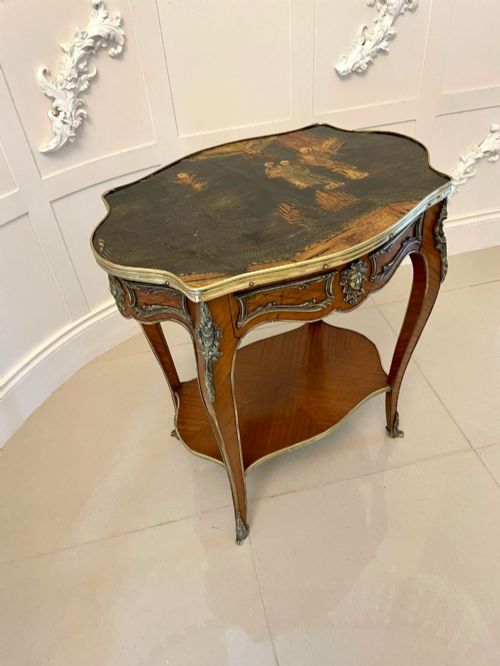
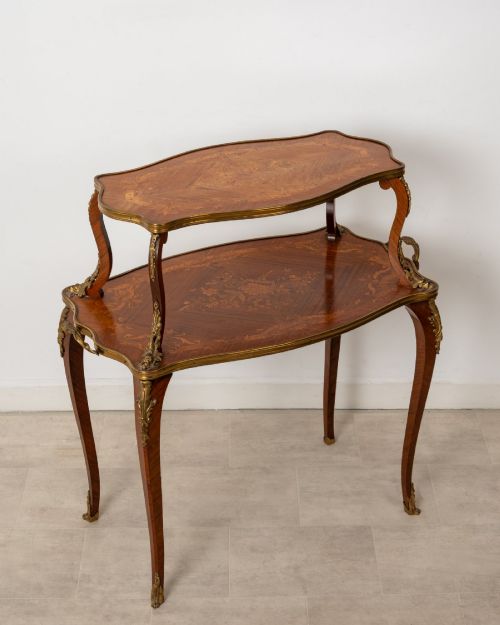
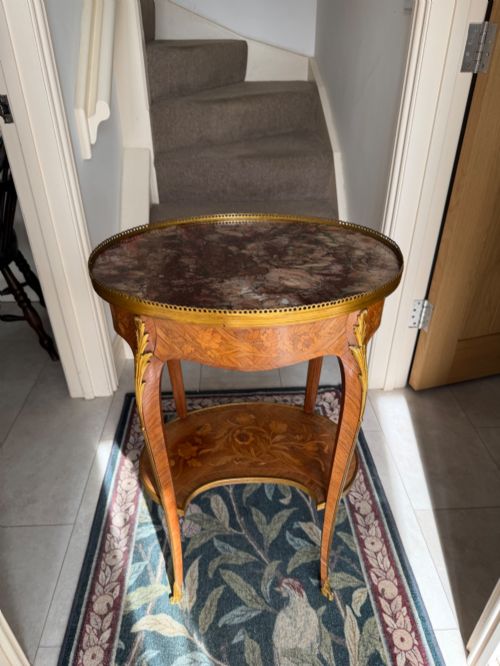
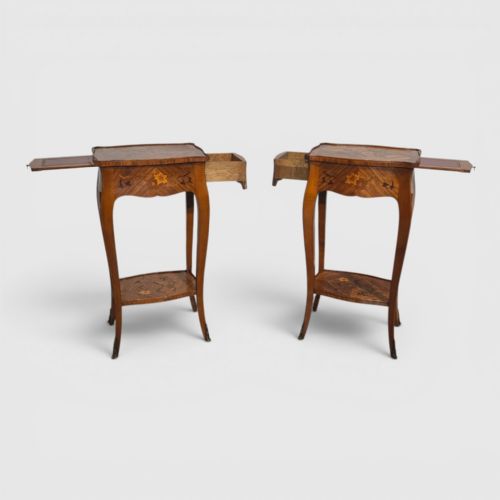


French Marquetry Tier Table
A French marquetry tier table brings layered display surface and intricate wood patterns together in one compact piece of furniture.
French Marquetry Tier Table
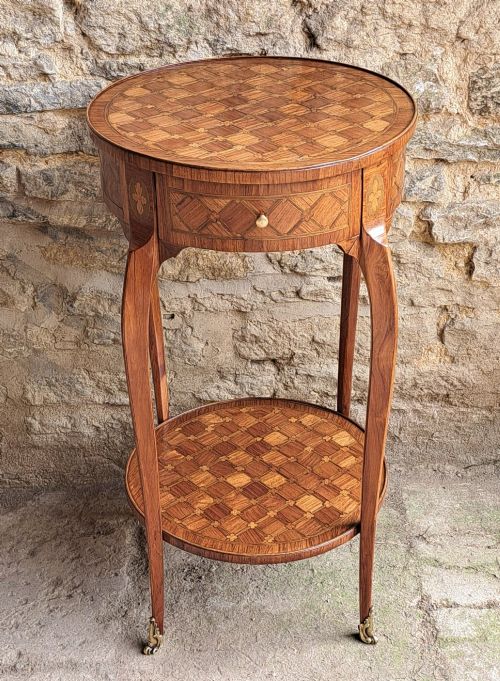
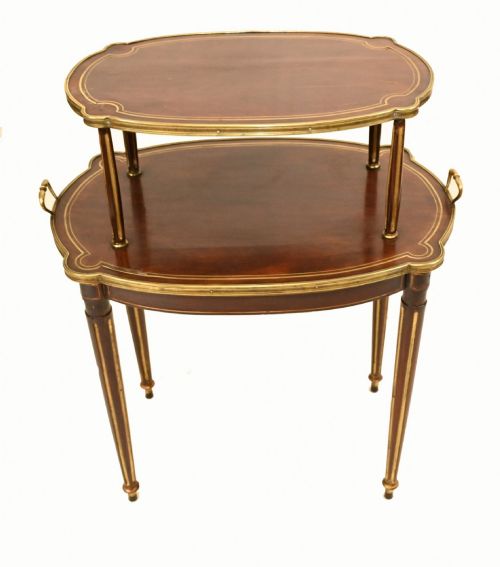
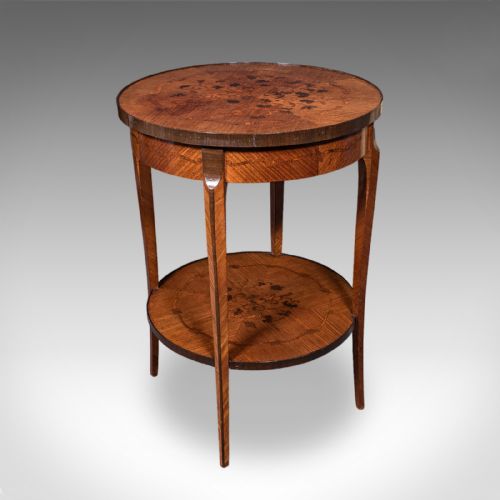
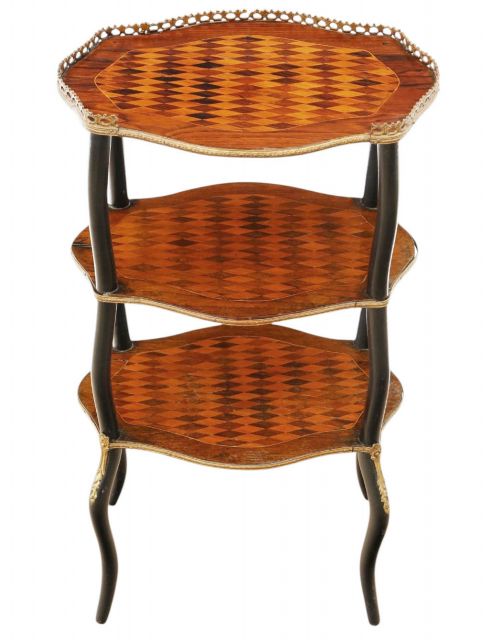
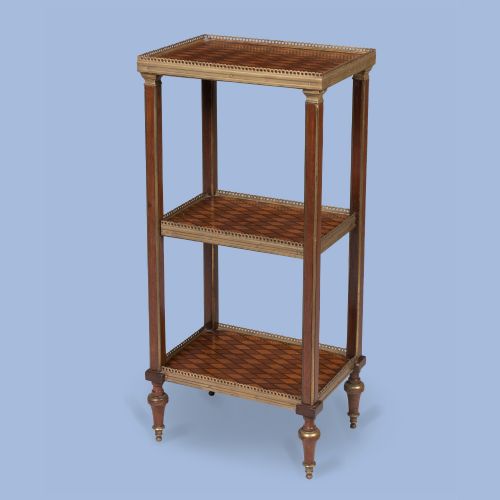
When you search for a french marquetry tier table, you encounter tiered etageres, occasional tables, and two or three-tier display stands originating from the nineteenth and early twentieth centuries. These pieces typically take the form of side tables or lamp tables, constructed with multiple platforms designed to hold decorative objects or lighting.
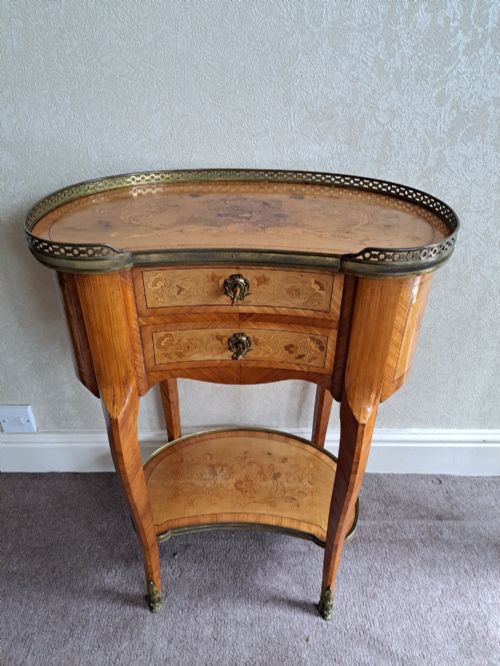
The aesthetic draws heavily from historical French taste, predominantly appearing in Louis XV and Louis XVI styles, alongside Napoleon III and Rococo revivals. Walnut, kingwood, rosewood, and mahogany serve as the primary timber foundations for the patterned wood surfaces.
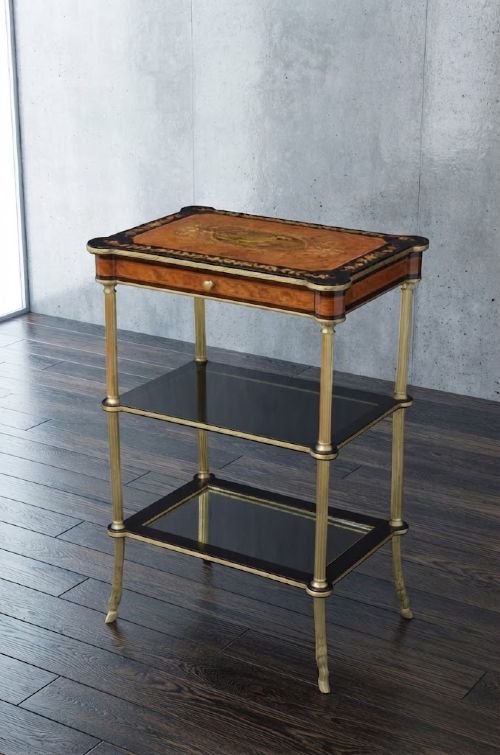
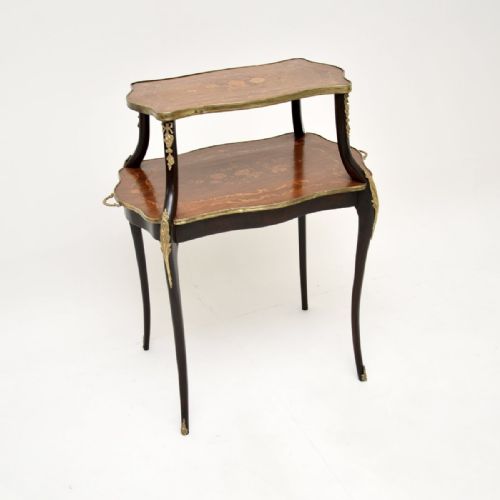
The selection on this page ranges from modest two-tier occasional tables to elaborate ormolu-mounted etageres. Most examples date from the Victorian and Edwardian eras, reflecting a sustained British demand for continental decorative furnishings.
How they were made
Cabinet makers built these tables using solid timber carcases overlaid with fine wood veneers arranged in geometric parquetry or pictorial marquetry designs. Woods such as kingwood, rosewood, walnut, and mahogany were sliced into thin sheets and hand-cut to form intricate floral or scroll motifs.
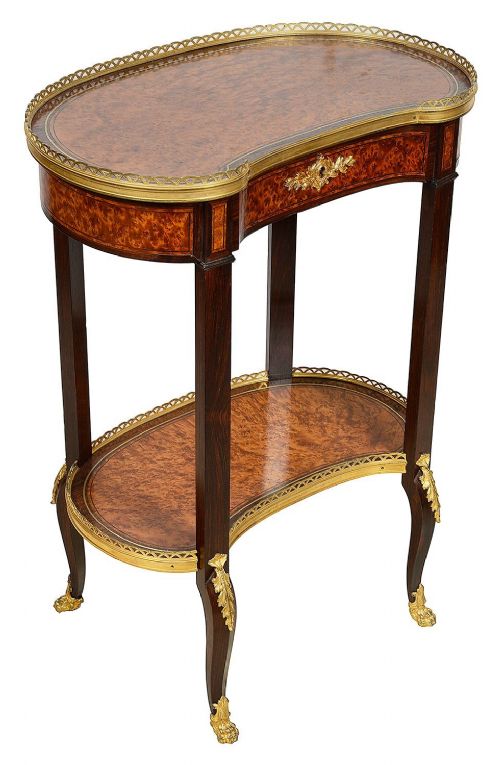
Metal mounts cast in brass or ormolu were applied to edges, legs, and gallery rails to protect corners and frame the timber work. Ebonised wood also appears as a contrasting structural material, paired with mirrored tiers or inlaid surfaces.
French Marquetry Tier Table Retail Price Guide 2026
Typical asking prices for french marquetry tier table among the pieces listed under this phrase on Sellingantiques today, from the lower quarter to the upper quarter. They describe what is for sale here now, not the wider market.
Listings feature walnut, kingwood, rosewood, and mahogany timbers combined with brass or ormolu mounts across multiple eras.
What varies in quality
The distinction between standard production and exceptional work lies in the crispness of the marquetry cutting and the depth of the timber figuring. Superior pieces display seamless veneer joints and subtle tonal variations within the floral patterns, whereas lesser examples rely on repetitive, stamped motifs.
Mount quality dictates the overall finish, with finely chased ormolu or cast brass galleries elevating the visual weight of the piece. The rigidity of the tier supports and the choice of secondary woods inside the construction further separate standard items from superior workshop output.
Edwards & Roberts·François Linke·Haentgos Freres
The French Marquetry Tier Table Glossary
- Marquetry
- Decorative veneer work arranged in pictorial patterns using different coloured woods. Craftsmen assemble these thin wood pieces like puzzles to create floral or architectural scenes.
- Etagere
- A set of open shelves or tiers designed for displaying small objects. This form became particularly popular in nineteenth-century French furniture design.
- Ormolu
- Gilded bronze mounts applied to furniture for decoration and edge protection. The technique involves treating bronze with an acid and gold amalgam.
- Parquetry
- Geometric wood inlay forming repetitive patterns such as cubes or chequers. It differs from marquetry by using strict angular shapes rather than pictorial designs.
- Gallery
- A raised miniature rail surrounding the edge of a table top or tier. It prevents items from sliding off the surface.
French Marquetry Tier Table: Frequently Asked Questions
What is a French marquetry tier table used for?
These tables provide stacked surfaces originally intended for displaying porcelain, small clocks, and decorative ornaments in a drawing room.
Today, they function effectively as bedside stands, lamp tables, or compact display pieces in living spaces where vertical surface area is useful.
How do I identify a Louis XV style tier table?
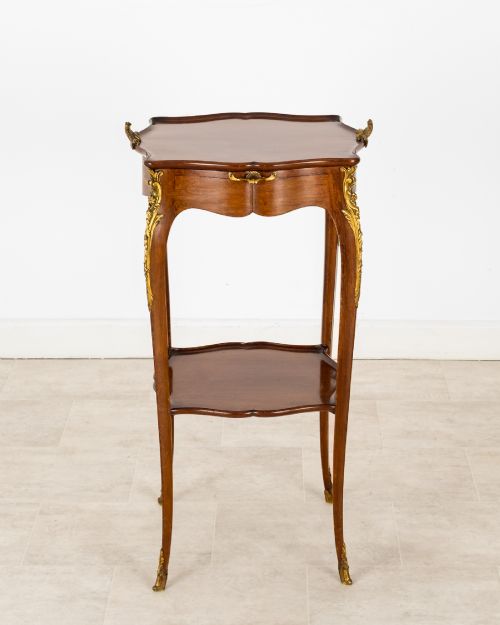
Louis XV style pieces are defined by sweeping cabriole legs, asymmetrical curves, and organic floral marquetry motifs. Ormolu mounts on these tables typically accent the knee of the leg and the curved apron.
By contrast, Louis XVI style versions feature straight fluted legs, symmetrical geometric inlays, and classical architectural proportions.
What is the difference between an etagere and a tier table?
An etagere specifically denotes a piece built primarily with multiple open display shelves rising vertically. A tier table is a broader term that can include occasional tables fitted with an extra shelf beneath the main top.
In practice, nineteenth-century makers used these terms interchangeably depending on the height and intended function of the piece.
How should I care for antique marquetry wood?
Protect antique wood surfaces by keeping them away from direct sunlight and maintaining stable room humidity to prevent veneer lifting. Dust regularly with a dry cloth and apply a traditional beeswax polish sparingly.
Avoid placing damp items or unshielded drinks directly on the polished tiers to protect the delicate timber inlay.