

Victorian Tiered Display Stand
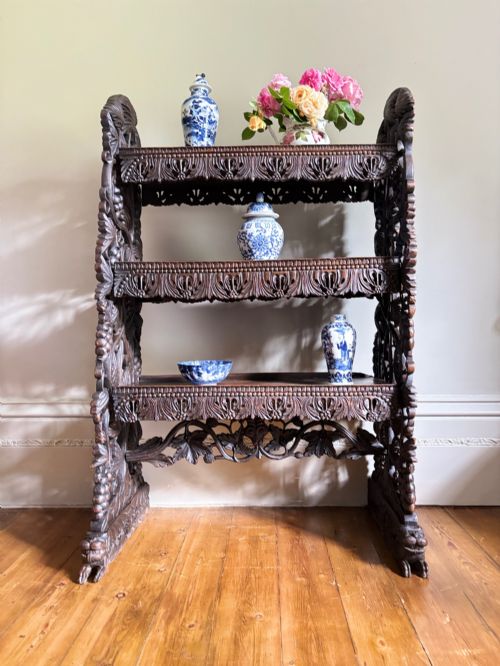
These Victorian tiered display stand pieces offer tiered surfaces for holding decorative objects, bringing multiple levels of display space into sitting rooms and parlours.
Victorian Tiered Display Stand
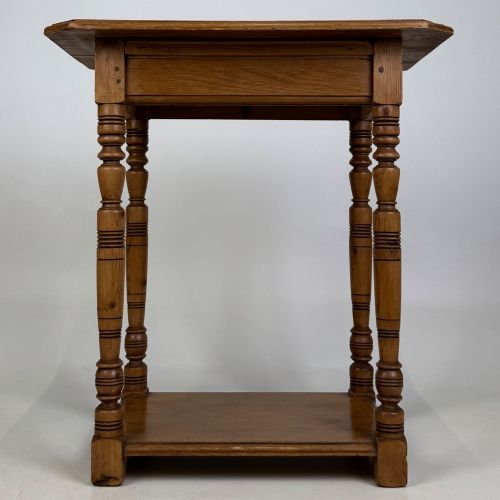
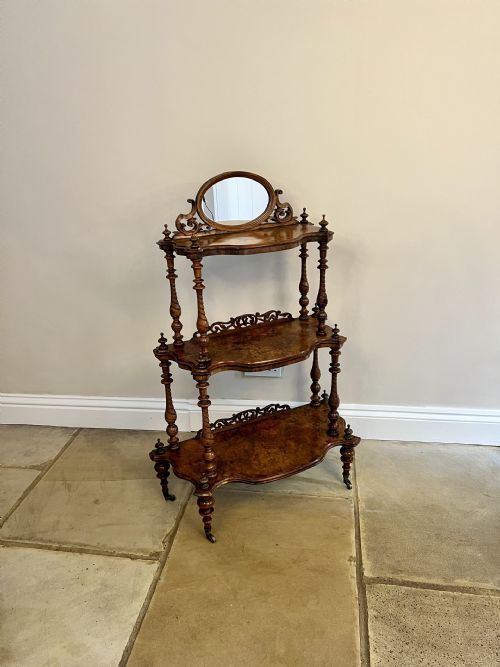
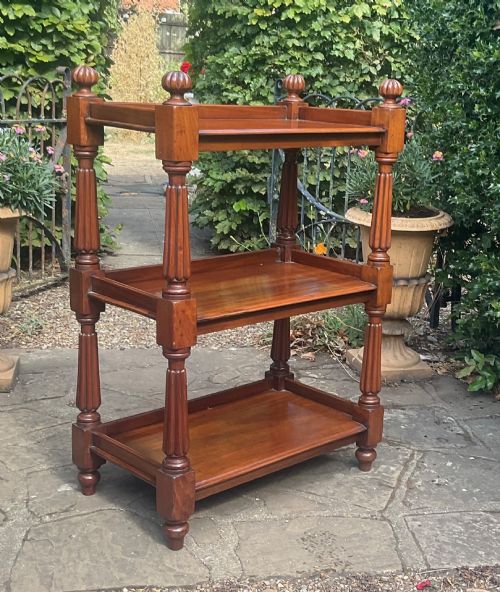
A Victorian tiered display stand provides multiple open levels supported by turned uprights, columns or bamboo supports, creating vertical storage for small objects in a room. These pieces appear as whatnots, etageres, corner shelves and side tables across the nineteenth century.
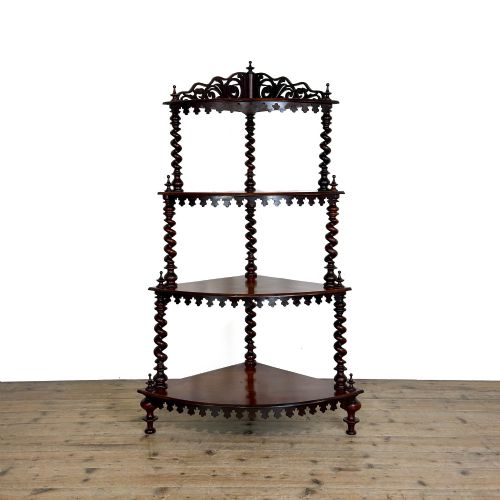
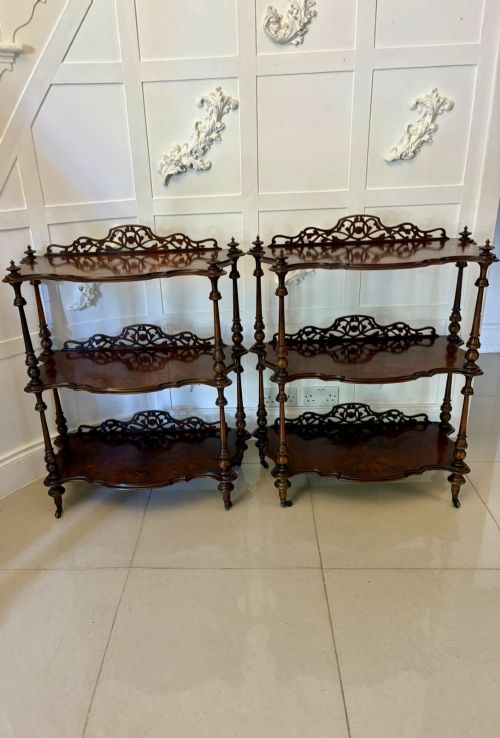
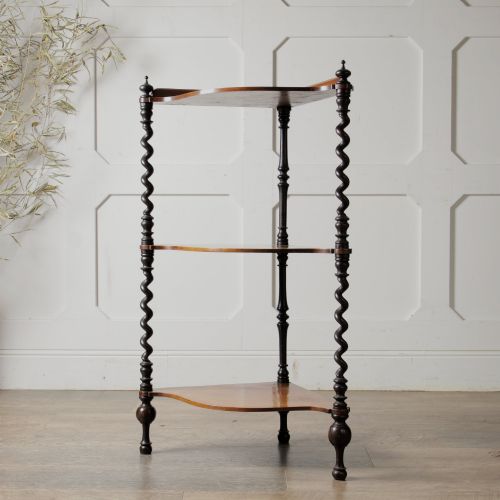
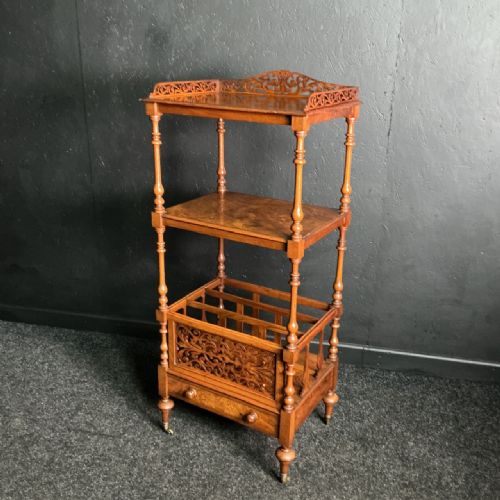
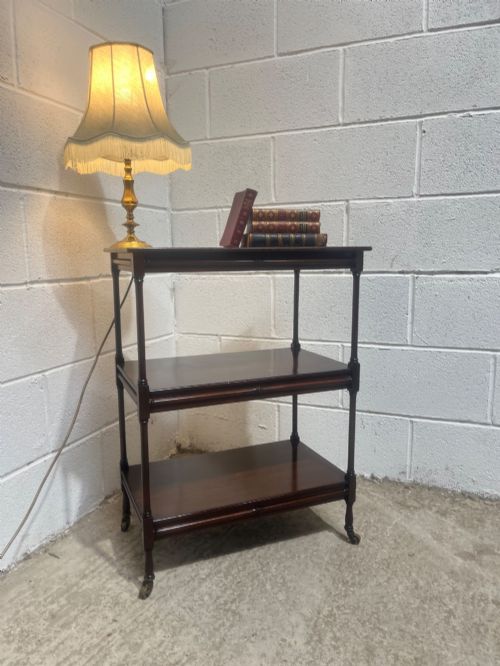
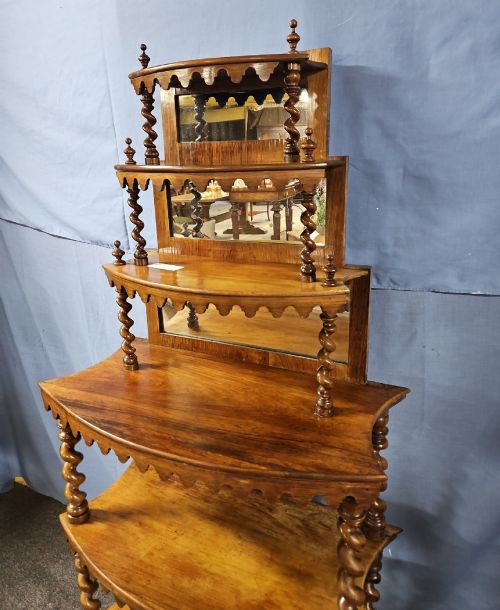
The version most commonly met on this page is the walnut or mahogany whatnot with three or four tiers, often featuring barley twist columns or shaped shelves. Makers also produced examples in rosewood, ebonised wood and bamboo during the later Victorian period.
Materials and construction
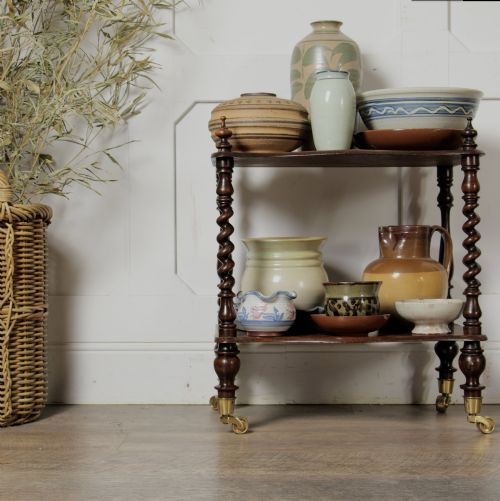
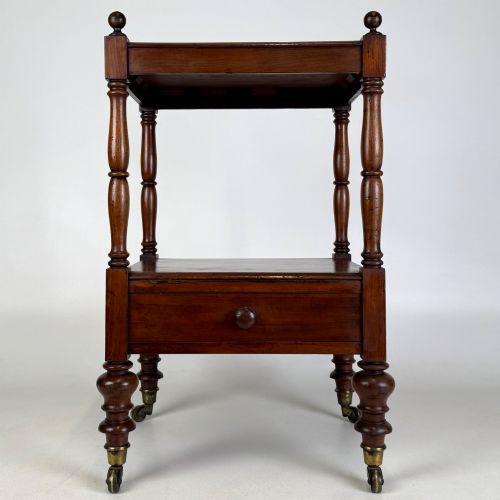
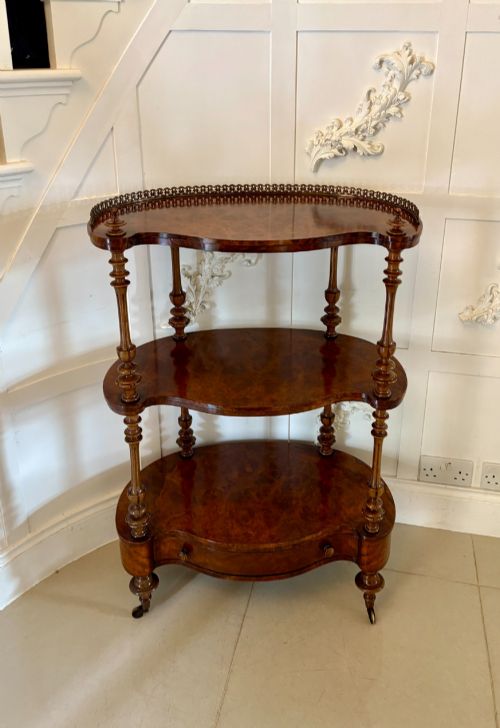
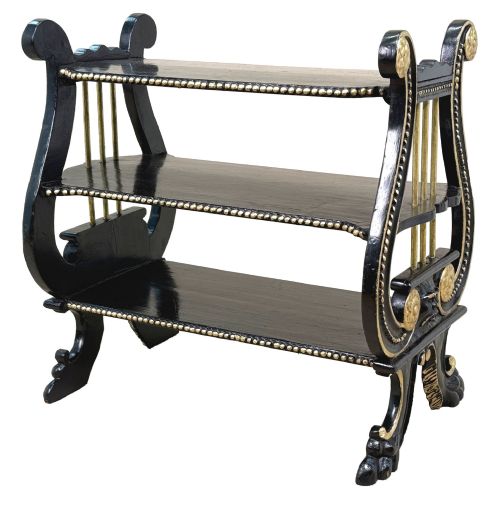
Cabinet makers utilised dense hardwoods including mahogany, walnut, burr walnut and rosewood, frequently shaping the shelves with serpentine edges or adding brass castors to the feet. Ebonised finishes and parcel gilding also appear on pieces designed in the French manner.
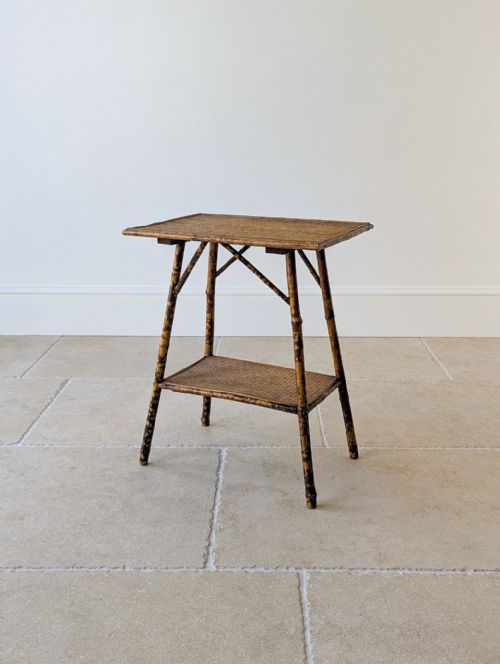
Alternative materials include bamboo and lacquer for lighter items, alongside brass mounts and inlaid marquetry decoration on refined etageres. Structural support comes from turned wooden columns, barley twist legs or bamboo stalks fixed between the graduated shelves.
Victorian Tiered Display Stand Retail Price Guide 2026
Typical asking prices for victorian tiered display stand among the pieces listed under this phrase on Sellingantiques today, from the lower quarter to the upper quarter. They describe what is for sale here now, not the wider market.
A cotton reel display tree from an English shop fitting appears alongside domestic furniture, complete with four tiers.
Qualities that separate examples
The choice of timber fundamentally divides the range, moving from plain pine or standard mahogany up to highly figured burr walnut, amboyna, padauk and rosewood. Rich veneers and dense grain patterns signal higher workshop standards.
Construction detail separates standard items from finer productions, seen in serpentine-shaped shelves, fine marquetry inlay, brass mounts and delicate turning such as barley twist columns. The presence of makers or specialised decorative forms elevates specific pieces.
Edwards and Roberts
The Victorian Tiered Display Stand Glossary
- Whatnot
- A piece of furniture consisting of several open shelves placed one above the other for displaying small objects or books. These items gained popularity in the nineteenth century for drawing rooms.
- Barley twist
- A type of turning shaped like a helix resembling a twisted rope. This technique appears frequently on the vertical supports of nineteenth-century stands.
- Serpentine
- A curved line that is convex in the middle and concave at the ends. This shape frequently outlines the front edges of superior display shelves.
- Marquetry
- Decorative veneer work forming pictures or patterns by using thin pieces of wood. Craftsmen applied this technique to the surfaces of finer etageres.
Victorian Tiered Display Stand: Frequently Asked Questions
What rooms suit a tiered display stand?
These tiered stands function well in sitting rooms, hallways or parlours where horizontal surface area is limited. Their vertical design utilises corner spaces or wall areas efficiently.
They hold small ornaments, books or collections without dominating the floor plan, matching the domestic habits of the nineteenth century.
How do whatnots and etageres differ?
Whatnots typically refer to English pieces with three or four functional wooden shelves supported by turned posts. They served practical storage and display purposes in everyday interiors.
Etageres often lean towards French styling with lighter frames, marquetry, brass mounts or ebonised surfaces intended primarily for decorative display.
Are corner versions common?
Corner variants appear frequently in mahogany, walnut and pine to fit snugly into unused room angles. These pieces maximise display capacity in smaller spaces.
Their triangular shelves step back progressively toward the top, mirroring the proportions of freestanding rectangular models.
What woods dominate these pieces?
Mahogany and walnut form the foundation of the majority of listings, appearing in both plain and highly figured burr variations. Rosewood and ebonised timber also feature prominently.
Lighter materials such as bamboo emerge in pieces associated with the later decades of the nineteenth century.