



Antique Wooden Trolley
An antique wooden trolley brings rolling utility to hospitality, spanning Victorian tiers, Edwardian oak designs and streamlined Art Deco drinks carts.
Antique Wooden Trolley
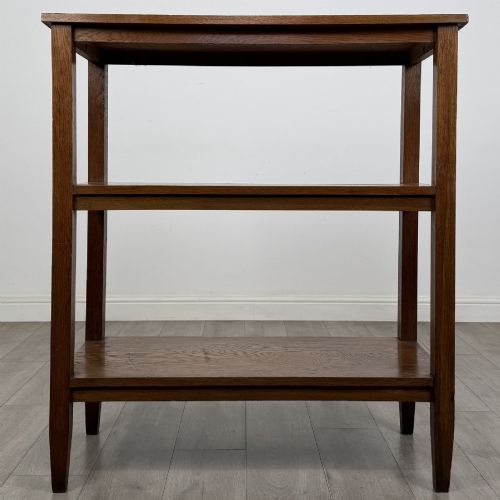
The search for an antique wooden trolley opens up a remarkably varied group of mobile furniture items, stretching from formal dining rooms to domestic kitchens and commercial spaces. Buyers encounter tea trolleys, drinks trolleys, serving tables and drop-side versions designed to move food and glassware with ease.
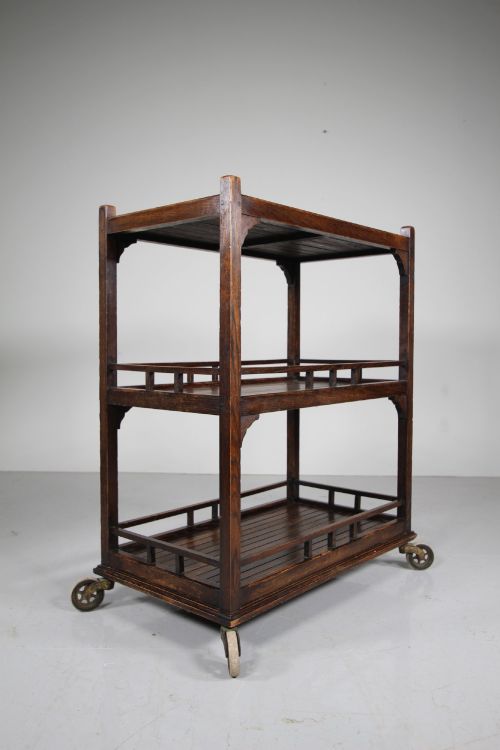
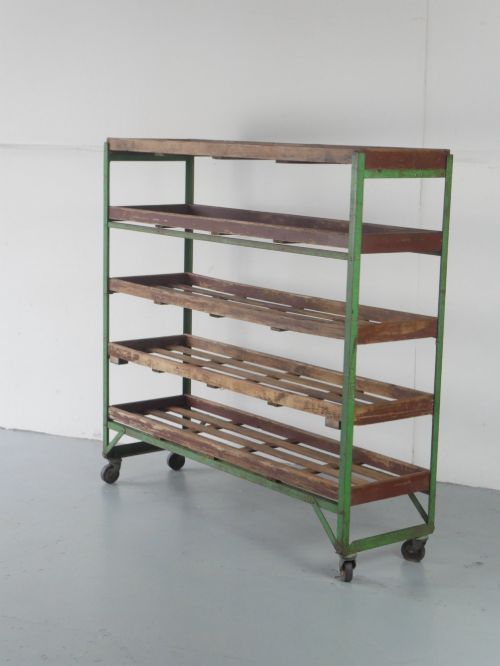
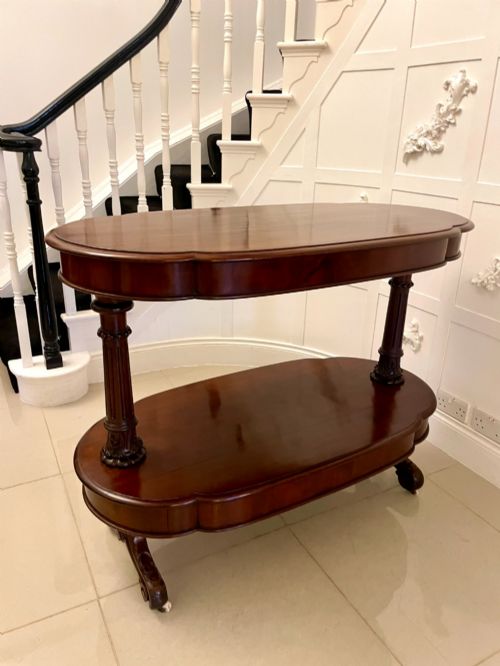
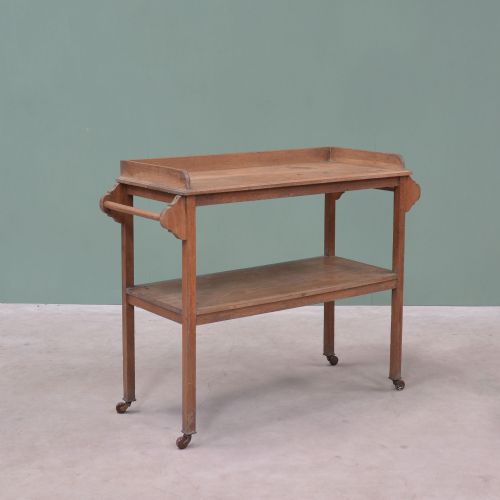
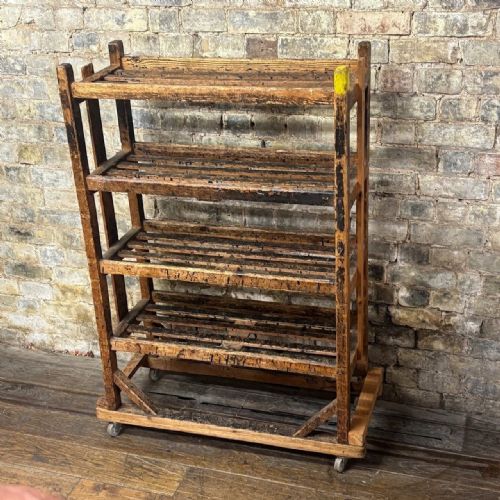
Most pieces seen here belong to the Edwardian period and the nineteen-twenties, frequently rendered in oak with two tiers or removable trays. Earlier nineteenth-century examples appear as mahogany buffets, dumb waiters and butlers trays on stands, alongside industrial shoe carts and grocery delivery hand carts from the early twentieth century.
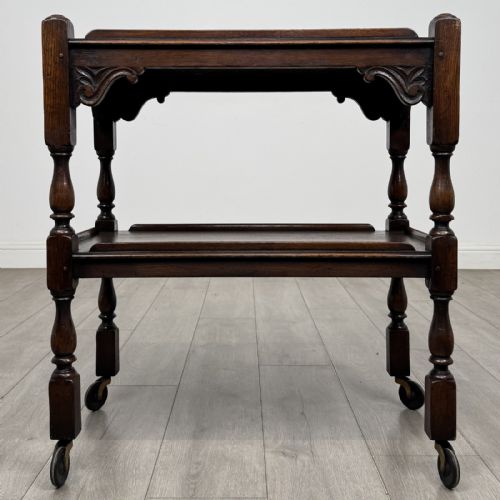
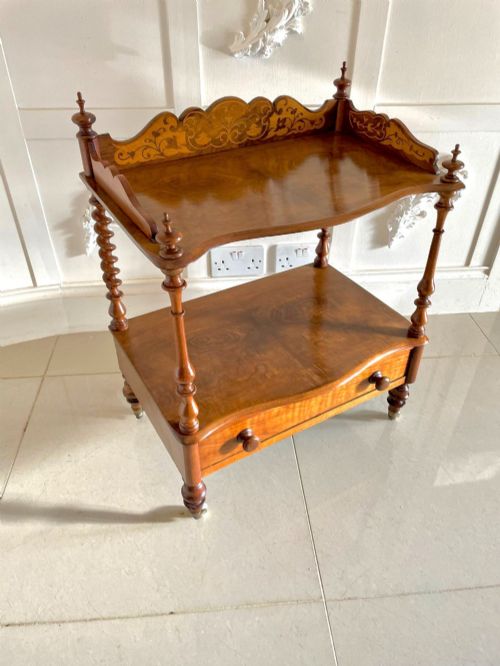
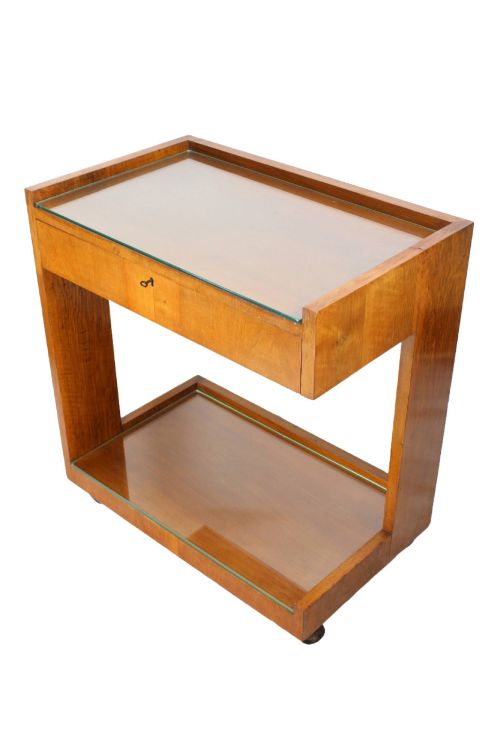
Stylistic variation runs from Georgian proportions through Victorian barley twist supports to Art Deco circular walnut bar carts and metamorphic serving tables. Walnut and mahogany dominate the finer formal pieces, while sturdy oak serves the everyday tea and serving trolleys.
Materials and construction
Makers utilised dense hardwoods such as mahogany, oak, walnut and pollard oak to build frames that could support weight and movement. Inlaid details, burr walnut veneers and brass fittings appear on select formal pieces from the Victorian and Edwardian eras.
Structural mobility relies on original castors, wheels and clever mechanisms found in rise-and-fall tiers, drop sides and metamorphic designs. Joinery ranges from sturdy domestic framing to fine cabinet-making on formal sideboards and dumb waiters.
Antique Wooden Trolley Retail Price Guide 2026
Typical asking prices for wooden trolley among the pieces listed under this phrase on Sellingantiques today, from the lower quarter to the upper quarter. They describe what is for sale here now, not the wider market.
One unexpected nineteenth-century survivor is a folk art cow trolley intended for a rustic French butcher shop display.
Assessing quality
Quality rests upon the selection of timber, such as figured walnut or rich mahogany, and the crispness of turned elements like barley twist uprights. Superior examples retain their original castors, smooth wheel action and well-fitted removable trays.
Construction integrity distinguishes workshop-made items from simpler utility pieces, particularly in the movement of folding actions, rise-and-fall mechanisms and drop-side hinges. Clean inlay work and balanced proportions indicate higher workshop standards.
The Antique Wooden Trolley Glossary
- Dumb waiter
- A tiered serving stand used for holding dishes and drinks without requiring extra servants at the table. These pieces date back to the Georgian and nineteenth-century periods.
- Butlers tray
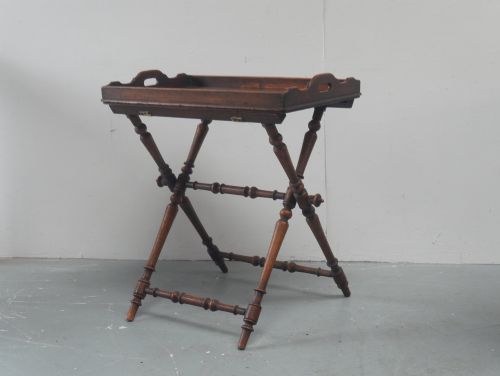
- A shallow wooden tray with hinged sides, designed to sit upon a folding wooden stand. They were traditionally used for transporting and serving tea or meals.
- Metamorphic
- Furniture engineered to transform its shape or function, such as a side table that expands into a drinks chest or serving trolley. These inventive pieces gained popularity in the Art Deco era.
- Barley twist
- A decorative turning technique resembling a twisted rope, commonly found on the upright supports of Victorian and Edwardian tables and trolleys.
- Cheese coaster
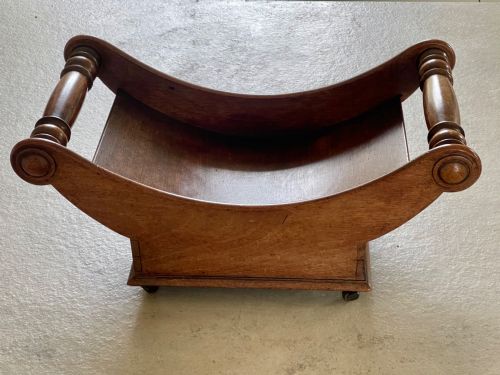
- A small trolley or tray fitted with rollers, designed to glide smoothly along a dining table for passing cheese and fruit.
Antique Wooden Trolley: Frequently Asked Questions
What is an antique wooden trolley used for?
These mobile pieces served multiple domestic purposes, primarily moving tea, afternoon refreshments and bottled drinks between rooms. Dining rooms utilised dumb waiters and buffets to hold extra plates and courses.
Today, buyers repurpose them as mobile cocktail bars, side tables or bedside storage. Their wheels and removable trays maintain their original practical utility in modern homes.
How do I date an antique trolley?
Dating relies on timber choices, hardware and stylistic markers aligned with specific eras. Georgian and Regency pieces feature heavy mahogany and simple lines, while Victorian examples often show dark woods and barley twist turnings.
Edwardian and nineteen-twenties pieces lean toward practical oak tea trolleys with lift-off trays. Art Deco items introduce circular walnut designs, streamlined shapes and metamorphic mechanisms from the nineteen-thirties.
Are these trolleys sturdy enough for daily use?
Most pieces were built from solid hardwoods like oak, walnut and mahogany to carry heavy ceramics, glass and food. Their robust construction suits everyday tasks when handled with reasonable care.
Original castors and wheels require gentle movement across modern flooring. Checking the security of joints and tray supports ensures safe daily service.
What is the difference between a tea trolley and a dumb waiter?
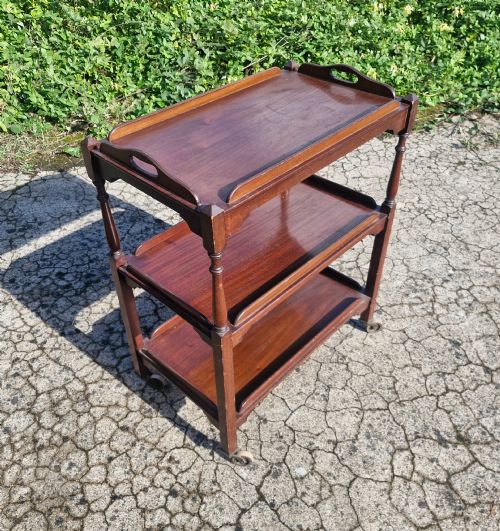
Tea trolleys are lighter, two-tier or three-tier wooden carts on wheels, often featuring removable trays and drop sides designed for serving afternoon refreshments. They emerged prominently in the Edwardian and early twentieth-century periods.
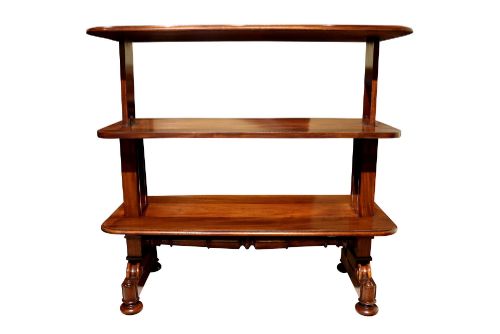
Dumb waiters are heavier nineteenth-century or Georgian dining furniture items with fixed stacked shelves, engineered to hold heavy serving dishes during formal meals without constant staff attendance.