


Three Tier Buffet
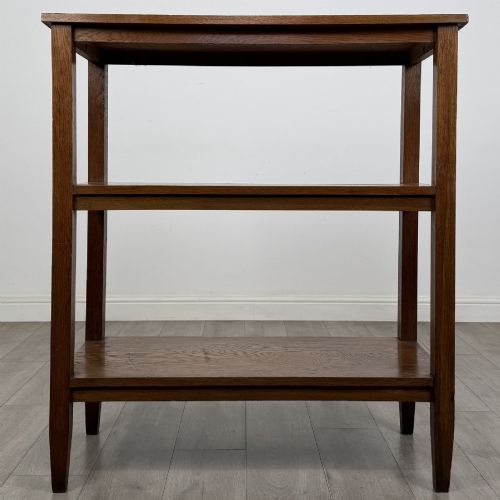
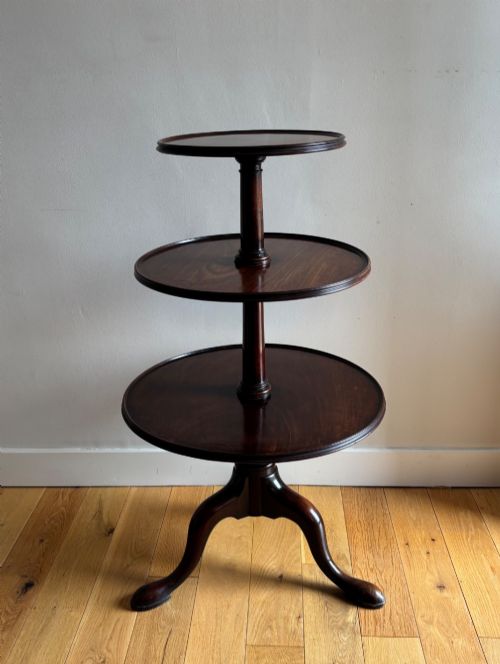
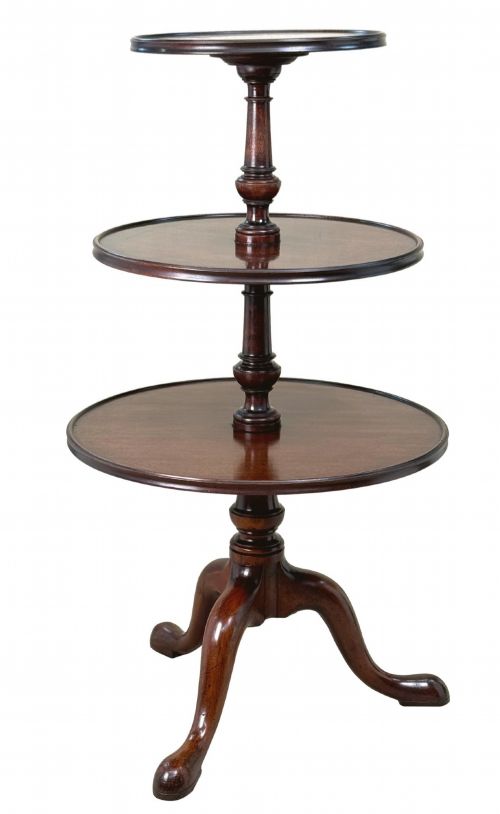
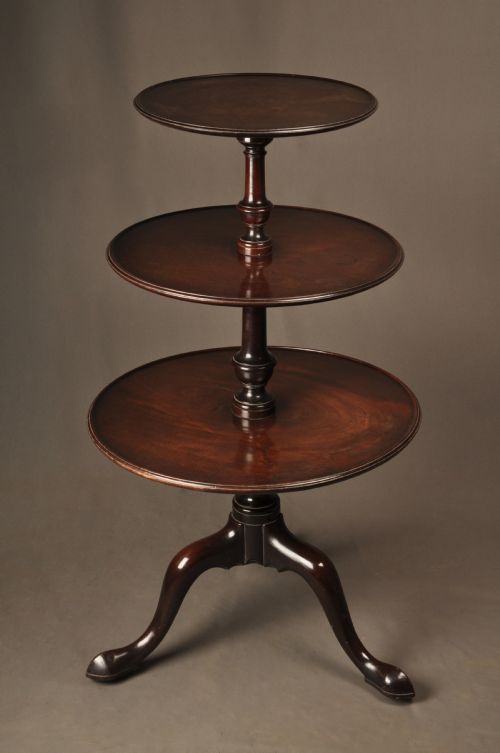
A three tier buffet organises dining rooms with stepped tiers of timber, functioning as a serving table or dumb waiter for food and silver.
Three Tier Buffet
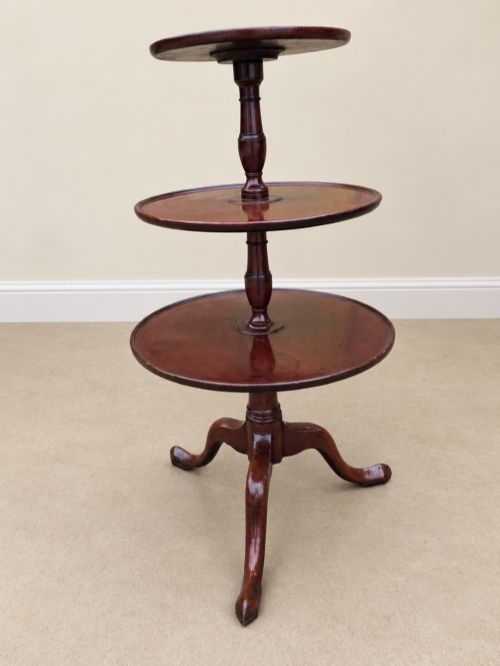
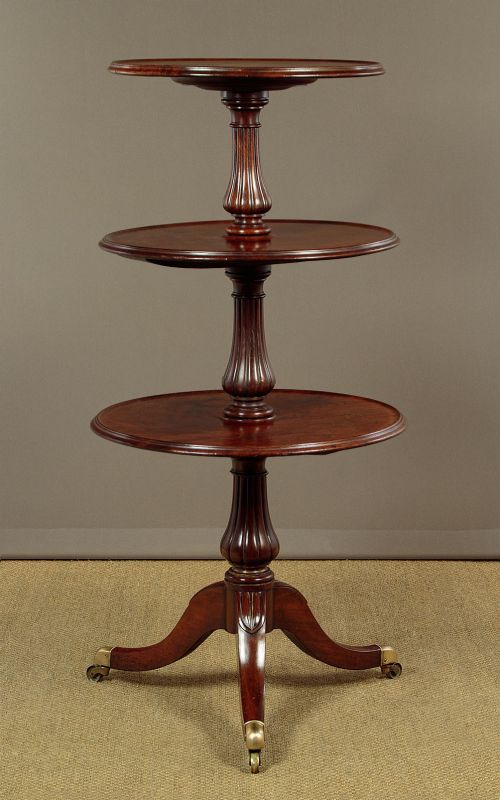
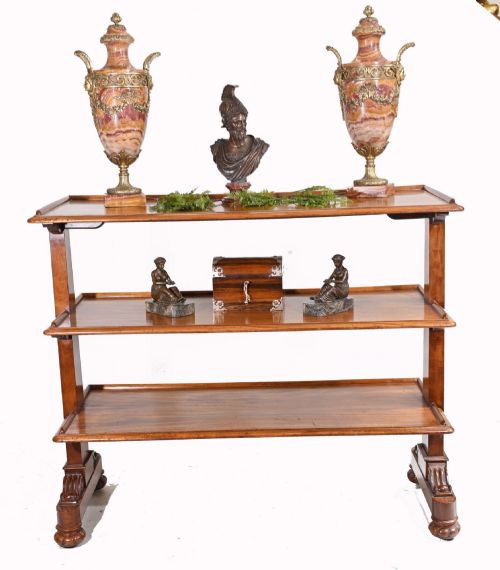
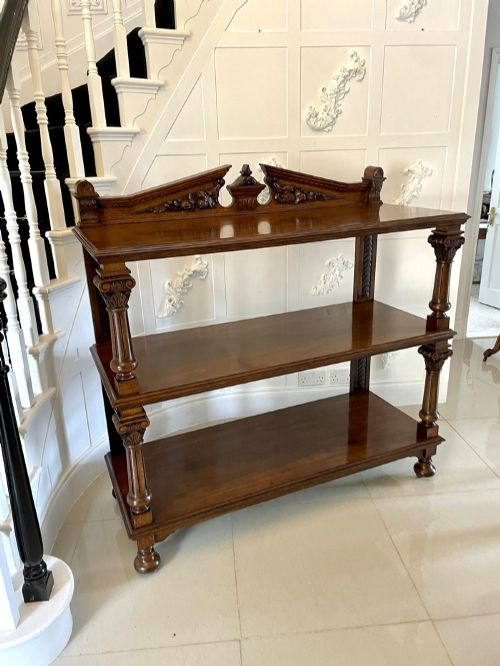
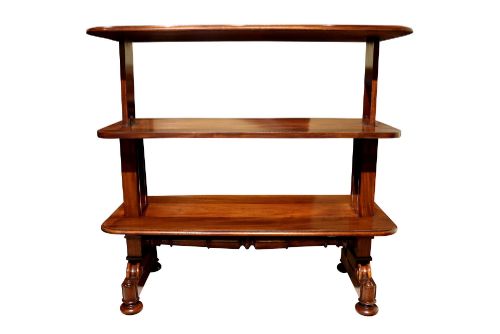
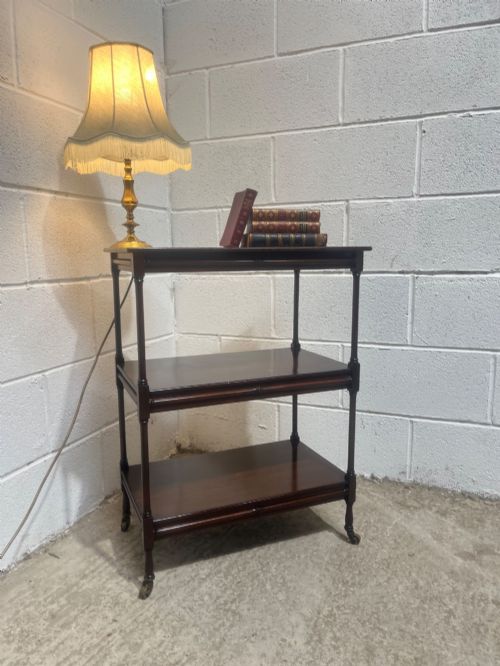
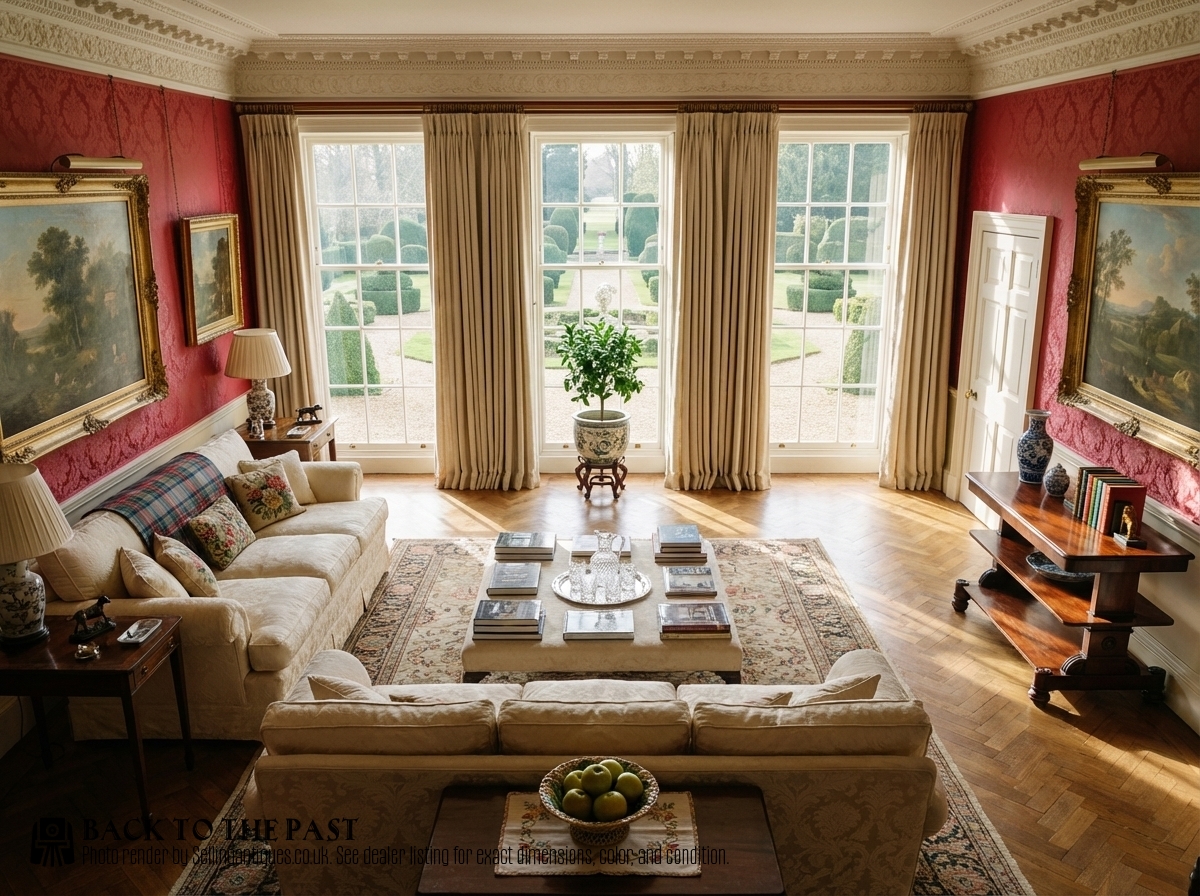
A three tier buffet is a tiered serving piece designed for dining rooms, appearing across the Georgian, Regency, Victorian and Edwardian periods as dumb waiters, etageres and serving tables. These pieces organise food and silver across three ascending shelves supported by turned columns, pillars or castors.
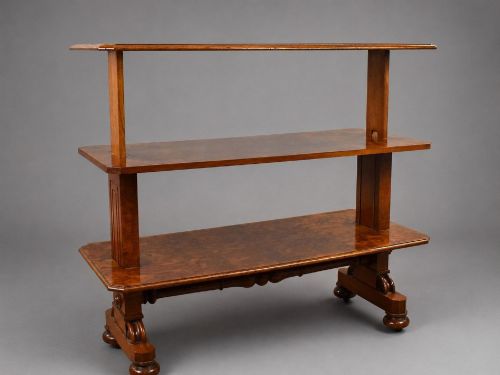
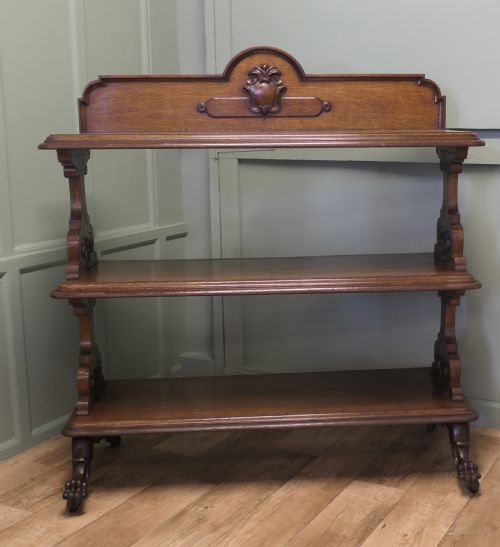
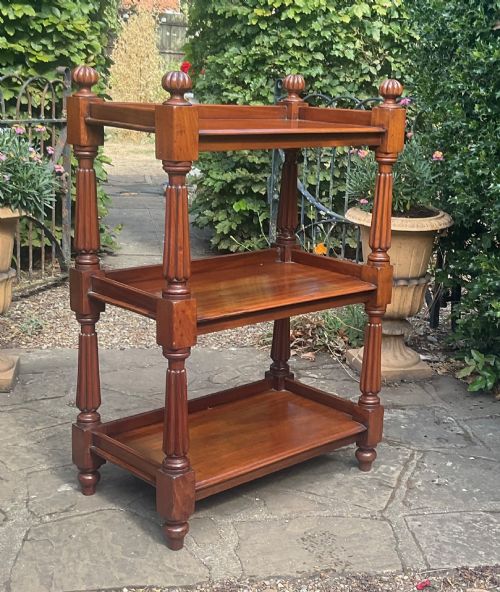
The version most commonly met on this page is the mahogany three tier buffet from the nineteenth century, often featuring circular graduating tiers or rectangular shelves with raised galleries. Oak, walnut and rosewood variations also appear frequently, including examples with integrated drawers and rise and fall mechanisms.
How they were made
Cabinet makers utilised dense hardwoods such as mahogany, oak, walnut and rosewood, alongside decorative veneers like pollard oak, burr walnut and fiddleback mahogany. These timbers were selected for their stability and grain pattern, then fashioned into circular or rectangular tiers.
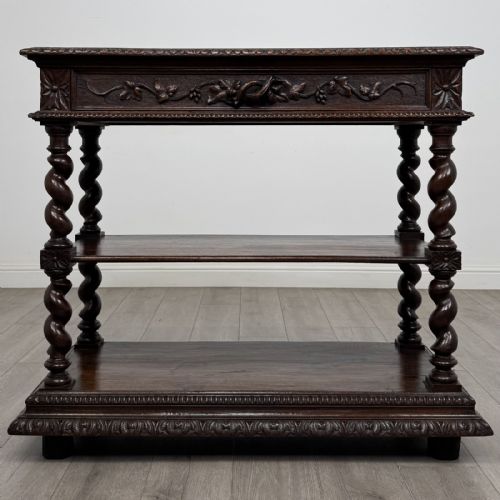
Construction techniques involve turned and block supports, barley twist columns, and telescopic or rise and fall mechanisms. Many pieces incorporate original brass castors, turned knob finials and gallery tray edges to secure items on the shelves.
Three Tier Buffet Retail Price Guide 2026
Typical asking prices for three tier buffet among the pieces listed under this phrase on Sellingantiques today, from the lower quarter to the upper quarter. They describe what is for sale here now, not the wider market.
Some Victorian examples incorporate telescopic mechanisms that raise and lower like an artist's easel, making dinner service an unexpected piece of theatre.
What varies in quality
Quality rests in the selection of figured timber, such as Cuban mahogany or burr walnut, and the crispness of turned supports and carved details. Pieces featuring functional mechanisms like telescopic risers or drawers demonstrate superior joinery.
Proportion and scale distinguish finer examples from standard utility pieces, alongside the retention of original hardware such as brass castors and finials.
Gillows
The Three Tier Buffet Glossary
- Dumb waiter
- A tiered serving stand used in dining rooms to hold dishes without requiring a servant present.
- Etagere
- A piece of furniture consisting of a set of open shelves for displaying small objects or serving.
- Rise and fall
- A mechanical central column that allows the tiers of a buffet to be adjusted in height.
- Fiddleback mahogany
- A figured mahogany timber showing cross-rippling similar to the back of a violin.
- Pollard oak
- Oak timber taken from pollarded trees, producing a dense, highly decorative knotty grain.
Three Tier Buffet: Frequently Asked Questions
What is a three tier buffet used for?
These pieces served as auxiliary serving tables in dining rooms, holding dishes, glassware and silver close to the dining table.
They allowed diners to help themselves or enabled servants to manage courses efficiently during large meals.
How do I date a three tier buffet?
Dating relies on timber choice, architectural style and turning details, moving from Georgian mahogany curves to heavy Victorian oak carvings.
Regency examples often feature pedestal bases with brass castors, while later Victorian pieces utilise barley twist columns and drawers.
Are these pieces adjustable?
Certain examples feature telescopic or rise and fall mechanisms operated via a central column.
These metamorphic versions allowed the tiers to change height for serving or storage convenience.
What woods were used?
Makers primarily used mahogany, oak and walnut, often selecting highly figured veneers like burr walnut or pollard oak for decorative impact.
Rosewood and teak also appear in specific nineteenth-century examples.