





19th Century What Not
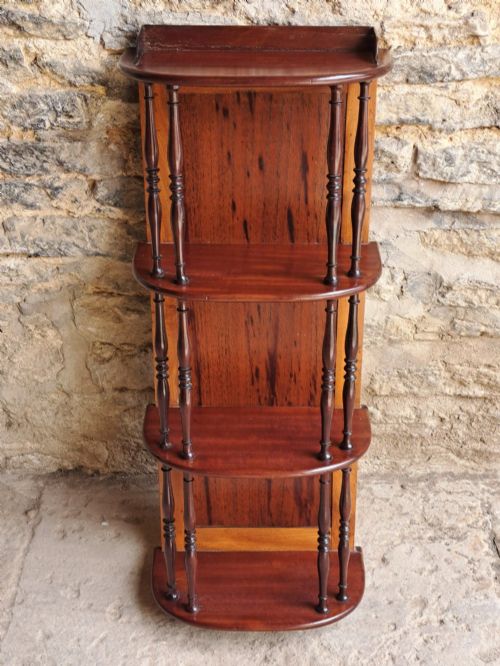
A 19th century what not provides tiered open shelving for displaying objects or holding books, combining utility with decorative elegance in any room.
19th Century What Not
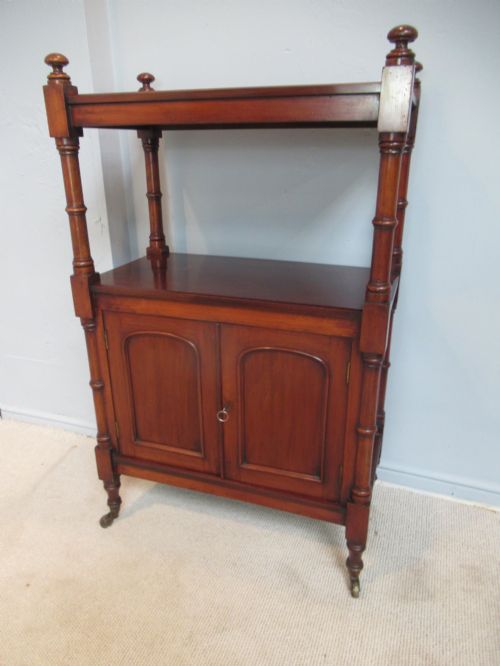
A 19th century what not is a piece of multi-tiered furniture designed primarily for display and storage in domestic interiors. The form appears in various configurations, including freestanding multi-tier stands, corner units, and pieces combined with cabinets, drawers, or music racks.
Mahogany forms the backbone of these pieces, alongside walnut, burr walnut, rosewood, and ebonised wood. Surviving examples span the Regency, George IV, Georgian, and Victorian periods, extending into the late 19th century.
The version most commonly met on this page is the four-tier or three-tier mahogany freestanding whatnot, often resting on turned supports or castors. Smaller variants, wall-hanging shelves, and delicate French Napoleon III etageres also appear regularly.
How They Were Made
Cabinetmakers utilised dense hardwoods like mahogany and walnut to support multiple stacked platforms without excessive bulk. Turnery, such as bobbin-turned uprights or slender spindle columns, separates the tiers while maintaining structural rigidity.
Decorative detailing relies on marquetry, parquetry, and fine string inlay set into burr walnut or rosewood surfaces. Brass fittings, castors, and gallery rails frequently accent the corners and edges of upper shelves.
19th Century What Not Retail Price Guide 2026
Typical asking prices for 19th century what not among the pieces listed under this phrase on Sellingantiques today, from the lower quarter to the upper quarter. They describe what is for sale here now, not the wider market.
Some Victorian models combined open display shelves with music racks, proving that Victorians wanted to read sheet music and display porcelain simultaneously.
What Varies in Quality
The choice of timber and veneer dictates much of the visual distinction, moving from straight-grained mahogany to richly figured burr walnut and exotic rosewood. Marquetry panels and intricate parquetry elevate simpler carcass forms into high-status decorative objects.
Joinery execution and proportion govern the stability of multi-tiered structures. Tighter tolerances in turning, solid brass hardware, and well-integrated lower drawers or cabinets separate standard utility pieces from finer examples.
Holland and Sons
The 19th Century What Not Glossary
- Whatnot
- A piece of furniture consisting of a series of open shelves for displaying small objects. The name supposedly derives from its catch-all utility.
- Etagere
- A French style of furniture consisting of a set of open shelves for displaying ornaments. It functions similarly to a whatnot but often leans toward lighter, more decorative construction.
- Canterbury
- A low stand with partitioned vertical sections for sheet music or books, frequently incorporated into the base of a whatnot or music cabinet.
- Marquetry
- Decorative veneer applied to furniture in patterns using wood, metal, or shell. It creates pictorial or geometric designs across flat surfaces.
- Parquetry
- Geometric mosaic woodwork used for floors or furniture surfaces. It relies on contrasting wood colours to form repeating patterns.
- Turnery
- Items shaped on a lathe, such as the vertical columns or legs supporting individual shelves. It provides both structural support and rhythmic visual detail.
19th Century What Not: Frequently Asked Questions
What is a 19th century what not?
A 19th century what not is a tiered shelving unit designed for displaying decorative objects, holding books, or keeping daily items close at hand. Makers produced them in numerous configurations, including freestanding rectangular units, corner versions, and pieces combined with drawers or music cabinets.
They emerged as a popular domestic furnishing during the Regency period and remained staple household items throughout the Victorian era. The tiered design allowed families to showcase ceramics, silver, and ornaments in sitting rooms and parlours.
How were what nots used originally?
Original domestic use centred on display and organisation in formal rooms. Families placed porcelain, small sculptures, and books on the open shelves for easy viewing.
Some variants included enclosed lower cabinets or built-in racks for sheet music, serving specialised functions in music rooms and libraries. Their portable nature allowed servants to move them easily during cleaning or room rearranging.
How do I live with a whatnot?
Living with a whatnot involves utilising its open shelving for everyday display while respecting its antique timber construction. Placing them against stable walls protects freestanding multi-tier models from accidental tipping.
Regular dusting with a soft cloth maintains the polished finish of mahogany and walnut surfaces. Avoid placing them in direct sunlight or near heat sources to prevent timber splitting and veneer lifting.
How do I tell periods apart?
Differentiating periods relies on observing timber choices, decorative motifs, and overall construction proportions. Regency and George IV examples often feature restrained classical lines in dense mahogany or rosewood.
Victorian pieces frequently introduce heavier turnery, burr walnut veneers, marquetry inlay, or ebonised finishes. Late 19th-century variants sometimes lean towards lighter aesthetic movement designs or elaborate fretwork.