
Antique Tiered Shelf Unit
An antique tiered shelf unit brings vertical display and storage into a room, combining practical shelving with distinct period character.

Antique Tiered Shelf Unit
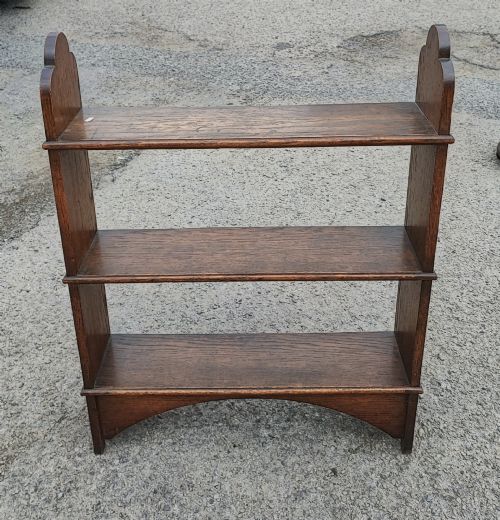
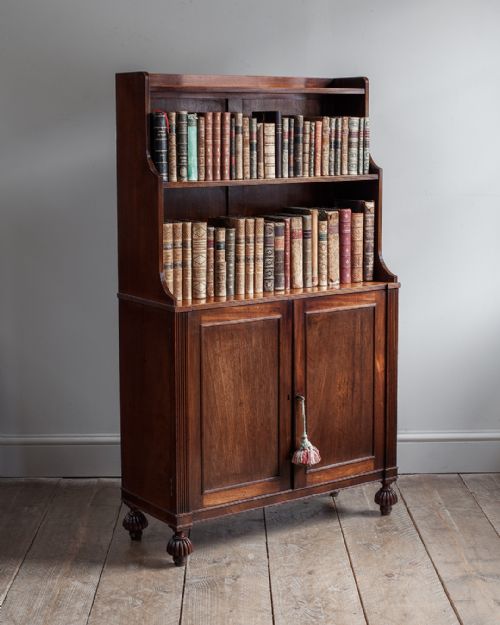
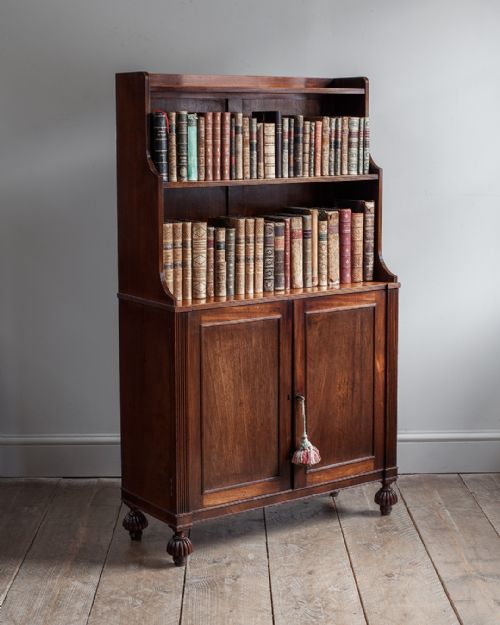
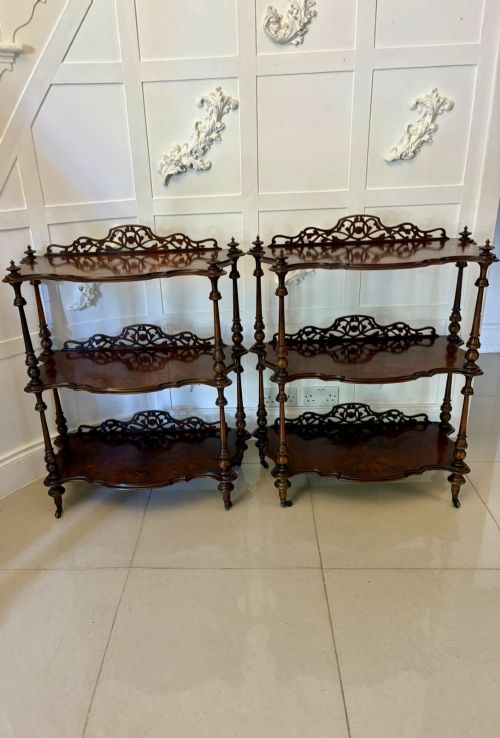
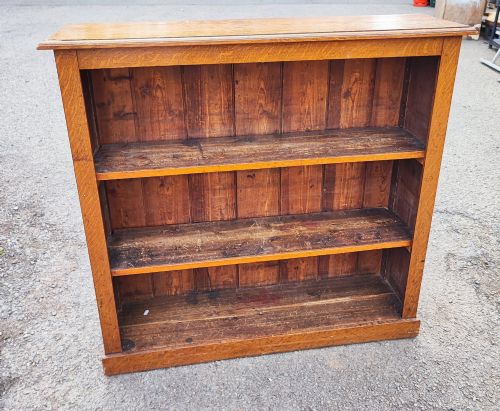
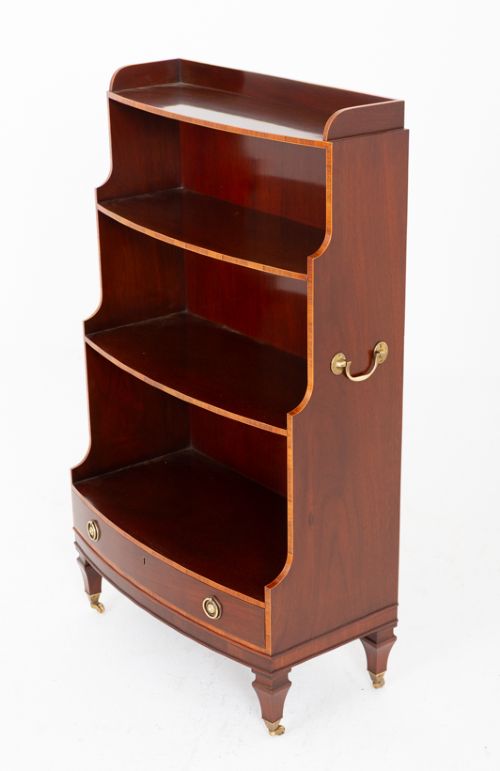
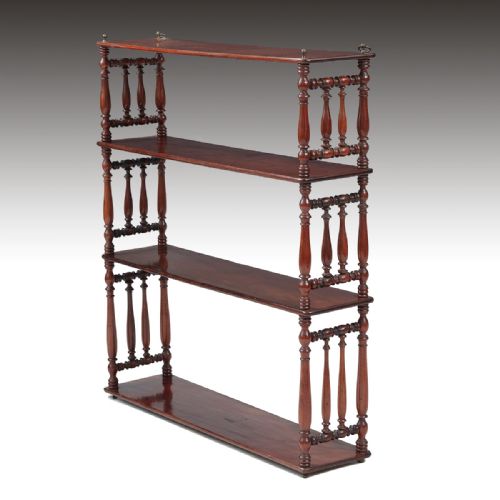
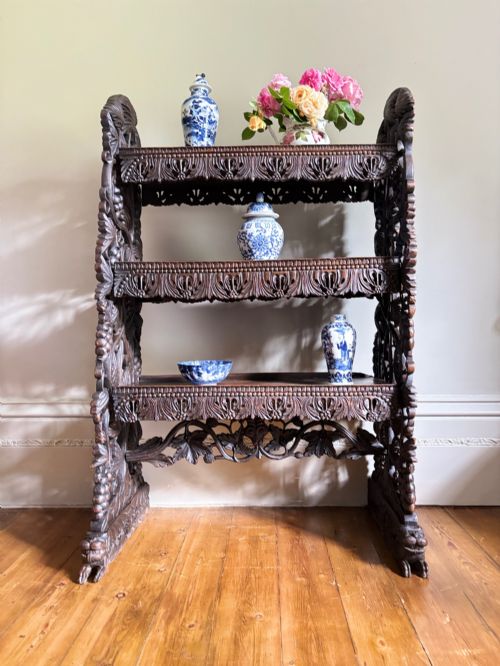
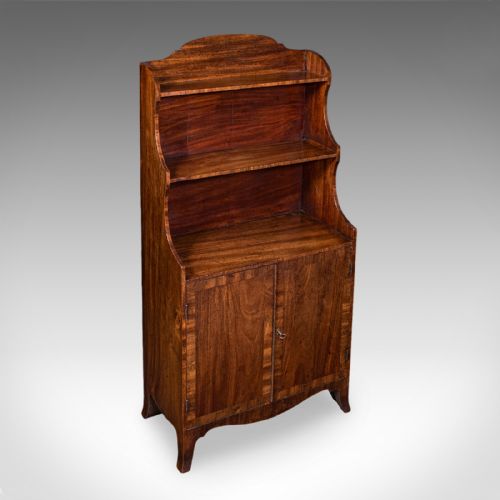
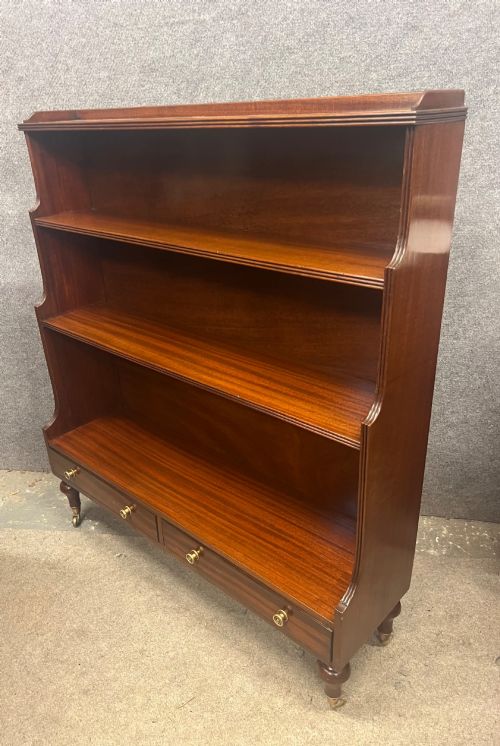
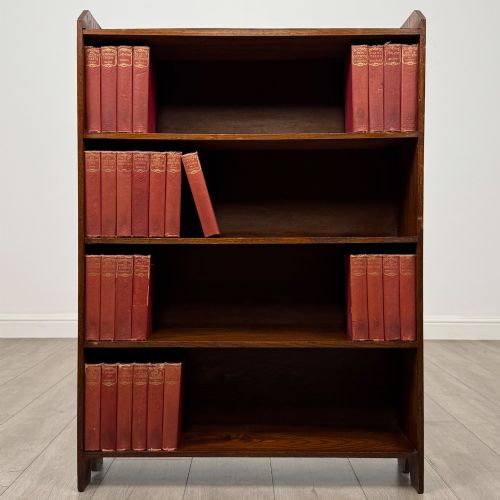
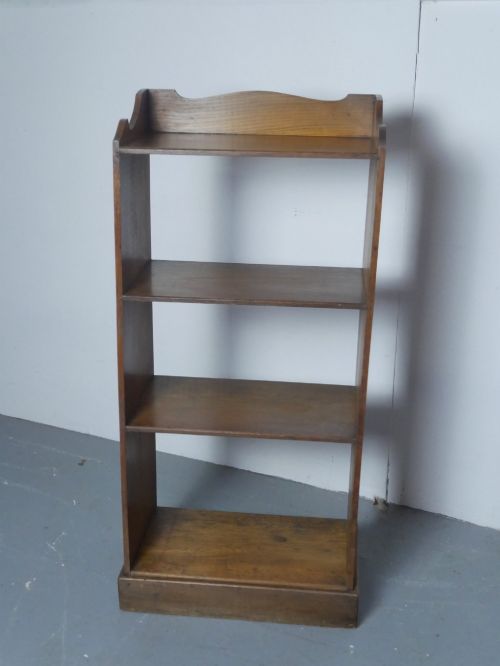
An antique tiered shelf unit encompasses multi-level display pieces designed to hold books, collections, and decorative items across successive horizontal surfaces. The selection spans distinct forms including whatnots, etageres, waterfall bookcases, open bookcases, hanging shelves, and buffets.
The pieces emerge from several periods, with 19th Century, Regency, Victorian, and Edwardian examples appearing frequently alongside Arts and Crafts and George III pieces. Buyers meet versatile configurations ranging from slim corner whatnots and wall shelves to larger multi-tier freestanding buffets.
How they were made
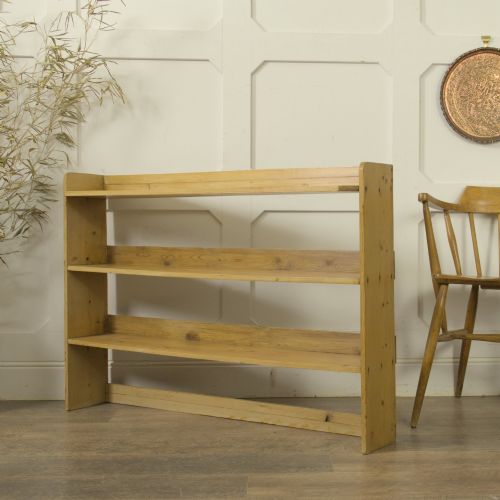
Cabinetmakers utilised a variety of dense hardwoods including mahogany, walnut, burr walnut, rosewood, and oak, alongside pine and ebonised wood. Brass components and castors frequently appear on moveable floor-standing pieces to support heavier timber tiers.
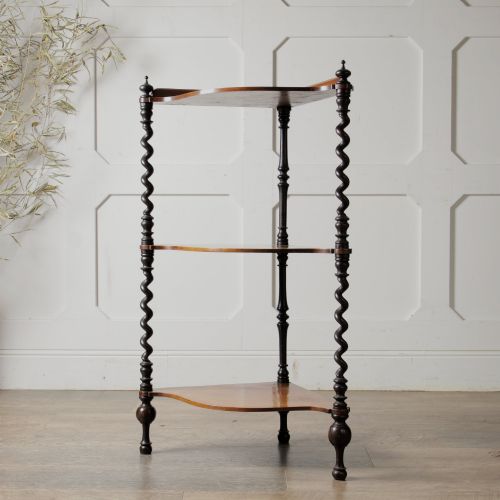
Construction methods match the demands of multi-level weight distribution, incorporating turned legs, barley twist supports, and graduated waterfall tiers. Joinery aligns with the period of manufacture, securing shelves firmly to vertical uprights or wall brackets.
Several pieces include fully adjustable shelving, proving that Victorians loved micro-managing the exact height of their porcelain collections.
What varies in quality
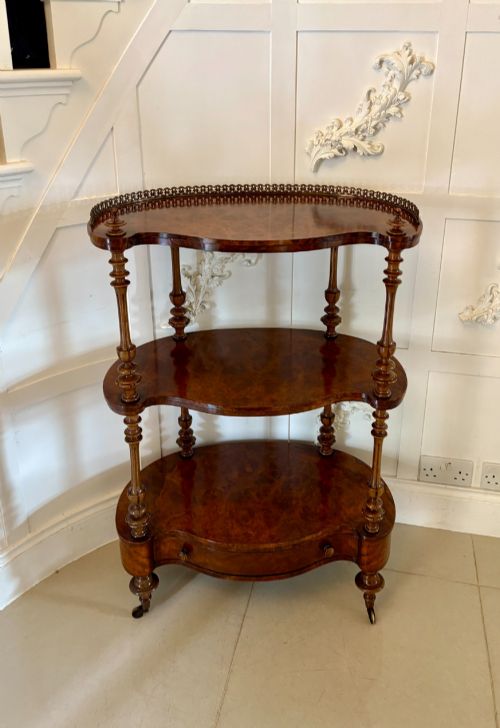
Quality reveals itself in the choice of timber and veneer, particularly the grain figuration found in burr walnut, rosewood, and figured mahogany surfaces. Finer examples display careful attention to proportion, edge moulding, and structural turning.
Execution of detail separates standard utility furniture from finer commissions. Subtleties in the joinery, the integration of matching pairs, and the retention of original castors or hanging hardware distinguish superior pieces.
The Antique Tiered Shelf Unit Glossary
- Whatnot
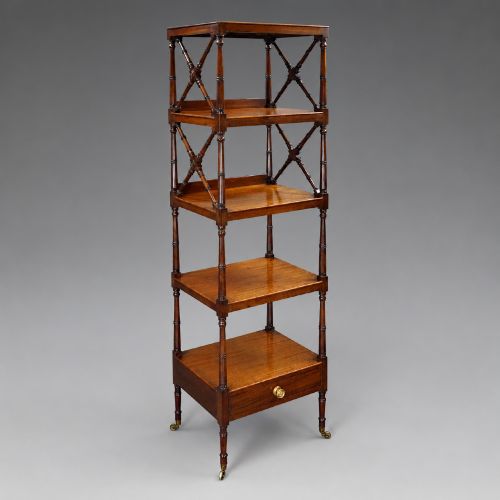
- A piece of furniture with multiple open shelves for displaying small objects or books. These typically stand upright on slender legs and date widely across the nineteenth century.
- Etagere
- A French term for a tiered open shelving unit used for ornaments or books. They often feature delicate uprights and multiple graduated platforms.
- Waterfall bookcase
- A shelving unit where each successive shelf steps back from the one below it, creating a profile resembling descending water. This form gained popularity during the Regency and Victorian periods.
- Buffet
- A tiered shelving structure or sideboard used for serving or display. Examples from the nineteenth century frequently incorporate three or more wooden tiers supported by turned columns.
- Barley twist
- A type of turned wooden support carved in a spiral twist resembling barley sugar. This decorative turning appears frequently on Victorian supports and uprights.
Antique Tiered Shelf Unit: Frequently Asked Questions
What is the difference between an etagere and a whatnot?
An etagere generally originates from French design traditions with an emphasis on decorative display, whereas a whatnot represents a broader British category of multi-shelved furniture.
In practical terms, both function similarly to hold books and ornaments across tiers, though etageres often present lighter framing.
How do I place a tiered shelf unit in a room?
Freestanding floor units fit well against walls, in alcoves, or positioned centrally depending on the finished back of the timber. Corner variants utilise unused angles efficiently.
Hanging shelves require secure wall fixings suited to the weight of the timber and the objects placed upon them.
Are waterfall bookcases stable enough for heavy books?
Waterfall bookcases handle moderate volumes well, but their stepped design means lower shelves accommodate deeper and heavier items more securely.
Solid hardwood construction from periods like the Regency and Victorian eras provides inherent structural strength for daily use.
How do I identify a Victorian tiered shelf unit?
Victorian pieces frequently employ dense timbers such as burr walnut, rosewood, and mahogany, often featuring distinct decorative turns like barley twists.
Original castors, rich patination, and heavier framing typically signal mid to late nineteenth-century manufacture.