
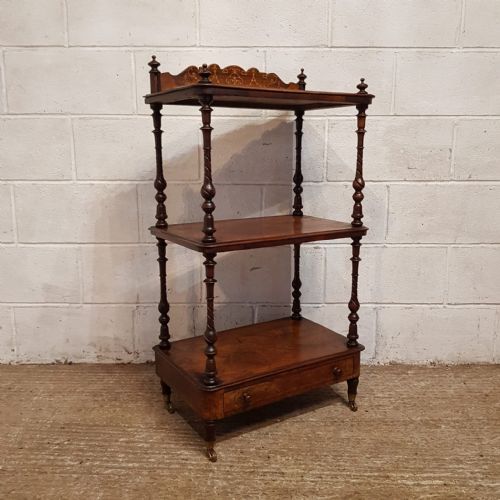


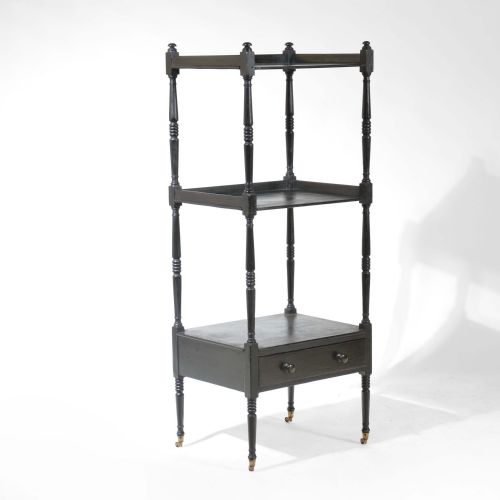


Antique Wooden Corner Shelf
An antique wooden corner shelf makes use of unallocated space, bringing timber grain and tiers to a neglected room angle.
Antique Wooden Corner Shelf
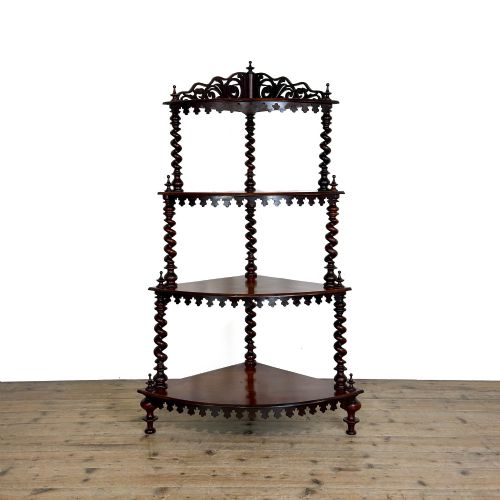
When you search for an antique wooden corner shelf, you encounter items designed to fit the junctions of a room, taking forms such as tiered whatnots, hanging open shelves, and enclosed corner cabinets. These pieces serve to display ceramics, books, and small ornaments without occupying the floor space demanded by standard cabinetry.
The selections available span several distinct eras, with Victorian and Georgian examples appearing frequently alongside Regency and Edwardian pieces. You will find both wall-hung varieties and freestanding corner units constructed to utilise awkward architectural spaces.
Mahogany predominates among the surviving items, often complemented by walnut, burr walnut, ebonised wood, and occasional examples in olive wood or padouk. These timbers are shaped into multi-tiered structures, some incorporating lower cupboards or glazed doors.

Materials and construction methods
Cabinetmakers utilised solid and veneered hardwoods, turning to mahogany as the primary structural timber while employing burr walnut and olive wood for decorative visual impact. Inlays of boxwood and mounts of brass or ormolu provide contrast and structural articulation.
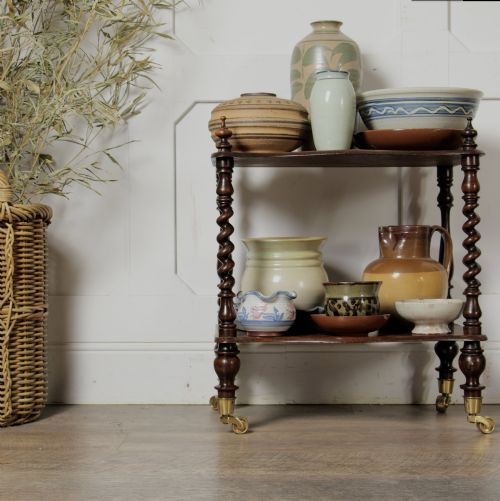
Joinery methods range from simple tiered shelving supported on turned columns or barley twist uprights to enclosed cabinetry featuring panelled doors and carved detailing. Back panels are commonly fitted to protect walls and provide stability across multiple tiers.
Some corner shelves even come with a built-in cupboard, perfect for hiding things you forgot you owned.
Distinctions in craftsmanship
The standard of a piece depends upon the selection of timber veneers, the crispness of turned or carved elements, and the integrity of the joints connecting shelves to uprights. Superior examples display carefully matched wood grains and stable construction that supports weight across multiple tiers without sagging.
Liberty & Co.
The Antique Wooden Corner Shelf Glossary
- Whatnot
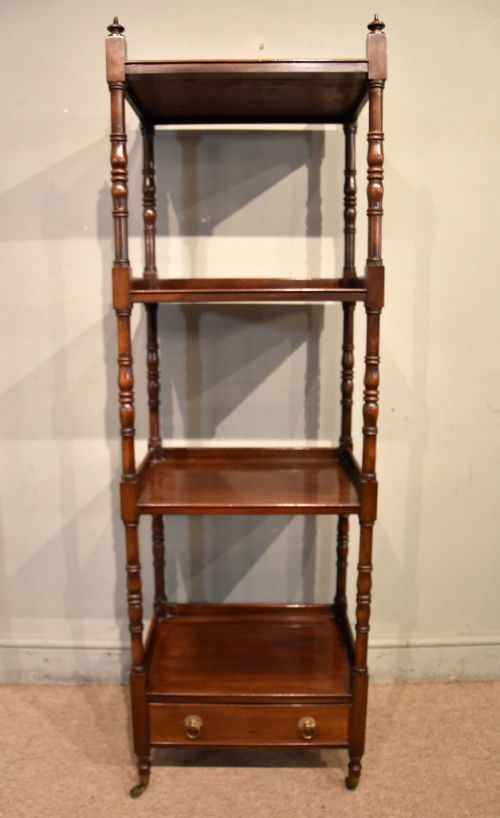
- A piece of furniture consisting of several open shelves for displaying small objects. These tiers are often supported by slender columns or turned uprights.
- Etagere
- A set of open shelves for displaying ornaments, similar in function to a whatnot. The term is frequently used interchangeably with tiered shelving units.
- Ormolu
- Gilded bronze mounts applied as decorative accents on furniture. This material appears on select 19th-century cabinets and cupboards.
- Ebonised wood
- Timber stained or treated to imitate ebony. This dark finish is found on specific Victorian and Georgian pieces.
- Bow front
- A convex curved front facade common on Georgian and Regency corner cupboards and shelf units. This shape softens the angular geometry of a room corner.
Antique Wooden Corner Shelf: Frequently Asked Questions
How do I install a wall-hung corner shelf safely?
Wall-mounted versions require secure fixing points into solid masonry or wall studs using appropriate brackets and screws. Because these shelves often carry heavy porcelain or books, the weight distribution must be supported adequately by the wall structure.
Ensure the vertical back battens are screwed directly into solid supports rather than relying solely on plasterboard. Check that the right-angled joint remains square before final tightening to prevent uneven loading.
What is the difference between a whatnot and a corner cabinet?
A whatnot is an open tiered structure designed specifically for display, featuring multiple shelves supported by posts or columns. A corner cabinet incorporates enclosed storage behind doors, hiding its contents from view.
Open shelves suit decorative items and frequently accessed books, while cupboards provide concealed storage for tableware or household supplies. Both types utilise the same ninety-degree room geometry.
How do I care for antique mahogany corner furniture?
Maintain timber surfaces by dusting regularly with a soft, dry cloth and applying traditional beeswax sparingly to nourish the grain. Avoid placing pieces near direct heat sources or strong sunlight, which can dry out the wood and fade polished finishes.
Lift rather than drag freestanding units when repositioning them to protect the joints connecting the shelves to the upright supports. Ensure humidity levels in the room remain stable to prevent timber movement.
How can I tell a Georgian corner shelf from a Victorian one?
Georgian pieces generally display simpler, restrained lines with classical proportions and primary timbers like solid mahogany. Victorian examples often introduce more elaborate turning, such as barley twist columns, or decorative veneers like burr walnut and exotic inlays.
Examine the construction details and secondary woods used at the back or interior of the piece, as earlier items employ hand-cut fixings and distinct timber selections compared to later production methods.