

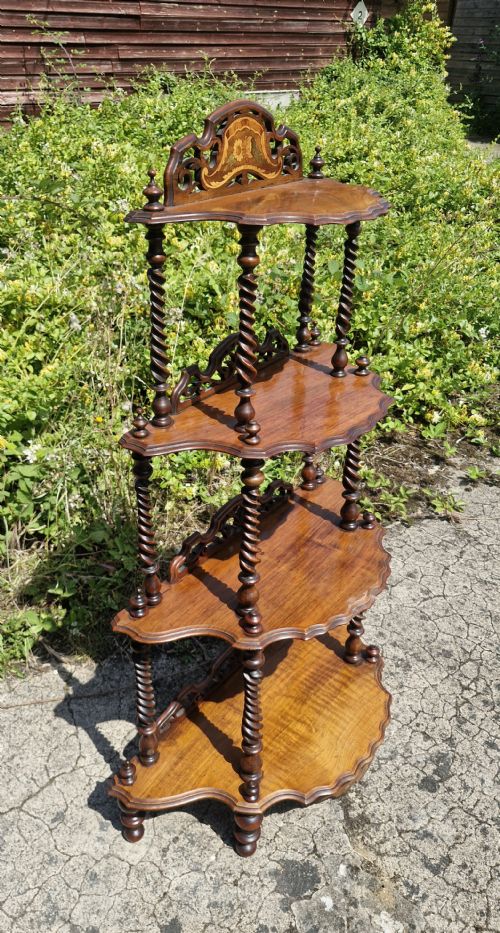
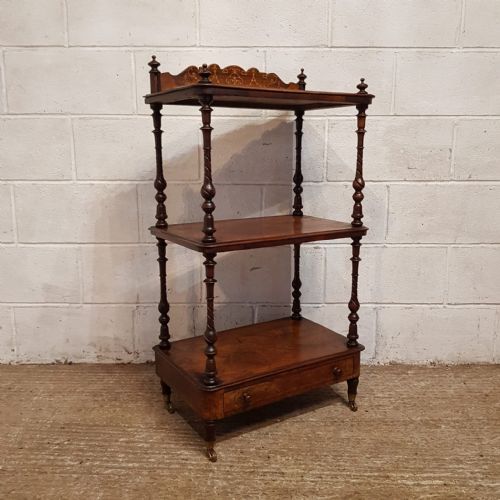
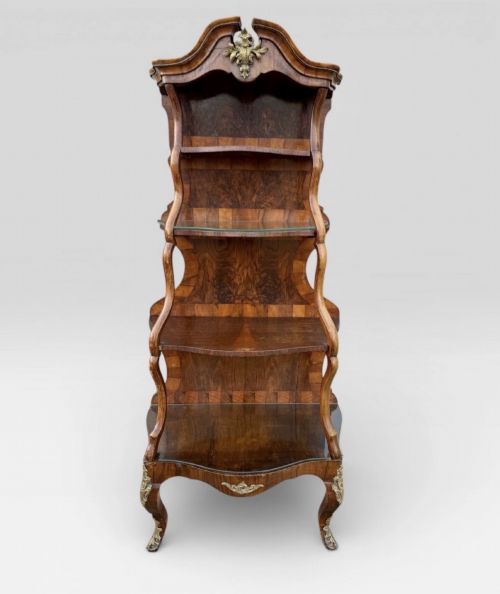


Walnut Corner Shelves
Walnut corner shelves are practical multi-tiered display stands designed to utilise vacant room angles, offering collectors useful vertical storage.
Walnut Corner Shelves
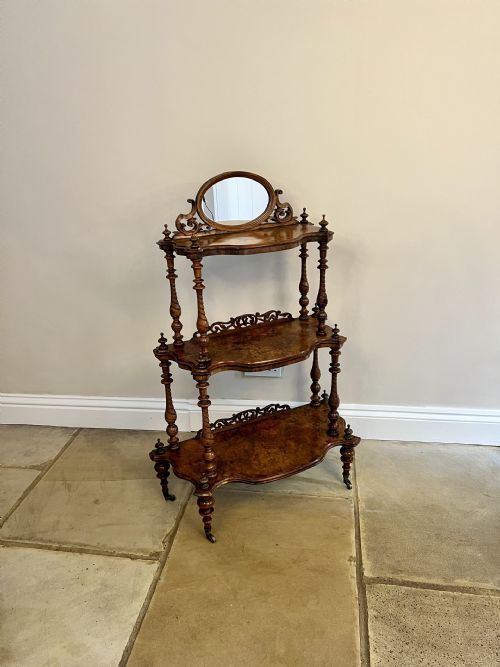
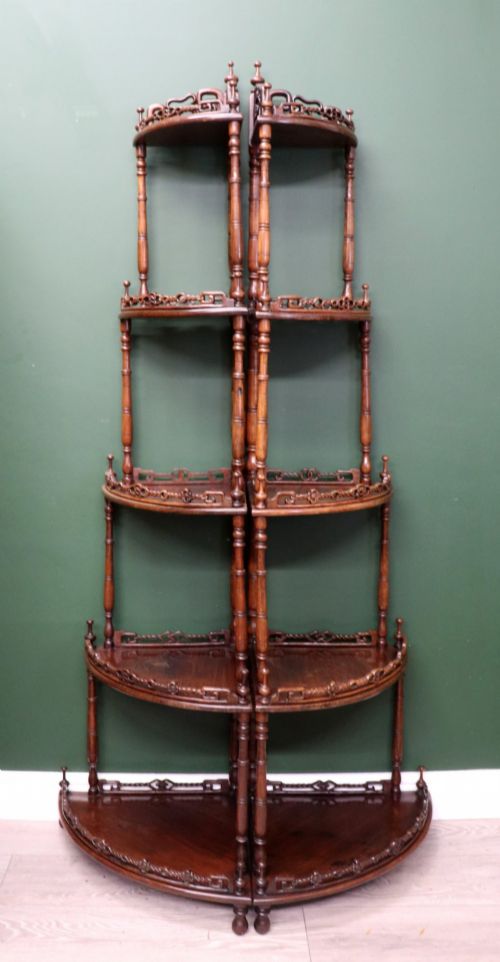
When searching for walnut corner shelves, buyers encounter multi-tiered display units and whatnots designed to fit into room angles. The pieces available span the Victorian and Edwardian eras, with particular focus on nineteenth-century designs.
Most examples function as open shelving units or corner whatnots constructed primarily from walnut and burr walnut. These items serve to hold decorative objects, books and small ornaments within domestic interiors.
How they were made
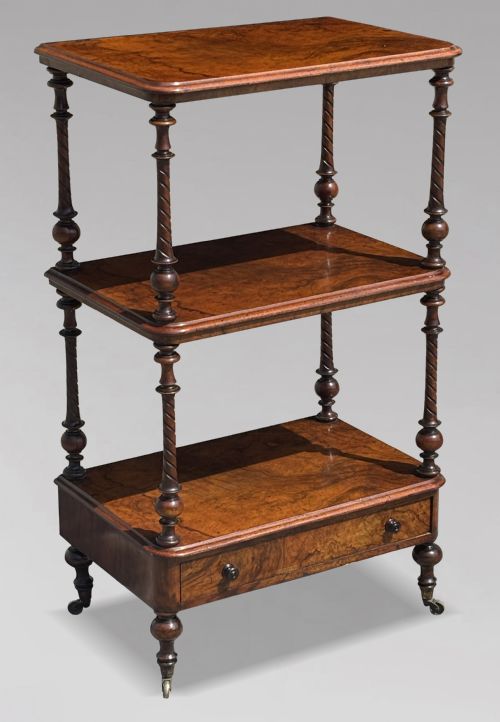
Cabinet makers utilised solid walnut and decorative burr walnut veneers applied to secondary timbers. Surfaces frequently incorporate boxwood inlay, marquetry inlay and brass fittings to enhance the visual presentation.
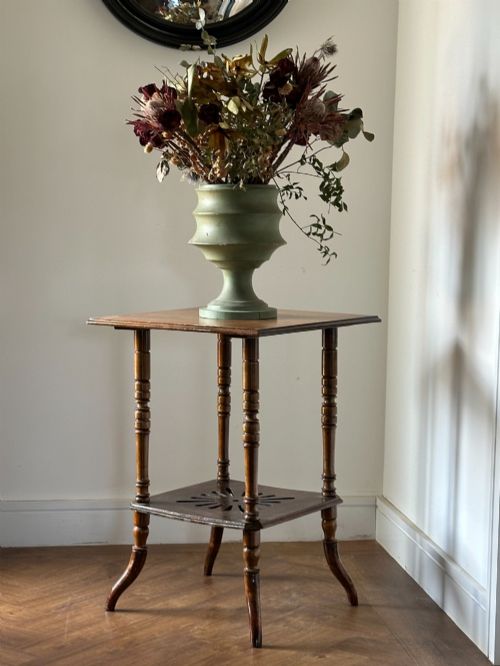
Structural elements range from simple turned supports to carved columns and hollow barley twist tiers. Selected pieces integrate glass panels or gilt metal mounts alongside mahogany components.
Listings feature Victorian and Edwardian examples utilising burr walnut, mahogany, and marquetry inlay.
What varies in quality
The degree of refinement in the timber figure and the complexity of the inlay separate standard items from exhibition pieces. Burr walnut with rich grain patterns commands greater attention than plain stock.
Execution of turned supports, carved details and structural joinery defines the standard of craftsmanship. Pieces exhibiting detailed marquetry or specialised forms such as hollow barley twists represent more ambitious production.
Liberty & Co.
The Walnut Corner Shelves Glossary
- Whatnot
- A moveable set of open shelves for displaying ornaments or books. Originating in the eighteenth century, these tiers became popular domestic furniture throughout the Victorian period.
- Burr walnut
- A wood cut from the irregular growths on walnut trees, showing highly figured swirling patterns. Cabinet makers prized this veneer for fine furniture panels and tabletops.
- Marquetry inlay
- Decorative patterns formed by fitting contrasting pieces of wood veneer into a prepared surface. Craftsmen used various tinted woods and boxwood lines to create floral or geometric motifs.
- Barley twist
- A turned wooden column resembling the spiral shape of twisted barley sugar. This decorative turning appears on upright supports of mid-nineteenth-century stands.
Walnut Corner Shelves: Frequently Asked Questions
How do I style corner shelves?
Place them in unused room angles to display small collections, ceramics or bound books without obstructing traffic flow.
Balance the weight of objects across the multiple tiers to maintain visual stability and proportion.
What is an etagere?
An etagere is a piece of furniture consisting of a set of open shelves for displaying small objects. The term derives from the French word for a stage or shelf.
These units function similarly to whatnots and corner stands within Victorian interiors.
How can I date my whatnot?
Examine the timber selection, turning styles and inlay techniques used across the shelves. Victorian pieces often feature burr walnut veneers and barley twist supports, while Edwardian examples display lighter inlay work.
Consulting historical design characteristics helps narrow down the decade of manufacture.
Are corner shelves sturdy enough for heavy books?
Most antique whatnots and corner display units were built for decorative ornaments rather than heavy library volumes. The slender turned supports and tiered platforms suit lighter decorative items.
Distributing weight evenly prevents strain on the original joints and brackets.