
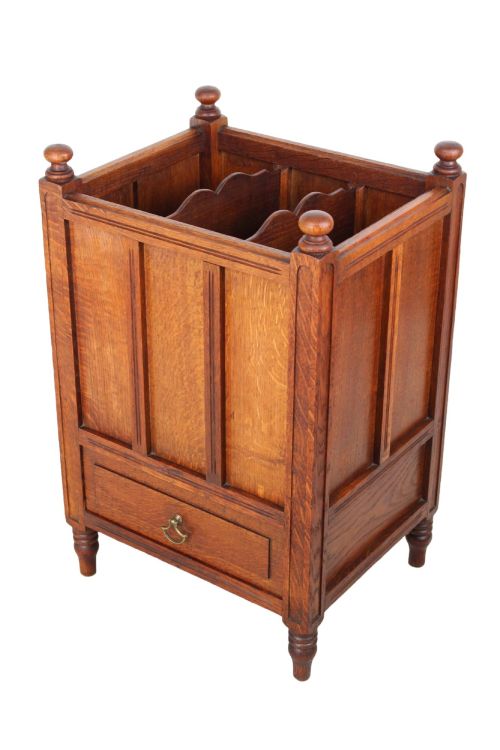
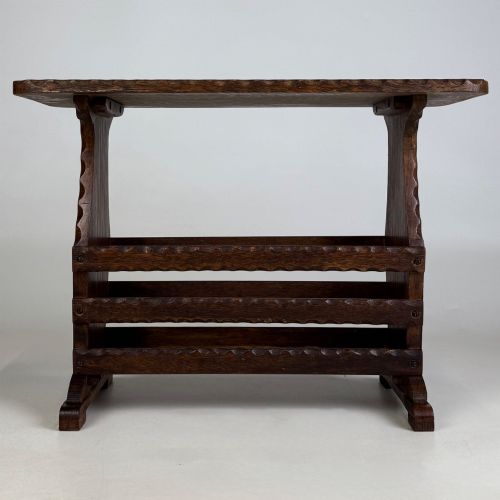
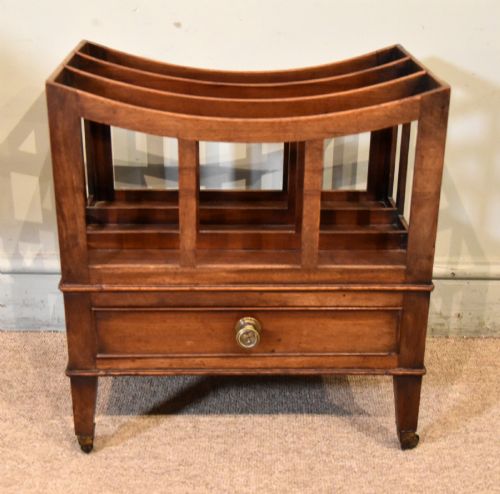
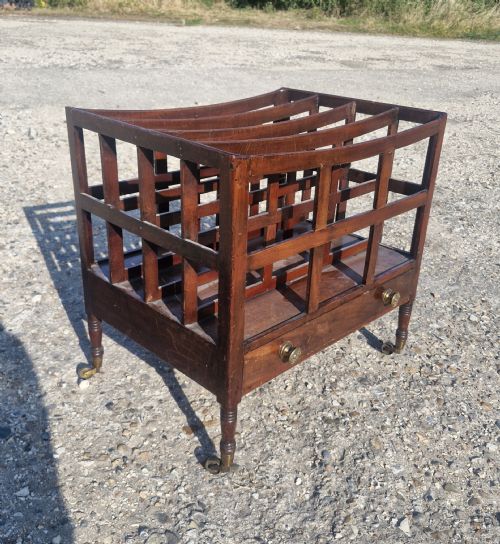



Brown Wooden Magazine Rack
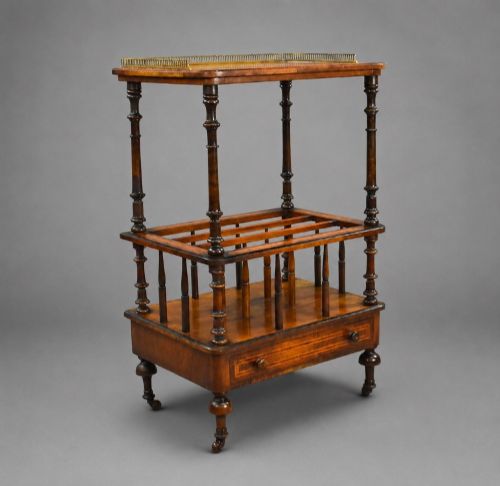
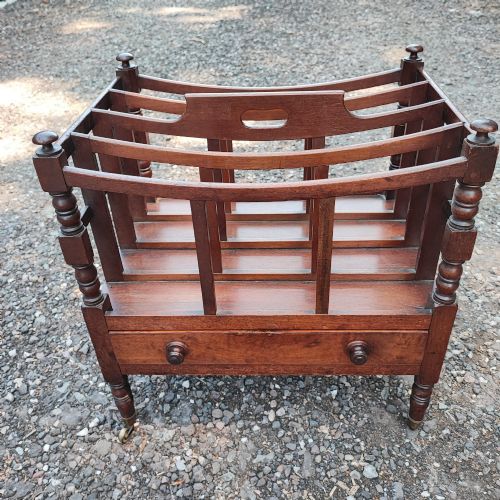
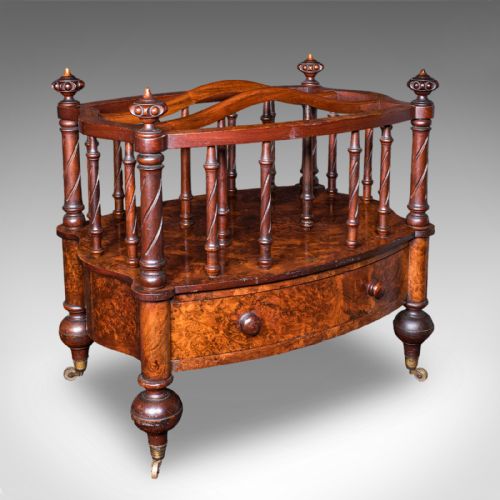
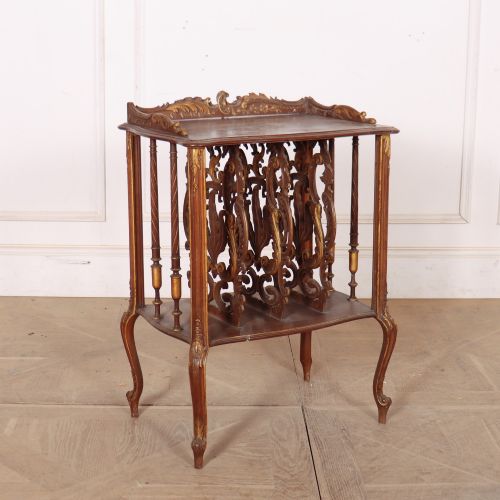
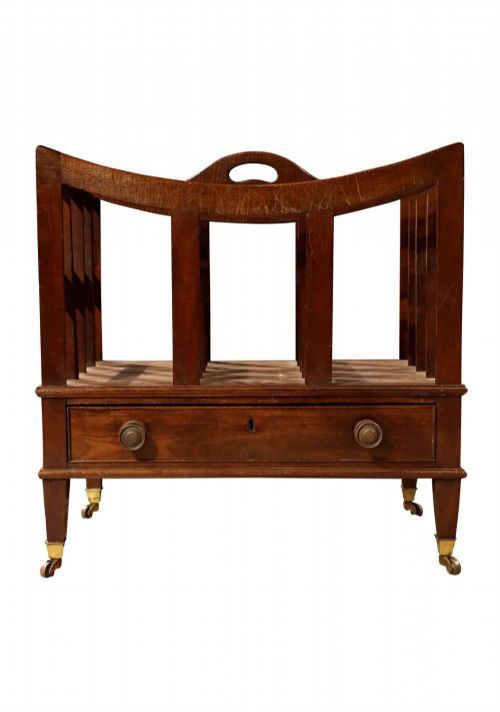
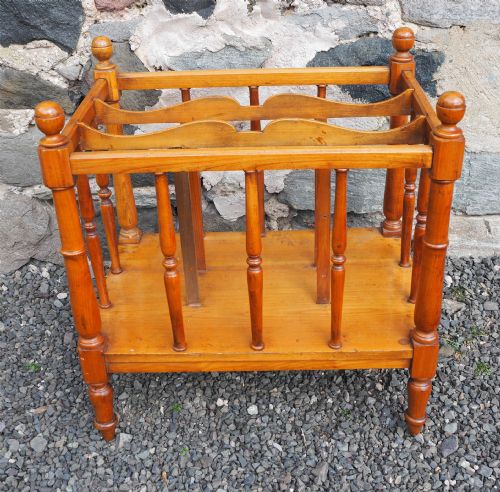
A brown wooden magazine rack is a sturdy Victorian or Regency canterbury designed to keep periodicals tidy beside a chair.
What a brown wooden magazine rack is
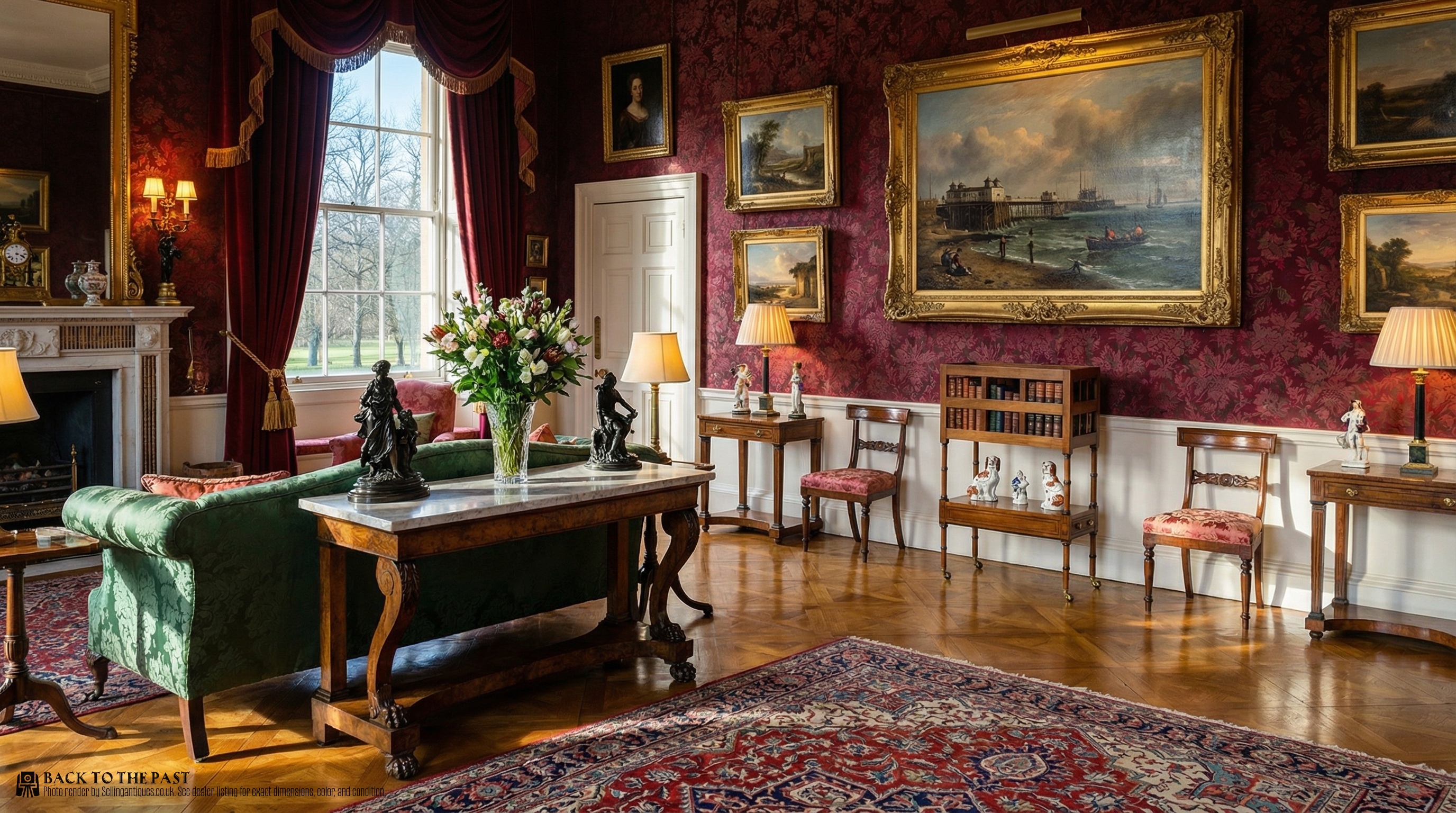
When you search for a brown wooden magazine rack, you encounter canterburys from the nineteenth century designed to hold books, music sheets and journals. These pieces typically feature partitioned sections for upright storage and often sit on low castors for mobility across a room.
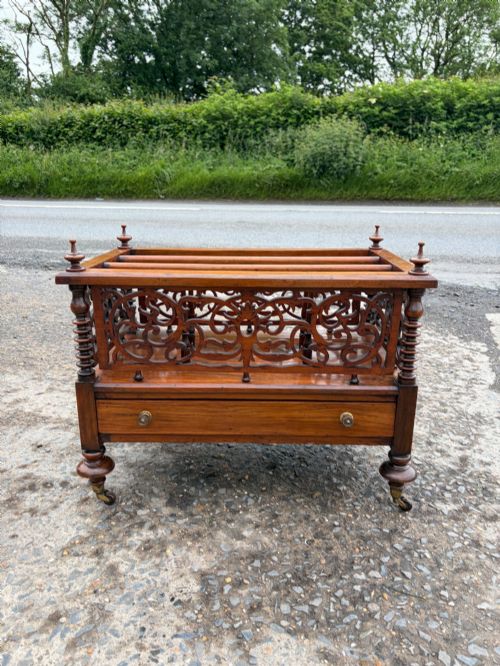
The versions most commonly met on this page span the Regency, Victorian and Edwardian periods. They take the form of low wooden stands with slatted dividers, frequently incorporating a drawer in the base for smaller items.
How they were made
Cabinet makers utilised solid timber and veneers, selecting mahogany, walnut and burr walnut for their rich grain and durability. Joinery relied on precise framing to support the weight of heavy volumes within the slatted compartments.
Detailing often included brass fittings, boxwood inlay and turned wooden spindles. Some examples integrated ceramic components or delicate pierced woodwork on the partitions.
Retail Price Guide 2026
Typical UK retail prices for brown wooden magazine rack, calculated from the Sellingantiques database of over a million retail prices indexed since 2003. This retail price guide relies exclusively on Sellingantiques data; no external sources or auction records are used, so the figures do not describe the wider market.
Many of these stands roll about on tiny brass wheels, ready to follow you from the sofa to the fireplace.
What varies in quality
Quality rests upon the selection of timber and the crispness of the turning on the upright supports. Figured walnut and richly grained mahogany distinguish finer workshop productions from simpler utility items.
The structural integrity of the slatted dividers and the presence of original brass castors or matching drawer pulls define the upper tier of these pieces.

Howard and Sons of London
The Brown Wooden Magazine Rack Glossary
- Canterbury
- A low stand with partitions for holding sheet music, books or magazines. It often includes a single drawer beneath the main compartments.
- Burr walnut
- A veneer taken from the knotted growth of a walnut tree, yielding highly decorative swirling patterns. Cabinet makers prized this for principal display surfaces.
- Boxwood
- A dense, pale wood frequently used for contrasting stringing and inlay work on nineteenth-century furniture. It provides sharp visual borders against darker mahogany or walnut.
- Castor
- A small wheel fitted to the legs of a piece to allow easy movement across carpets and floorboards. Early examples use brass fixings.
Frequently Asked Questions
What is a canterbury?
A canterbury is a low wooden stand featuring upright partitions designed to store loose papers, music sheets and periodicals.
Cabinet makers of the nineteenth century built these pieces to keep reading materials tidy and close to seating areas.
How do I date a wooden rack?
Dating relies upon timber selection, structural form and decorative details such as inlay or turned spindles.
Pieces span the Regency, Victorian and Edwardian eras, each showing shifts in stylistic preferences and joinery methods.
Where were these placed?
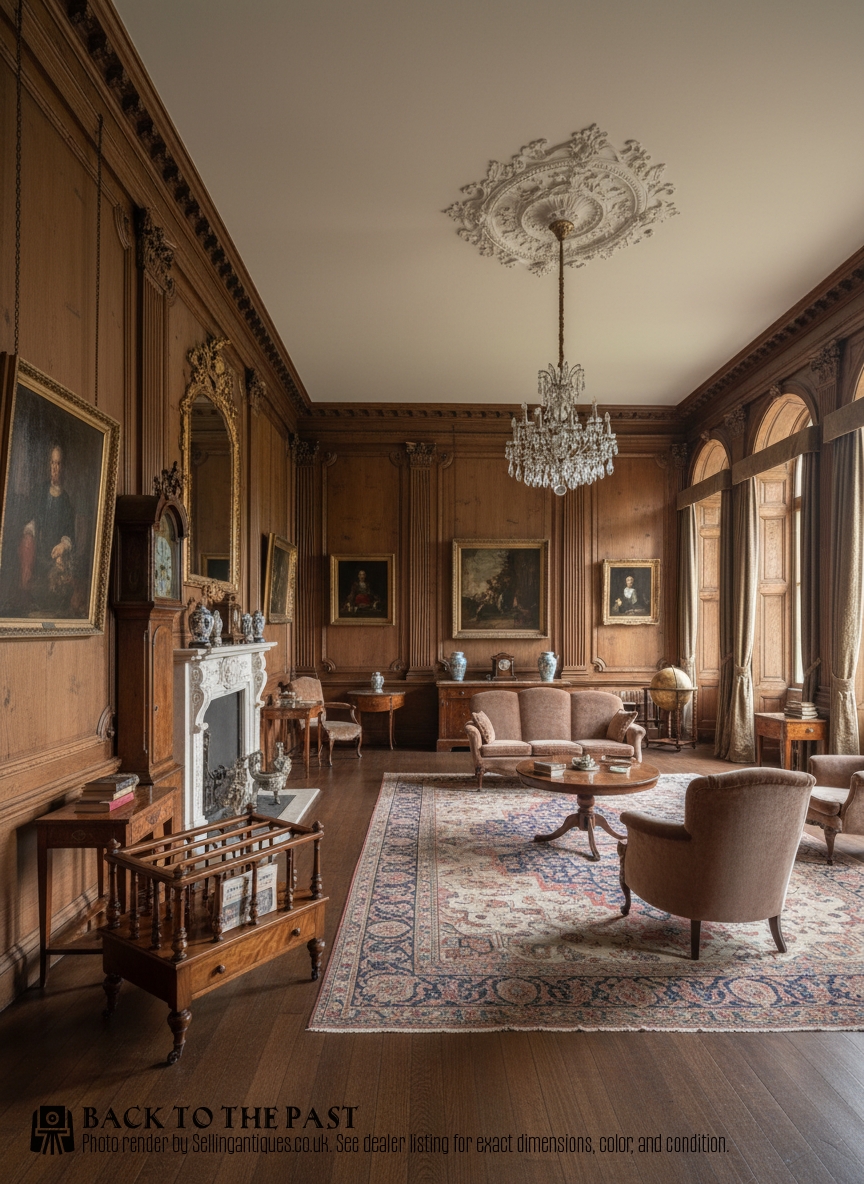
These stands sat beside armchairs or reading desks in nineteenth-century drawing rooms and libraries.
Their compact size and castors allowed servants or residents to reposition them easily.
What woods were used?
Workshops constructed these pieces primarily in mahogany and walnut, frequently selecting figured or burr varieties for visual impact.
Secondary woods and boxwood appeared in structural framing and decorative stringing.