

Mahogany Canterbury Rack
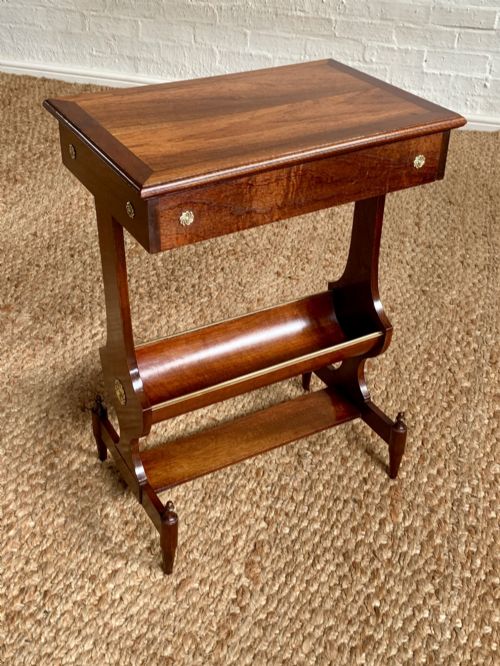
A mahogany canterbury rack organises folios and papers with compartmented elegance, bringing refined timber utility to a traditional interior.
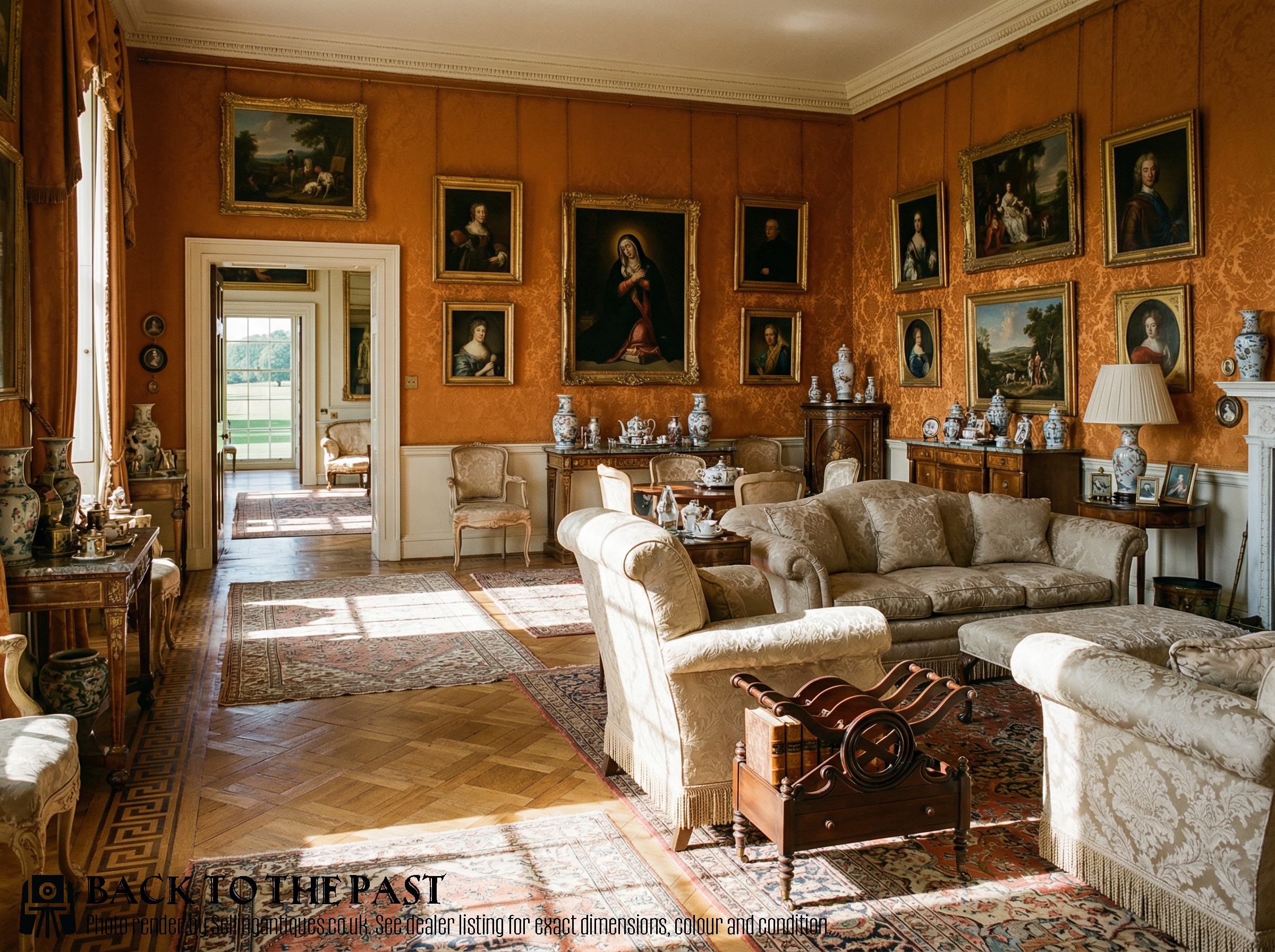
Mahogany Canterbury Rack
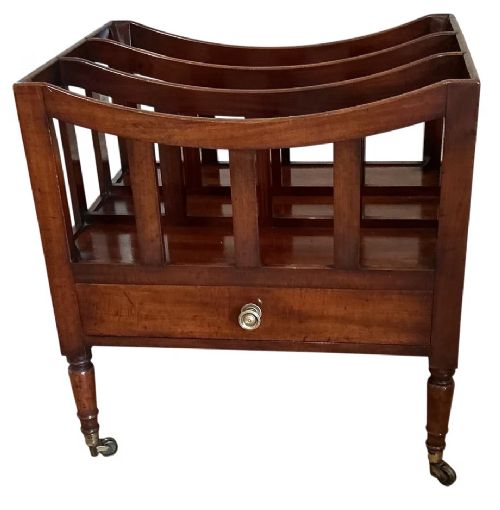
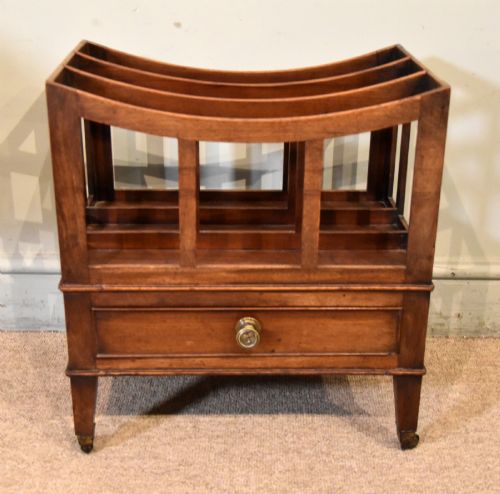
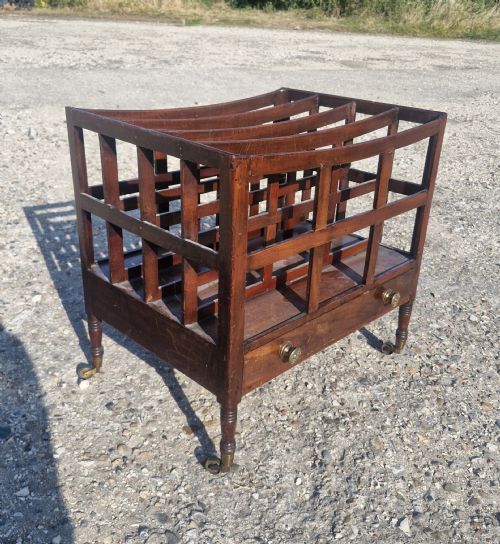
A mahogany canterbury rack serves as a low, partitioned stand designed originally for sheet music and folios, evolving into a holder for journals and papers. When searching for a mahogany canterbury rack, buyers encounter pieces spanning the Georgian, Regency, William IV, Victorian, and Edwardian periods.
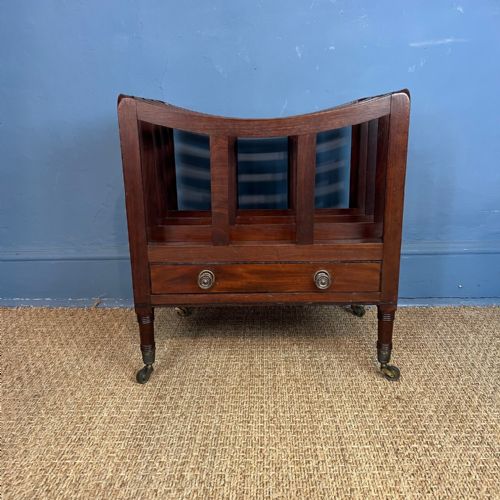
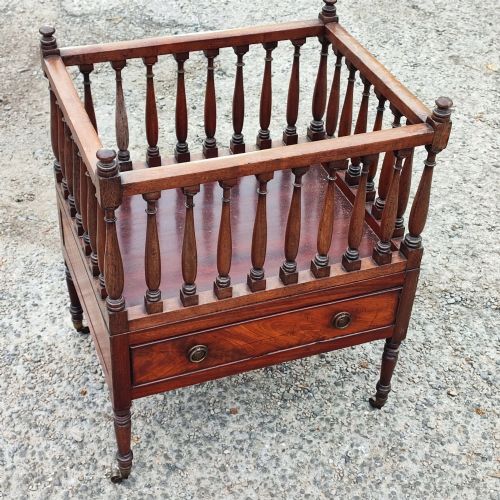
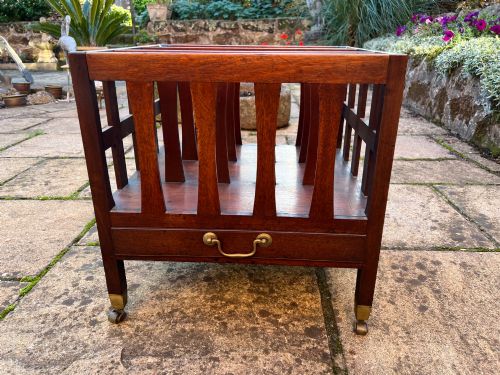
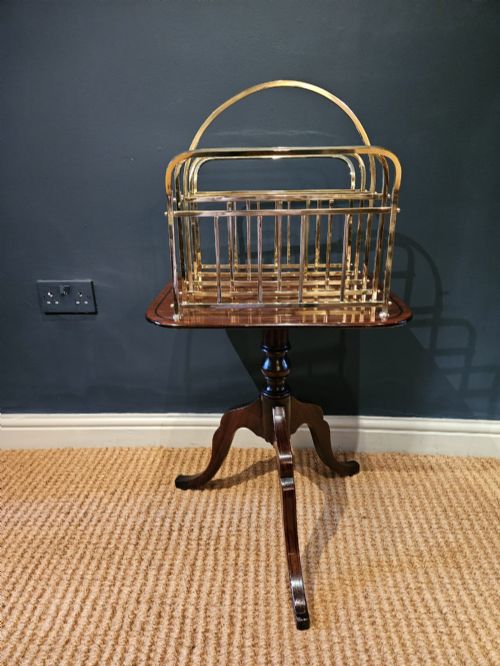
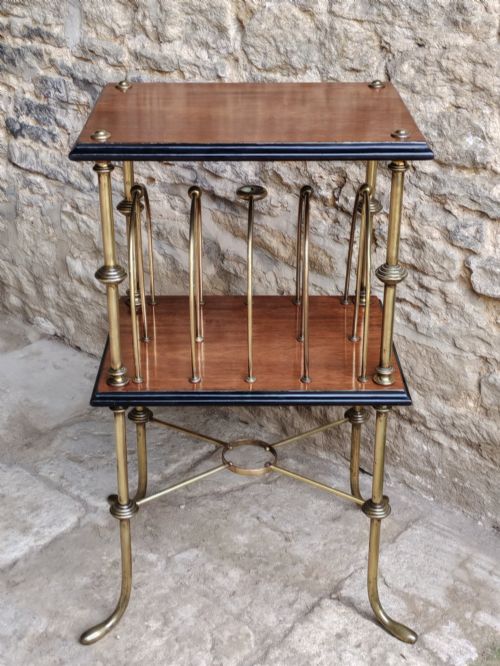
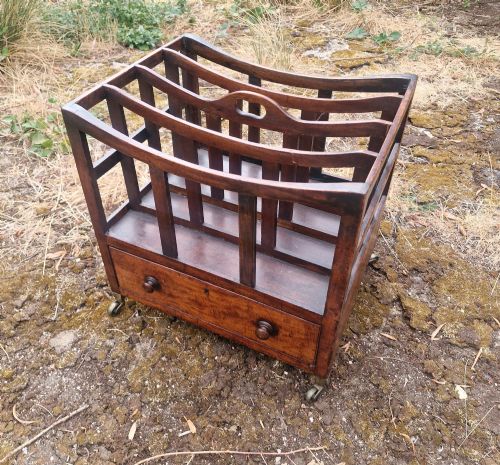
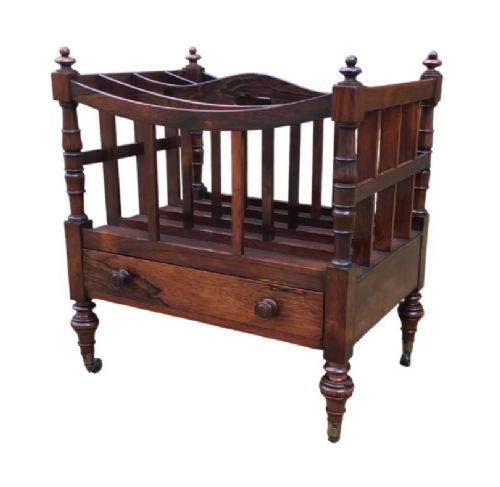
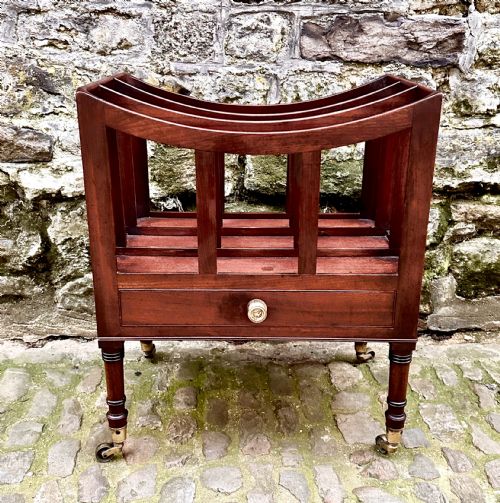
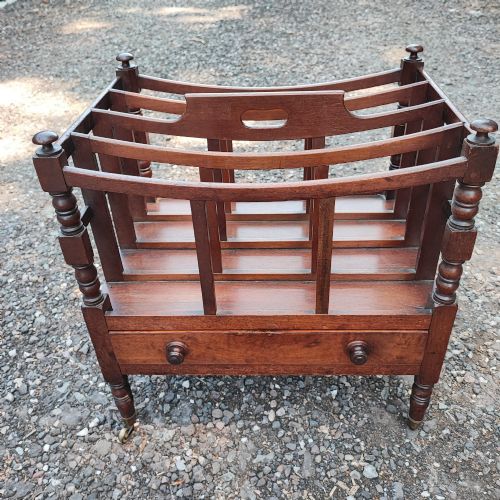
The form typically comprises vertical slatted divisions above a low plinth, frequently incorporating a single drawer or turned supports fitted with castors. Regency and Georgian examples dominate the selection, often taking boat-shaped or multi-tier profiles intended for freestanding placement beside seating.
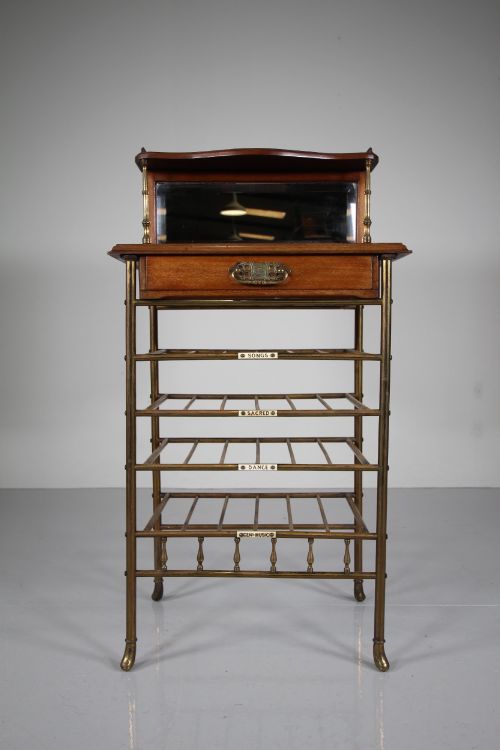
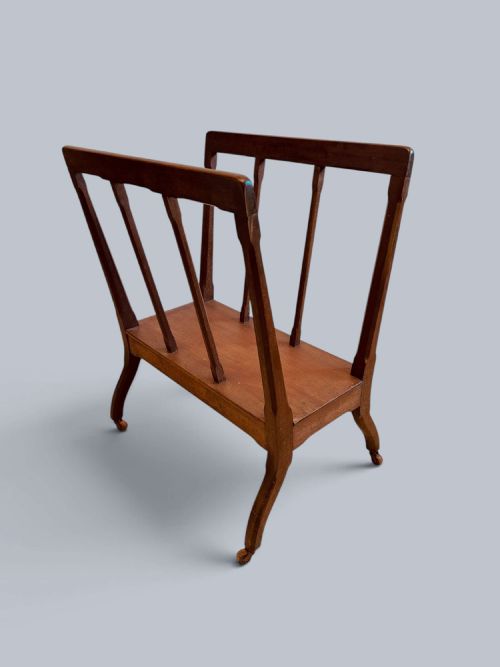
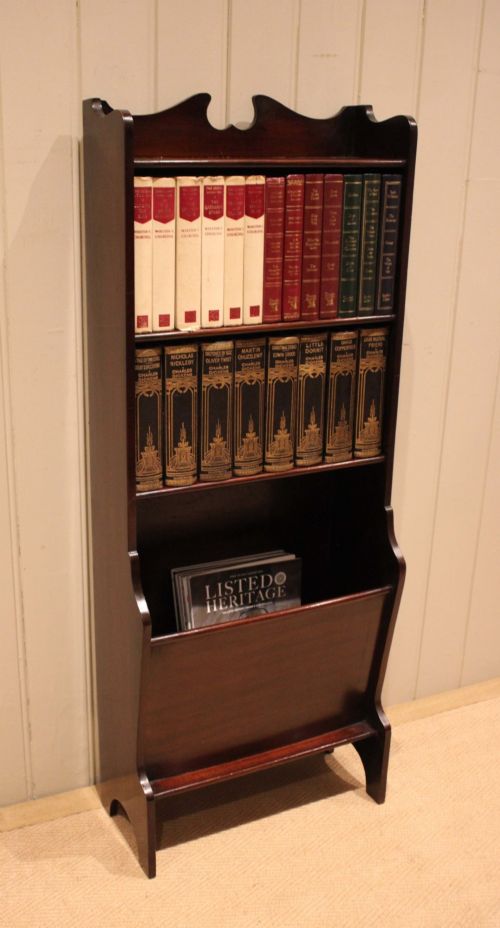
Later Edwardian and early twentieth-century interpretations maintain the timber framework while adapting the compartment proportions for modern periodicals and smaller folios. These versatile stands bridge the gap between auxiliary table surfaces and dedicated paper storage.
Distinctions in construction and finish
Quality rests upon the selection of timber grain, the crispness of turned supports, and the integration of the lower drawer rather than applied ornamentation. Finer specimens exhibit substantial Cuban mahogany boards, hand-cut dovetails, and retained original brass castors.
Weaker examples show plain secondary timbers, clumsy slat proportions, or replacement hardware that disrupts the clean horizontal lines of the lower tier.
Mahogany Canterbury Rack Retail Price Guide 2026
Typical asking prices for mahogany canterbury rack among the pieces listed under this phrase on Sellingantiques today, from the lower quarter to the upper quarter. They describe what is for sale here now, not the wider market.
Rumour links the first Canterbury to an archbishop who asked for a stand to keep his musical scores from sliding off the floor.
The Mahogany Canterbury Rack Glossary
- Canterbury
- A low stand with partitions for holding music sheets, books, or newspapers. The name originates from the Archbishop of Canterbury, who supposedly commissioned the first such piece.
- Cuban mahogany
- A dense, highly figured timber exported from Cuba, prized for its dark rich tone and heavy weight. Cabinet makers utilised it extensively during the Georgian and Regency eras.
- Castor
- A small wheel mounted in a swivel frame on the base of furniture to allow easy movement. Many period pieces feature brass wheel fittings.
- Folio
- A large-format sheet of paper or bound volume. Canterburys were originally sized specifically to hold these large musical or literary sheets upright.
Mahogany Canterbury Rack: Frequently Asked Questions
What were mahogany canterbury racks used for originally?
These stands held unbound sheet music, manuscript folios, and books near pianofortes or reading desks in formal drawing rooms. Musicians and readers used the vertical slats to keep scores sorted and accessible.
Over subsequent decades, households repurposed the partitions to hold daily newspapers, periodicals, and general correspondence within sitting areas.
How do I tell a Regency canterbury from a Victorian one?
Regency pieces often display cleaner architectural lines, boat-shaped partitions, precise mahogany turning, and slender brass castors. They emphasise classical proportion and restrained use of inlay.
Victorian iterations tend to feature heavier proportions, darker finishes, and occasionally more elaborate carving or multi-tier shelving structures suited to late-century interiors.
Are drawers common on these stands?
Many examples incorporate a single shallow drawer positioned beneath the slatted upper section. This compartment accommodated smaller items such as writing implements, tuning keys, or loose pamphlets.
Pieces without drawers rely entirely on the open slatted tiers for storage, maintaining a lighter visual profile on the floor.
How should I care for a mahogany canterbury rack?
Keep the timber away from direct heat sources and strong sunlight to prevent the mahogany finish from fading or drying out. Dust the slatted partitions regularly with a soft, dry cloth.
Applying a traditional beeswax polish occasionally helps nourish the grain and maintain the natural lustre of the aged wood surfaces.