

Wooden Canterbury Stand
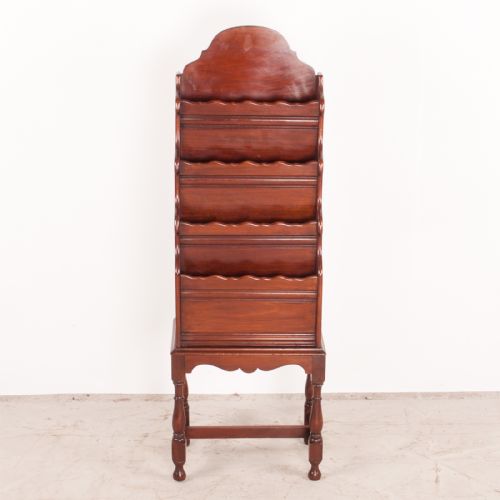
A wooden canterbury stand is a partitioned stand for holding books and music, combining practicality with fine cabinet-making.
Wooden Canterbury Stand
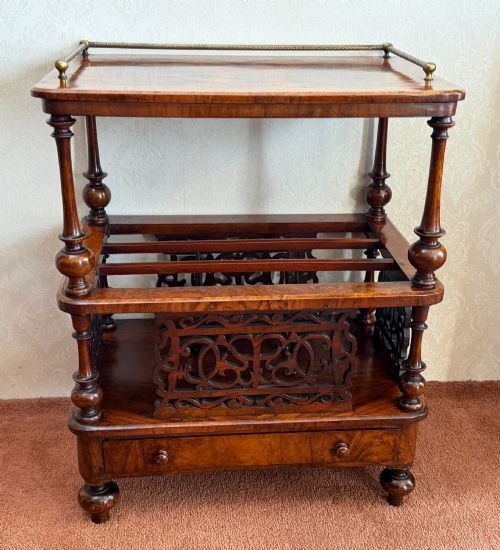
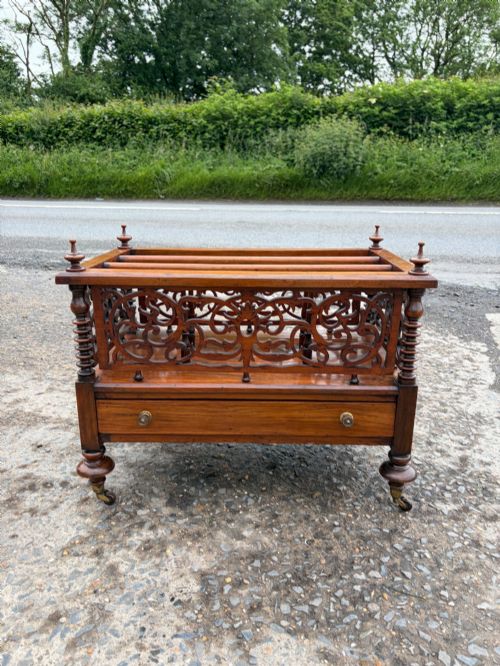
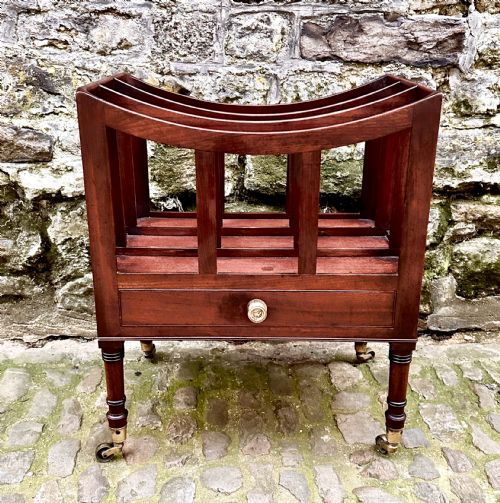
A wooden canterbury stand functions primarily as a piece of freestanding furniture designed to hold periodicals, sheet music, or books within partitioned compartments. Buyers seeking a wooden canterbury stand will most frequently encounter mahogany and burr walnut examples spanning the Georgian, Regency, and Victorian periods.
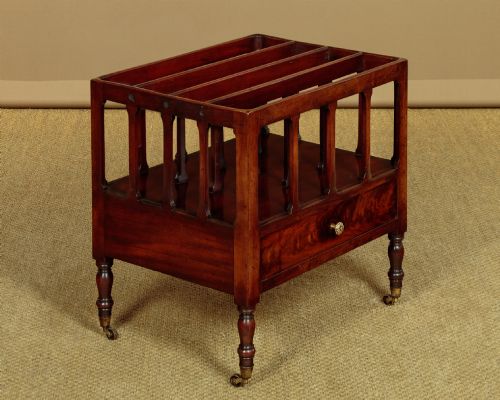
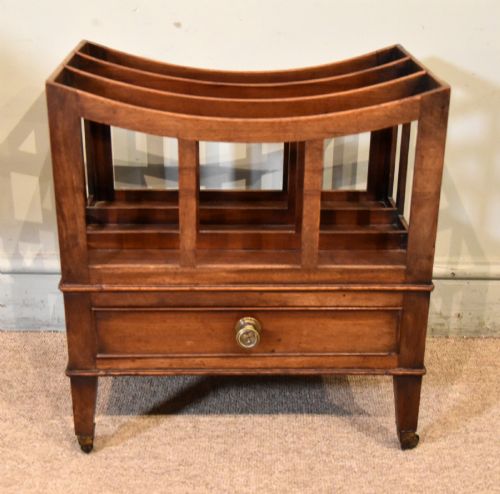
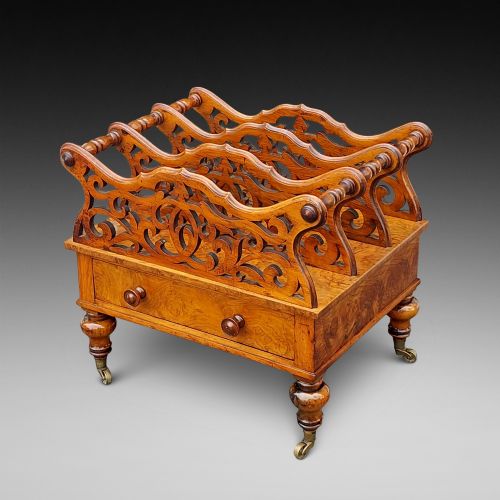
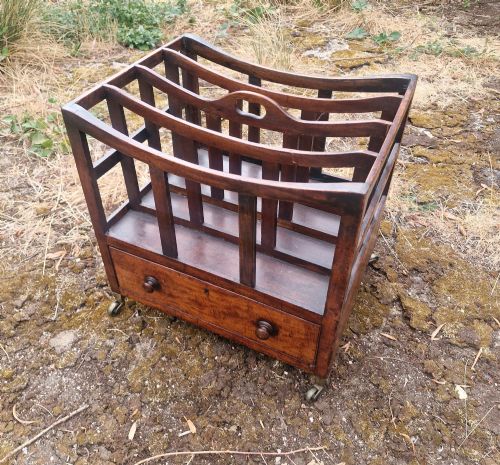
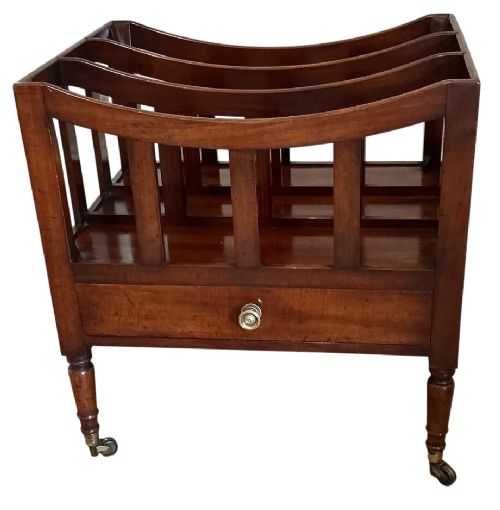
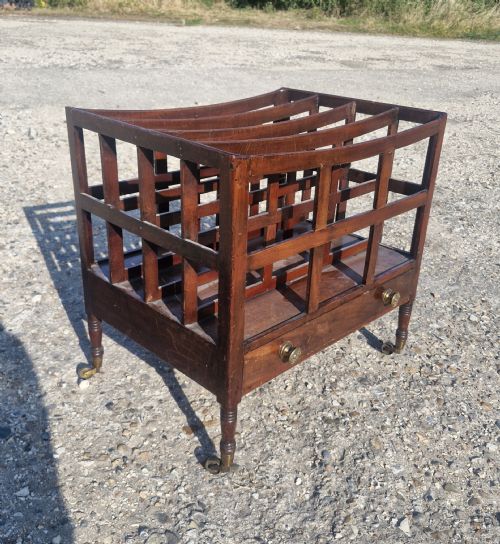
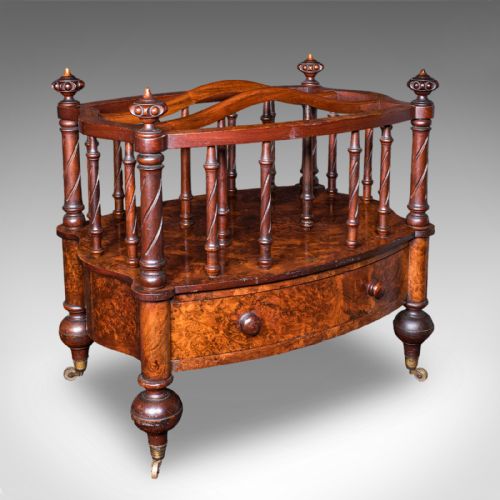
The standard form comprises multiple vertical slats forming divisions above a low plinth, often incorporating a single drawer at the base. These stands frequently rest upon turned legs fitted with castors, allowing them to be moved easily across a room.
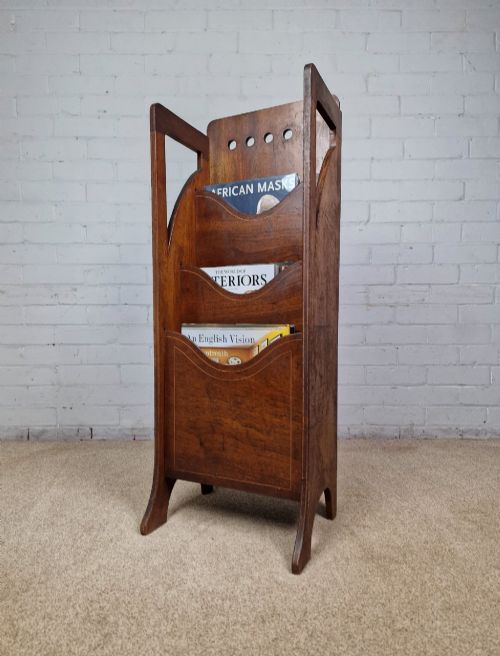
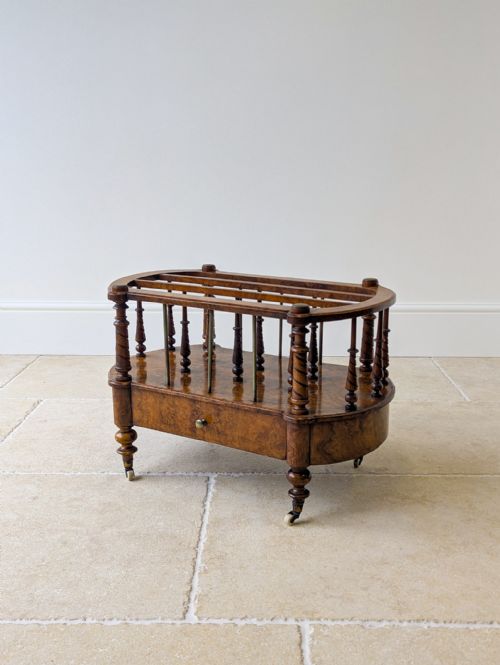
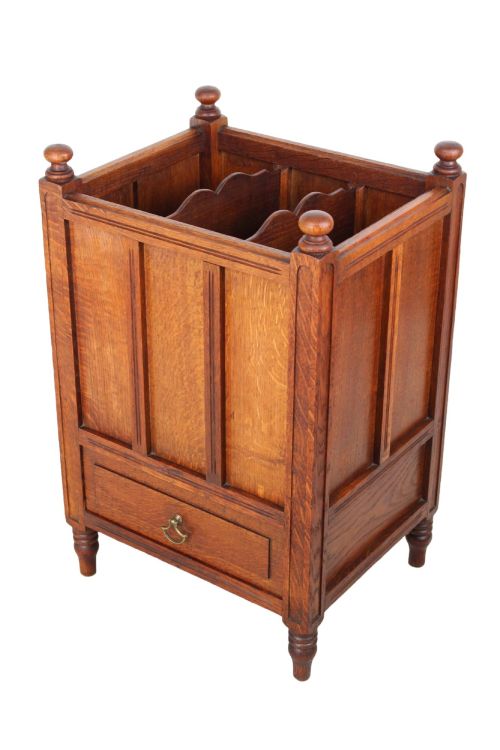
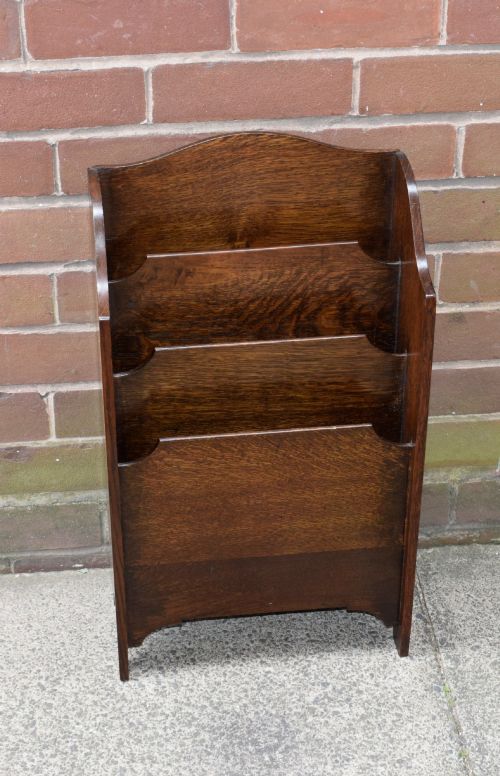
Originating in the late eighteenth century, the design evolved through the nineteenth century into various configurations, including music cabinets and combination magazine racks. The pieces available range from formal Regency boat-shaped models to simpler Edwardian oak iterations.
Materials and construction
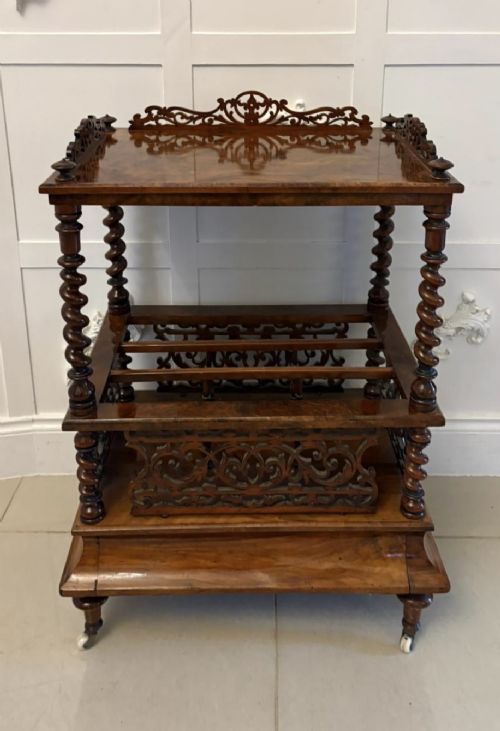
Cabinet-makers relied heavily on dense hardwoods such as mahogany, rosewood, and walnut to construct the main framework and delicate vertical dividers. Burr walnut and figured veneers frequently appear on Victorian examples, providing rich surface grain patterns across the flat panels and tabletops.
Joinery techniques included precise dovetailing for the base drawers and sturdy tenon joints for the slatted partitions that divide the compartments. Many of the earlier stands incorporate turned wooden legs supported by brass castors for mobility.
Wooden Canterbury Stand Retail Price Guide 2026
Typical asking prices for wooden canterbury stand among the pieces listed under this phrase on Sellingantiques today, from the lower quarter to the upper quarter. They describe what is for sale here now, not the wider market.
Listings feature woods including mahogany, walnut, burr walnut, rosewood, oak, and fruitwood across the Georgian, Regency, and Victorian periods.
Quality and execution
The distinction between standard items and superior examples lies in the selection of timbers and the crispness of the turning on the legs. Fine specimens display carefully matched veneers and robust internal joinery that prevents the slatted divisions from loosening over time.
Henry Ogden & Son
The Wooden Canterbury Stand Glossary
- Castor
- A small wheel fitted to the base of the legs to permit easy rolling across the floor. They are commonly made of brass in these pieces.
- Boat-shaped
- A curved hull-like outline seen on certain Regency stands, tapering gracefully towards the ends. This profile gives the piece a distinctive silhouette.
- Whatnot
- A set of open shelves for displaying small objects, sometimes combined with a canterbury compartment at the base. These tiered stands date predominantly from the nineteenth century.
- Inlaid
- Ornamentation formed by embedding pieces of contrasting wood or other materials into the surface of the primary timber. This technique creates geometric or floral patterns across the wood.
Wooden Canterbury Stand: Frequently Asked Questions
What is a wooden canterbury stand used for?
These stands were originally created to hold loose sheets of music near a piano or music stand. Over time, their partitioned sections made them equally suitable for newspapers, periodicals, and books in a sitting room.
Today, they serve the same functional purpose while operating as decorative occasional furniture. Their compact footprint allows them to fit neatly beside seating or against empty wall spaces.
How do I date a wooden canterbury?
Dating relies heavily on the primary timber used and the prevailing style of the legs and partitions. Georgian and Regency pieces typically feature straight-grained mahogany or rosewood with delicate turned supports.
Victorian models frequently introduce burr walnut veneers, heavier proportions, and inlaid decoration. Edwardian versions lean towards simpler oak or lighter mahogany construction without excessive ornamentation.
Where should I place a canterbury in my home?
A wooden canterbury stand works best beside a sofa, armchair, or desk where reading materials accumulate. Because they are finished on all sides as freestanding items, they do not need to sit flat against a wall.
The low height of the piece ensures it does not block sightlines or overwhelm surrounding furniture. Many people use the top surface as a small occasional table for a lamp or decorative small objects.
Are these stands sturdy enough for daily use?
The structural integrity depends on the condition of the vertical slat joints and the base frame. Solid hardwood construction from the Georgian and Victorian eras generally provides adequate strength for holding magazines and books.
Care should be taken when moving them, especially if the piece rests on older castors. Routine handling does not harm the wood provided the partitions remain securely anchored.