



Turned Spindle Magazine Rack
A turned spindle magazine rack is an elegant piece of nineteenth-century furniture that organises periodicals while adding timeless timber character to a room.
Turned Spindle Magazine Rack
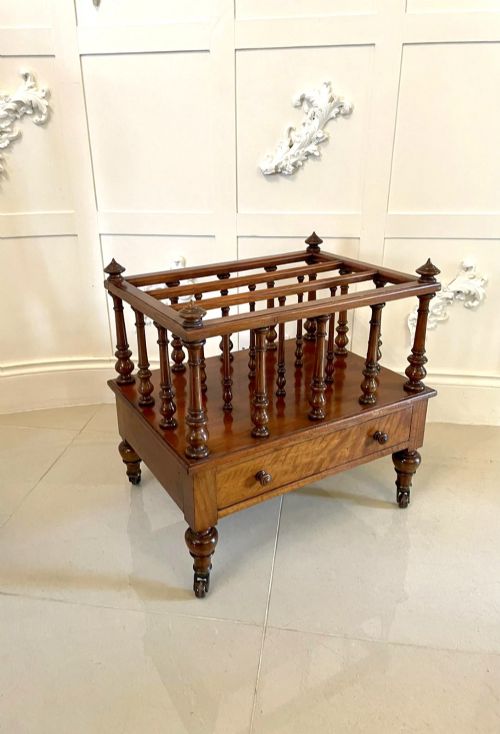
When you search for a turned spindle magazine rack, you encounter Victorian and Regency canterburys, magazine stands, and music racks designed to hold papers and folios. The pieces on this page span from the early nineteenth century through the Victorian era, utilising forms primarily associated with canterburys and traditional magazine stands.
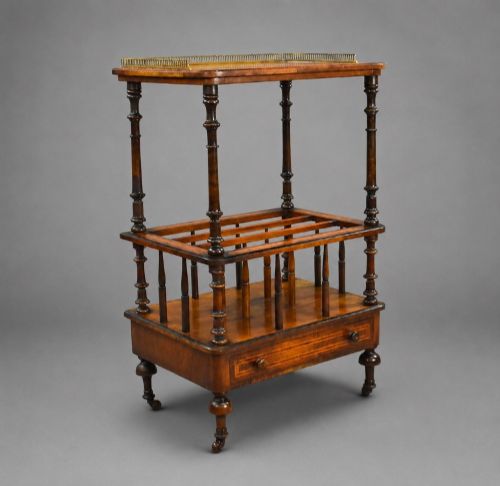
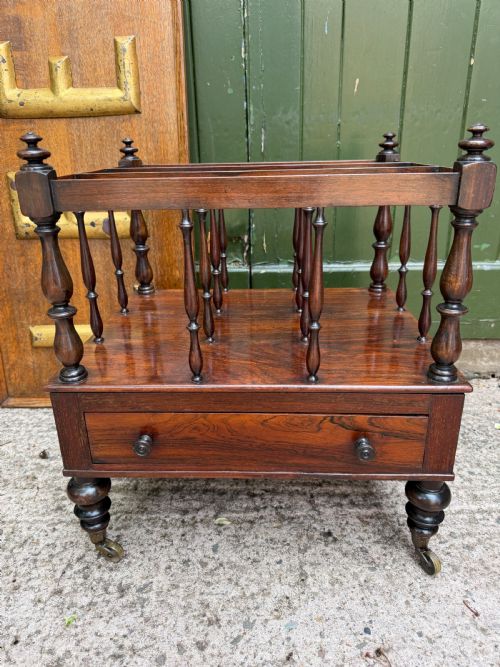
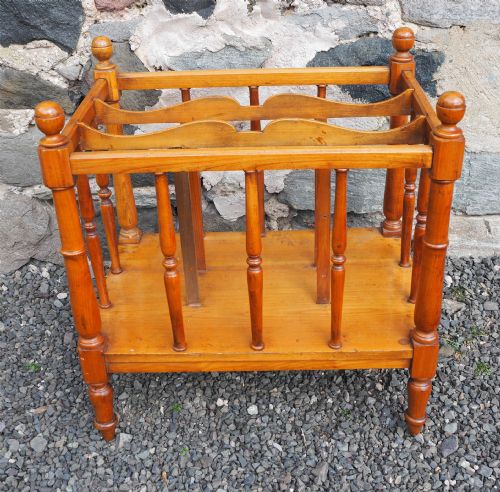
The most common version you will meet is the walnut or mahogany Canterbury featuring vertical turned timber spindles that form the divisions for holding publications. Walnut, burr walnut, rosewood, and mahogany dominate the offerings, occasionally accompanied by fruitwood, iron, or brass details.
Makers such as Edwards and Roberts, Gillows, and Shoolbred appear in the evidence alongside numerous pieces from the broader Victorian and Regency periods. These items frequently incorporate lower drawers or combination formats that double as music stands and what-nots.
How they were made
Cabinetmakers constructed these stands from dense hardwoods including mahogany, rosewood, walnut, and fruitwood, often selecting figured veneers for the main body and plinth. The characteristic vertical divisions rely on individually turned wooden spindles shaped on a lathe to create slender columnar supports.
Joinery techniques involved precise mortise and tenon joints to secure the partitions and uprights, whilst brass castors frequently supported the feet for mobility. Additional decorative elements include applied burr walnut inlays, ebonised finishes, and occasional ceramic or brass mounts.
Turned Spindle Magazine Rack Retail Price Guide 2026
Typical asking prices for turned spindle magazine rack among the pieces listed under this phrase on Sellingantiques today, from the lower quarter to the upper quarter. They describe what is for sale here now, not the wider market.
Some nineteenth-century makers evidently believed music and magazines were practically the same thing, inventing combination stands that served both appetites equally well.
What varies in quality
The choice of timber sets the baseline for quality, with highly figured walnut, rich rosewood, and burr veneers marking out finer examples from simpler fruitwood pieces. The crispness of the turned wooden spindles and the precision of the joinery further distinguish standard production from superior cabinet work.
Attribution to known makers such as Gillows, Edwards and Roberts, or Shoolbred elevates a piece through documented craftsmanship and superior detailing. The inclusion of functional lower drawers, brass castors, and intact ebonised or inlaid decorations also separates the more ambitious designs from basic stands.
Edwards and Roberts·Gillows·Shoolbred
The Turned Spindle Magazine Rack Glossary
- Canterbury
- A low stand with partitions, originally designed to hold sheet music and later utilised for periodicals and magazines. These pieces often feature integrated drawers at the base.
- Spindle
- A slender, turned piece of wood forming a vertical post or partition within the rack. Spindles are shaped on a lathe to create decorative profiles.
- Figured walnut
- Timber exhibiting an attractive, mottled grain pattern highly prized by nineteenth-century cabinetmakers. It was frequently selected for the visible exterior surfaces of quality furniture.
- What-not
- A multi-tiered open set of shelves used for displaying or storing small items. Some examples combine this tiered shelving format with a lower canterbury section.
Turned Spindle Magazine Rack: Frequently Asked Questions
What is a canterbury?
A canterbury is a low, compartmentalised stand originally built to hold sheet music during the Regency and Victorian periods. Over time, these pieces became popular for keeping periodicals and newspapers tidy in sitting rooms.
They typically feature upright turned spindles dividing the upper section into distinct slots, often accompanied by a small drawer underneath for smaller items.
How do I date a walnut stand?
Dating relies on examining the timber selection, construction methods, and overall stylistic markers recorded across the nineteenth century. Pieces from the Regency era tend to show leaner classical lines, whereas mid-Victorian examples often use heavier figured walnut and intricate inlays.
Makers' marks or stamps, where present, provide the most direct evidence of a workshop's active period between eighteen hundred and the late Victorian decades.
Where should I place a magazine rack?
These stands suit sitting rooms, studies, and libraries where reading materials are frequently kept close to seating areas. Their compact footprint allows them to sit beside armchairs or sofas without dominating the floor space.
Keep timber pieces away from direct heat sources and strong sunlight to protect the polished walnut, mahogany, or rosewood surfaces from drying out.
Are these stands sturdy enough for daily use?
Nineteenth-century stands were built from solid hardwoods like mahogany and walnut to endure regular handling of heavy books and music folios. The mortise and joinery used by period cabinetmakers provides lasting structural integrity.
Lifting the piece by its main frame rather than pulling on individual spindles ensures the turned uprights remain secure over years of domestic use.