


Regency Magazine Stand
A regency magazine stand offers an elegant solution for keeping periodicals and sheets in order.
Regency Magazine Stand
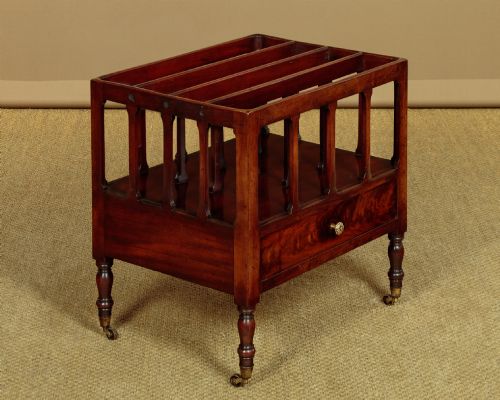
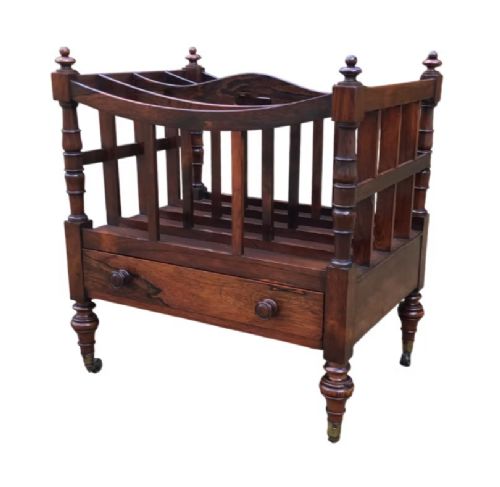
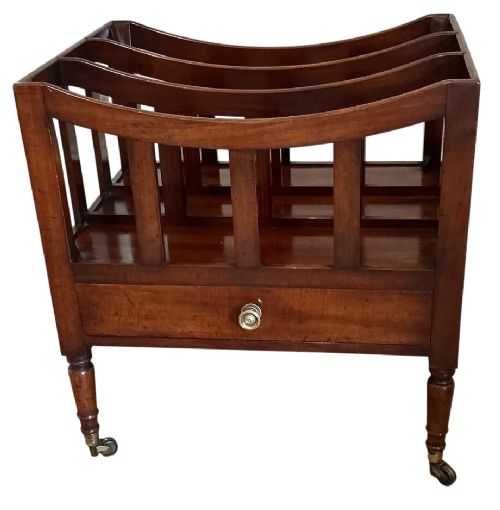
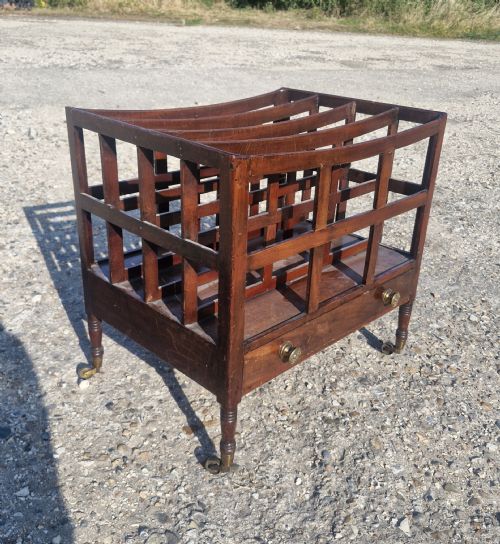
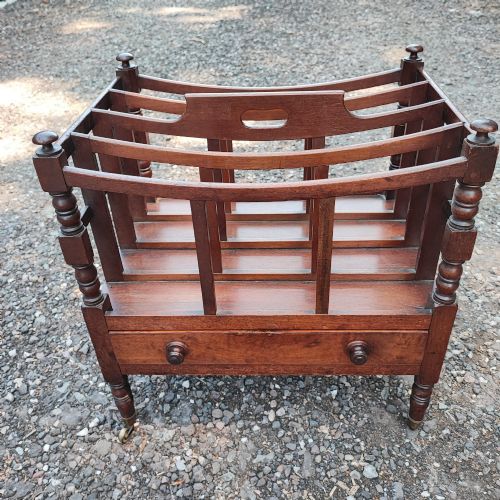
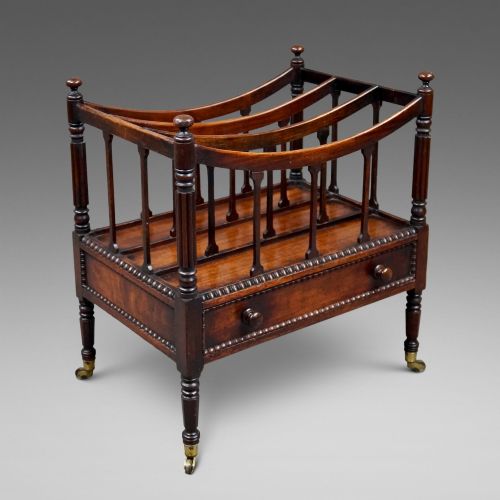
When you search for a regency magazine stand, you encounter pieces primarily known historically as canterburys, alongside folio stands and magazine tidies. These pieces served to hold newspapers, sheet music, and periodicals in the principal rooms of grand houses.
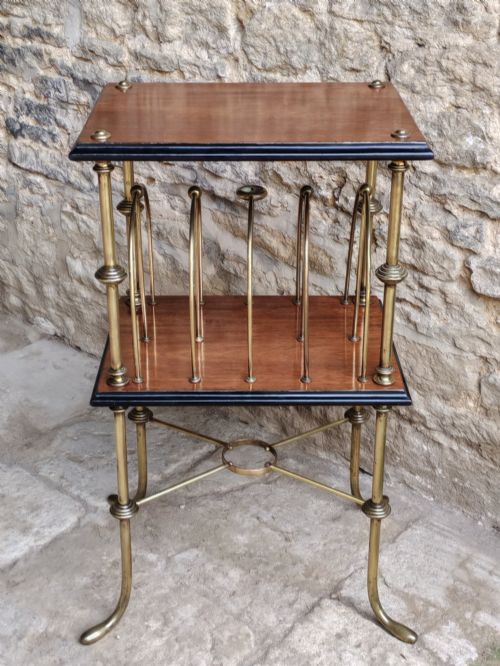
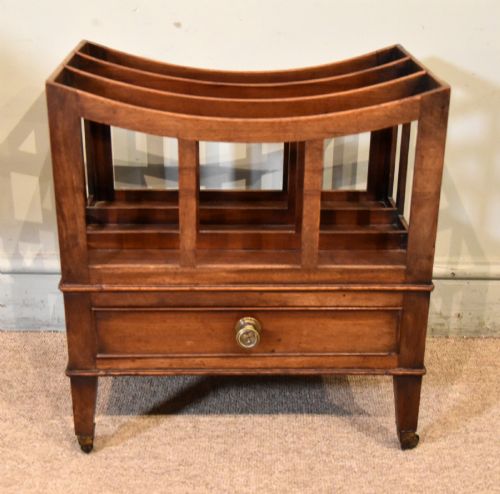
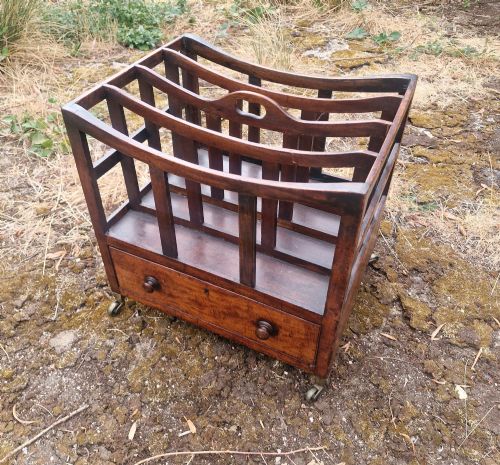
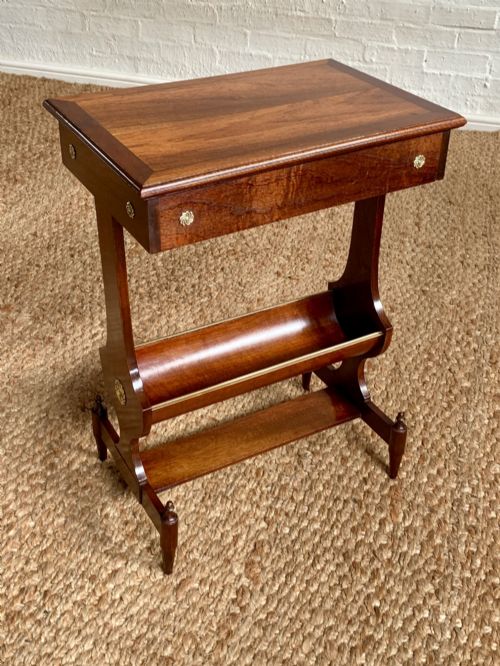
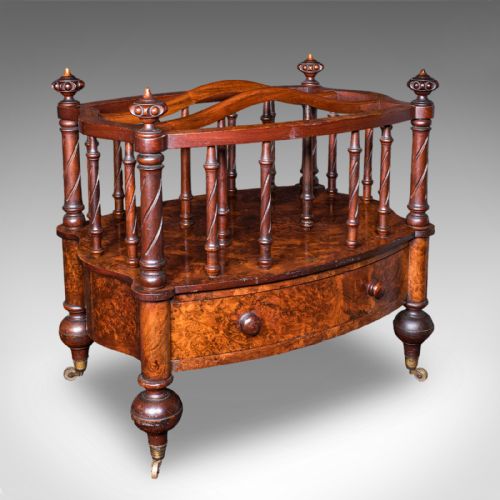
The pieces appearing on this page span the Regency period itself as well as later revivals, maintaining the characteristic low profile and compartmentalised frame. Mahogany and rosewood dominate the forms, often fitted with drawers beneath the divisions and supported on castors.
Most examples function with open vertical partitions designed to keep reading matter upright and accessible near seating areas. Variations include boat-shaped frames and revolving designs intended for music or folios.
How they were made
Cabinetmakers constructed these stands predominantly in dense hardwoods such as mahogany, rosewood, and burr walnut, occasionally utilising Cuban mahogany for substantial proportions. Timber selection provided both structural rigidity for the dividers and a polished surface for the grain.
Brass details appear frequently, taking the form of castors, carrying handles, or inlaid banding that complements the dark wood tones. Joinery techniques ensured the vertical slats and corner supports remained secure under the weight of heavy paper volumes.
Regency Magazine Stand Retail Price Guide 2026
Typical asking prices for regency magazine stand among the pieces listed under this phrase on Sellingantiques today, from the lower quarter to the upper quarter. They describe what is for sale here now, not the wider market.
Some stands feature carved Prince of Wales feathers, giving polite historical allegiance right beside your daily newspapers.
What varies in quality
Quality rests in the crispness of the turning on the legs, the sophistication of any carved details such as Prince of Wales feathers, and the choice of highly figured veneers. Plain mahogany pieces sit at one end of the scale, while substantial rosewood examples with integrated drawers and fine brass mounts represent more ambitious workshop output.
The harmony of proportions dictates the visual success of the piece, separating standard utility items from refined examples made by notable makers like Gillow's. The integration of functional elements, such as smooth-running drawers and original castors, marks the distinction between ordinary and superior production.
The Regency Magazine Stand Glossary
- Canterbury
- A low stand with vertical divisions used for holding loose papers, sheets of music, and periodicals. The form originated around the late eighteenth century and remained popular through the Victorian era.
- Folio Stand
- A large adjustable or fixed stand designed to hold oversized prints, drawings, and bound plates. These pieces often feature substantial trestle supports rather than small turned legs.
- Division
- One of the individual vertical sections forming the interior rack of a stand. These partitions keep stacked volumes separated and upright.
- Castor
- A small wheel attached to the base of the legs to allow easy movement across carpets and floors. Original brass examples enhance the period integrity of the stand.
- Etagere
- A set of open shelves for displaying small objects, sometimes combined with lower rack sections. The term describes tiered furniture popular in the nineteenth century.
Regency Magazine Stand: Frequently Asked Questions
How were they used originally?
These stands kept daily newspapers, weekly journals, and musical scores close to seating areas in the home. Musicians placed sheet music in the divisions for easy access near pianos or music stands.
The low profile allowed the stands to sit beside chairs or tables without obstructing views or passage through the room.
How do I tell periods apart?
Regency pieces often display restrained classical lines, sometimes incorporating brass inlay or rosewood veneers. William IV examples tend to be heavier and bolder in their proportions.
Later Victorian and Edwardian revivals frequently echo these earlier silhouettes but utilise different secondary timbers or machine-cut details. Examining the construction methods and wood ageing helps clarify the date.
Where should I place one?
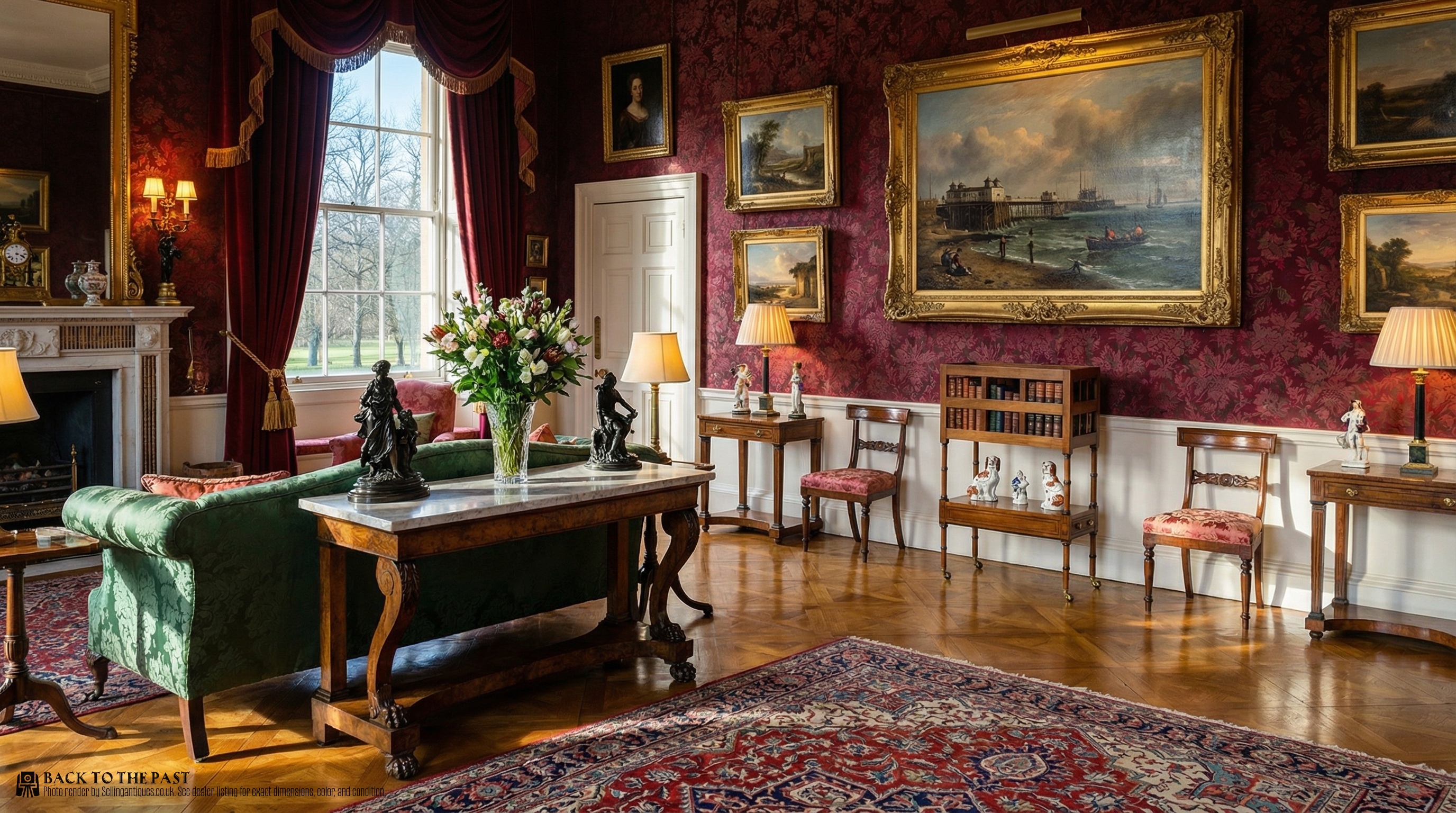
These stands fit naturally beside a sofa or armchair to hold current reading matter and magazines. Their compact footprint also suits hallways or studies as functional accent furniture.
Avoid placing them in direct sunlight or near heat sources to protect the polished wood surfaces and veneers.