
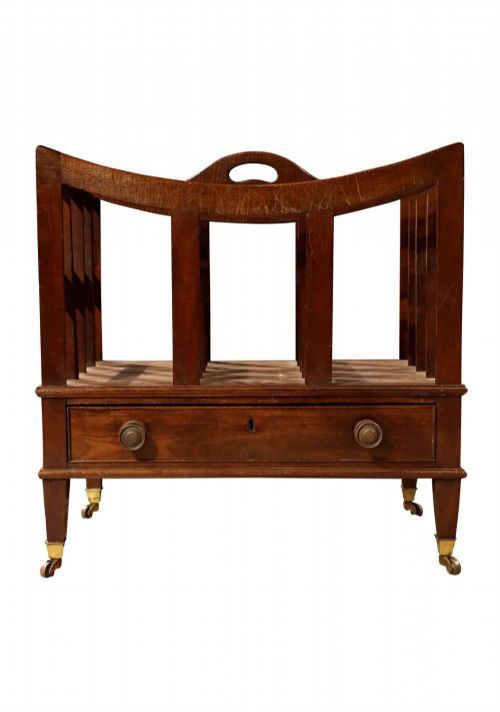


Georgian Sheet Music Rack
A georgian sheet music rack brings order to scores and folios with the refined proportions of the Regency and Georgian periods.
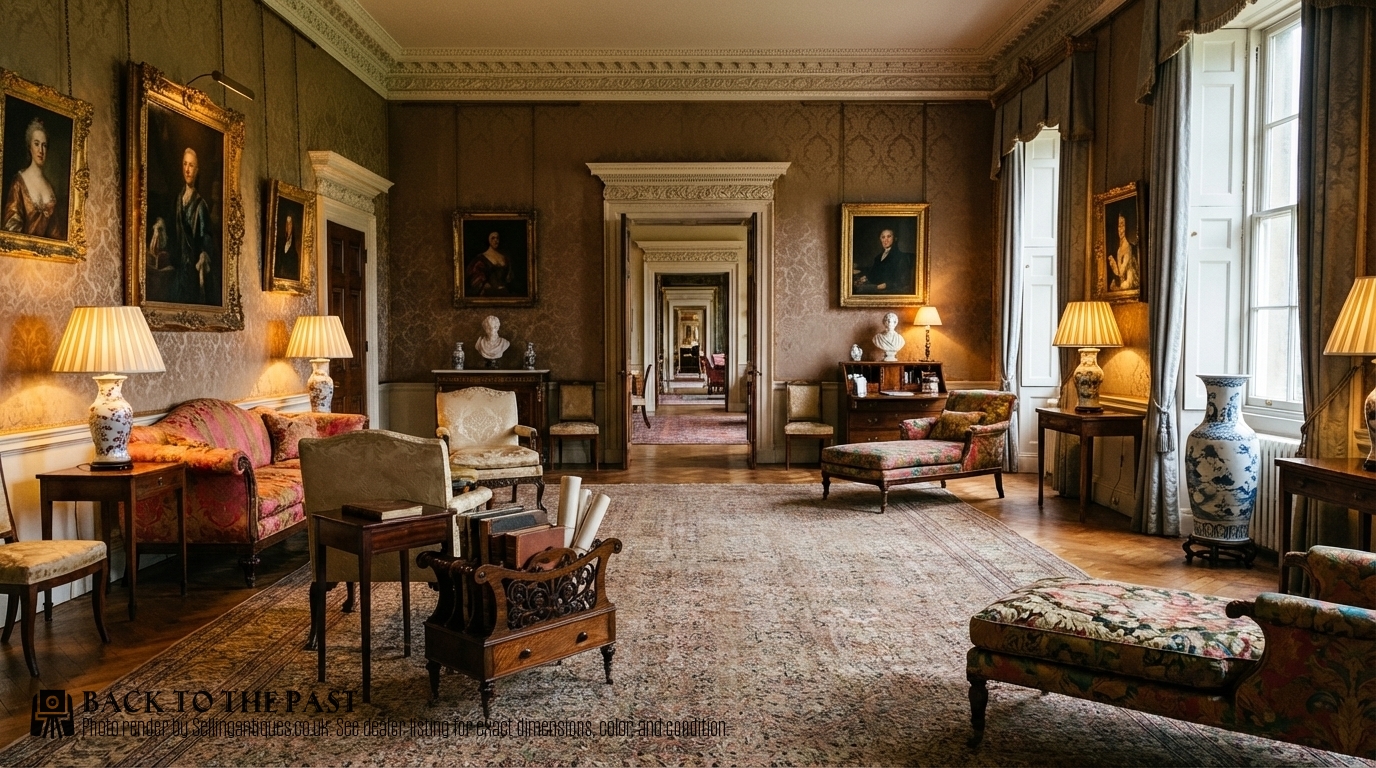
Georgian Sheet Music Rack
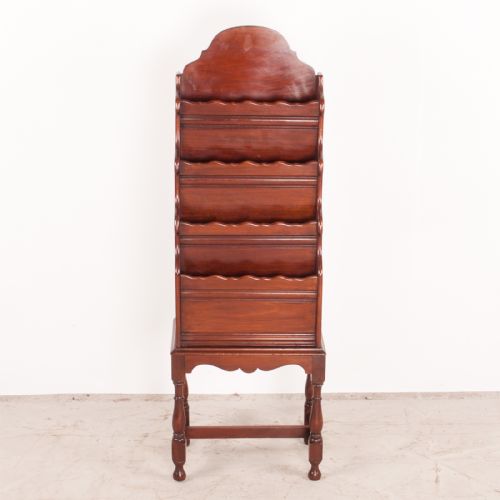
When searching for a georgian sheet music rack, collectors encounter pieces primarily designated as canterburys, alongside music stands and magazine tidies spanning the Georgian, Regency, William IV, and Victorian periods.
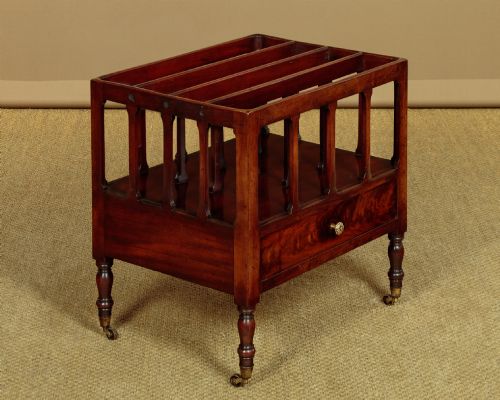
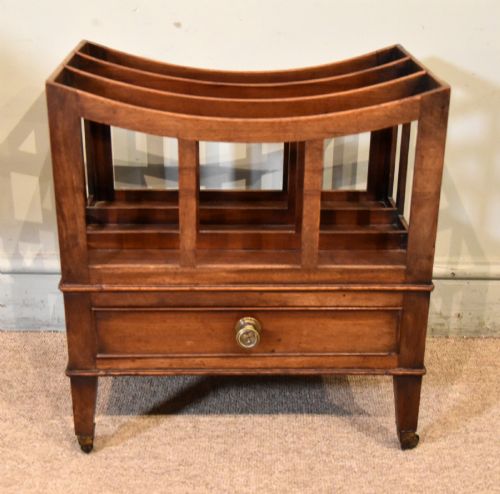
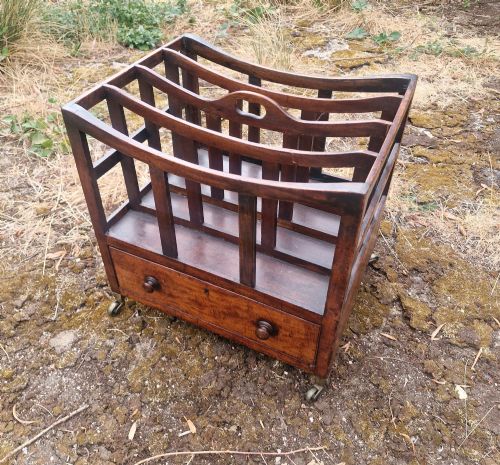
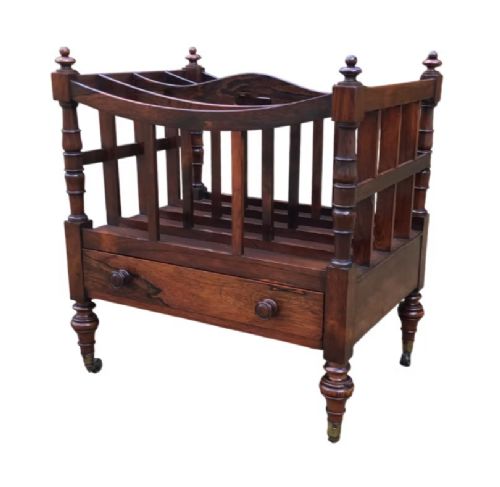
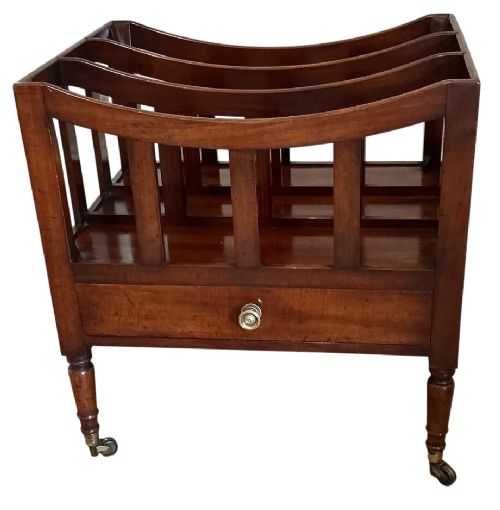
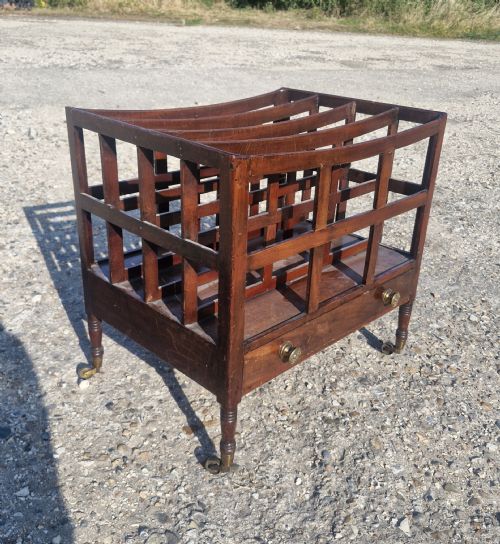
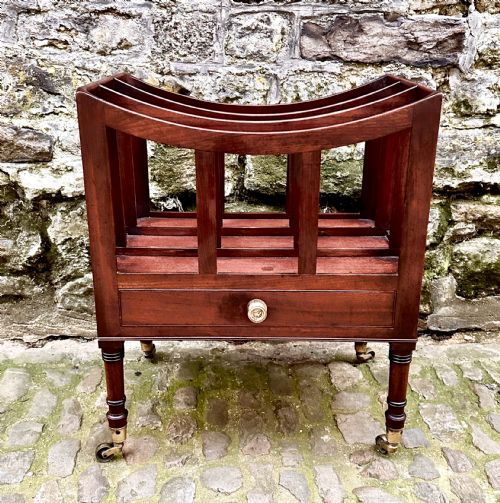
The form most frequently met on this page is the freestanding mahogany or rosewood canterbury featuring slatted dividers for upright storage, often incorporating a low drawer beneath the main tier.
Originating as stands for holding musical folios near the pianoforte, these pieces appear in boat-shaped variants and larger designs attributed to Regency aesthetics and later revivals.
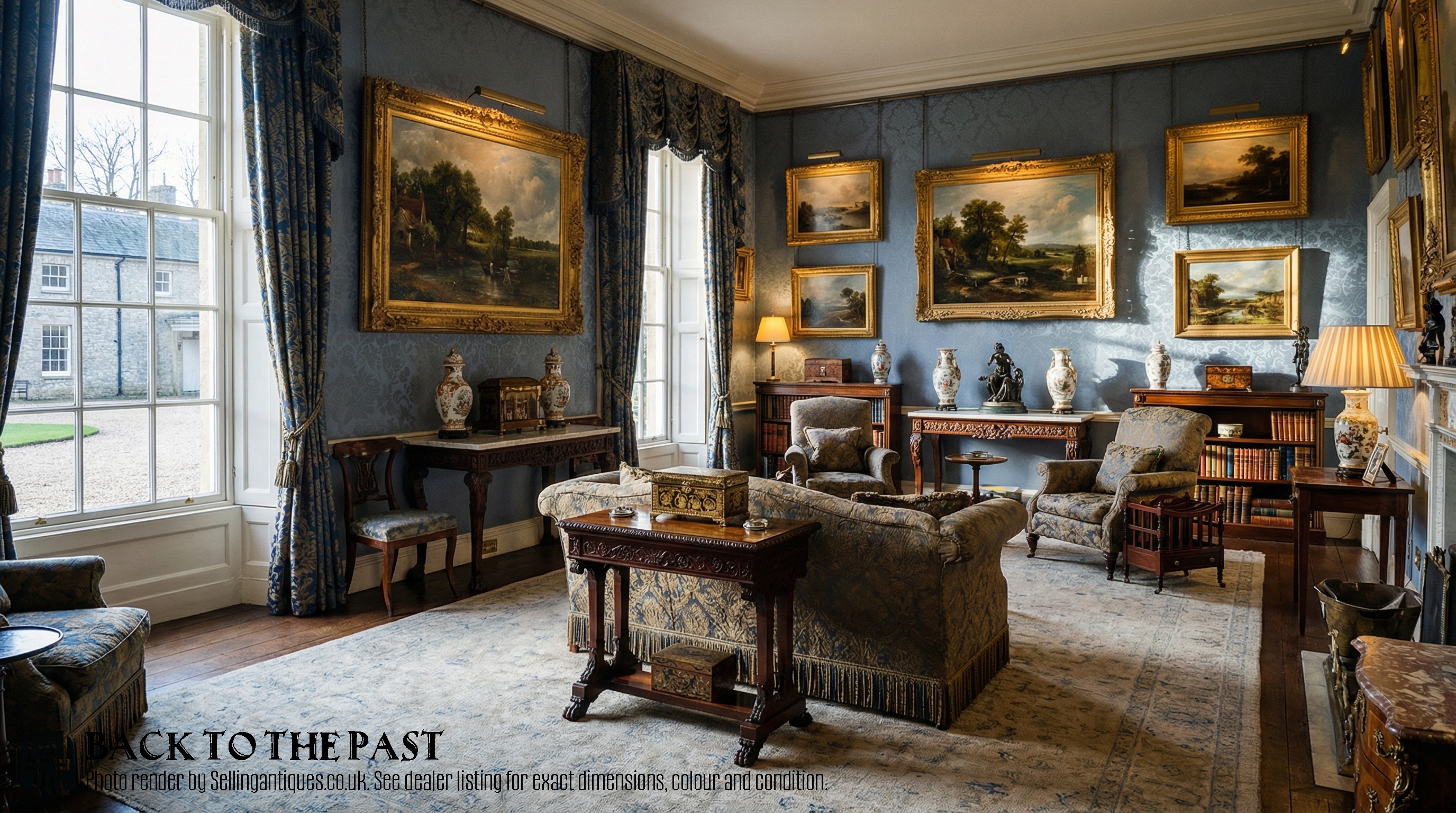
How they were made
Cabinetmakers constructed these pieces predominantly from dense timbers like mahogany, Cuban mahogany, and rosewood, frequently incorporating contrasting stringing such as ebony inlay.
Structural integrity relied on turned legs fitted with brass castors to allow smooth movement across carpets in period drawing rooms and parlours.
Carved details, including Prince of Wales feathers or reeded supports, demonstrated the proficiency of the workshop in shaping solid hardwoods.
Georgian Sheet Music Rack Retail Price Guide 2026
Typical asking prices for georgian sheet music rack among the pieces listed under this phrase on Sellingantiques today, from the lower quarter to the upper quarter. They describe what is for sale here now, not the wider market.
The furniture spans the Georgian, Regency, William IV, and Victorian eras, alongside Edwardian and later revivals.
What varies in quality
The distinction between standard examples and finer items rests upon the choice of timber figure, such as richly grained Cuban mahogany or polished rosewood, paired with crispness in turned or carved elements.
Proportion and execution define the upper tier of the range, where slender divisions, integrated drawers with clean dovetails, and original brass castors remain undisturbed by heavy restoration.
The Georgian Sheet Music Rack Glossary
- Canterbury
- A low stand with upright divisions, originally designed for holding sheet music or books, resting on legs with castors. The form gained popularity in the late eighteenth century.
- Inlay
- A technique where pieces of contrasting wood or metal are fitted into a recess on the surface to create decorative patterns. Ebony bandings on mahogany provide a sharp linear contrast.
- Regency
- The British stylistic period spanning the early nineteenth century, characterised by classical restraint, Grecian influences, and refined cabinetwork. Pieces from this era often employ rosewood and bold brass mounts.
- Boat-shaped
- A curved hull-like contour found on the sides of certain freestanding canterburys from the Regency period. This profile softens the rectangular geometry of the stand.
- Castor
- A small wheel mounted in a swivel frame attached to the base of furniture legs for ease of movement. Brass versions are typical on nineteenth-century stands.
Georgian Sheet Music Rack: Frequently Asked Questions
What is a georgian sheet music rack?
A georgian sheet music rack is typically a freestanding canterbury built to hold folios and scores upright near a keyboard instrument. These pieces feature slatted compartments and frequently rest on turned legs with castors.
Cabinetmakers of the period also produced adjustable music stands and companion tables with lower tiers for paper storage. Their primary function was keeping performance materials organised and accessible in the drawing room.
How were these stands used?
Musicians placed these racks beside the pianoforte or harp to store active sheet music and manuscript books. The open divisions allowed performers to select scores quickly during practice or recitals.
Lower drawers served to hold smaller accessories, loose papers, or tuning tools. Over time, households adapted the stands to hold newspapers and magazines.
How do I date a canterbury?
Dating relies on timber choice, leg turning, and overall stylistic vocabulary. Earlier examples from the Georgian period favour mahogany with restrained lines, while Regency and William IV pieces often use rosewood, bold carving, and boat-shaped profiles.
Secondary woods and construction methods inside any integrated drawers also offer clues to the decade of manufacture. Revivals from later in the nineteenth century imitate these traits with slightly different joinery standards.
Are these stands sturdy enough for daily use?
Most surviving pieces possess durable hardwood frames built to withstand the weight of heavy paper folios. The slender partitions and leg joints benefit from careful handling rather than heavy loads.
Placing the stand away from direct heat sources helps preserve the polished rosewood or mahogany surfaces. Regular checks on the castor attachments ensure smooth movement across the floor.