





Antique Walnut Paper Rack
An antique walnut paper rack brings practical organisation and rich timber grain to a room, most often appearing as a Victorian canterbury.
Antique Walnut Paper Rack
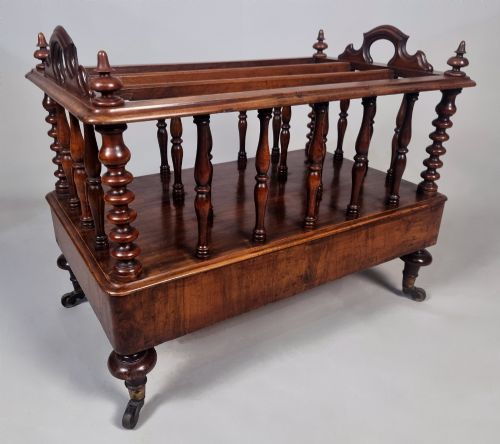
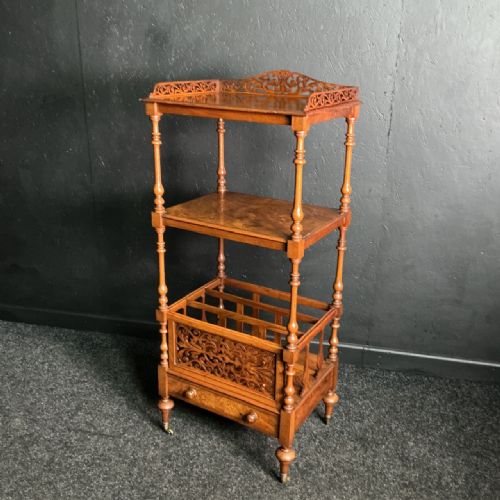
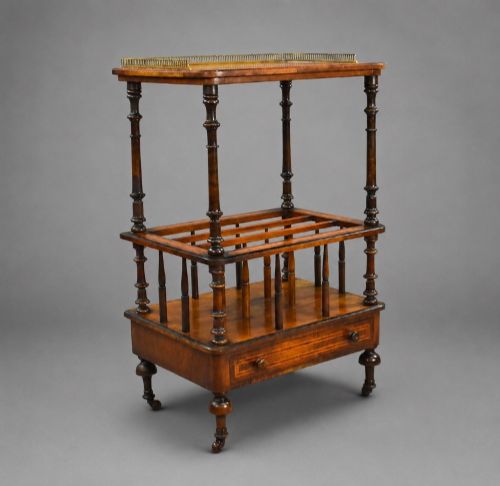
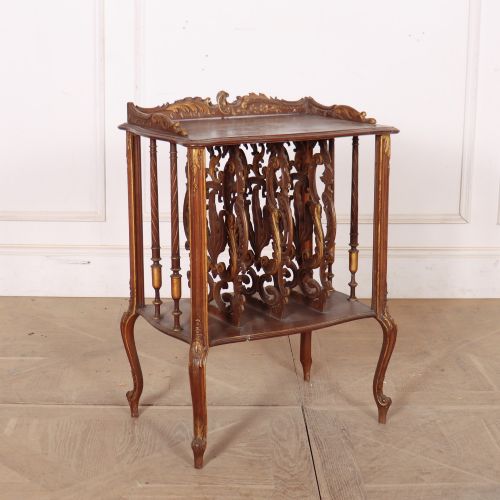
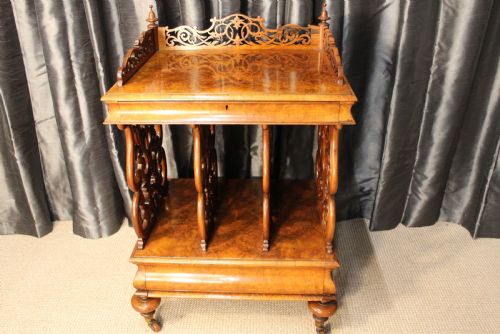
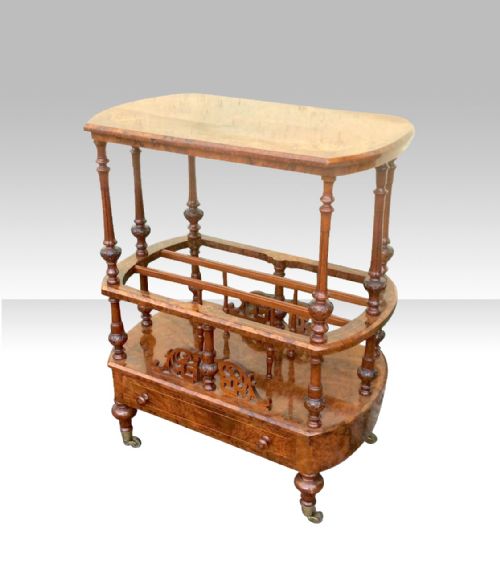
An antique walnut paper rack serves to hold newspapers, magazines, and sheet music, primarily taking the form of a canterbury or whatnot in these listings. These pieces date predominantly from the Victorian period, alongside examples from the Regency era.
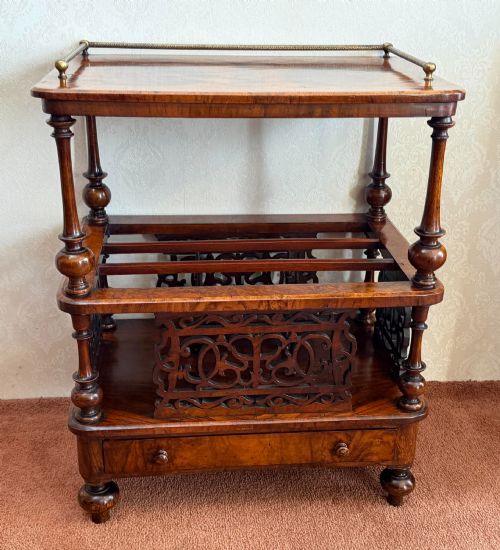
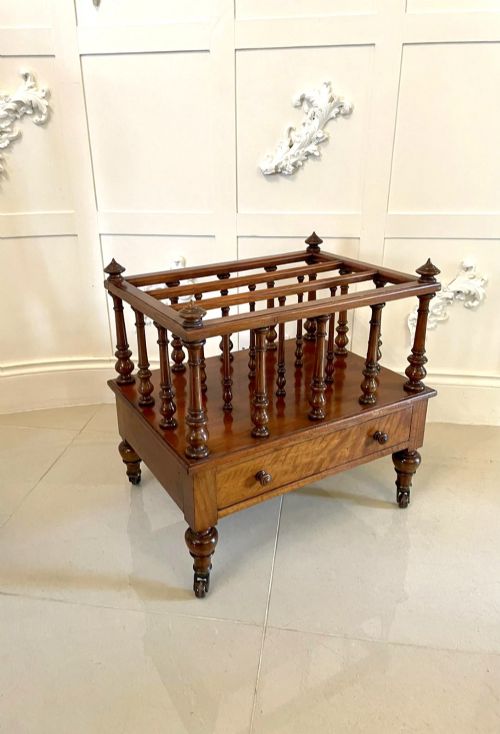
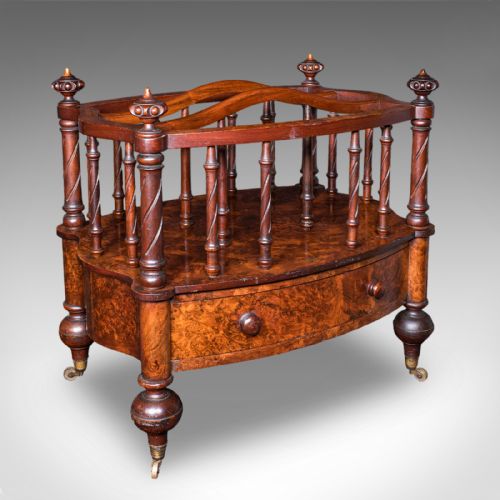
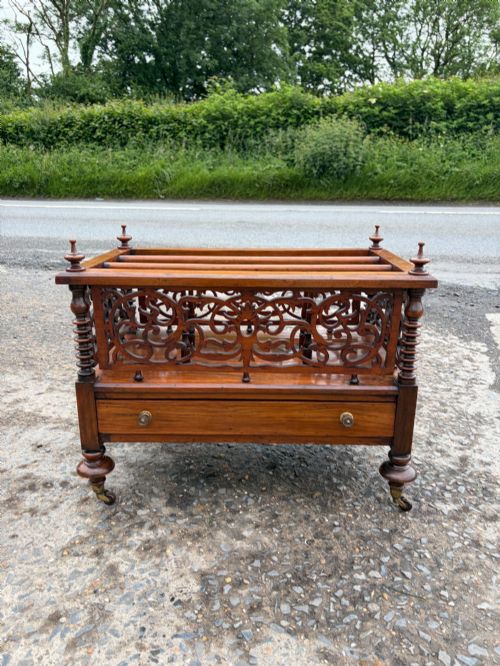
The primary function involves dividing papers or folios into upright partitions, frequently supplemented by a low drawer beneath or supported on turned legs with castors. Buyers encounter various designations across the inventory, including magazine racks, music stands, and lamp tables combined with racks.
What varies in quality
The distinction between standard and superior pieces rests on the choice of timber and the complexity of the decoration. Highly figured burr walnut veneers combined with intricate boxwood inlay and marquetry elevate a piece above plain walnut versions.
Structural additions such as integrated drawers, turned columns, and substantial proportions indicate finer craftsmanship. The presence of original brass hardware and matching ceramic castors also distinguishes better examples.
Antique Walnut Paper Rack Retail Price Guide 2026
Typical asking prices for walnut paper rack among the pieces listed under this phrase on Sellingantiques today, from the lower quarter to the upper quarter. They describe what is for sale here now, not the wider market.
The listings feature walnut and burr walnut predominantly, supplemented by brass, boxwood inlay, and ceramic components across Victorian and Regency pieces.
The Antique Walnut Paper Rack Glossary
- Canterbury
- A low stand with upright partitions designed for holding newspapers, sheet music, or folios. Many incorporate a small drawer at the base.
- Burr walnut
- A veneer taken from the warted growths of walnut trees, prized for its swirling, highly figured grain patterns. Cabinet makers used it on the primary display surfaces of Victorian furniture.
- Whatnot
- An open set of freestanding shelves used for displaying ornaments or holding books and papers. Several pieces combine this form with a canterbury base.
- Marquetry
- Decorative patterns formed by fitting contrasting pieces of veneer into a wood ground. This technique often appears on the top surfaces and panels of Victorian pieces.
- Fretwork
- Ornamental design perforated through the wood, seen on the partitions or side panels of certain stands.
Antique Walnut Paper Rack: Frequently Asked Questions
What is a canterbury?
A canterbury is a low, compartmentalised stand originally built for holding sheet music and newspapers. These pieces sit on castors for easy movement around a drawing room.
Many examples include a single drawer beneath the partitions for smaller items.
How do I use one today?
These racks hold current magazines, journals, and daily newspapers near a sofa or armchair. They keep reading material neatly organised and elevated off the floor.
Larger variations with flat tops also function as occasional lamp tables.
How do I date a piece?
Most items date to the Victorian period, typically between 1850 and 1890, though a few Regency examples appear. Stylistic clues such as burr walnut veneers, boxwood inlay, and turned legs point to mid-to-late nineteenth-century production.
Construction methods like hand-cut dovetails in the drawers further confirm the era.
Are they sturdy enough for daily use?
These pieces were built to withstand regular household use, employing solid timber frames and sturdy partitions. The inclusion of castors allows them to be repositioned without straining the joints.
Care should be taken not to overload the partitions with heavy modern volumes beyond their intended paper capacity.