

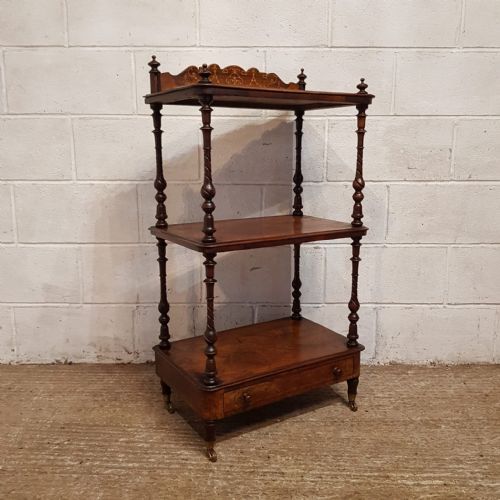


Antique Music Shelf
An antique music shelf brings tiered display and partitioned storage into a room, joining the utility of a Canterbury with the open tiers of an étagère.
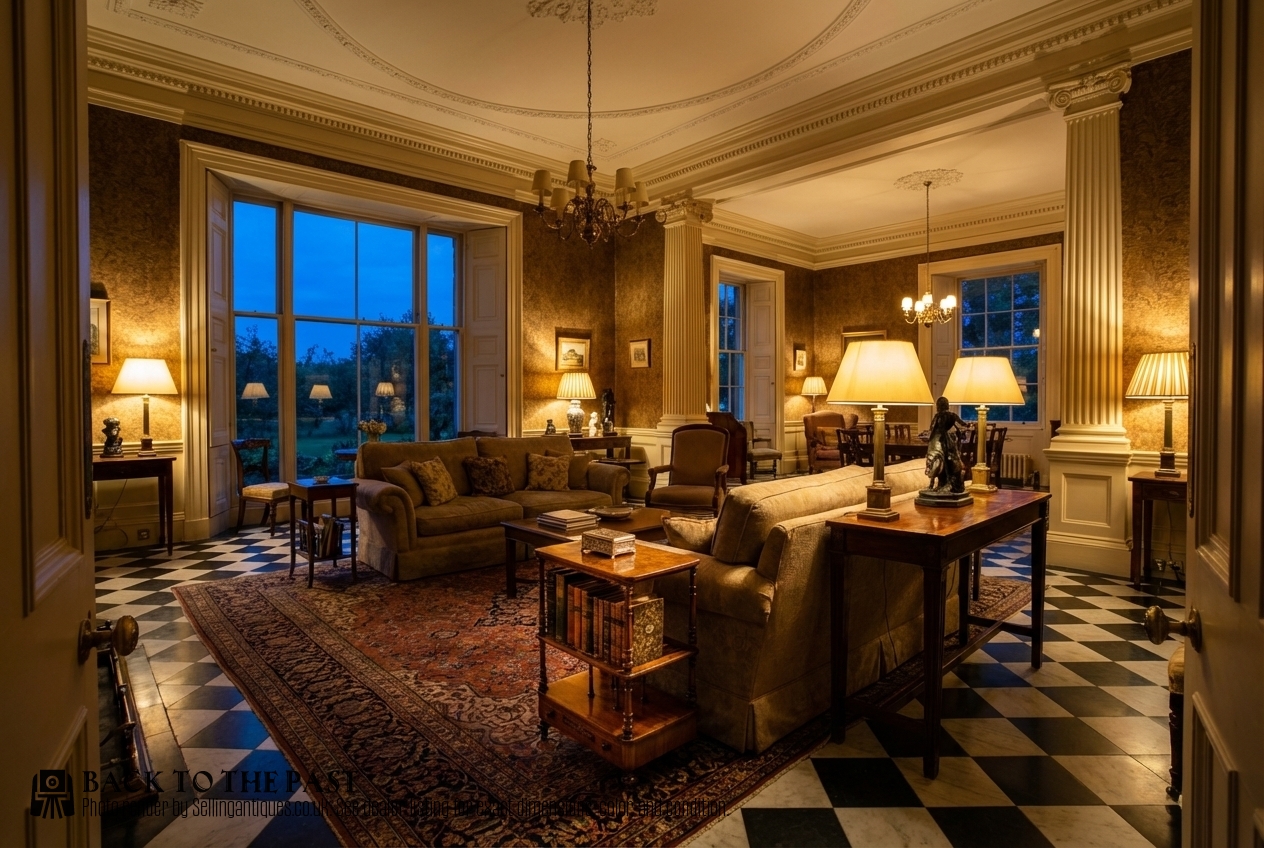
Antique Music Shelf
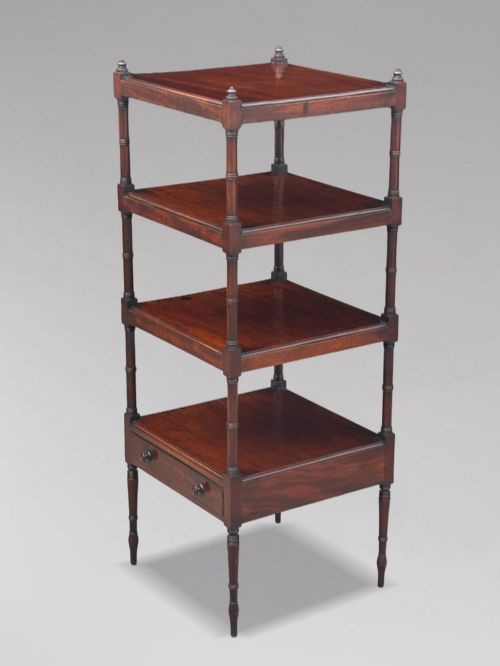
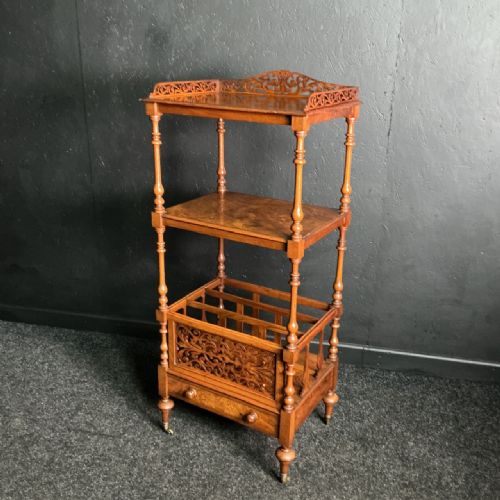
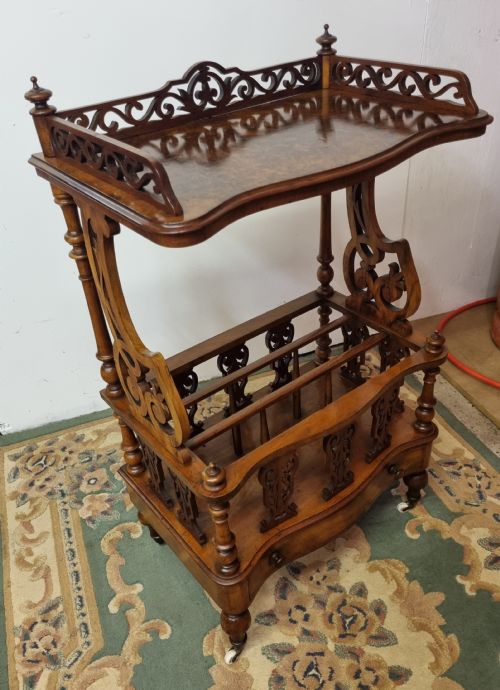
When you search for an antique music shelf, you encounter pieces that merge the open shelving of whatnots and étagères with the dedicated vertical dividers of music cabinets and canterburys. Most examples on this page date from the Victorian and Edwardian eras, constructed in forms that range from multi-tiered display stands to enclosed cabinets with lower drawers.
The objects span simpler mahogany and walnut frames to elaborate rosewood and burr walnut iterations fitted with brass castors and turned feet. Makers combined open stages for folio storage with enclosed compartments, creating versatile furniture designed for sheet music, books, and parlour display.
Materials and construction methods
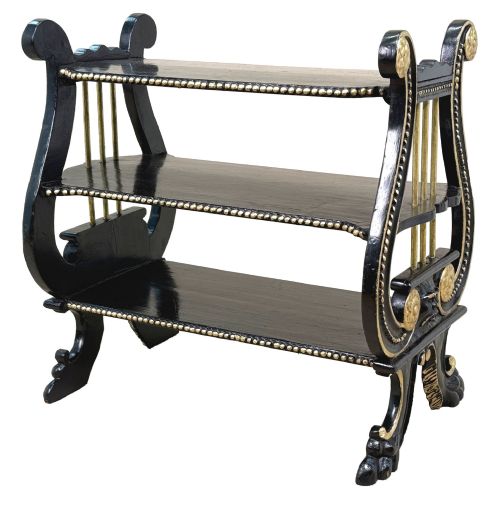
Cabinetmakers utilised rich timber veneers including burr walnut, rosewood, and mahogany over solid pine or oak carcases. Finer details involved ebony inlay, parcel gilding, glazed panels, and ormolu mounts to accent the tiered profiles.
Structural elements relied on turned wooden supports, shaped shelves, and slotted partitions designed to keep bound scores upright. Original brass castors and ceramic components frequently appear on freestanding variants intended for easy relocation around a drawing room.
Some pieces manage to be a whatnot, a Canterbury, and a music cabinet all at once, refusing to choose a single job.
Judging the standard of execution
Quality reveals itself in the choice of timber figure, such as the depth of grain in burr walnut or the dark warmth of selected rosewood. Superior pieces display crisp inlay work, finely turned spindles, and robust joinery that keeps multi-tiered shelves stable.
The integration of functional elements like dovetailed drawers, original brass castors, and well-fitted vertical partitions distinguishes standard production from exceptional workshop output. Attention to secondary timbers and secondary finishes on unexposed parts marks the distinction at the upper end.
Gabriel Viardot·Gillows
The Antique Music Shelf Glossary
- Canterbury
- A low stand featuring upright divisions, originally designed to hold music folios or newspapers. Victorian examples frequently combine this partitioned section with upper whatnot tiers.
- Étagère
- A set of open shelves supported by small columns, used for displaying ornaments and small objects. These pieces sit alongside whatnots in the multi-tiered category.
- Whatnot
- A piece of furniture consisting of open shelves for holding books or ornaments. They appear in single or multi-tier formats across the nineteenth century.
- Parcel Gilded
- Partly covered in gold leaf applied over a prepared surface. This technique highlights carved details or inlaid borders on ebonised frames.
Antique Music Shelf: Frequently Asked Questions
What is an antique music shelf?
An antique music shelf is a multi-tiered piece of furniture designed to hold sheet music, books, and decorative objects in a Victorian or Edwardian interior.
These pieces combine the open display tiers of an étagère or whatnot with the partitioned slots of a Canterbury or music cabinet.
How were antique music shelves used?
Victorians placed these stands in parlours and drawing rooms to keep folio music organised near a piano while displaying small ornaments on upper shelves.
Lower partitions held sheet music upright, while drawers and enclosed cupboards stored smaller accessories and writing materials.
What woods were used for music shelves?
Cabinetmakers relied heavily on dense tropical hardwoods and figured native timbers such as mahogany, rosewood, and walnut.
Burr walnut veneers and ebonised finishes with parcel gilding also appear frequently among nineteenth-century examples.
How do I date a music shelf?
Dating relies on stylistic shifts, moving from the heavier George III and Regency mahogany forms through the rounded walnut of the Victorian era to Edwardian output.
Turned feet, original brass castors, and inlaid details help narrow the manufacturing period alongside construction methods visible beneath the shelves.