


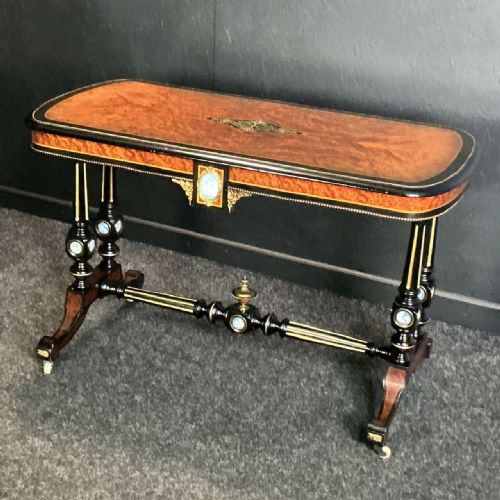
Victorian Walnut Occasional Table
These nineteenth-century occasional tables bring rich timber figures and versatile forms into modern rooms.
What a victorian walnut occasional table is
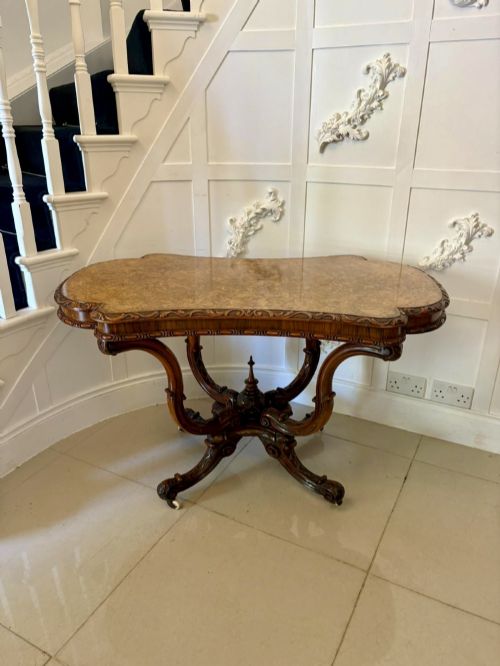
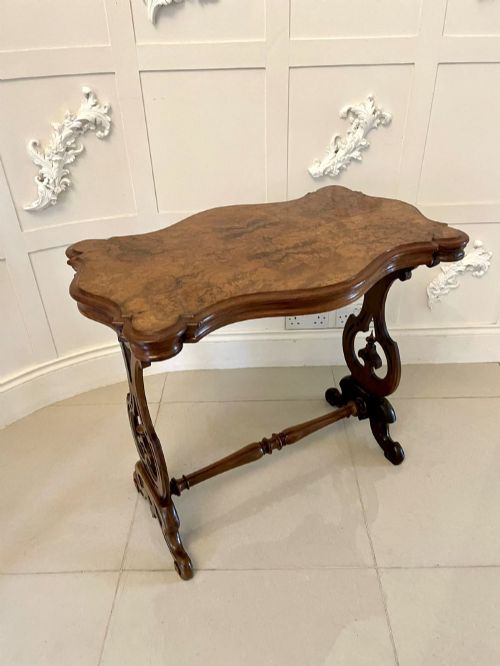
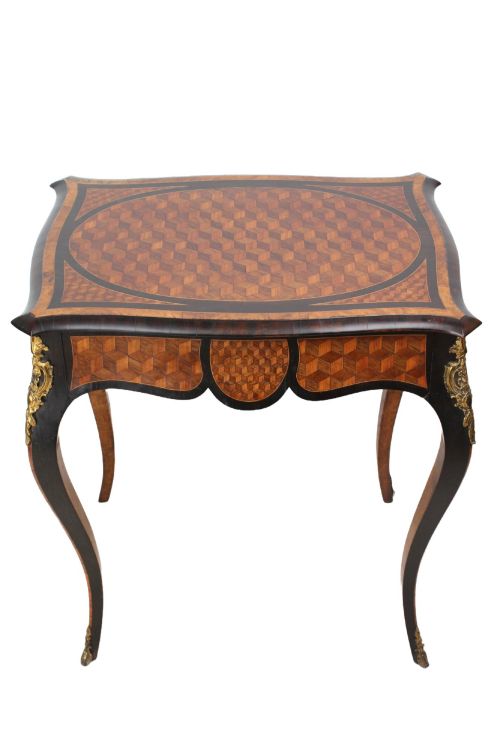
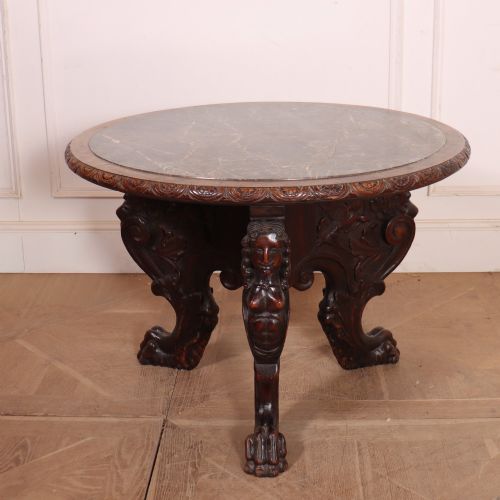
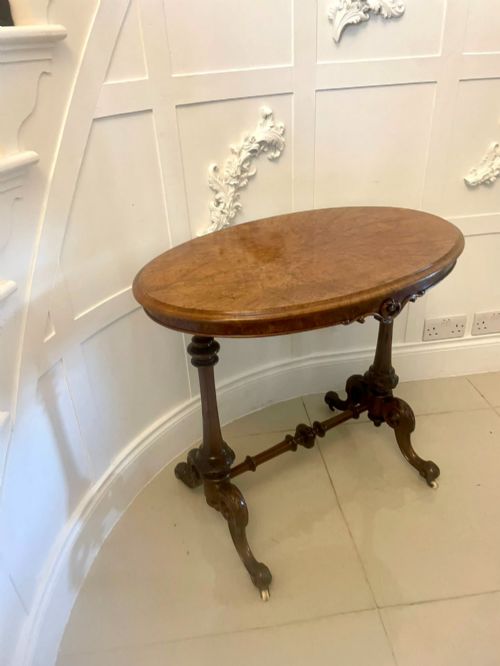
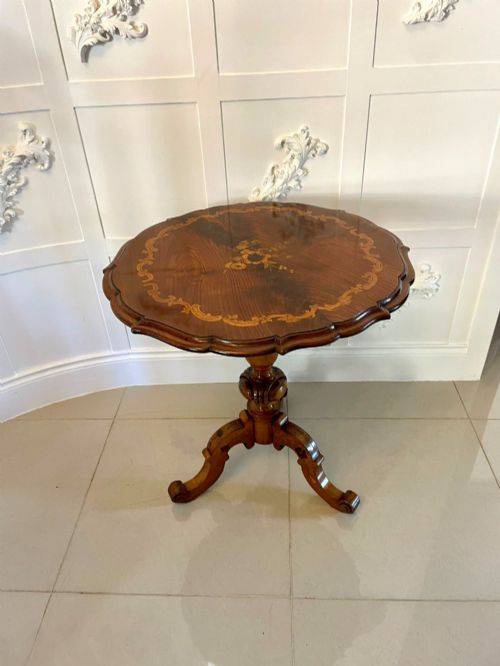
A victorian walnut occasional table serves as a flexible surface for lamps, books and drinks, emerging in various shapes during the nineteenth century. Buyers encounter circular, oval, octagonal and drop-leaf formats designed for specific spots in a Victorian interior.
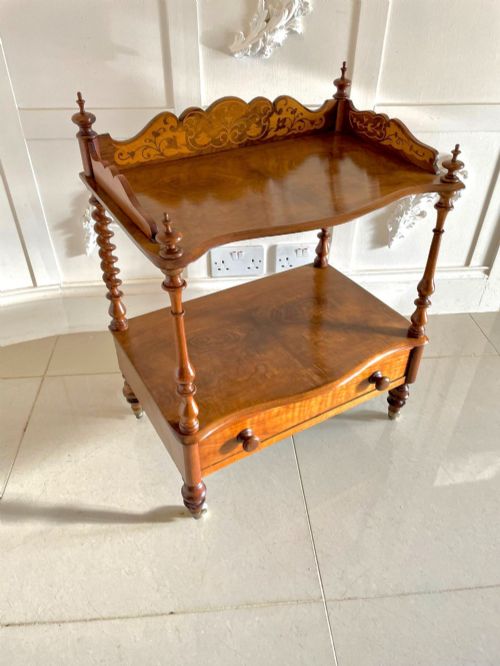
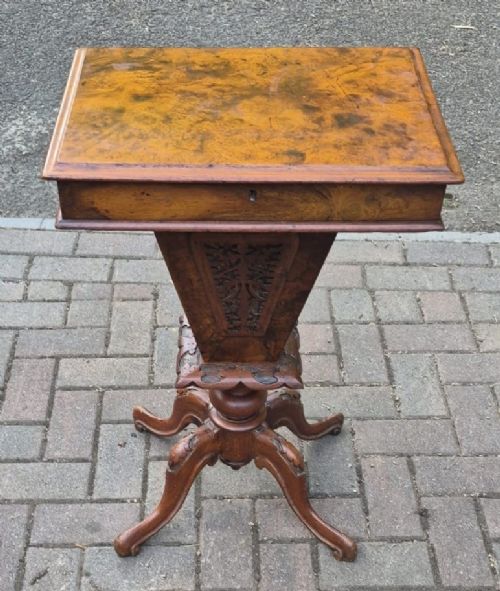
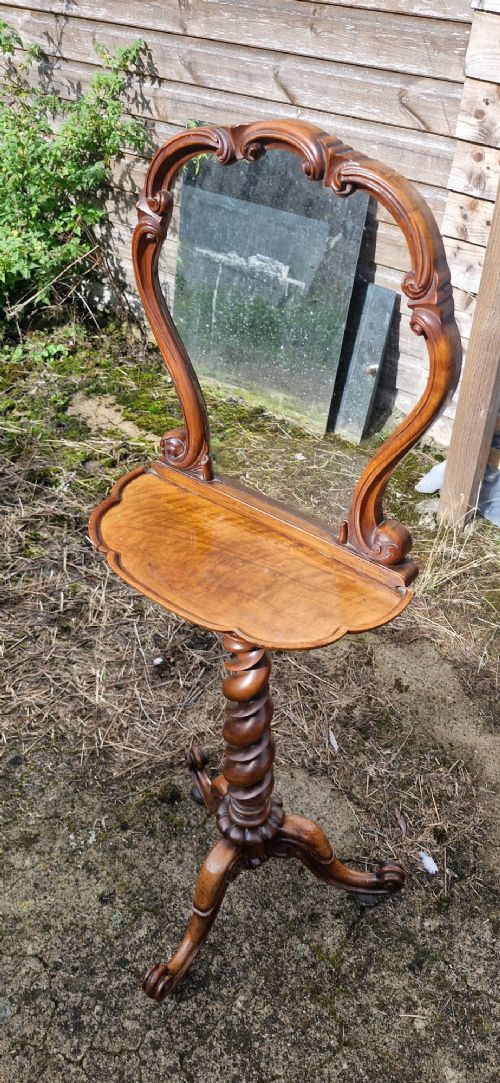
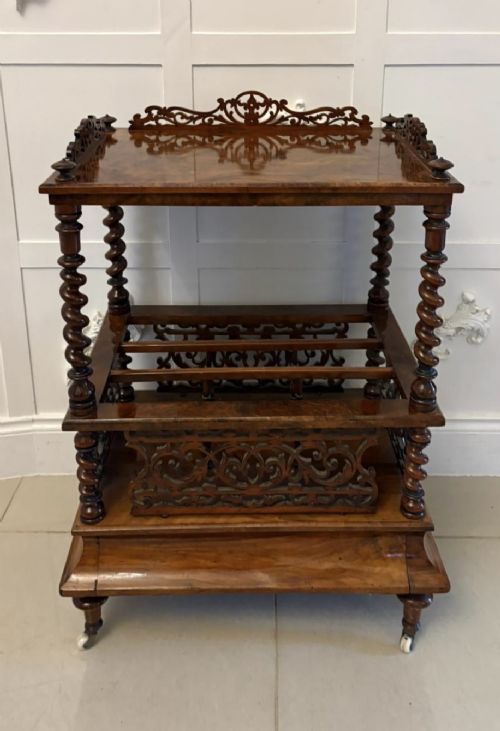
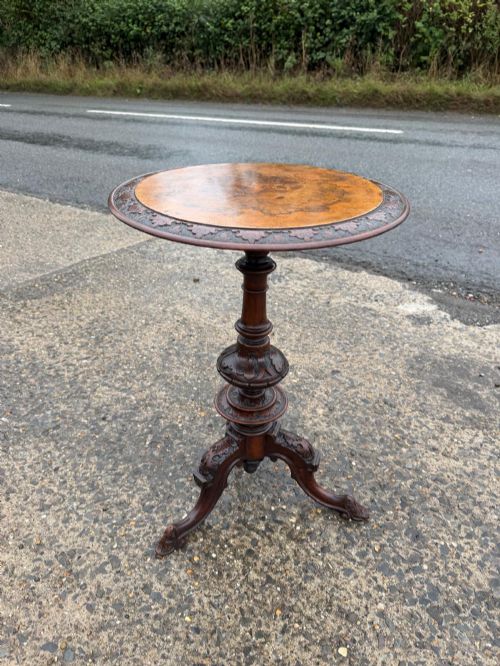
The selection ranges from simple tripod candle stands and side tables to multi-functional pieces like work tables, Canterbury whatnots and revolving book tables. Burr walnut and figured walnut dominate the surviving examples, often enhanced by inlay or drop leaves.
What varies in quality
The distinction between standard pieces and the finest examples lies in the selection of the timber veneer and the precision of the marquetry or boxwood inlay. Richly figured burr walnut with balanced natural patterns elevates the appearance significantly.
Construction details such as stable tripod joints, finely turned legs and clever multi-functional elements like revolving book sections or drop leaves demonstrate superior workshop competence.
Retail Price Guide 2026
Typical UK retail prices for victorian walnut occasional table, calculated from the Sellingantiques database of over a million retail prices indexed since 2003. This retail price guide relies exclusively on Sellingantiques data; no external sources or auction records are used, so the figures do not describe the wider market.
The Victorian Walnut Occasional Table Glossary
- Burr walnut
- A veneer taken from the knotted growths of walnut trees, yielding complex swirling grain patterns. It forms the primary decorative surface on finer nineteenth-century tables.
- Canterbury
- A low stand featuring partitions for sheet music or magazines, often combined with a drawer and an occasional table top. These pieces combine reading storage with a display surface.
- Marquetry
- Fitted wood veneers arranged to create pictorial or geometric designs on tabletops. Artisans use contrasting timbers to achieve this decorative effect.
- Drop leaf
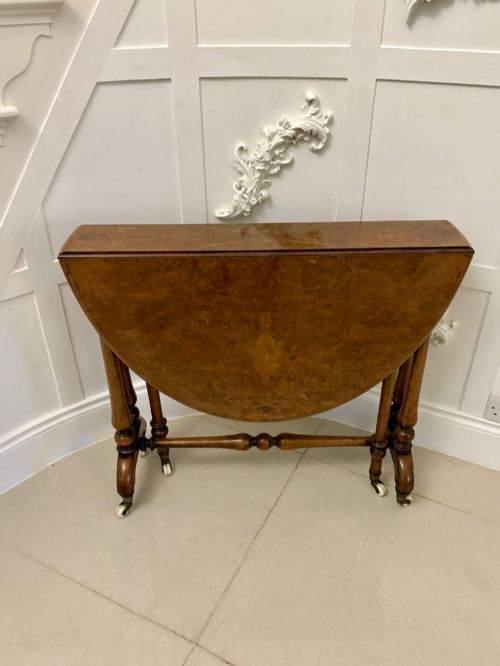
- A hinged tabletop flap that folds down to save space or lifts up to expand the surface area. Sutherland tables and corner tables utilise this mechanism.
- Tripod base
- A central pillar supported by three legs, commonly found on nineteenth-century wine and candle stands. This design provides stability on uneven floors.
Frequently Asked Questions
What is a Sutherland table?
A Sutherland table is a narrow drop-leaf table with hinged flaps that fold almost flat when not in use. They became popular in the Victorian period for easy repositioning.
These versatile tables often feature burr walnut veneers and turned legs, serving well as occasional surfaces in compact spaces.
How do I use an occasional table today?
These nineteenth-century pieces function well as side tables next to sofas or as lamp tables in a corner. Their modest scale allows them to fit easily into modern living layouts.
Multi-functional variants such as Canterbury tables or revolving book tables also provide convenient storage for books and magazines.
What is the difference between side and occasional tables?
The terms often overlap, but occasional tables typically denote smaller, easily moved pieces intended for specific tasks like holding a candle, book or lamp. Side tables frequently stay positioned against a wall.
Victorian makers produced various forms including wine tables, window tables and tripod stands to suit different domestic needs.