



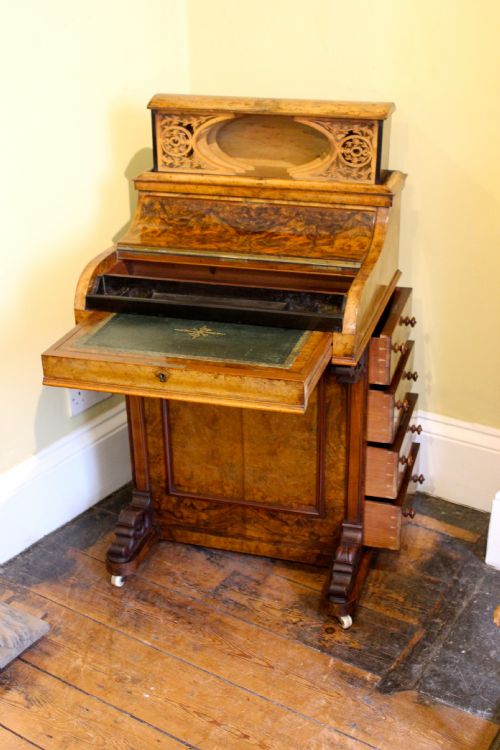
Victorian Walnut Davenport
A victorian walnut davenport brings compact, highly organised writing storage into a room through clever cabinetry.
Victorian Walnut Davenport
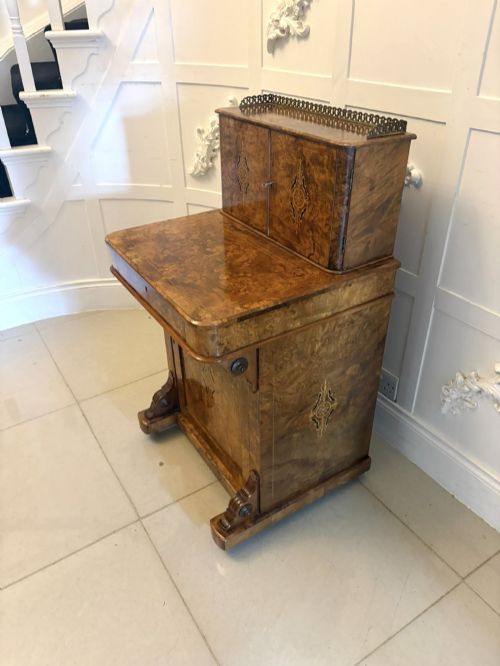
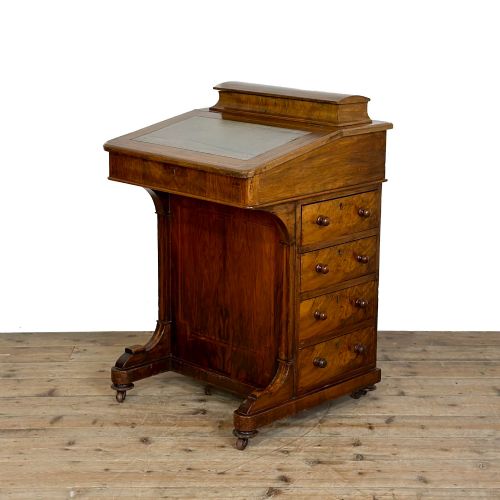
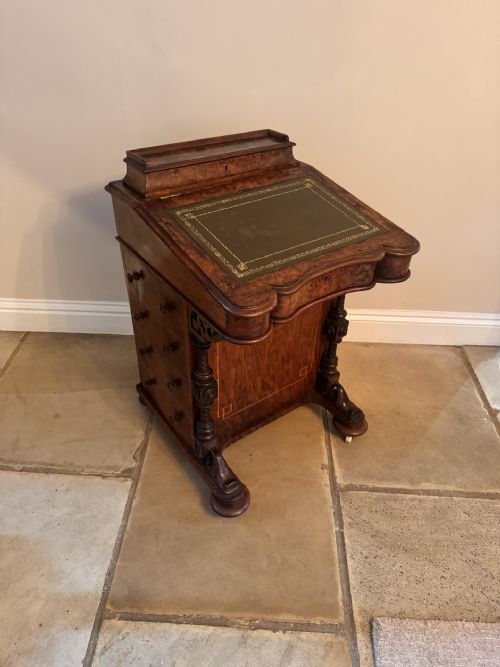
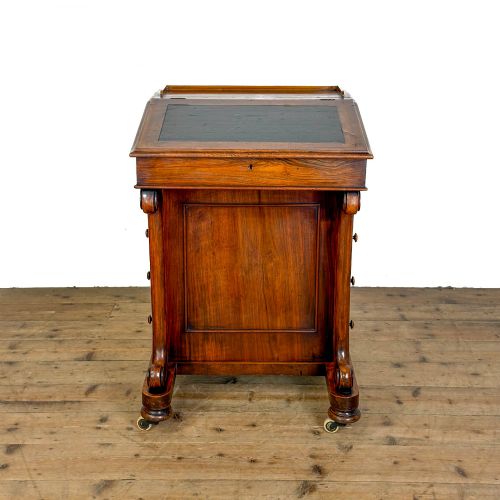
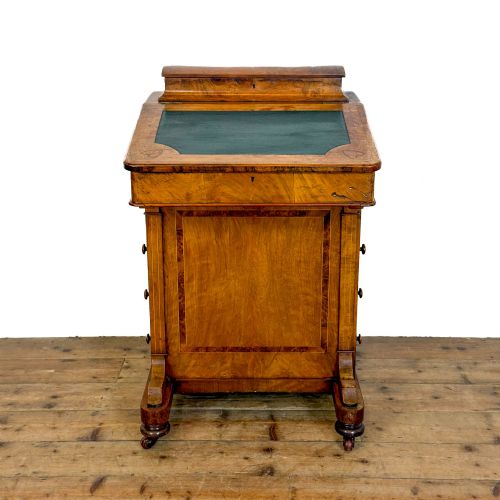
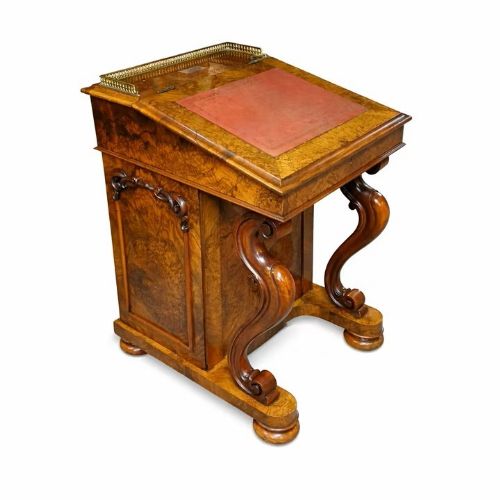
A victorian walnut davenport is a small slope-fronted writing desk originating in the nineteenth century, most frequently encountered in variations dating between eighteen fifty and eighteen eighty. These pieces combine a sloping leather-lined writing surface above a set of drawers with stationary compartments housed on top.
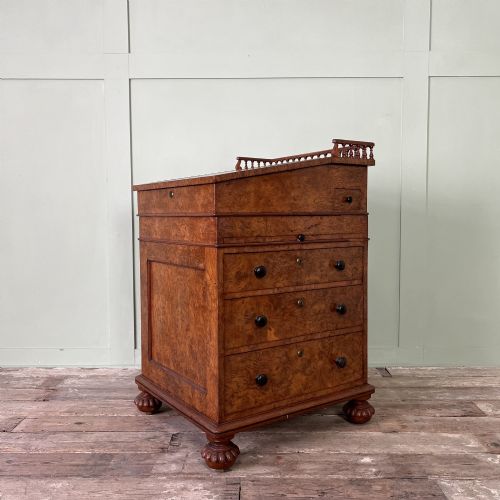
The standard examples seen here include four drawer configurations, freestanding models designed to sit away from a wall, and elaborate piano top or pop-up versions. Makers also produced tall bureau cabinets and specialist work desks within this distinct compact form.
Materials and Technique
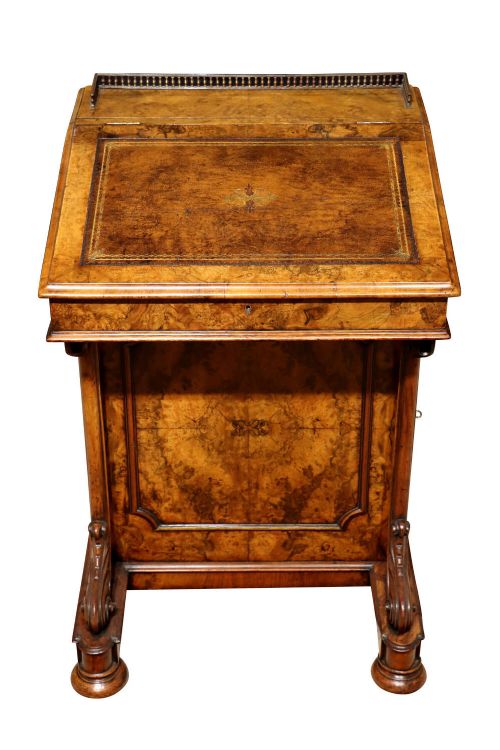
Cabinet makers utilised solid walnut and decorative burr walnut veneers over secondary timbers, often accentuating the grain with crossbanding and ebonised details. Surfaces frequently incorporate intricate boxwood inlay and floral marquetry across the writing slopes and stationary cabinets.
Internal fittings rely on secondary woods like satinwood for small drawers and pigeonholes, whilst functional elements integrate brass hardware and fitted leather writing inserts.
Victorian Walnut Davenport Retail Price Guide 2026
Typical asking prices for victorian walnut davenport among the pieces listed under this phrase on Sellingantiques today, from the lower quarter to the upper quarter. They describe what is for sale here now, not the wider market.
Listings feature walnut, burr walnut, boxwood inlay, and marquetry across nineteenth century Victorian, Aesthetic, and mid-Victorian periods.
Cabinetry and Detail
Differentiation in these desks rests upon the choice of burr veneer figuring, the precision of the boxwood inlay, and the complexity of internal mechanisms found in pop-up and piano top variants. Finer examples display superior timber selection across all sides, allowing the piece to stand freely in a room.
The integration of secondary timbers inside the stationery compartments and the crispness of marquetry work distinguish standard production items from workshop pieces bearing attribution to notable makers.
Gillow & Co·Wilkinson & Son
The Victorian Walnut Davenport Glossary
- Davenport
- A compact pedestal desk featuring a sloping top and side drawers. This form gained popularity during the Victorian era for domestic correspondence.
- Burr Walnut
- Wood cut from a walnut tree growth, yielding highly figured and swirly grain patterns. Cabinet makers used veneers of this material on primary exterior surfaces.
- Marquetry
- Decorative patterns formed by fitting together thin slices of wood veneer and other materials. Artisans applied floral and geometric designs to desk lids and cabinets.
- Pop-Up
- A mechanism within certain desks where opening the writing lid raises an internal stationery compartment. This mechanical feature hides drawers and pigeonholes when closed.
- Crossbanding
- A border strip of veneer laid around the edge of a panel with the grain running perpendicular to the centre. This technique frames the primary wood surface.
Victorian Walnut Davenport: Frequently Asked Questions
What is a davenport desk used for?
These pieces served as compact writing desks for private correspondence and household accounts in nineteenth-century homes. The upper compartment held stationery and ink, while the pedestal drawers stored papers.
Today, they function as practical writing tables or decorative freestanding pieces in studies and living rooms where floor space is limited.
How do pop-up davenports work?
A pop-up or piano top version contains an internal spring or weight mechanism linked to the writing slope. Lifting or sliding the top action automatically raises the stationery nest from the body of the desk.
This ingenious mechanism conceals inkwells and small compartments when the desk is closed, keeping the writing surface clear.
Are all davenports freestanding?
Many examples are finished on all sides to allow placement anywhere in a room rather than flat against a wall. The side drawers typically open on one side while dummy drawers balance the opposite facade.
Buyers should examine the rear panels to confirm whether a specific desk was intended to sit away from walls.
How do I date a victorian davenport?
Dating relies on stylistic shifts between the eighteen fifties and eighteen eighty, moving from robust burr walnut forms to later Aesthetic Movement influences. Cabinet construction methods and hardware types also assist in narrowing the decade of manufacture.
Makers' stamps inside drawers or on brass locks provide definitive attribution when present.