

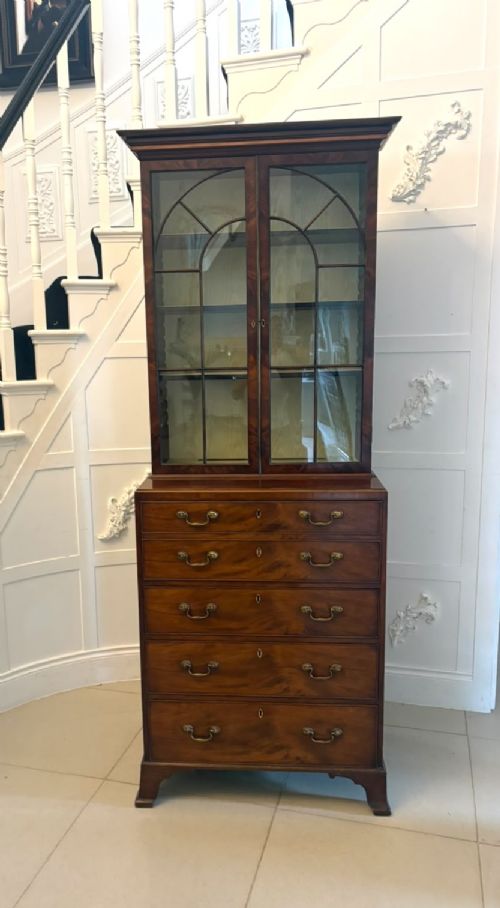
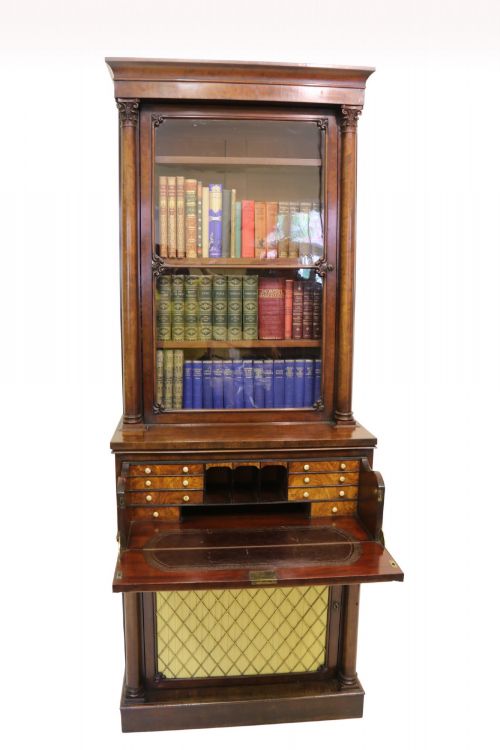

Gillows Writing Desk
A gillows writing desk brings enduring Lancaster cabinet-making into a study through solid timber and considered proportions.
Forms and periods
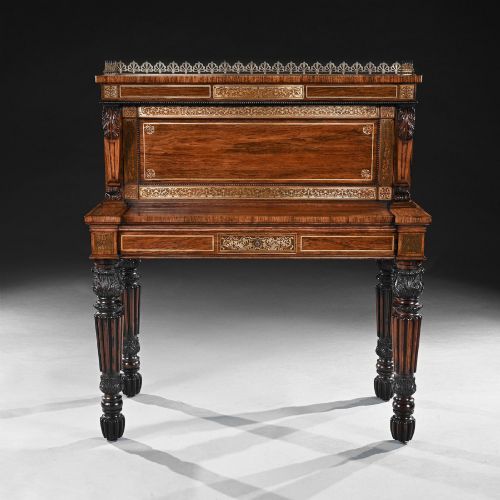
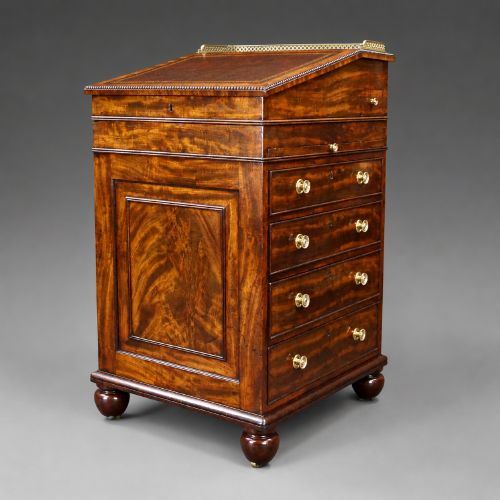
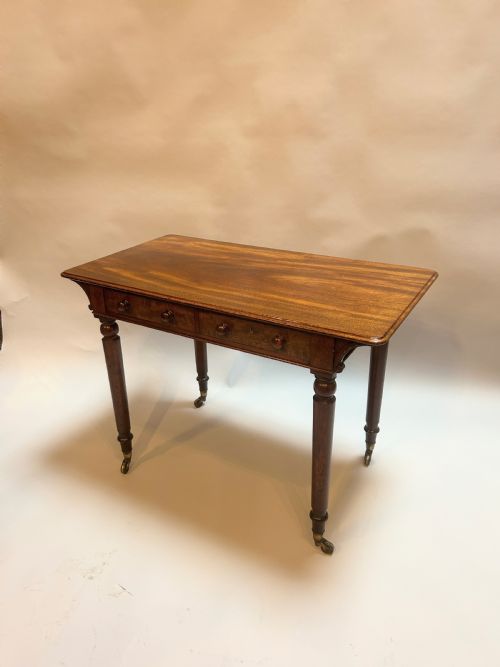
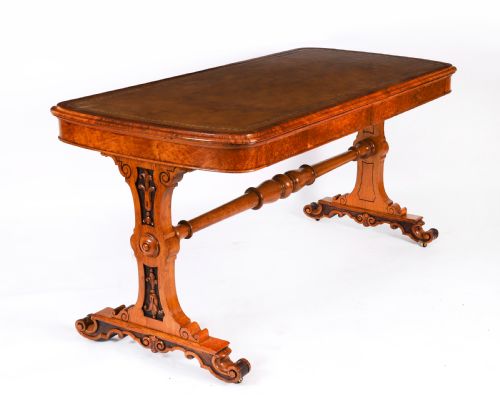
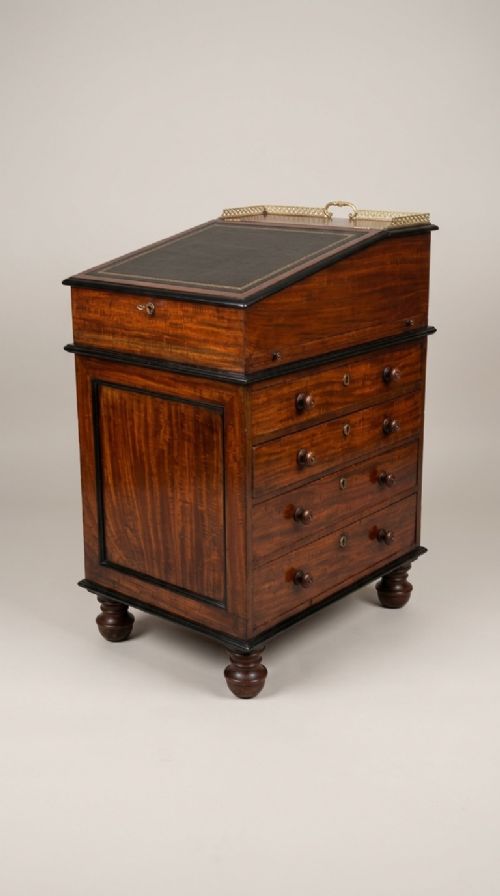
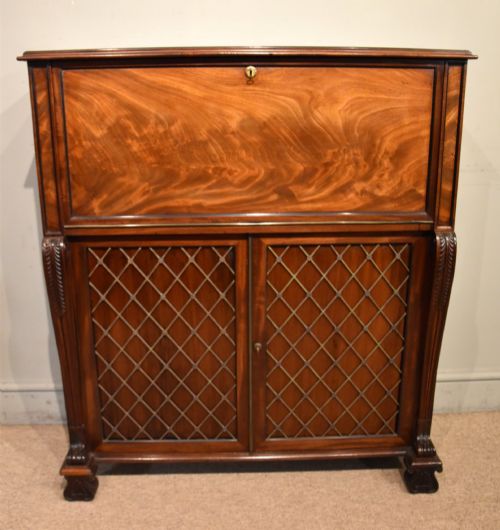
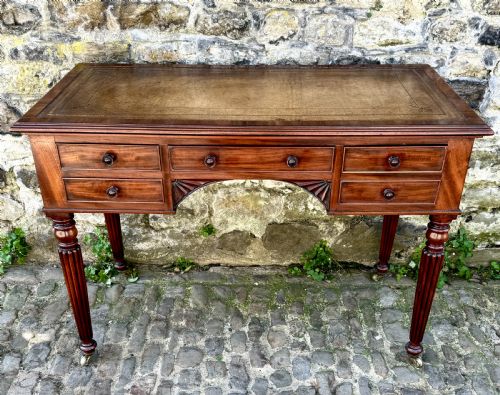
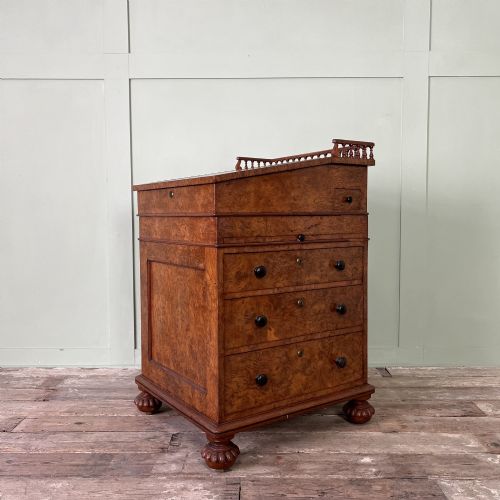
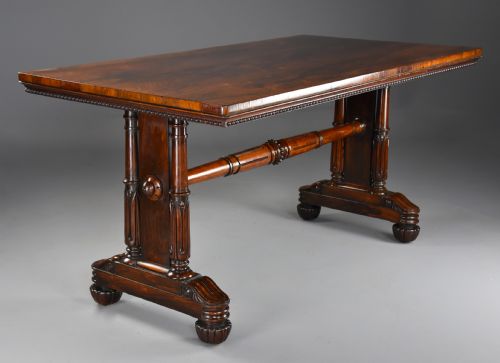
A gillows writing desk spans the Georgian, Regency, and Victorian eras, taking the form of library tables, compact Davenports, and kidney-shaped writing surfaces. These pieces reflect the output of a premier Lancaster and London workshop known for high-grade domestic furniture.
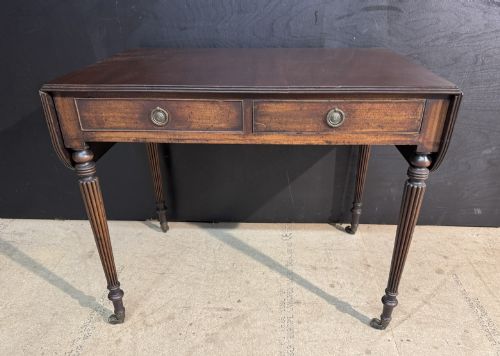
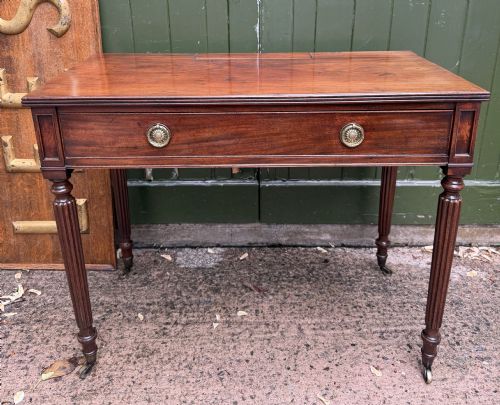
The versions most commonly found here include Victorian mahogany two-drawer tables and compact Regency examples in figured woods. Oak and burr walnut appear alongside mahogany, often paired with inset leather writing surfaces.
Materials and construction
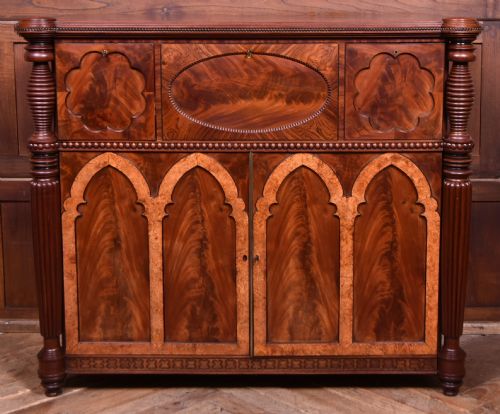
Makers utilised dense timbers including mahogany, oak, walnut, rosewood, and satinwood, frequently selecting veneers to highlight grain patterns on drawer fronts and top surfaces. Secondary woods provide structural stability inside drawers and carcases.
Brass fittings, such as castors, drop handles, and escutcheons, complement the timber, while inset panels of tooled leather create a durable writing plane. Structural joinery relies on precise dovetailing and sturdy turnings.
Retail Price Guide 2026
Typical UK retail prices for gillows writing desk, calculated from the Sellingantiques database of over a million retail prices indexed since 2003. This retail price guide relies exclusively on Sellingantiques data; no external sources or auction records are used, so the figures do not describe the wider market.
Some desks retain their original ink stains tucked inside small drawers, left behind by writers centuries ago.
Defining distinction
The upper tier of these pieces is distinguished by the selection of exceptionally figured timbers, such as burr walnut or bird's-eye maple, combined with meticulous carving and integrated secondary drawers. Simpler examples in standard mahogany or oak represent functional utility rather than elaborate design.
Subtle details separate standard production from exceptional workshops, including the weight and finish of cast brass hardware and the crispness of reeded legs or turned pillars. Original bills, drawings, or maker stamps elevate historical value significantly.
Gillow & Co·Gillows of Lancaster·Waring & Gillows
The Gillows Writing Desk Glossary
- Davenport
- A compact writing desk featuring a sloping top above a bank of side drawers. This form became popular during the nineteenth century for domestic studies.
- Kidney shaped
- A curved writing desk profile designed to wrap around the seated user. It often appears in Victorian walnut variants.
- Bureau plat
- A freestanding library table or writing desk fitted with drawers in the frieze. These pieces are finished on all sides for placement in the centre of a room.
- Cheveret
- A small writing table or lady's writing desk featuring a tier of small drawers or shelves above the main writing surface. This form was produced around the Regency and Victorian periods.
- Secondary wood
- The internal timber used for drawer linings, backboards, and framing where the primary show wood is not visible.
Frequently Asked Questions
How do I identify a genuine piece?
Look for stamped maker marks, signature brass castors, and high-standard secondary timbers like oak inside the drawer boxes. Lancaster workshops often marked their carcases directly on the wood.
Construction methods also guide attribution, matching documented proportions and joinery details from archival records.
What woods were used?
Mahogany forms the majority of surviving examples, supplemented by oak, rosewood, walnut, and burr walnut. Exotic accents like purpleheart and satinwood occasionally appear on select library tables.
Leathers used for the writing surfaces are frequently tooled in gold leaf.
How should I care for the leather top?
Clean the leather gently with a dry or barely damp cloth, avoiding harsh chemical cleaners that strip the original tooling and colour. Periodic application of neutral leather balm maintains suppleness.
Keep the desk away from direct sunlight and heat sources to prevent the leather from drying and cracking.
Where were these desks placed?
Freestanding library tables and bureau plat desks were designed to sit in the centre of a room with finished backs. Smaller Davenports and ladies' desks fit easily against perimeter walls or within private chambers.
Their finished rear elevations reflect their original use in large country houses and town residences.