

Compact Office Desk
A compact office desk offers a practical working surface in a small footprint, spanning centuries of cabinet-making traditions from walnut Davenport desks to oak writing tables.
Compact Office Desk
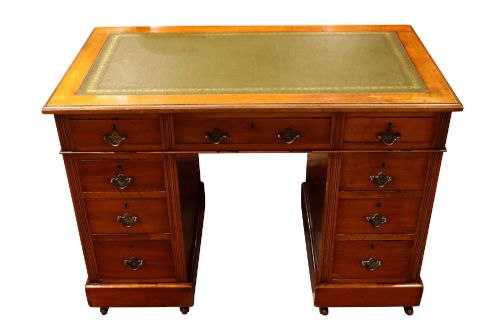
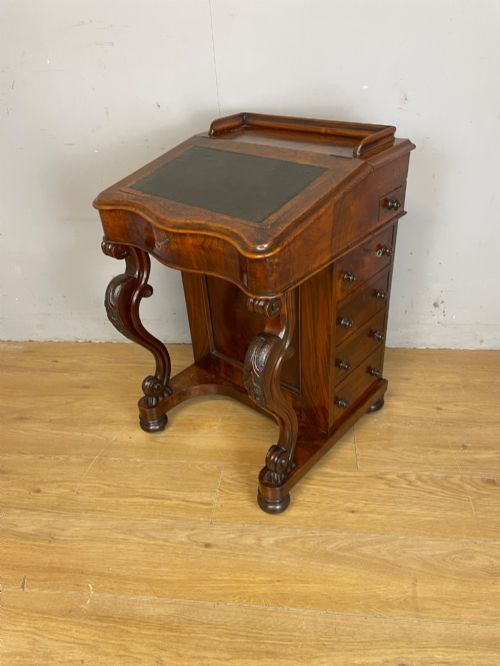
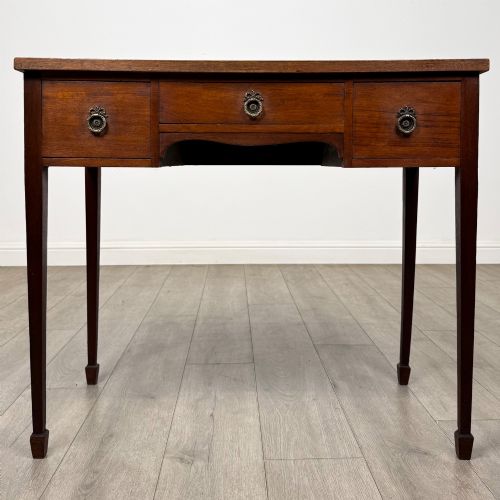
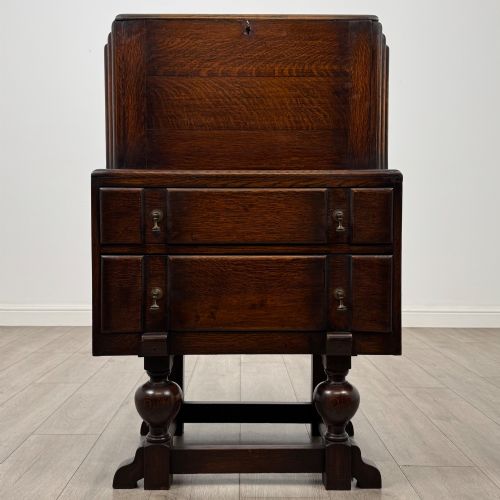
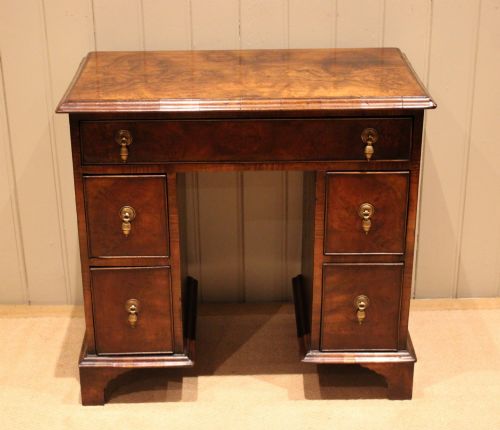
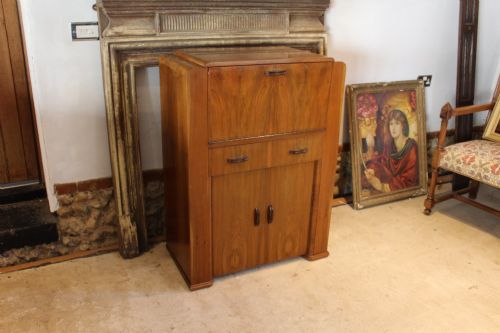
A compact office desk brings period character to a modern workspace through forms designed for limited space. When exploring a compact office desk, buyers encounter Victorian and Edwardian pedestals, Georgian kneeholes, and Art Deco writing tables alongside compact Davenport desks with sloped lids.
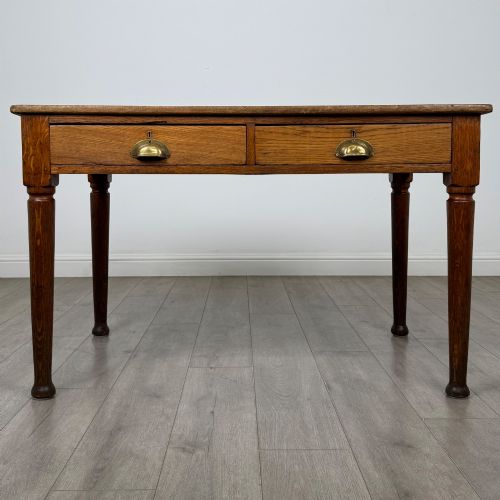
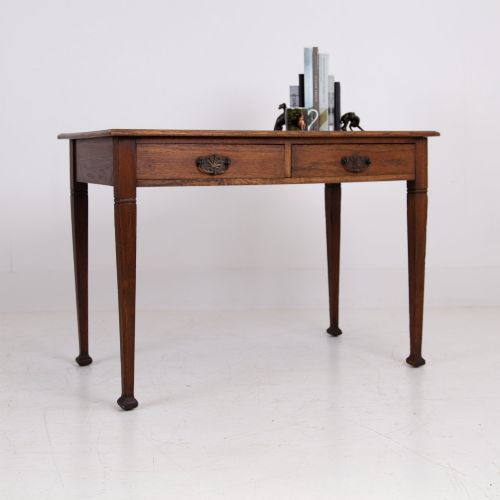
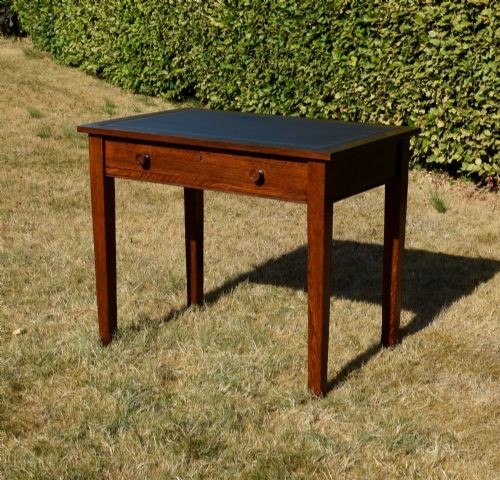
The selection ranges from nineteenth-century mahogany and burr walnut examples to early twentieth-century oak writing tables and filing cabinets. These pieces reflect historical shifts towards smaller domestic and office furniture while retaining traditional timber construction.
Materials and Technique
Cabinet-makers relied primarily on hardwoods such as mahogany, walnut, burr walnut, and oak, frequently enhanced with contrasting crossbanding and satinwood interiors. Brass handles, hinges, and gallery rails provide structural accents, while inset writing surfaces utilise leather.
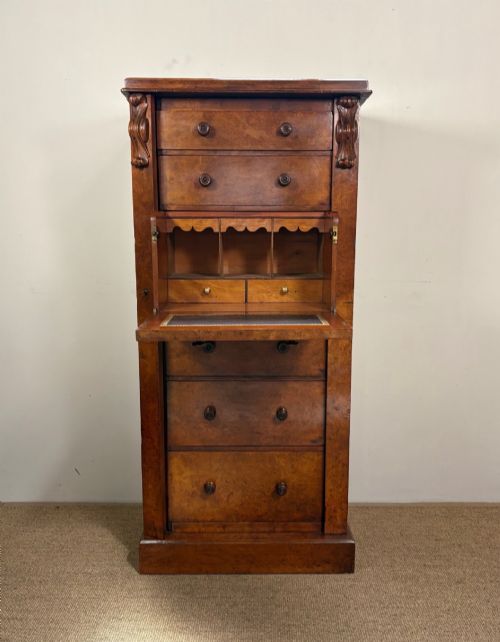
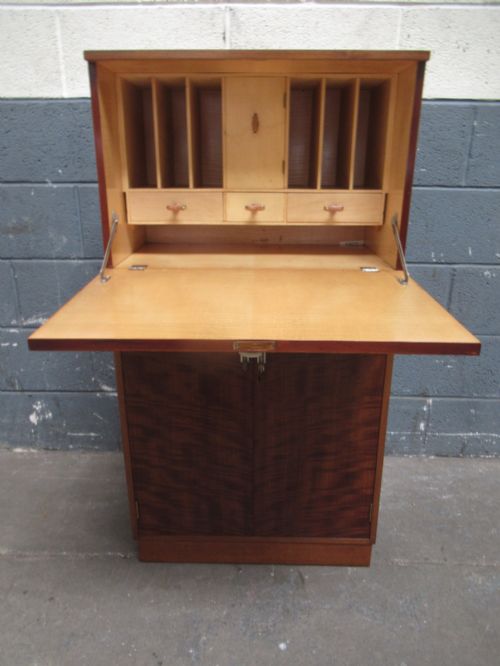
Construction techniques combine dovetailed drawer boxes with solid timber framing and decorative veneering. Desks often incorporate integrated compartments, stationery drawers, and specialised mechanisms like secret locking drawers or rising desk lids.
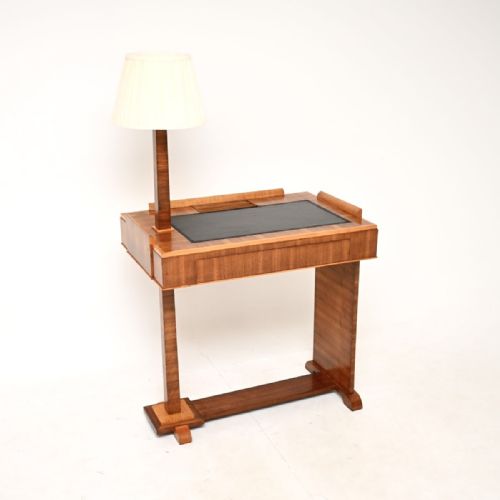
At least one compact desk includes an integrated lamp to illuminate your paperwork.
Gradations in Execution
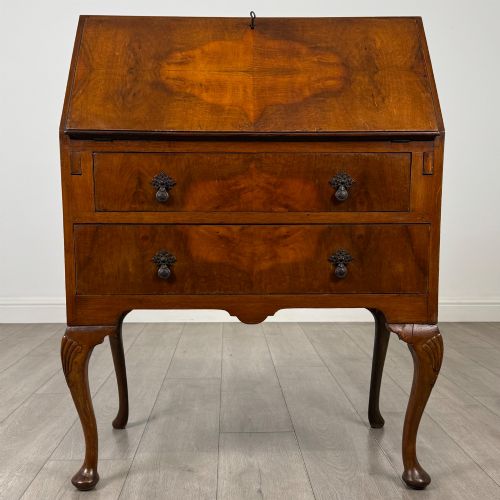
Quality rests in the selection of timber figures, particularly the matching of burr walnut or flame mahogany veneers across drawer fronts and desk lids. Superior pieces display finer dovetailing, precise inlay work, and original brass hardware rather than later replacements.
The architectural proportion and secondary timbers inside drawers distinguish standard workshop production from master cabinet-making. A well-executed compact office desk maintains structural integrity and smooth drawer operation despite its reduced scale.
Gillows·F.H. Marshall & Co·Jenners·Simpsons of Kendall
The Compact Office Desk Glossary
- Davenport desk
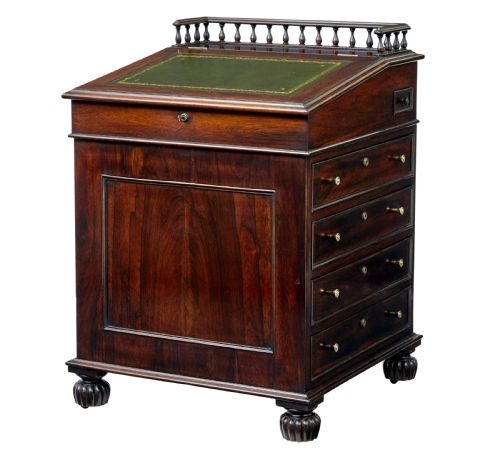
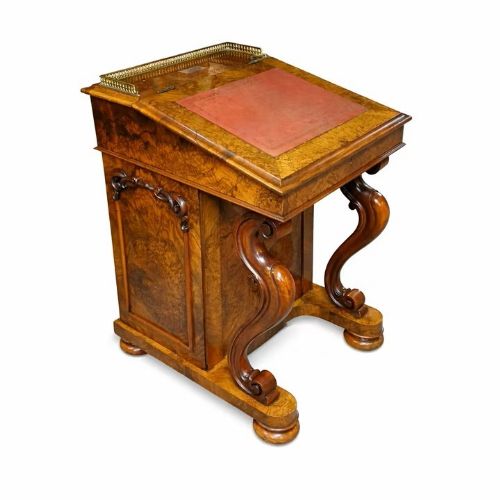
- A small compact writing desk featuring a sloping lid that lifts to reveal a storage compartment, typically supported by a pedestal of drawers accessed from the side.
- Kneehole desk
- A small desk with a central recess for the legs, flanked by pedestals containing banks of drawers.
- Crossbanding
- A narrow strip of veneer applied across the grain of the primary surface to create a decorative border.
- Secretaire
- A desk or chest of drawers featuring a drop-front writing flap that conceals fitted interior pigeonholes and small drawers.
- Bureau
- A writing cabinet with a sloping fall-front lid that opens to form a writing surface above drawers.
Compact Office Desk: Frequently Asked Questions
What is a Davenport desk?
A Davenport is a compact writing desk with a sloped, hinged top for writing and a set of drawers opening to the side. It was originally designed for use on ships or in small domestic rooms.
These pieces combine cabinet storage with a small writing surface, making them suitable for use as a writing table in modern sitting rooms or bedrooms.
How do I date an antique desk?
Dating relies on observing construction methods, timber choices, and stylistic details such as brass hardware or leg shapes. Nineteenth-century pieces frequently feature mahogany and burr walnut, while twentieth-century examples often utilise light oak.
Examining secondary timbers inside the drawer boxes and the cut of the dovetails provides further clues to the manufacturing period of the desk.
Are these desks suitable for daily work?
Many compact desks offer adequate surface area for laptop use and paperwork, though their historic dimensions are often lower and narrower than modern office furniture. Selecting a chair with an appropriate seat height ensures comfortable daily use.
Care should be taken to protect antique leather or polished wood surfaces from heavy wear by using appropriate desk pads.