

Walnut Slope Front Desk
A walnut slope front desk brings together rich timbers and practical writing compartments, offering a classic writing surface for daily correspondence.

Walnut Slope Front Desk
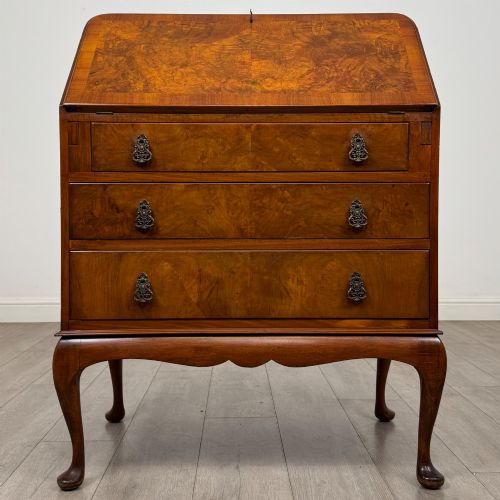
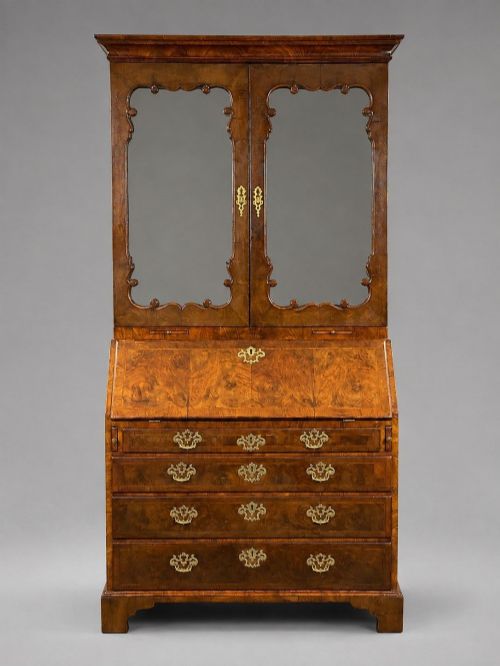
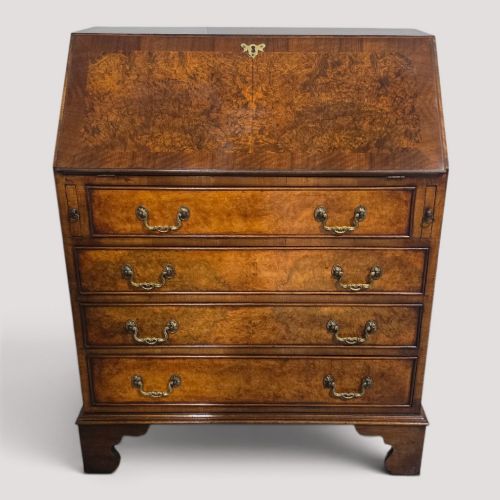
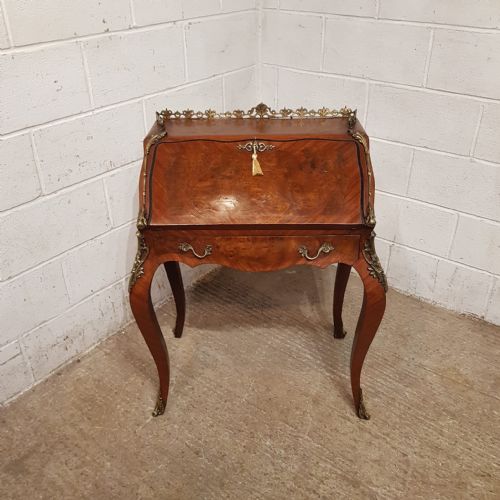
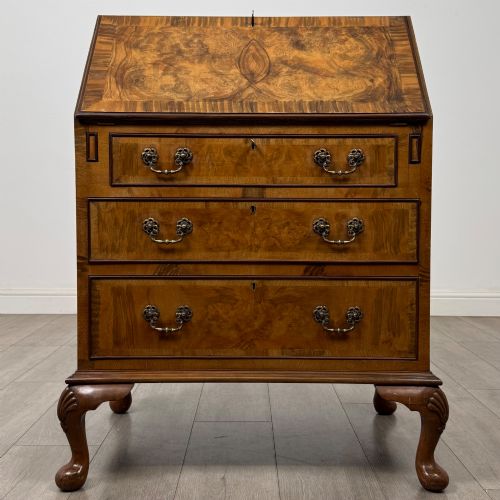
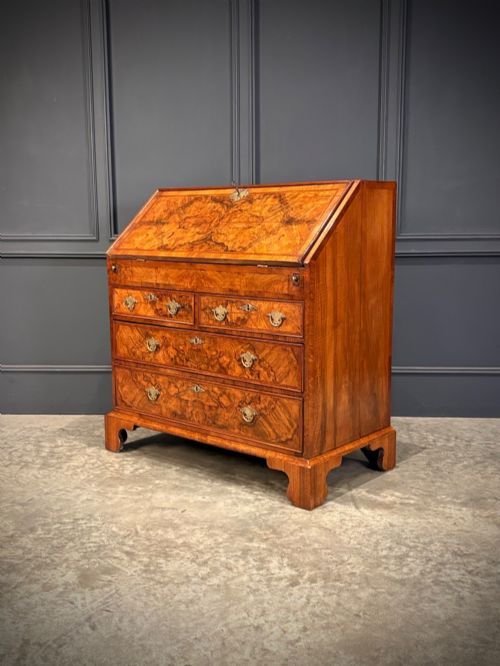
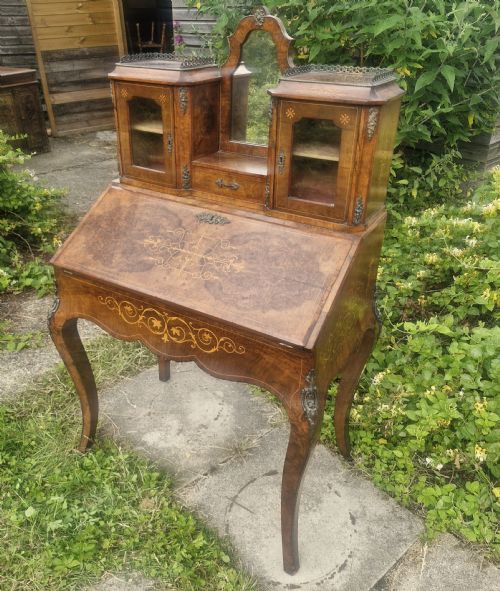
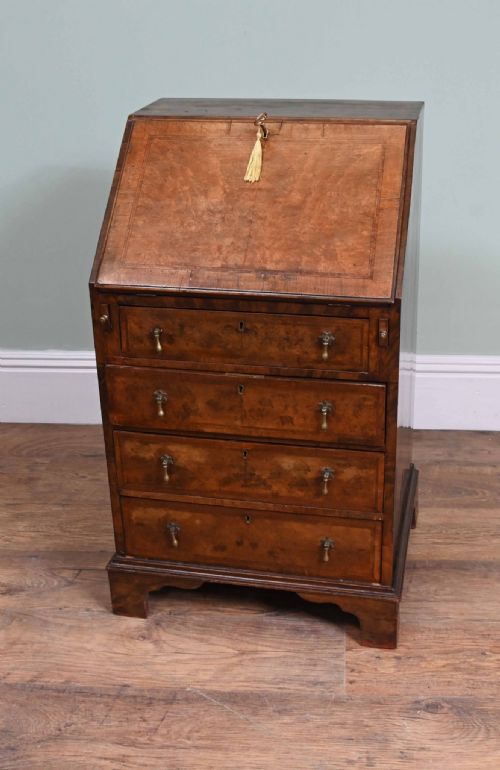
A walnut slope front desk serves as a dedicated writing station, featuring an angled flap that lowers to reveal fitted pigeonholes and small drawers. When you search for a walnut slope front desk, you encounter various forms ranging from compact writing tables to substantial bureau bookcases.
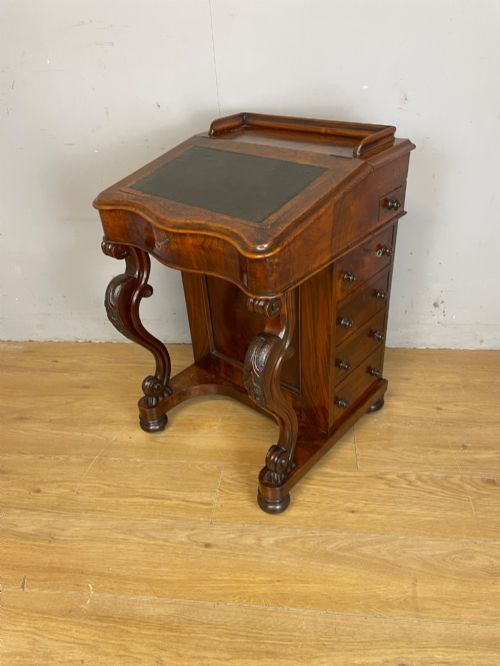
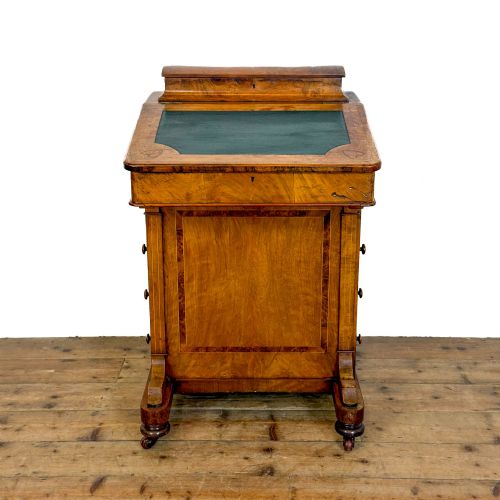
The pieces on this page span several centuries, with particular strength in 18th-century examples alongside Victorian, Edwardian, and later interpretations. Bureau desks and Davenport writing desks dominate the selection, often incorporating fitted interiors concealed beneath the sloping lid.
Materials and construction methods
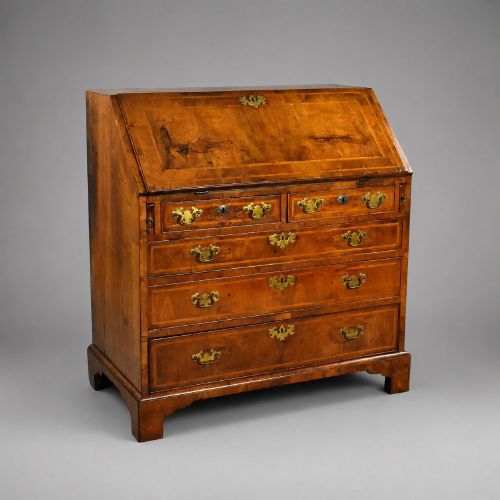
Cabinet makers utilised figured walnut, burr walnut, and feathered banding applied over secondary timbers, creating rich patterns across the sloping fall fronts and drawer facades. Ormolu mounts, brass handles, and original ironwork frequently accent these pieces.
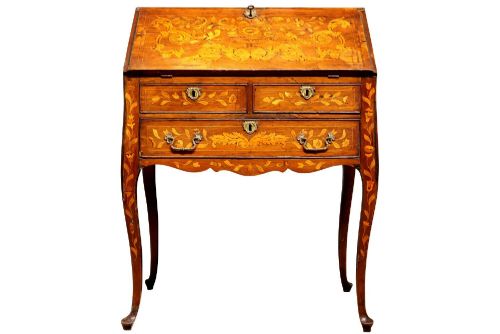
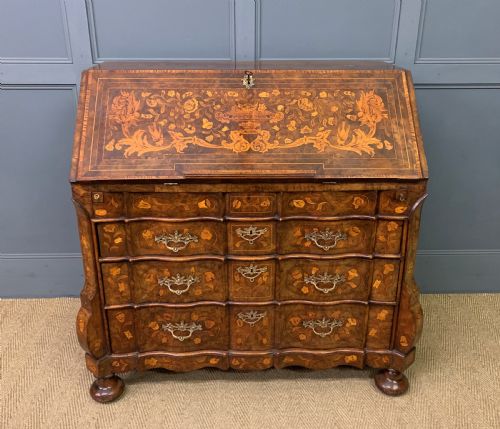
Inlaid marquetry featuring floral motifs and contrasting fruitwoods appears on Dutch-influenced examples, while Victorian versions occasionally incorporate satinwood and leather writing inserts.
Walnut Slope Front Desk Retail Price Guide 2026
Typical asking prices for walnut slope front desk among the pieces listed under this phrase on Sellingantiques today, from the lower quarter to the upper quarter. They describe what is for sale here now, not the wider market.
Many bureau interiors contain hidden secret compartments behind removable pigeonhole partitions for storing private documents.
Distinguishing quality across periods
The degree of figuring in the timber and the complexity of the interior drawer layout separate standard examples from superior ones. Early 18th-century pieces often display tight burr walnut grain and precise feather banding that demand advanced joinery skills.
The survival of original hardware, fitted secret compartments, and undisturbed surface patination govern the standing of an individual desk within its period.
The Walnut Slope Front Desk Glossary
- Bureau
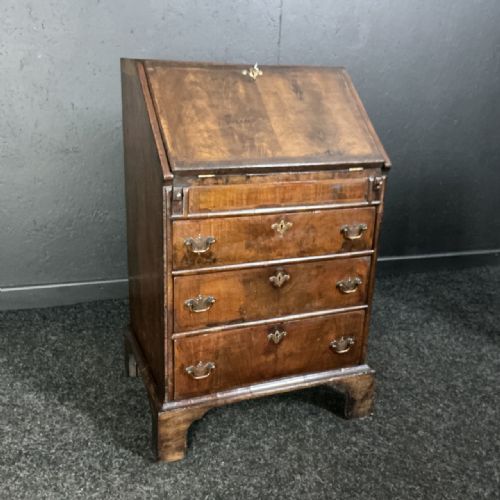
- A writing desk with a sloping lid that opens to reveal compartments for papers. It usually sits atop a chest of drawers.
- Davenport desk
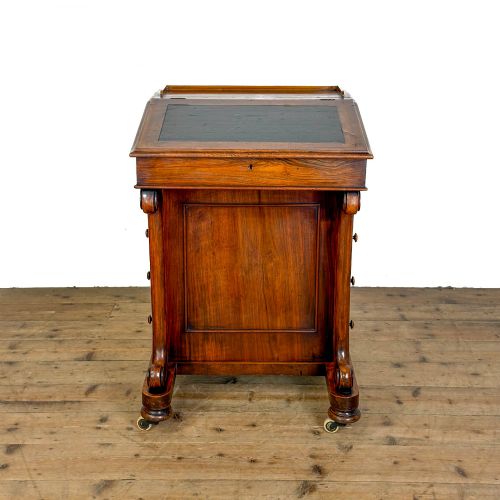
- A compact writing desk featuring a sloping top and drawers opening to one side. Victorian examples often include a stationary box on top.
- Burr walnut
- Timber taken from a tree growth or wart, yielding intricate, swirling grain patterns highly prized for cabinet veneers. It creates a highly decorative surface on the slope front.
- Feather banding
- Narrow strips of veneer laid in a herringbone pattern around the edges of drawer fronts or writing flaps. This technique frames the primary walnut grain.
- Marquetry
- The art of applying pieces of veneer to a structure to form decorative patterns and pictures. Floral designs are common on Dutch-origin examples.
Walnut Slope Front Desk: Frequently Asked Questions
How do I use a slope front desk?
Lower the hinged wooden flap to create a horizontal writing surface supported by pull-out lopers.
Inside, organise stationery and documents within the small drawers and open pigeonholes.
How do I date a walnut desk?
Examine the construction of the interior drawers, timber thickness, and overall form to determine the period.
Early 18th-century desks display different handle mounts and carcass joinery compared to Victorian or Edwardian revivals.
Where should I place a bureau in my home?
Position the desk against a stable interior wall away from direct sunlight and heat sources to protect the walnut veneer.
Ensure adequate clearance in front of the piece for the fall-front flap and a chair.