


Victorian Piano Top Desk
A Victorian piano top desk is a clever writing cabinet with a rising desk interior, offering both a fine workspace and concealed storage.
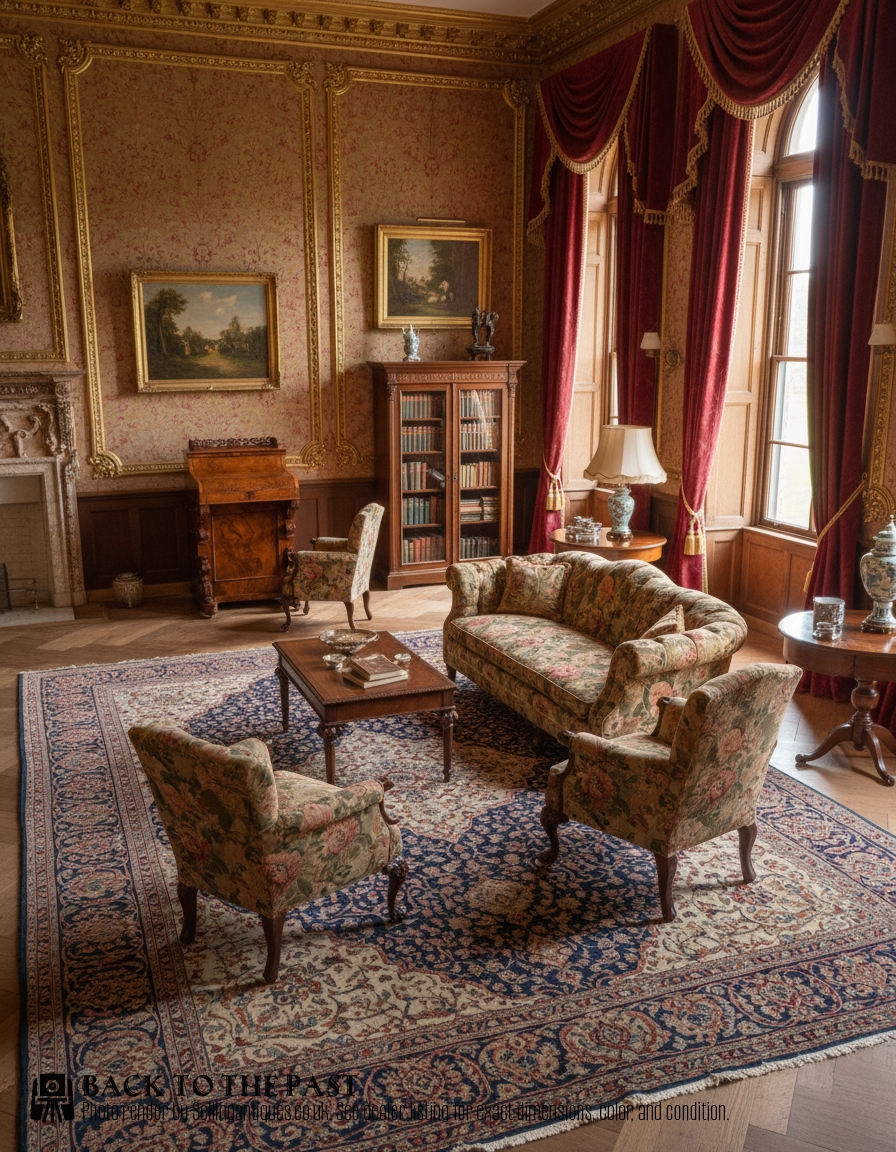
Victorian Piano Top Desk
A Victorian piano top desk, also known as a pop-up Davenport, is a compact writing cabinet dating from the nineteenth century. These pieces combine a sloping writing surface with a concealed mechanism that rises when the lid is opened.
The versions met on this page span the mid-Victorian era, including dates around 1850, 1860, and 1870. They primarily take the form of desks and writing tables built with a distinctive cylindrical top reminiscent of a piano.
Makers of the period designed these cabinets to save space while providing secure storage for correspondence. Buyers encounter them as sophisticated writing furniture intended for the principal rooms of a Victorian home.
What varies in quality
The sophistication of the pop-up mechanism largely separates the standard examples from the finest pieces. Smooth operation of the interior fittings when the cylinder lid is lifted indicates superior joinery and original engineering.
The choice of timber grain and the complexity of the boxwood inlay also distinguish the range. Dense burr walnut figures and crisp, detailed floral marquetry mark out the more ambitious pieces produced during the Victorian period.
Victorian writers clearly enjoyed a surprise, as these desks are also known as jack-in-the-box writing cabinets.
The Victorian Piano Top Desk Glossary
- Burr walnut
- A highly figured veneer taken from the wart-like growths on walnut trees. It yields swirling grain patterns prized by nineteenth-century cabinet makers.
- Marquetry
- The art of applying decorative pieces of veneer to a structure to form intricate designs. Floral motifs are frequently seen on these desks.
- Davenport
- A small pedestal desk featuring a sloping writing surface and drawers opening to the side. The piano top version adds a rising superstructure.
- Pop-up mechanism
- The internal spring or weight system that raises the stationery compartments when the main cylinder lid is opened. It represents the defining mechanical feature of the type.
- Boxwood inlay
- Contrasting pale wood inserted into dark veneer to create linear borders and geometric patterns. This technique highlights the edges and panels of the cabinet.
Victorian Piano Top Desk: Frequently Asked Questions
What is a Victorian piano top desk?
A Victorian piano top desk is a nineteenth-century writing cabinet featuring a cylindrical roll-top lid that conceals a rising interior. These pieces combine compact proportions with specialised mechanical storage for correspondence.
They originate primarily from the mid-Victorian decades, specifically around the 1850s to 1870s, and are constructed with writing slopes and side drawers.
How does the pop-up mechanism work?
The mechanism connects the rolling cylinder lid to an internal nest of small drawers and pigeonholes. When the user slides the top back, internal linkages cause the stationery compartments to rise automatically.
This clever engineering allowed Victorian writers to keep their papers secure and hidden when the desk was not in use.
What materials are typical for these desks?
Walnut and burr walnut form the primary timber for nearly every example recorded in this period. Artisans selected burr veneers for their dramatic, swirling grain patterns.
Additional materials include contrasting boxwood inlay, floral marquetry, fitted leather writing surfaces, and cast brass hardware.
How do I date a piano top desk?
Dating relies on the stylistic markers of the Victorian era, particularly the cabinet proportions, veneer choices, and inlay styles. Pieces seen here cluster around the 1850s, 1860s, and 1870s.
Examining the construction methods of the internal pop-up mechanism also helps place the desk within the nineteenth century.
Where were these desks used in the home?
These compact cabinets suited private sitting rooms, drawing rooms, or boudoirs where space was at a premium. Their finished backs and refined marquetry allowed them to sit away from the wall.
They provided a private workstation for correspondence without dominating the room like a larger partner's desk.