

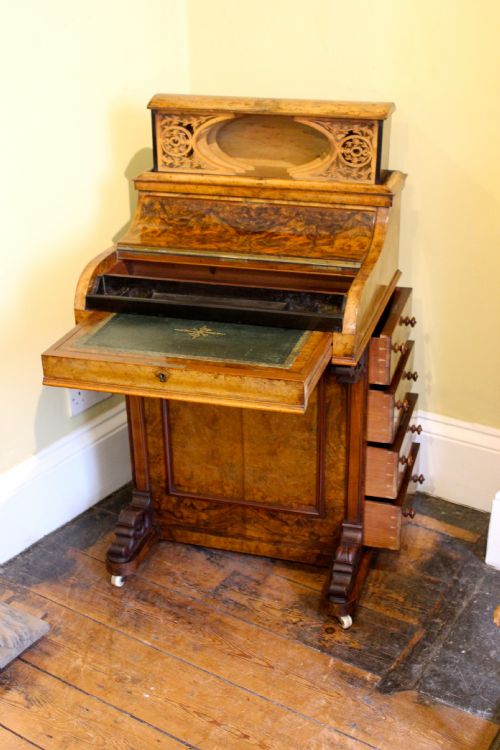


Carved Wooden Davenport
These carved wooden davenport desks combine a compact writing slope with concealed drawers, offering a practical workspace for smaller rooms.
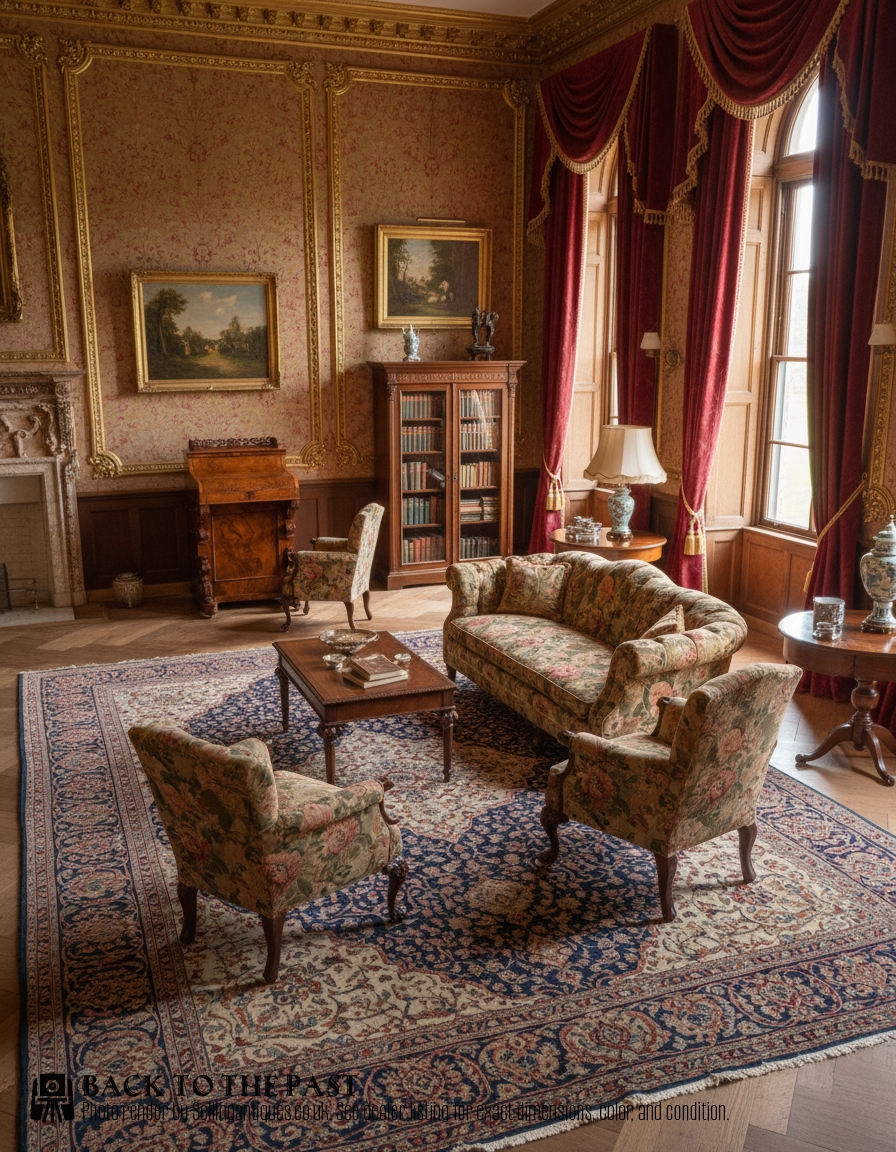
Carved Wooden Davenport
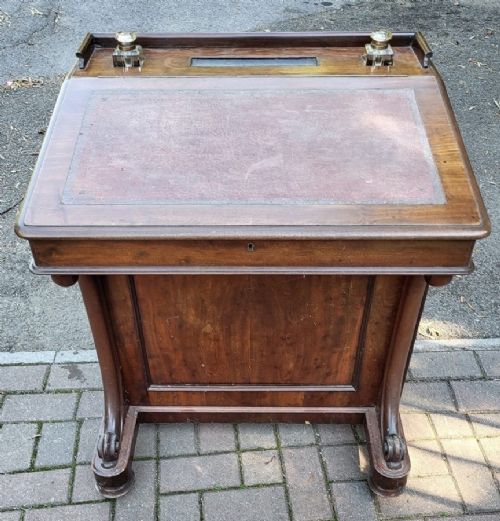
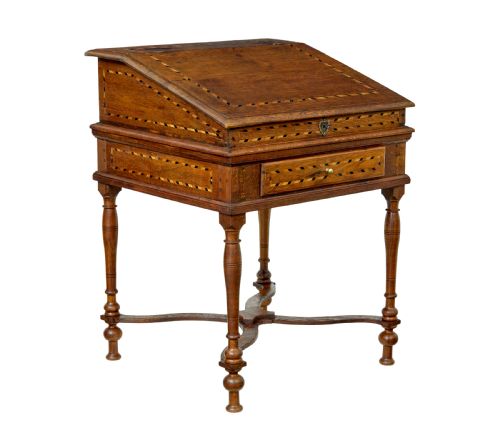
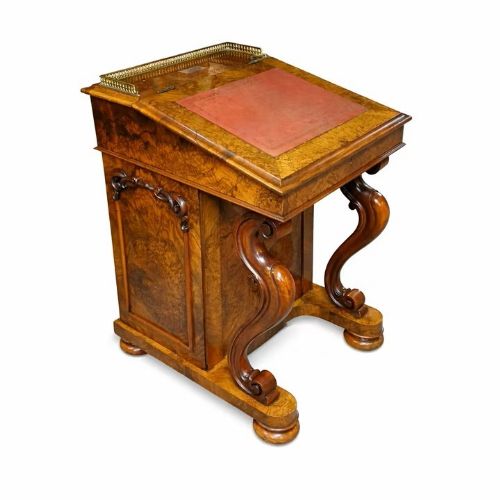
A carved wooden davenport typically presents as a compact writing desk with a sloping top, fitted drawers to the side, and a stationary compartment above. The examples available here span the Victorian period and the nineteenth century, including specific regional expressions such as Dutch and Anglo-Indian variants.
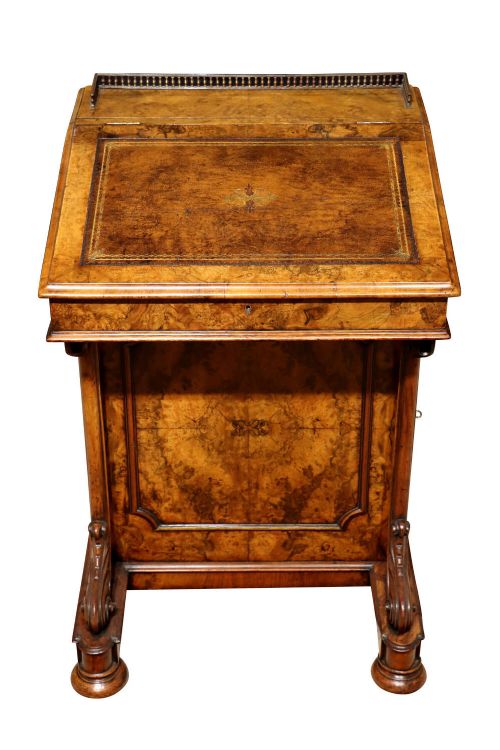
Most pieces encountered in this selection utilise burr walnut or mahogany as their primary wood, often paired with secondary timbers like oak and satinwood for interiors. Buyers frequently find variations ranging from standard slope-front desks to piano top and pop-up writing desks.
The form developed during the nineteenth century to serve as a ladies writing desk or a convenient parlour writing station. Their distinctive side drawers and enclosed superstructures make them instantly recognisable amongst antique writing furniture.
Materials and construction
Cabinetmakers constructed these desks using solid hardwoods like mahogany and oak, frequently applying highly figured burr walnut veneers to the exterior surfaces. Carved ornamentation adorns many of these pieces, particularly on the supports and panels of Victorian and Anglo-Indian examples.
Internal components often incorporate satinwood for drawer linings and pigeonholes, demonstrating a contrast in timber selection between the exterior show wood and hidden compartments. Leather inserts commonly top the writing slopes, providing a suitable surface for ink and paper.
Brass hardware, including drawer pulls, castors, and hinges, secures the moving parts and allows the compact bodies to be repositioned easily. Glass elements appear in select configurations, complementing the fitted stationary compartments.
Assessing quality
The distinction between standard examples and superior pieces rests on the complexity of the carving and the richness of the timber figure. Heavily figured burr walnut veneers and intricate carved detailing indicate a higher grade of cabinetmaking.
Internal arrangement and mechanical sophistication separate simpler writing slopes from elaborate piano top or pop-up davenports. Desks featuring fitted satinwood interiors and smooth mechanisms represent the more accomplished works of the period.
The Carved Wooden Davenport Glossary
- Davenport
- A compact pedestal desk featuring a sloping writing surface hinged above a bank of drawers. The form became popular during the nineteenth century for domestic correspondence.
- Burr walnut
- A veneer sliced from the knotty growths of walnut trees, prized for its swirling, highly decorative grain patterns. Cabinetmakers used it extensively on Victorian case furniture.
- Writing slope
- An angled desk surface designed to provide an ergonomic angle for handwriting. Many incorporate a hinged lid opening to reveal storage space for paper and ink.
- Piano top davenport
- A complex variant where the sliding top retracts to reveal an interior writing surface and pigeonholes, resembling the action of a piano fall.
- Satinwood
- A durable, yellowish timber native to India and Sri Lanka, utilised for fine stringing, secondary drawers, and contrasting interior details.
Carved Wooden Davenport: Frequently Asked Questions
What is a davenport desk used for?
These desks serve primarily as compact writing stations for home correspondence and administrative tasks. Their enclosed compartments keep writing materials neatly stored when not in use.
They function well in smaller reception rooms or bedrooms where a full-sized partner desk would overwhelm the floor space. The sloped top provides a comfortable angle for writing letters.
How do I identify a Victorian davenport?
Victorian examples typically date from the nineteenth century and often feature dense timbers such as mahogany or burr walnut. Look for characteristic side drawers and decorative carved woodwork typical of the period.
Many pieces also include brass castors and leather-lined writing surfaces. Regional variants like Anglo-Indian or Dutch pieces display distinct carved motifs and construction methods.
How should I care for a wood davenport?
Maintain the timber by keeping the piece away from direct heat sources and strong sunlight, which can dry out burr walnut and mahogany veneers. Dust regularly with a soft, dry cloth.
Condition the leather writing surface sparingly with appropriate balms to prevent cracking. Polish the wood surfaces occasionally with traditional beeswax to preserve the finish.