
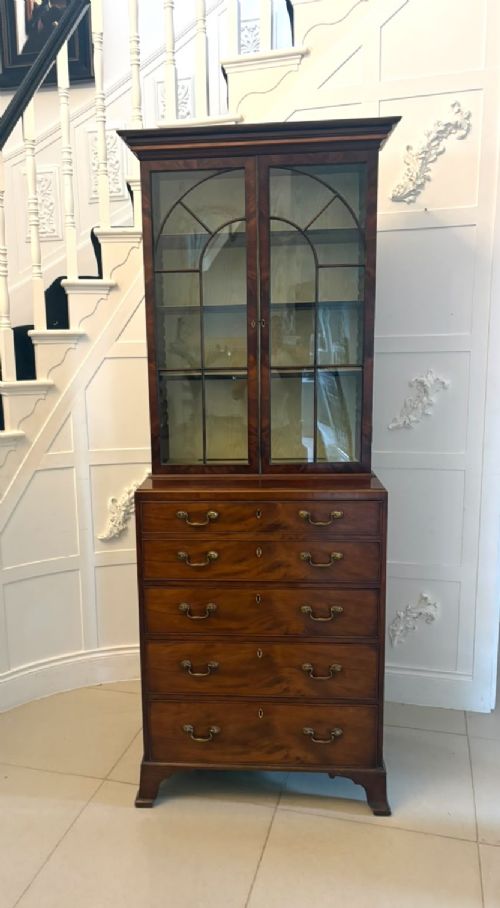
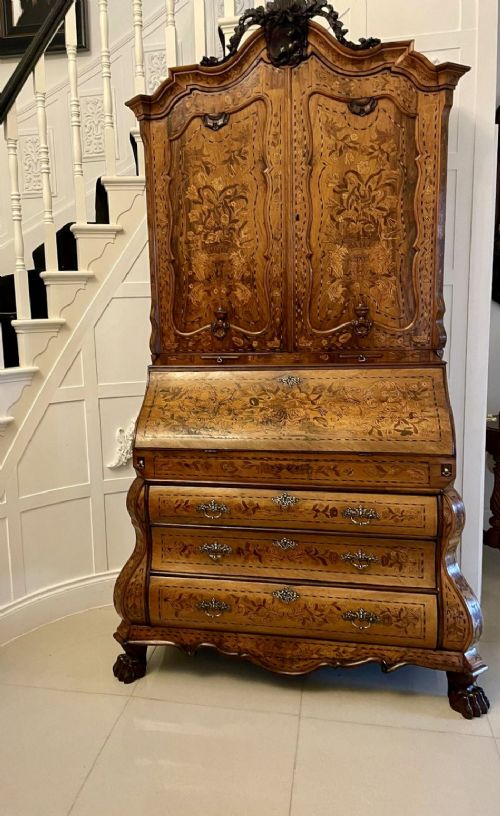
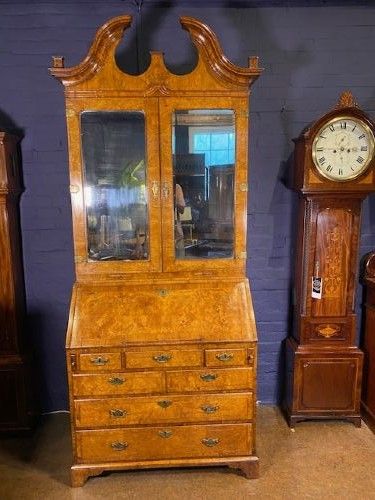
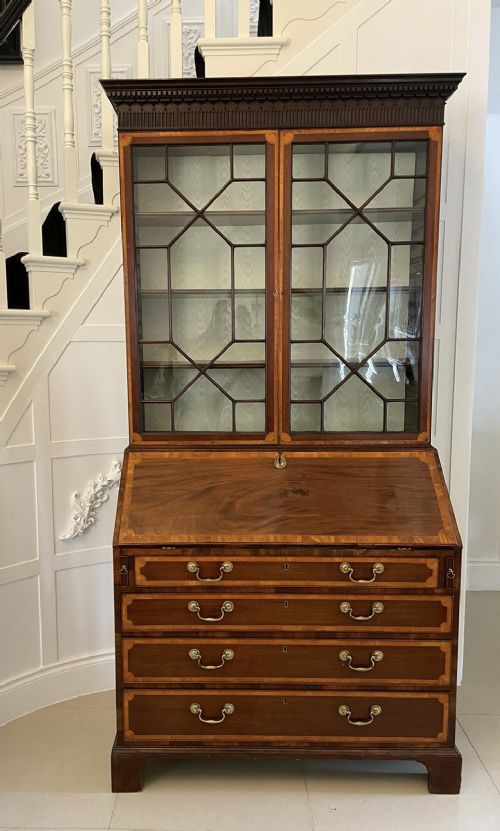



Eighteenth Century Secretary
An eighteenth century secretary combines a drop-front writing desk with a shelved upper cabinet, offering grand proportions and clever internal compartments for correspondence.
Eighteenth Century Secretary
When you search for an eighteenth century secretary, you encounter substantial writing furniture designed to hold books and papers behind glazed or panelled doors. These pieces combine a lower bureau section with fitted drawers and writing slopes with upper bookcase cabinets.
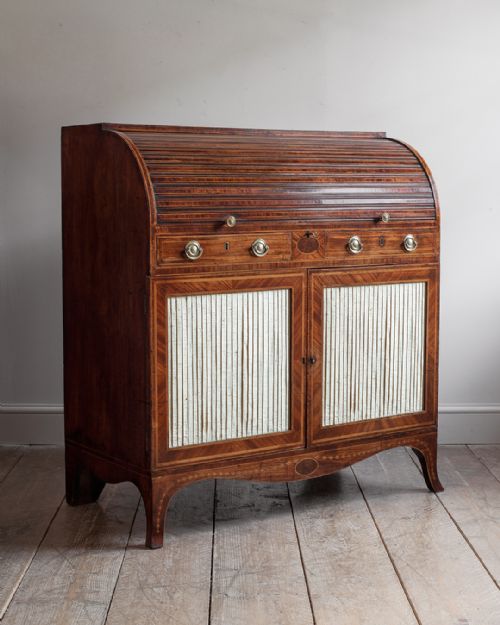
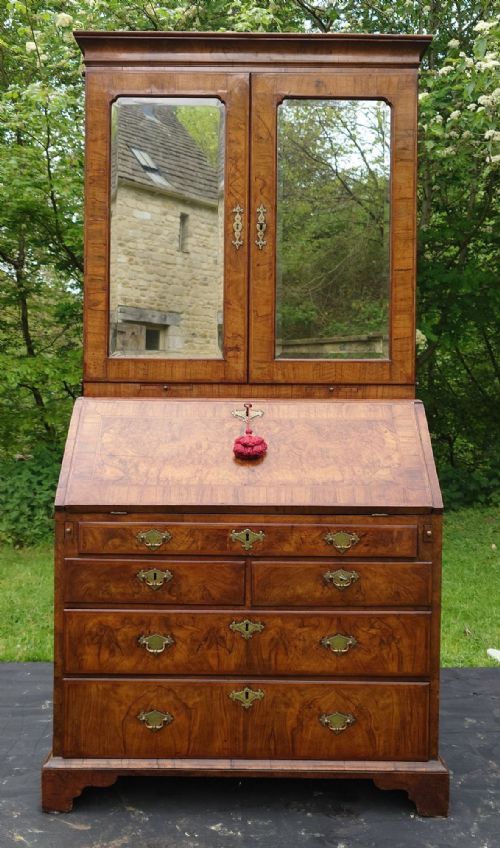
The versions you are most likely to meet on this page span the Georgian and Queen Anne periods, constructed in rich timbers like walnut and mahogany. Forms range from double-dome Italian cabinets to bureau bookcases with astragal glazed doors and cylinder tambour desks.
Makers utilised regional styles spanning English Georgian workshops, Dutch marquetry traditions, and Venetian rococo designs. These functional showpieces served as the administrative centre of the home for writing letters and storing bound volumes.
How they were made
Cabinet makers constructed these large pieces using solid and veneered timbers over robust oak or pine carcases. Walnut, mahogany, satinwood, and burr walnut provided the primary decorative surfaces, often enhanced with marquetry inlay and brass hardware.
Upper doors feature glazed panels with timber tracery such as astragal bars, protecting the library shelves within. Internal writing compartments incorporate secret drawers, pigeonholes, and fitted compartments assembled with traditional joinery techniques.
Listings feature woods including walnut, mahogany, satinwood, oak, and burr walnut, alongside brass hardware and glass.
What varies in quality
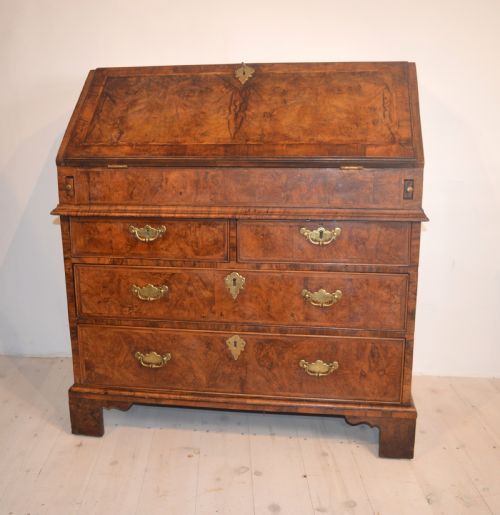
The distinction between standard examples and the finest items rests in the choice of timber figurations and the sophistication of the cabinet work. Highly figured burr walnut, rich mahogany veneers, and delicate satinwood inlay elevate the visual presence of a piece.
Internal complexity also defines the better examples, where concealed compartments, pigeonholes, and fitted writing slides demonstrate superior craftsmanship. The execution of glazing bars and structural proportions separates regional output from master workshop production.
Gillows·Gamichon A Paris
The Eighteenth Century Secretary Glossary
- Astragal glazed
- Glass doors divided into smaller panes by thin timber mouldings, commonly found on upper bookcase sections.
- Bureau bookcase
- A dual-purpose furniture form featuring a lower writing bureau combined with an upper shelving cabinet.
- Tambour
- A sliding surface made of narrow vertical strips of wood glued to a fabric backing, used on cylinder desks.
- Bonheur du jour
- A small, light ladies writing desk featuring a small cabinet or set of drawers on the upper surface.
- Marquetry
- Decorative veneer work created by fitting together pieces of various coloured woods to form pictorial patterns.
Eighteenth Century Secretary: Frequently Asked Questions
What is an eighteenth century secretary used for?
These dual-purpose pieces served as both a secure desk for correspondence and a display cabinet for a library. The drop-front flap opens to reveal small drawers and pigeonholes for paper storage, while upper glass doors protect valuable books.
In period homes, they functioned as the central administrative hub for managing household accounts and personal letter writing. Today, they remain practical for organising modern stationery while adding significant architectural presence to a room.
How do I identify a Georgian bureau bookcase?
Georgian bureau bookcases are characterised by architectural proportions, symmetrical drawer arrangements, and high-grade timber veneers. Look for classical cornice details at the top and bracket feet or ogee feet supporting the base.
The integration of the upper bookcase with the lower bureau desk defines the form, often accented with brasses and glazed upper doors. Walnut and mahogany predominate across this period, showing distinct grain patterns developed through hand polishing.
Where should I place a secretary in my home?
Position your secretary against a sturdy wall in a principal reception room, study, or library where the proportions can be properly appreciated. Ensure the room has stable humidity levels away from direct heat sources to protect the antique wood veneers.
Allow sufficient floor clearance in front of the piece so the fall-front writing flap can be fully lowered without obstruction. The upper display shelves also benefit from gentle lighting to highlight the glass panes and internal contents.
How do walnut and mahogany pieces differ?
Walnut pieces generally date from the earlier decades of the eighteenth century and feature rich, swirling grain patterns often enhanced by burr figuring. They possess a warmer, softer brown tone that developed deep patination over generations of care.
Mahogany pieces largely emerged later in the century, offering a denser, heavier construction with a tighter grain that took a sharp, crisp edge in carved details. Mahogany furniture often exhibits darker reddish-brown hues suited to the formal neoclassical styles of the later Georgian era.