
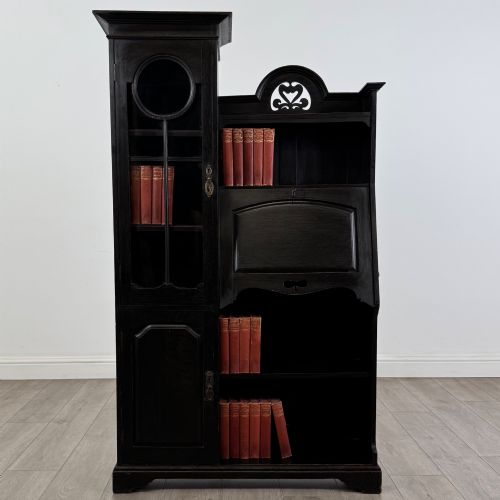
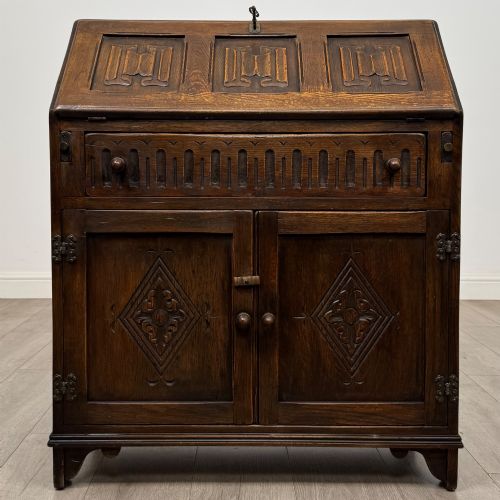
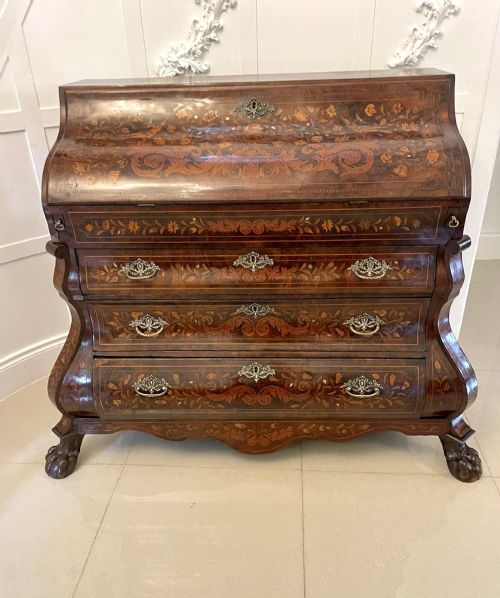
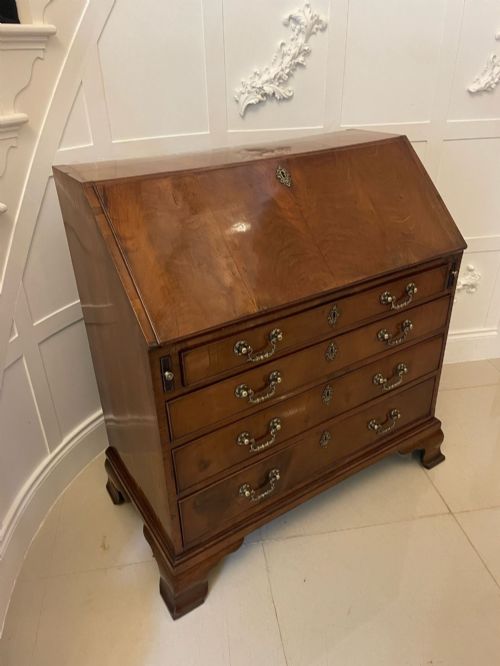
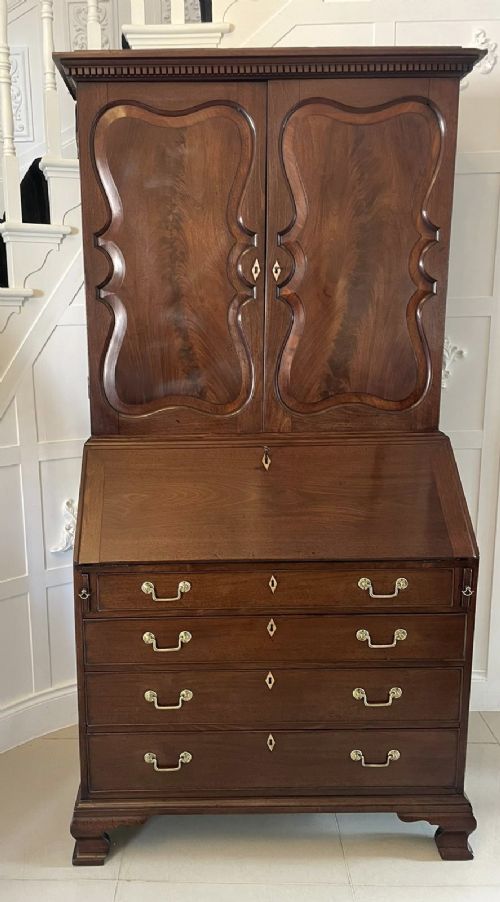
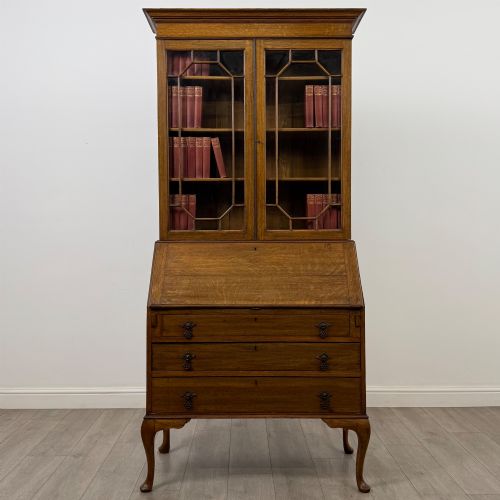
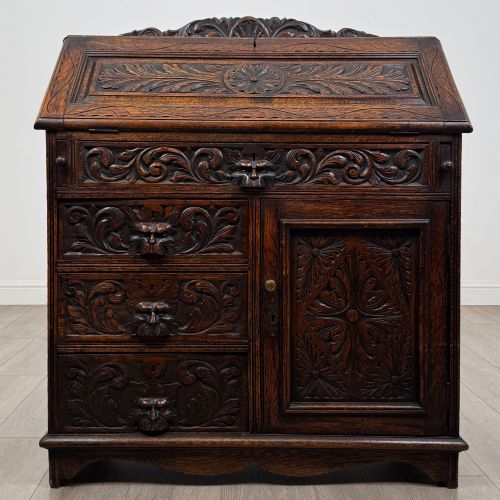
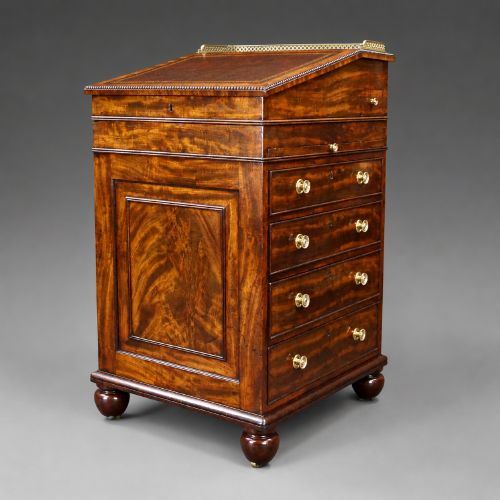
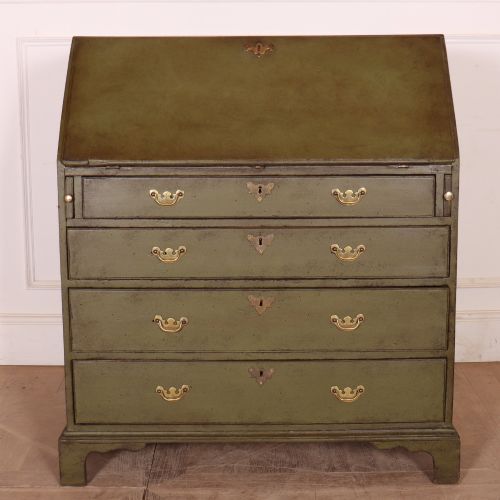
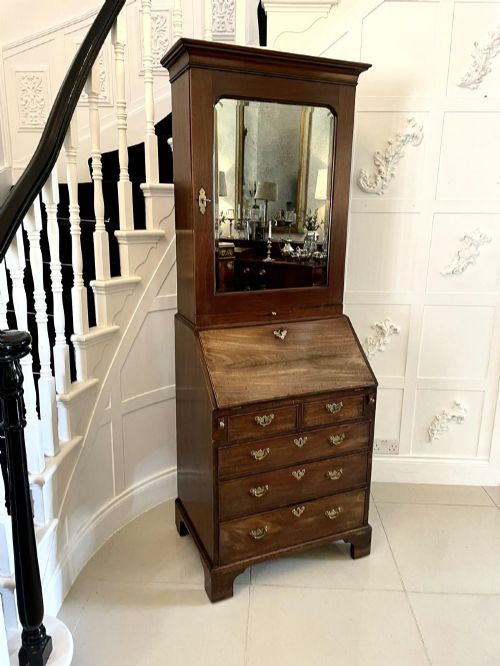


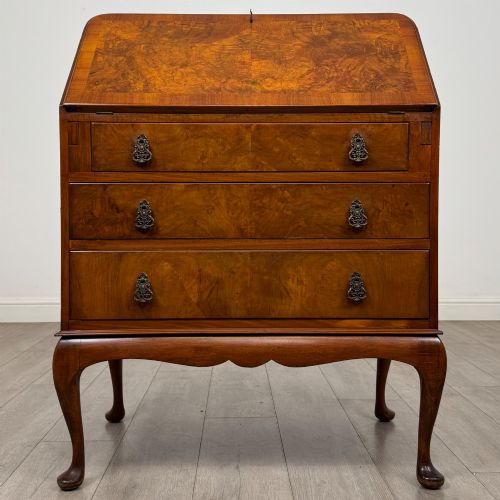
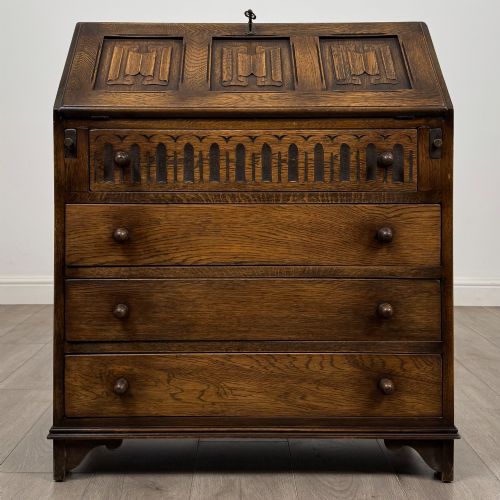
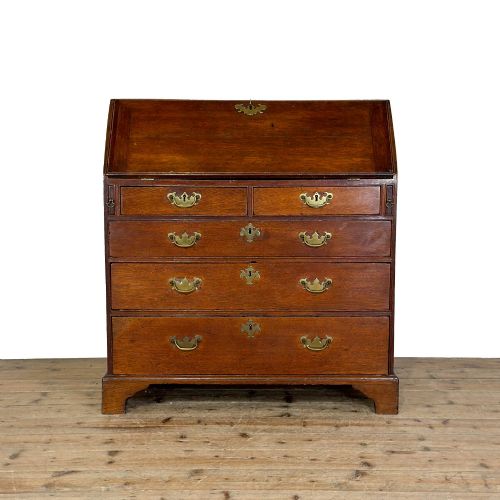
Slant Front Desk Cabinet
A slant front desk cabinet offers a concealed writing surface and upper display space, combining practicality with formal presence.

Defining the slant front desk cabinet
A slant front desk cabinet combines a lower bureau base with an upper bookcase or cabinet section, creating a commanding piece of furniture. When searching for a slant front desk cabinet, buyers encounter forms that span the eighteenth and nineteenth centuries, along with later revivals.
Examples on this page appear in styles ranging from Queen Anne and George II to Venetian Rococo and Jacobean Revival. These diverse stylistic iterations demonstrate how cabinetmakers adapted the form across different European centres.
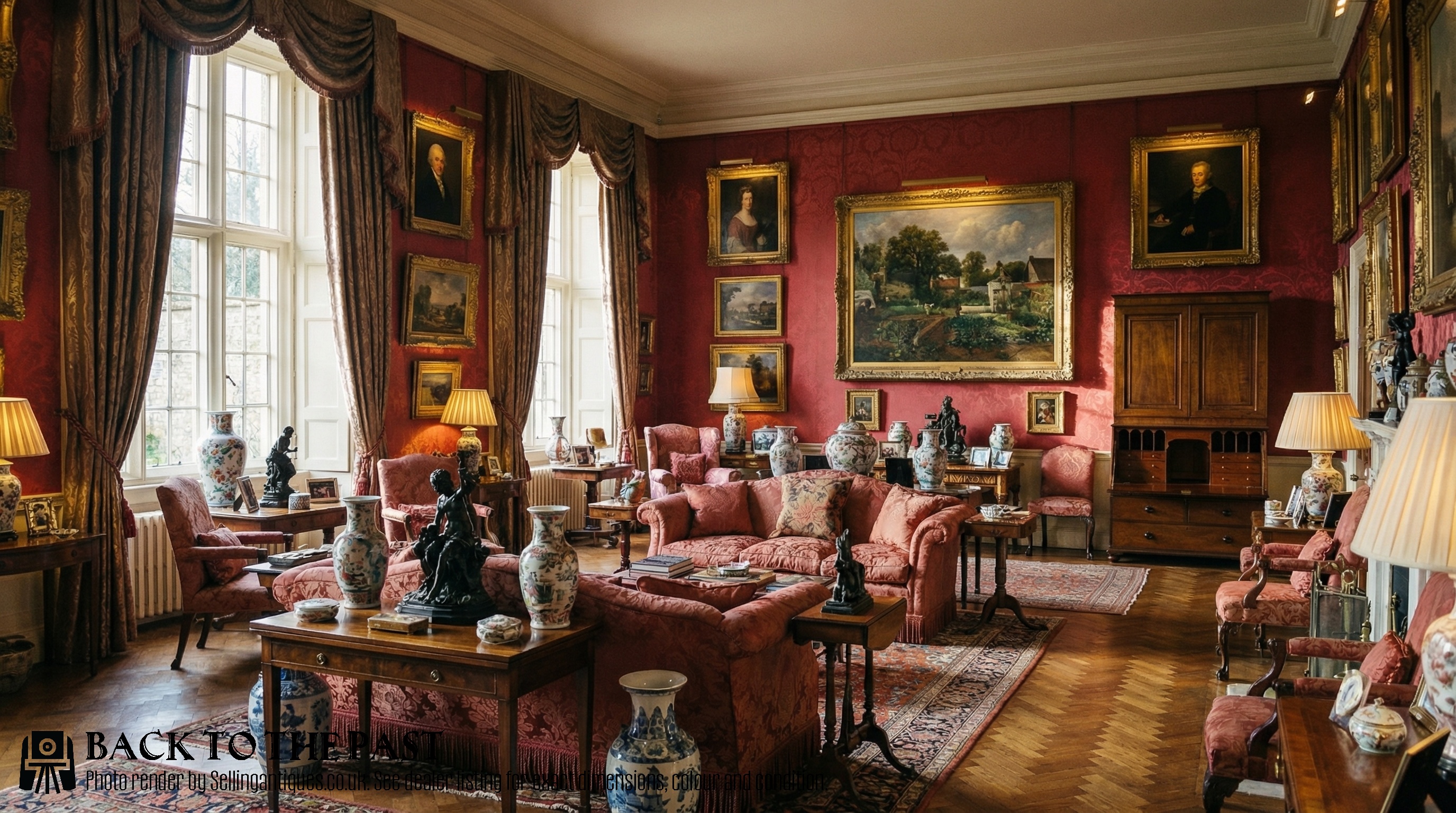
Materials and construction
Cabinetmakers constructed these pieces using dense hardwoods such as mahogany, oak, walnut, and burr walnut. In more decorative examples, walnut and tulipwood veneers combine with intricate marquetry work.
Upper cabinet doors frequently incorporate glass panels, sometimes arranged in astral glazing bars. Metalwork fittings rely on brass for handles, hinges, and key escutcheons.
Retail Price Guide 2026
Typical UK retail prices for slant front desk cabinet, calculated from the Sellingantiques database of over a million retail prices indexed since 2003. This retail price guide relies exclusively on Sellingantiques data; no external sources or auction records are used, so the figures do not describe the wider market.
Some secret compartments hide behind removable pigeonhole blocks, waiting for descendants to find forgotten love letters.
Distinctions in quality
Superior examples reveal themselves through the choice of timber figures, such as highly figured burr walnut or rich mahogany grain matched across the fall front and drawer faces. The precision of marquetry inlay and the delicacy of internal drawer joinery further separate ambitious commissions from simpler workshop output.
Proportion and architectural detail dictate visual success, from the sweep of a double dome top to the rhythm of glazing bars. Finer pieces maintain crisp carving on mouldings and robust internal framing that survives centuries of daily use.
The Slant Front Desk Cabinet Glossary
- Bureau bookcase
- A dual-purpose piece combining a sloping writing desk below with an enclosed shelving unit above. This form dominated elite interiors for storing volumes and conducting correspondence.
- Astral glazing
- Glass panes divided by narrow wooden bars within cabinet doors. This technique frames the contents while maintaining structural support.
- Marquetry
- Decorative patterns formed by fitting contrasting veneer pieces onto a carcase. Craftsmen used floral or geometric motifs to elevate flat wooden surfaces.
- Double dome
- An upper cabinet profile featuring two rounded arches side by side. This architectural flourish appears on high-status eighteenth-century pieces.
- Burr walnut
- Timber harvested from walnut tree growths, producing swirling, knotty grain patterns. Furniture makers prized these sheets for principal exterior surfaces.
Frequently Asked Questions
What is a slant front desk cabinet?
A slant front desk cabinet is a combined piece of furniture featuring a sloping writing flap that drops down to reveal internal compartments. Above this desk portion sits a tall storage cabinet typically enclosed by wooden or glass doors.
These pieces served as private writing stations and household libraries for storing correspondence and bound volumes. Their vertical composition maximised floor space while providing significant storage capacity.
How do I date a bureau bookcase?
Dating relies on examining timber species, construction methods, and stylistic details such as cornices and feet. Eighteenth-century versions often display figured veneers, hand-cut dovetails, and architectural proportions.
Later nineteenth-century and revival pieces show machine-sawn elements, different secondary woods, and interpretations of earlier decorative vocabularies. Comparing hardware fixings and secondary timber inside drawers helps confirm the period.
How were these cabinets used historically?
Owners used the sloping flap as a portable desk surface for writing letters, managing accounts, and reading manuscripts. The upper shelved section kept reference books and valuable papers secure and dust-free.
In affluent homes, these cabinets stood in parlours, libraries, or private dressing rooms. They functioned both as working furniture and as formal displays of the owner's literacy and taste.
Where should I place one at home?
These tall pieces require a sturdy wall with adequate clearance for the drop-front to open fully without blocking room traffic. Placing them in studies, living rooms, or wide hallways allows them to anchor the room visually.
Keep them away from direct sunlight and strong heat sources to protect historic wood veneers and prevent timber warping. Ensuring stable indoor humidity preserves the joints and finishes of older cabinetwork.