
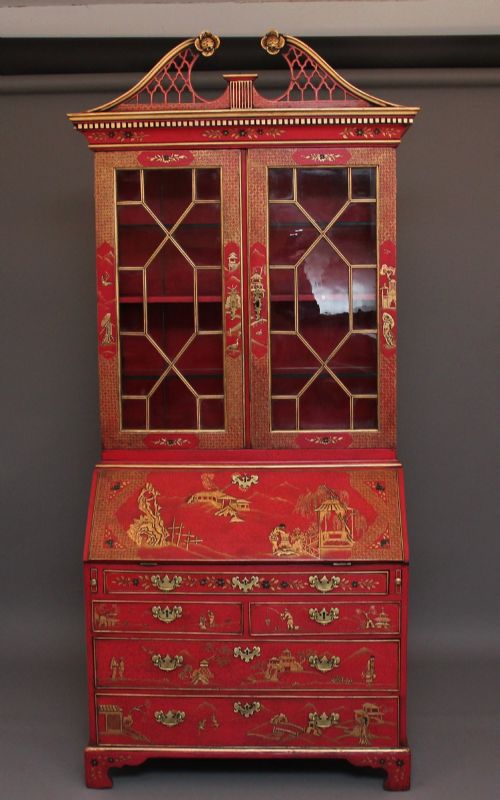
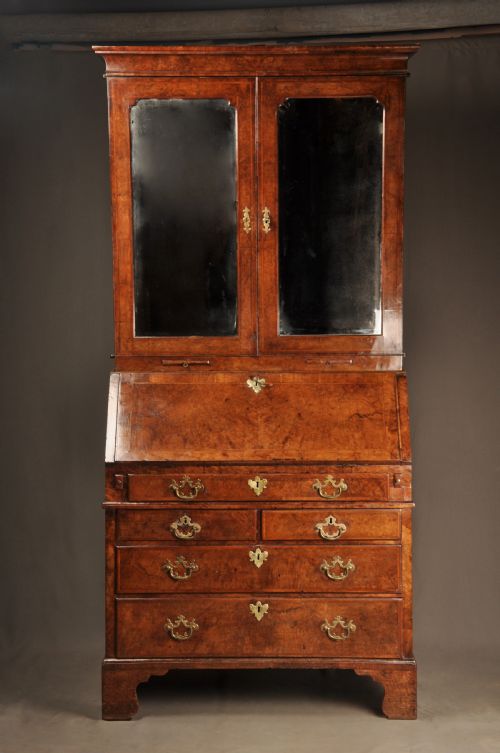


Early Georgian Secretary Cabinet
An early georgian secretary cabinet brings together compartments for correspondence and a tall shelved upper case, built for writing and storage in walnut or mahogany.
Early Georgian Secretary Cabinet
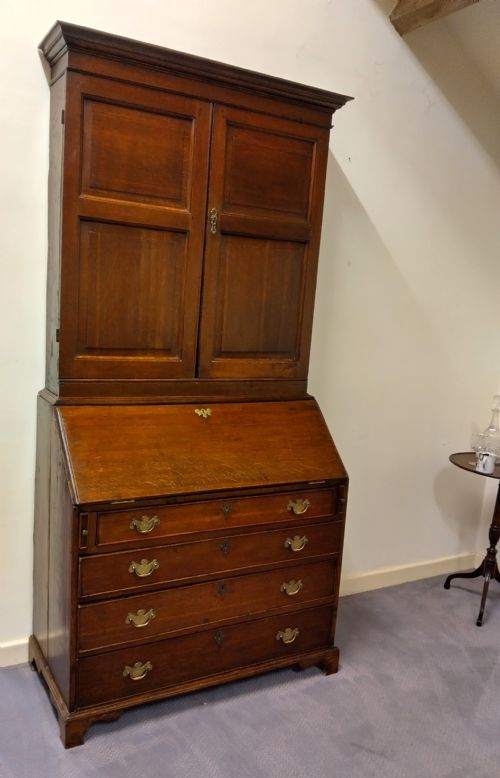
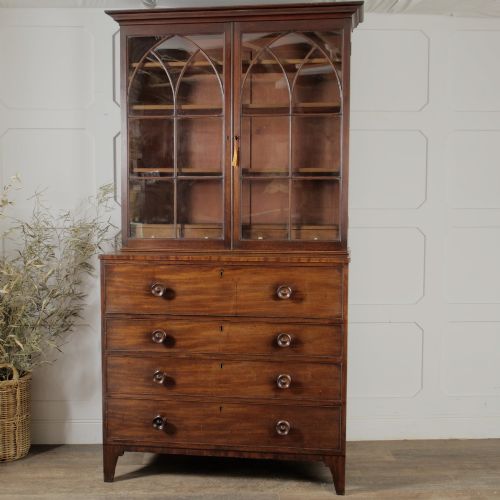
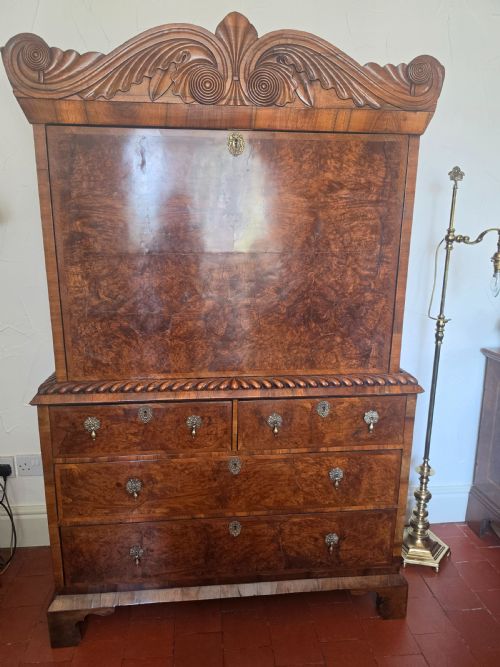
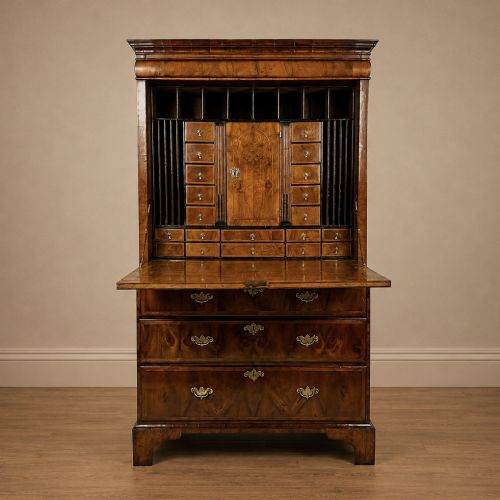
The early georgian secretary cabinet combines a lower writing desk, often configured with a fall front or pull-out drawer concealing internal pigeonholes, with an upper bookcase or cabinet section enclosed by glass or panelled doors. These pieces emerge predominantly from the eighteenth century, aligned with the reigns of Queen Anne and George I, alongside later interpretations produced in the nineteenth and twentieth centuries.
Buyers encounter substantial case pieces constructed in distinct sections, such as a glazed upper compartment resting upon a bureau base fitted with drawers and bun feet. The forms span bureau bookcases, escritoires, and secretaire cabinets executed in walnut, oak, and mahogany.
How they were made
Cabinet makers utilised dense native and imported timbers, notably walnut, burr walnut veneer, oak, and Cuban mahogany, applying careful grain selection to exterior surfaces. Primary structures often combine solid timber frames with figured veneers laid upon supportive secondary woods.
Construction details involve dovetailed drawer boxes, fielded panels, and fitted interior compartments featuring secret drawers and pigeonholes. Glazed upper doors employ timber framing around individual glass panes, while brass hardware secures doors and operates drawers.
Listings feature eighteenth-century periods including Queen Anne, George I, and George II, alongside nineteenth-century Regency and later revival periods.
What varies in quality
The depth of figure in the walnut or mahogany veneer dictates the visual presence of the cabinet, separating plain surfaces from highly decorative figured grain. Surface preservation, including the survival of original finish and patina, marks the distinction between untouched examples and heavily restored pieces.
Internal complexity and proportion also differentiate examples, visible in the layout of the fitted interior, the integration of candle slides, and the harmony between the upper cabinet and lower desk sections.
The Early Georgian Secretary Cabinet Glossary
- Escritoire
- A writing cabinet featuring a fall front that drops to reveal an internal arrangement of small drawers and pigeonholes. This form serves as a direct precursor to the later bureau bookcase.
- Secretaire
- A desk or cabinet containing a fitted writing drawer or a drop-front writing surface. The term often describes pieces where the top drawer pulls down to form a writing desk.
- Burr Walnut
- Timber taken from the abnormal growth of a walnut tree, yielding intricate, swirling grain patterns. Cabinet makers prized this wood for decorative veneering on prominent exterior surfaces.
- Astral Glazing
- Glazing bars dividing the glass panes of a bookcase door into geometric patterns. These delicate wooden strips support the glass while contributing to the decorative facade.
- Bun Feet
- Rounded, slightly flattened feet turned from solid timber, commonly supporting case furniture from the late seventeenth and early eighteenth centuries.
Early Georgian Secretary Cabinet: Frequently Asked Questions
What is an early georgian secretary cabinet?
An early georgian secretary cabinet is a tall furniture form featuring a lower writing desk combined with an upper shelved bookcase enclosed by doors. These dual-purpose pieces provided secure storage for correspondence and books in eighteenth-century interiors.
They stand as substantial case furniture, typically constructed in separate upper and lower sections to facilitate movement and placement within domestic rooms.
How do you use a secretary cabinet?
The piece functions primarily as a writing desk and a bookcase, utilising a fall-front flap or a pull-out drawer to provide a flat writing surface. Internal compartments hold papers, letters, and ink supplies while the upper shelves display books and decorative objects.
Candle slides pull out beneath the upper doors on certain models to hold lighting for writing during evening hours.
How do I identify walnut furniture periods?
Walnut furniture from the early eighteenth century typically displays figured veneers, cross-banding, and candle slides, often resting on bun feet. Earlier Queen Anne and George I examples prioritize warm timber tones and burr grain over carved ornamentation.
Later nineteenth and twentieth-century revivals replicate these forms using similar woods, though construction marks and secondary timbers often reveal the later date of manufacture.
Where were these cabinets placed originally?
These cabinets occupied principal rooms in large houses, serving administrative needs in studies, libraries, or private withdrawing chambers. Their imposing height and refined facades suited public display as well as private correspondence.
Positioned against interior walls, they anchored the scale of the room while keeping valuable books and documents securely enclosed.