

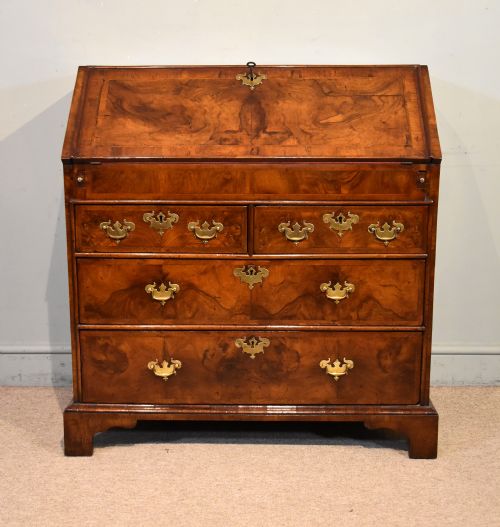




George I Walnut Bureau
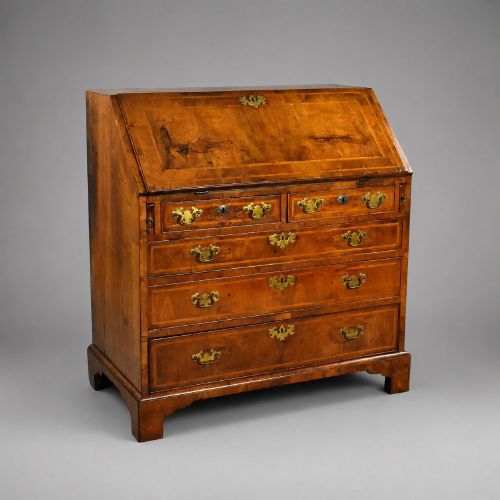
A george i walnut bureau combines a sloping fall-front writing surface with interior drawers, bringing early eighteenth-century elegance and warmth to a study.
George I Walnut Bureau
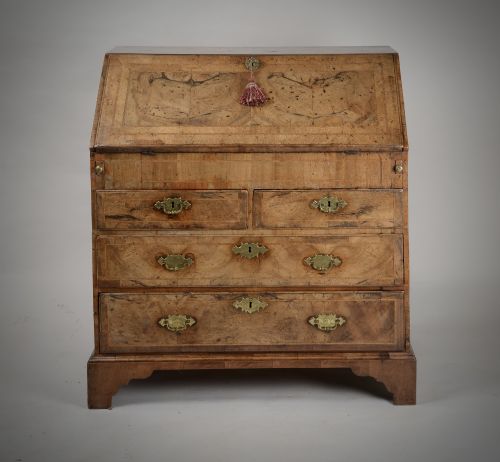
When you examine a george i walnut bureau, you look at a piece of case furniture designed for correspondence and storage during the early eighteenth century. These items typically feature a hinged writing flap that opens to reveal a fitted interior of small drawers and pigeonholes.
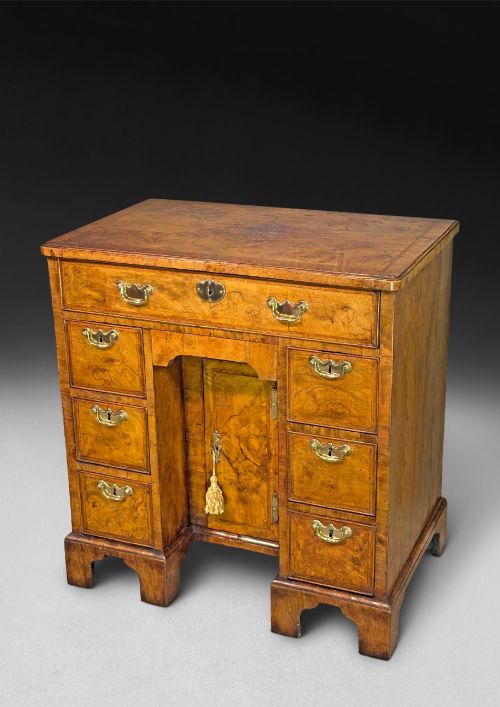
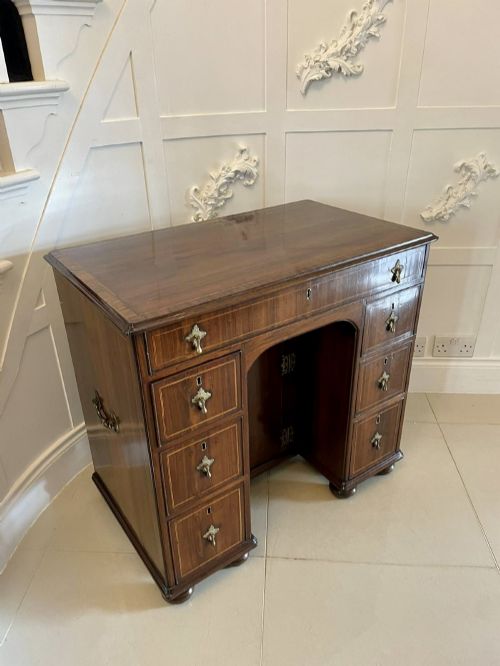
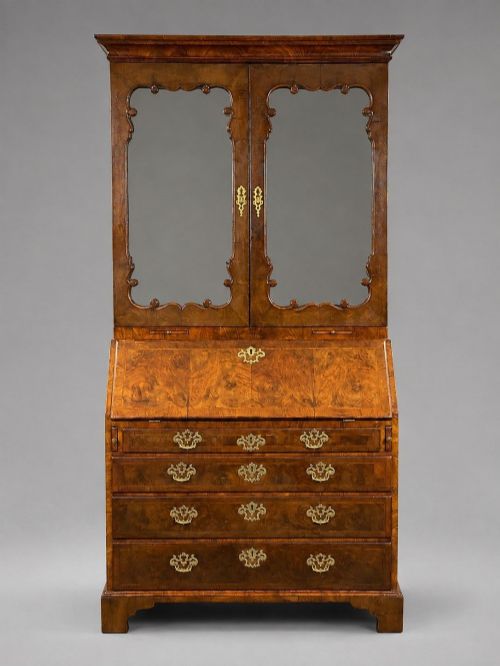
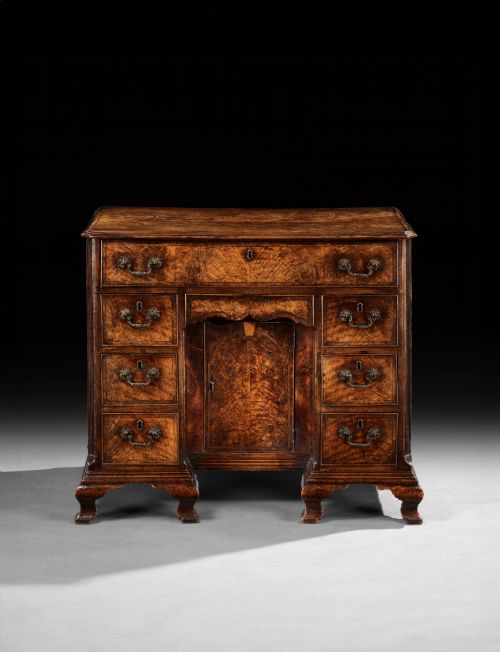
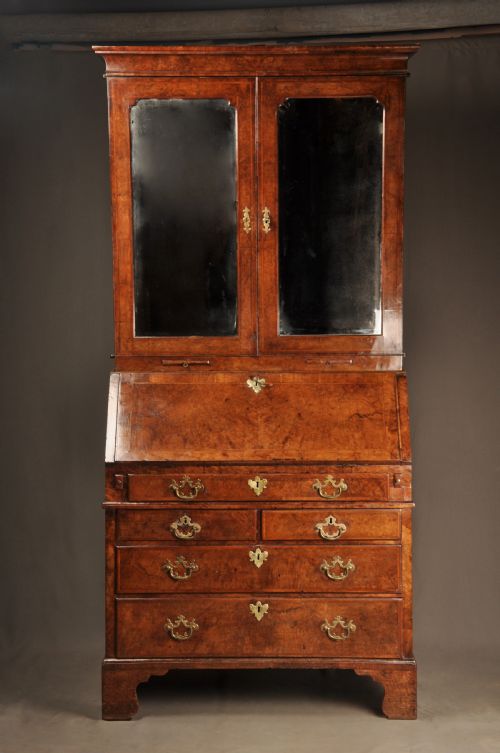
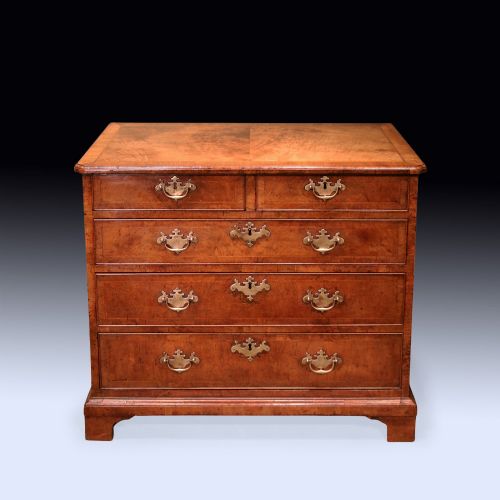
Beyond the standard fall-front bureau, this category encompasses related writing forms such as kneehole desks, bureau bookcases with glazed upper sections, and tall secretaire chests. The selection spans authentic eighteenth-century examples alongside later nineteenth-century revival interpretations.
The dominant material signature of these pieces is figured walnut, often enhanced by burr veneers, herringbone banding, and feather-banding details. Construction relies heavily upon solid oak for internal framing and secondary drawer linings.
Materials and construction methods
Cabinetmakers utilised thin veneers of figured, burr, or fiddleback walnut applied to stable oak or pine carcases, exploiting the rich grain patterns of the wood. Cross-banding and feather-banding bordered the drawer fronts and writing flaps to create deliberate decorative contrast.
Internal compartments incorporated solid walnut and oak for drawer construction, joined with hand-cut dovetails. Brass drop handles, escutcheons, and hinges completed the hardware, often secured with original iron locks.
George I Walnut Bureau Retail Price Guide 2026
Typical asking prices for george i walnut bureau among the pieces listed under this phrase on Sellingantiques today, from the lower quarter to the upper quarter. They describe what is for sale here now, not the wider market.
Secret compartments hidden behind miniature drawers within the fitted interior offered eighteenth-century writers a secure hiding place for private correspondence.
Assessing craftsmanship and condition
The visual success of a bureau rests upon the choice of timber veneers, where symmetrical matching of burr or figured grain separates standard items from exceptional ones. Crispness in the inlaid banding and the retention of original brass hardware and working locks elevate an example.
Structural integrity depends on the stability of the carcase and the smooth operation of the fall-front hinges and internal drawers. Pieces retaining a warm, deep patina on the timber surface command greater appreciation than those with stripped or overly refinished surfaces.
The George I Walnut Bureau Glossary
- Burr walnut
- Timber harvested from walnut tree growths, producing swirling, highly figured grain patterns. Cabinetmakers sliced this wood into thin veneers for decorative surfaces.
- Feather-banding
- Small strips of veneer cut diagonally and laid in a V-shape arrangement to form a decorative border around drawer fronts. This technique frames the primary walnut panels.
- Secretaire
- A writing cabinet featuring a drop-front or pull-out drawer concealing a fitted interior. It combines desk functionality with the vertical storage capacity of a chest.
- Kneehole desk
- A compact desk featuring a central recess for the user's legs, flanked by pedestals of small drawers. These pieces often share the same walnut veneers and brass hardware found on bureaux.
- Herringbone inlay
- Distinctive bordering formed by laying small strips of veneer in alternating diagonal directions to resemble fish bones. It creates a crisp geometric edge on drawer perimeters.
George I Walnut Bureau: Frequently Asked Questions
How do I identify George I walnut furniture?
George I walnut furniture relies on rich wood grain, cross-banded borders, and restrained proportions characteristic of the early eighteenth century. Makers favoured figured walnut veneers over heavy carving.
Secondary woods such as oak appear in the drawer linings and internal framing, while brass handles remain understated and functional.
What are candle slides?
Candle slides are small pull-out boards positioned directly beneath the main writing flap on certain bureau bookcases. They provided a stable surface for holding candlesticks to illuminate the desk.
Users pushed the slides back into the carcase when illumination was no longer required.
Where should I place a walnut bureau?
A walnut bureau fits well in studies, living rooms, or hallways where its compact footprint and warm wood tones complement traditional interiors. Direct sunlight should be avoided to protect the delicate walnut veneers from fading.
Maintaining stable room humidity helps preserve the antique timber and prevents veneer lifting.