






Walnut Secretaire Bookcase
A walnut secretaire bookcase combines a writing drawer with enclosed shelving, offering an imposing yet practical focal point for a traditional study.
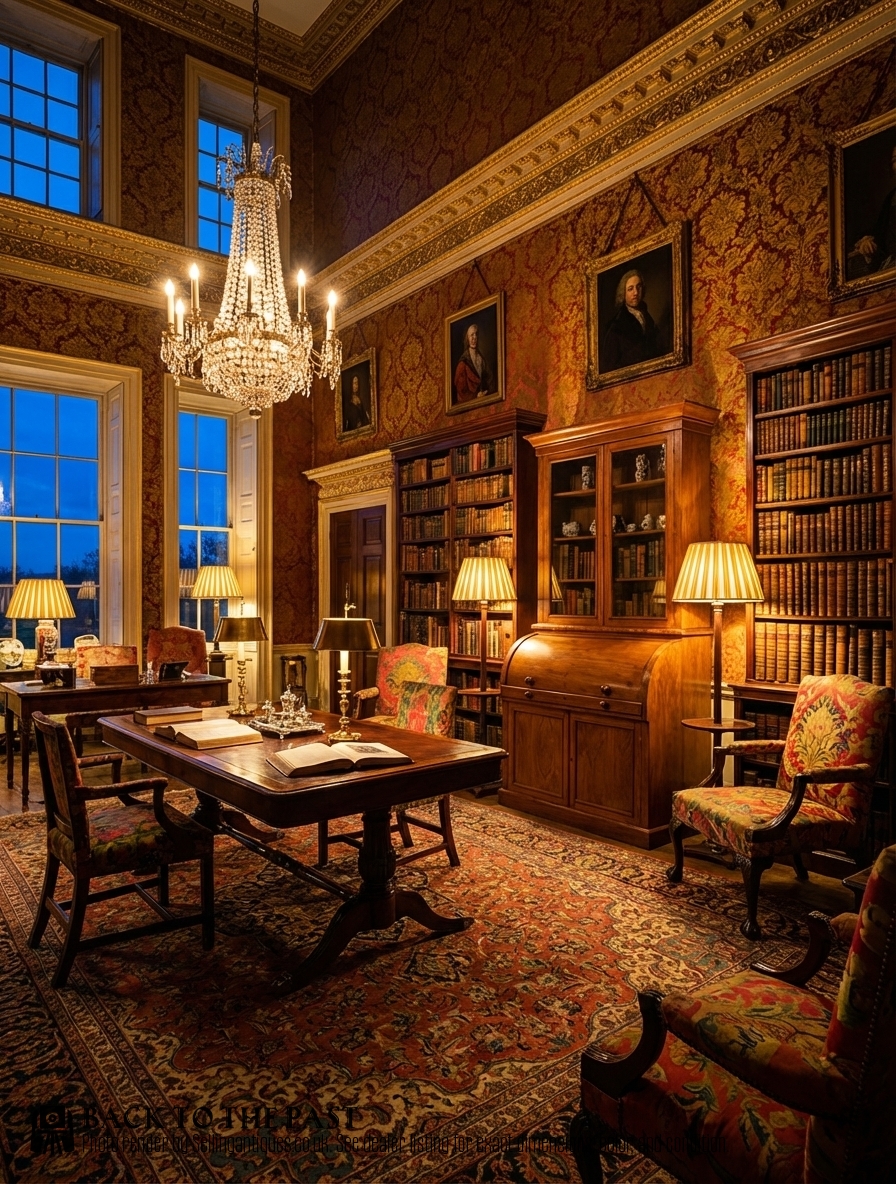
Walnut Secretaire Bookcase
A walnut secretaire bookcase is a substantial piece of furniture designed for both storage and correspondence, commonly encountered from the 18th century through to the Edwardian period. The evidence shows these cabinets appearing across Georgian, Victorian, and Edwardian eras, spanning styles from George I to late Victorian cabinet work.
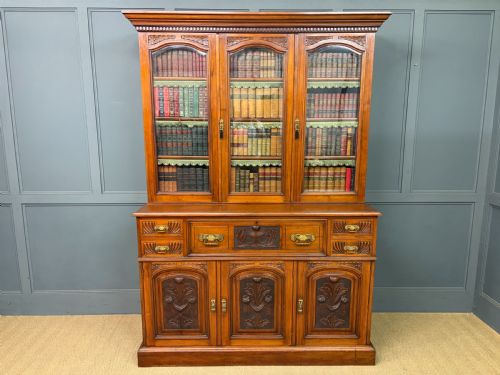
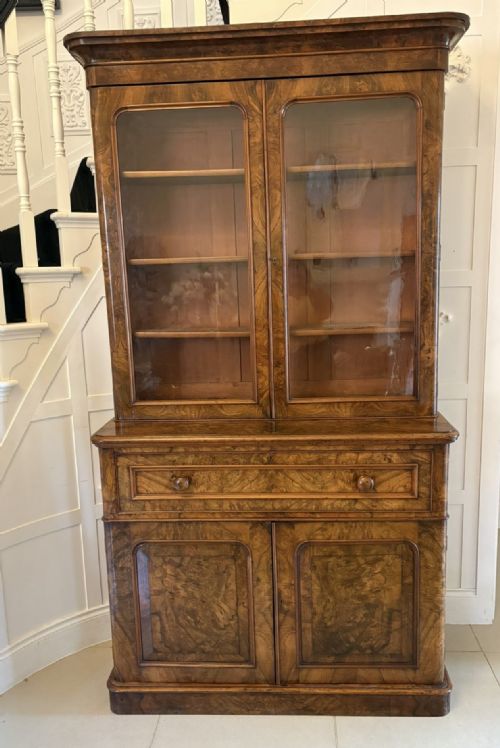
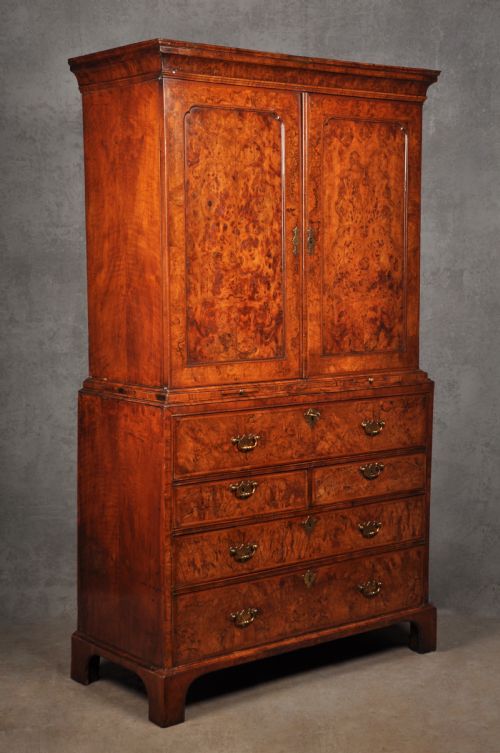
Buyers are most likely to meet Victorian burr walnut examples on this page, alongside earlier George I and George III bureau bookcases framed in figured timber. The forms range from tall breakfront library bookcases to smaller bureau cabinets fitted with glazed upper doors and drop-down writing drawers.
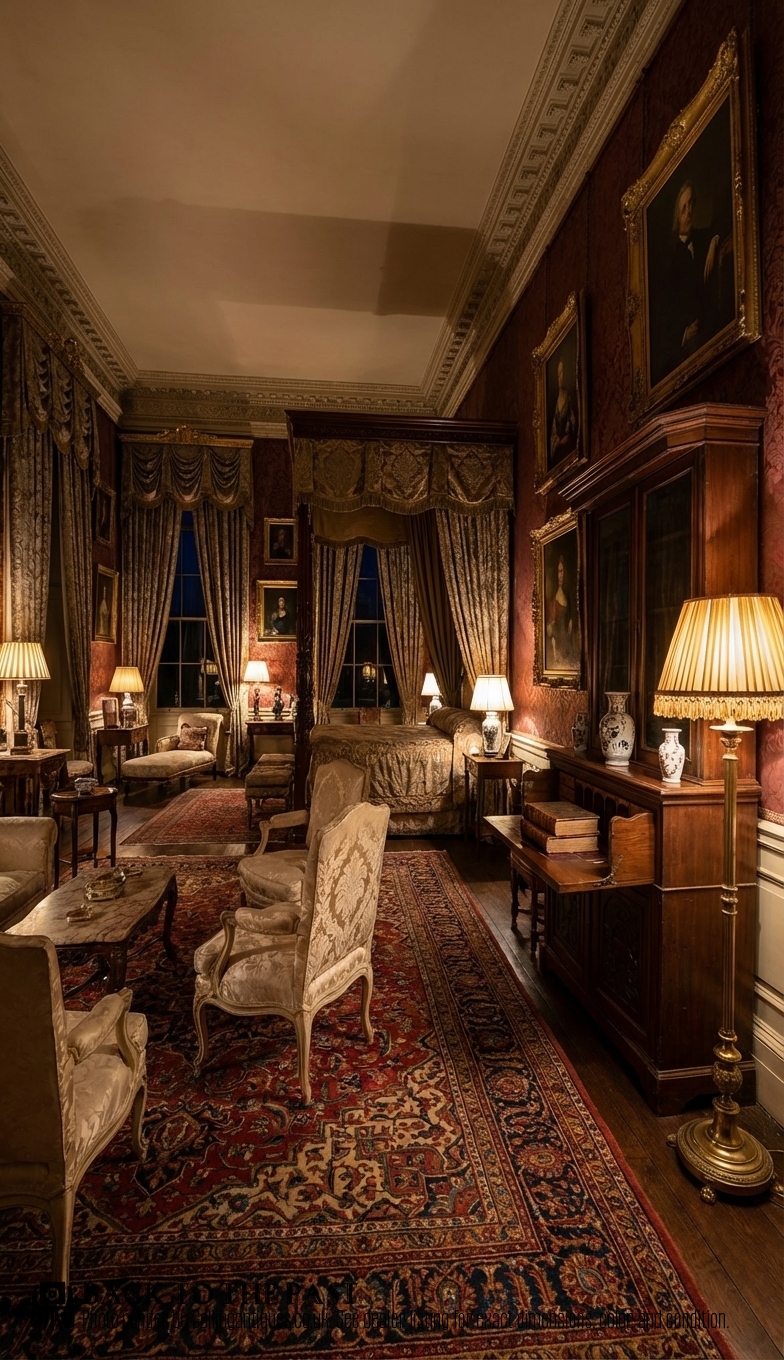
Materials and Construction
Makers utilised solid walnut and burr walnut veneers, often laying them over secondary woods such as oak and fruitwood inlay. The surfaces frequently incorporate herringbone banding, glass panes for the upper bookcase doors, and brass fittings on the drawers and fall fronts.
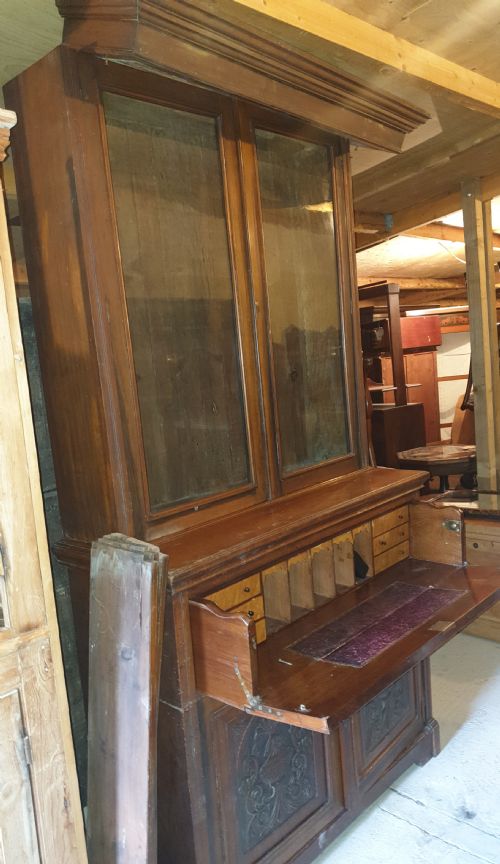
Internal writing compartments reveal fitted pigeonholes and small drawers, occasionally lined with velvet or leather. Structural integrity relies on traditional joinery within the carcase to support the heavy upper shelving and the cantilevered weight of the drop-front writing desk.
At least one historical cabinet maker managed to squeeze a Holy Roman Emperor into the provenance.
Assessing the Pieces
The visual hierarchy of a walnut secretaire bookcase rests primarily on the choice of timber, with highly figured burr walnut and matched veneers commanding attention over plainer surfaces. The crispness of the fruitwood inlay and the subtlety of herringbone banding indicate the maker's hand and the time invested in the exterior.
Proportion and scale also separate the standard production from the exceptional, particularly in smaller bureau cabinets where balancing the upper bookcase with a compact base requires precise design. The integration of the secretaire drawer, ensuring the fall-front mechanism operates smoothly without disrupting the exterior lines, marks the difference in cabinetmaking skill.
Gillows
The Walnut Secretaire Bookcase Glossary
- Secretaire
- A piece of furniture containing a drawer or compartment with a drop-down front that serves as a writing desk. It conceals pigeonholes and small drawers inside.
- Burr walnut
- A specialised wood cut from walnut tree growths, producing swirling, highly figured grain patterns. It was frequently used as a veneer on high-status cabinet doors and drawer fronts.
- Herringbone banding
- A decorative inlay pattern formed of small veneer strips laid diagonally in opposing directions to resemble a fish skeleton. It borders drawer fronts and panels on 18th-century and later furniture.
- Breakfront
- A cabinet design where the central section projects forward from the flanking wings. This architectural arrangement creates depth and shadow across large bookcases.
- Bureau bookcase
- A dual-purpose form combining a sloping or drop-front desk base with an upper section enclosed by glass or wooden doors for books. It serves as both a working surface and a display unit.
Walnut Secretaire Bookcase: Frequently Asked Questions
What is a walnut secretaire bookcase?
A walnut secretaire bookcase is a tall cabinet that merges a shelved upper section for books with a lower section containing a pull-down writing drawer.
These pieces provide both display space and a concealed desk surface within a single vertical footprint.
How do I date a walnut secretaire bookcase?
Dating relies on observing the stylistic details, construction methods, and timber selections recorded across the Georgian, Victorian, and Edwardian periods.
Earlier 18th-century pieces often display figured walnut and herringbone inlay, whereas later Victorian iterations frequently utilise burr walnut veneers and heavy glass doors.
Where should I place a secretaire bookcase?
These tall cabinets suit studies, libraries, or spacious drawing rooms where their height and rich wood tones can anchor the interior.
Ensure adequate clearance in front of the piece so the drop-down writing drawer can open fully without obstruction.
How is the writing section organised?
The secretaire drawer drops open to reveal a fitted interior containing small drawers, pigeonholes, and occasionally a leather or velvet writing surface.
This compartment keeps correspondence materials neatly organised and out of sight when the fall front is closed.