
Antique Cylinder Top Desk
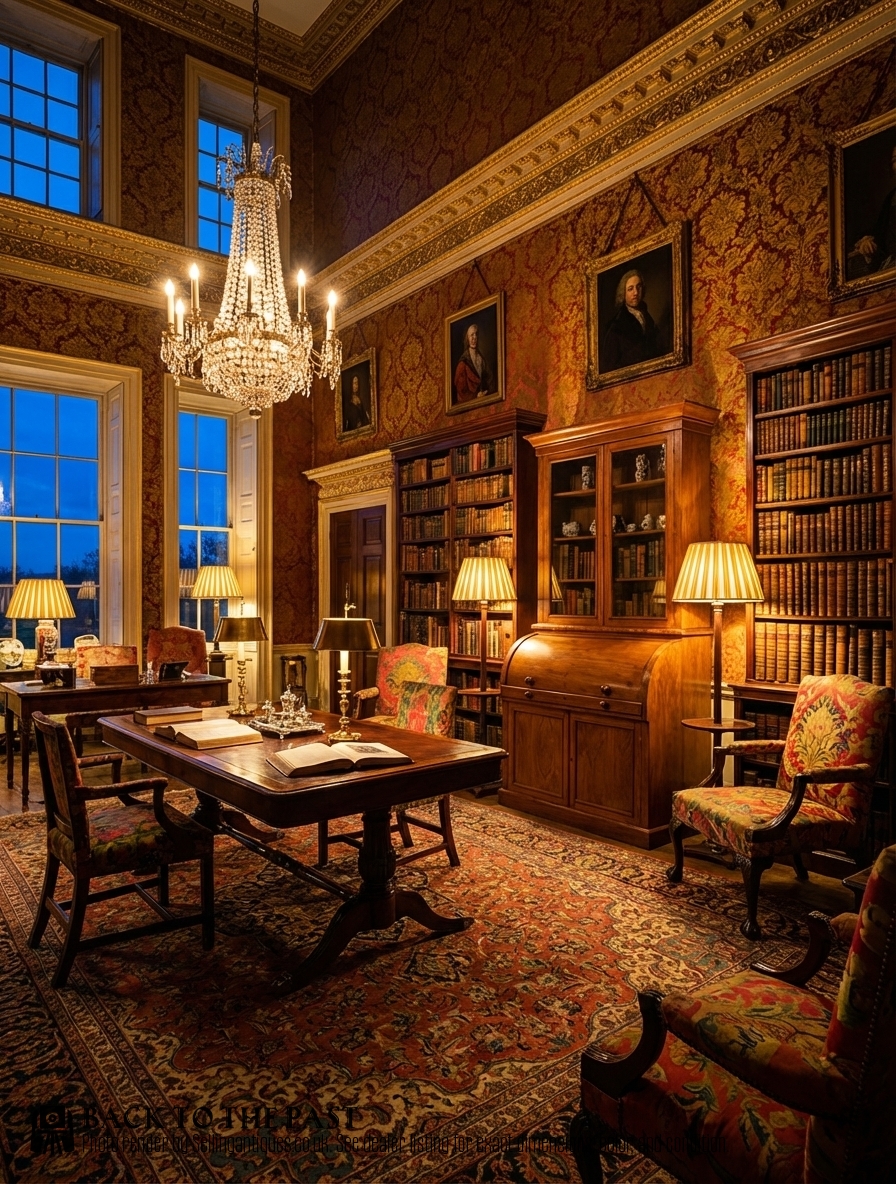
An antique cylinder top desk brings architectural polish to a study, concealing papers behind a curved wooden roll.
What They Are
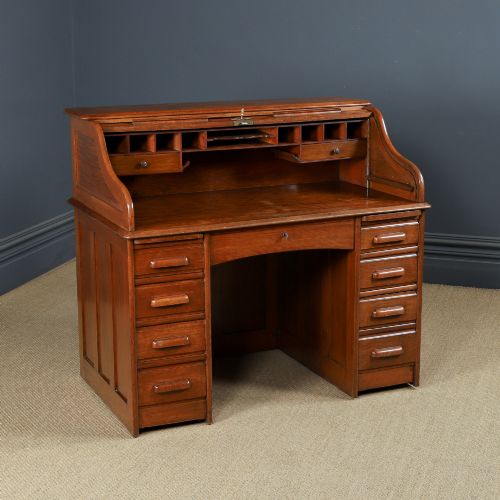
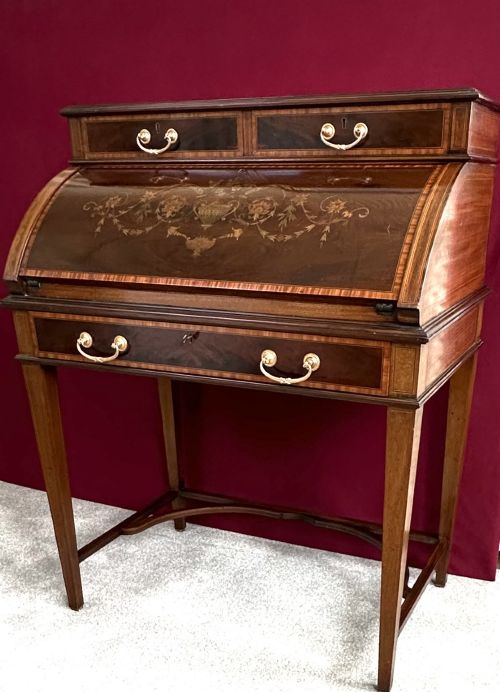
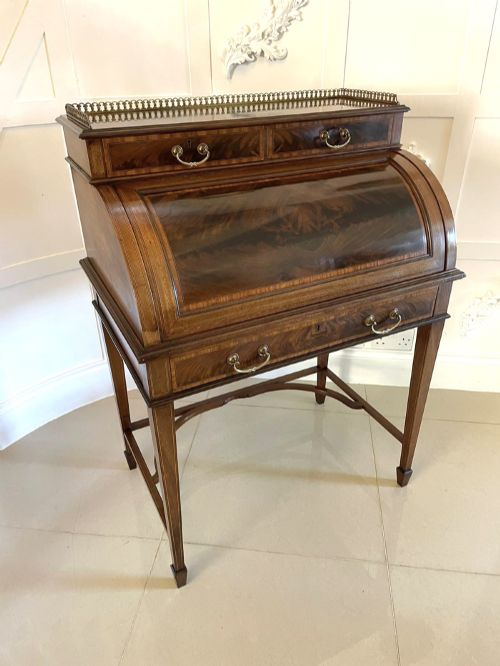
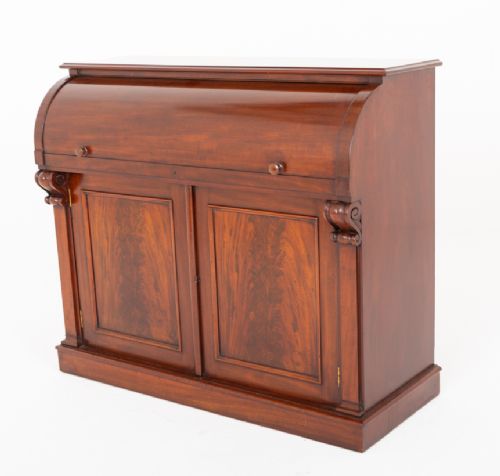
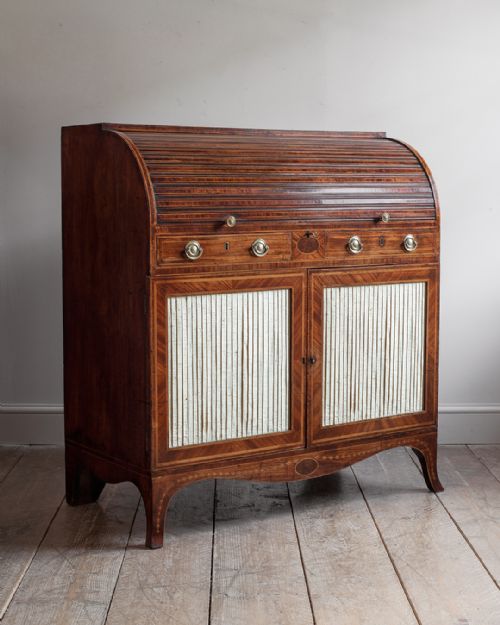
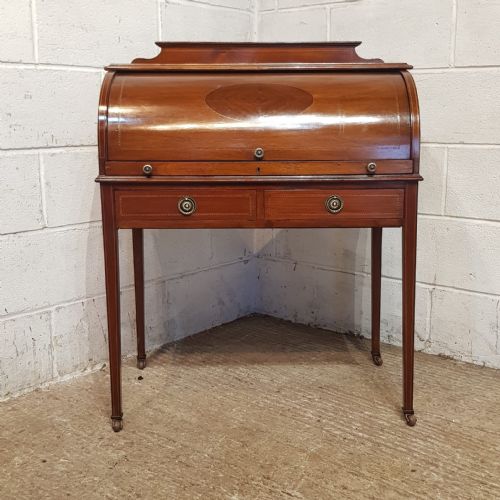
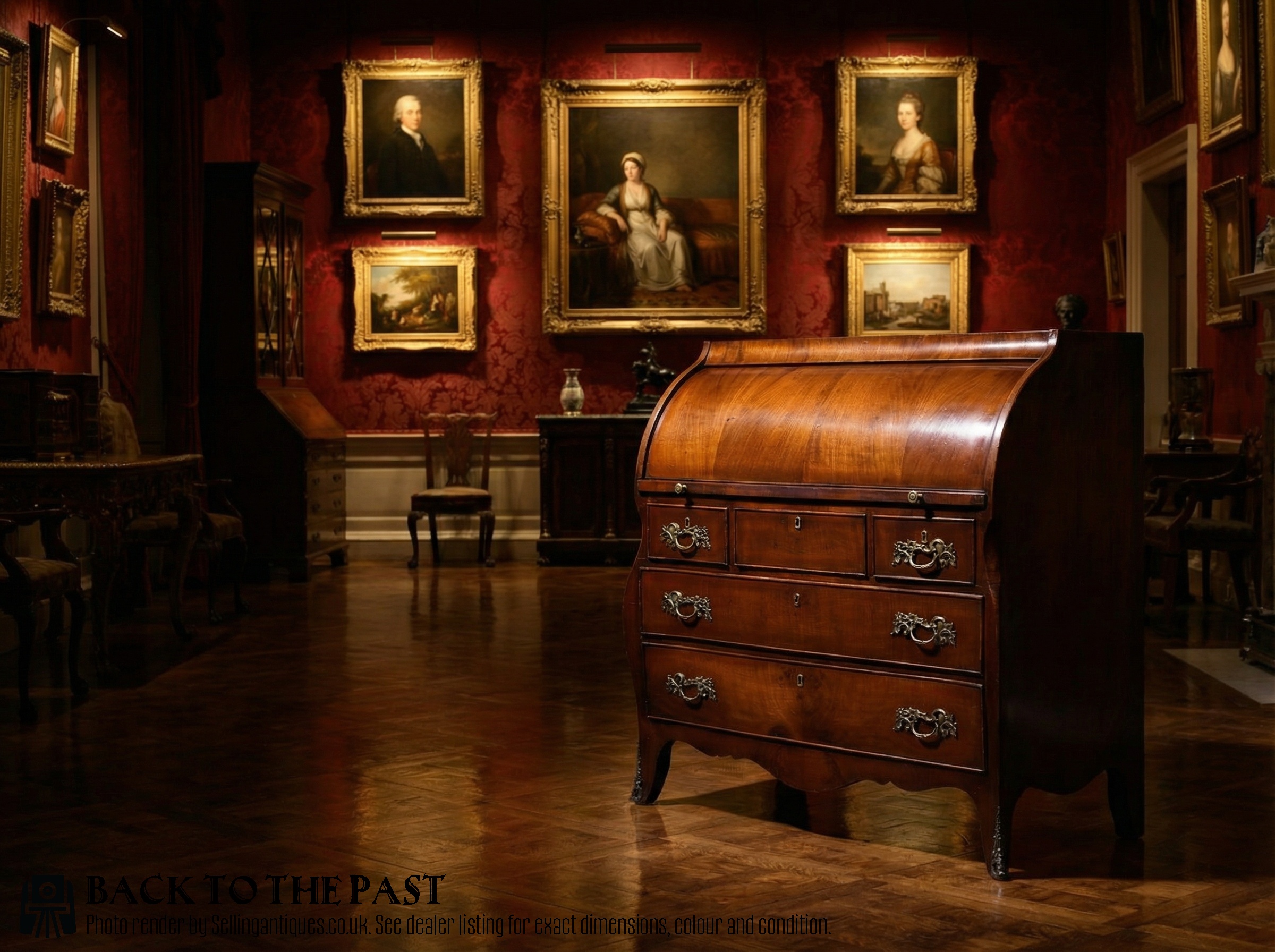
An antique cylinder top desk provides a private, lockable workspace by using a curving wooden shutter that slides down over the writing surface and pigeonholes. These pieces span several distinct eras, appearing most frequently in sturdy Victorian mahogany configurations or lighter Edwardian iterations with delicate brass fittings.
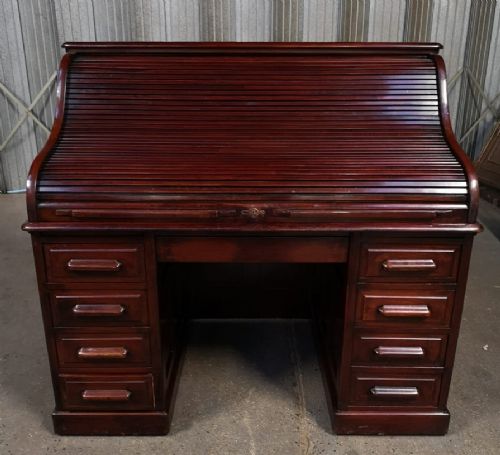
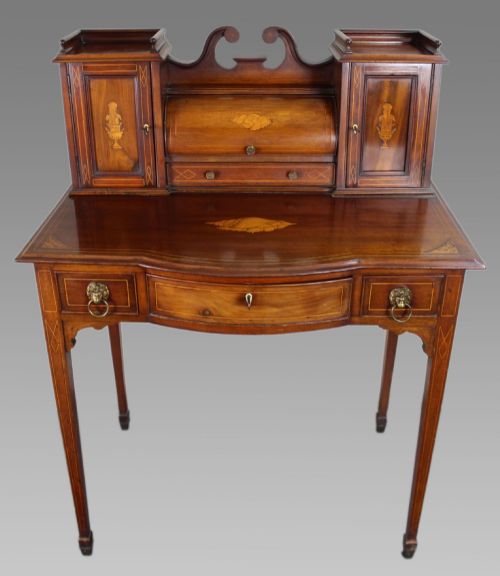
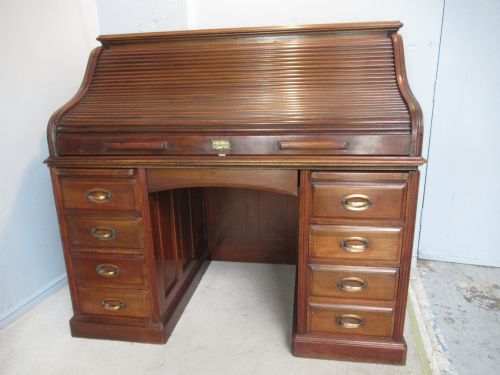
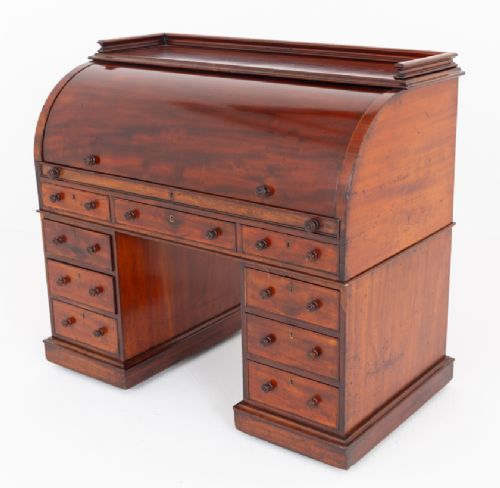
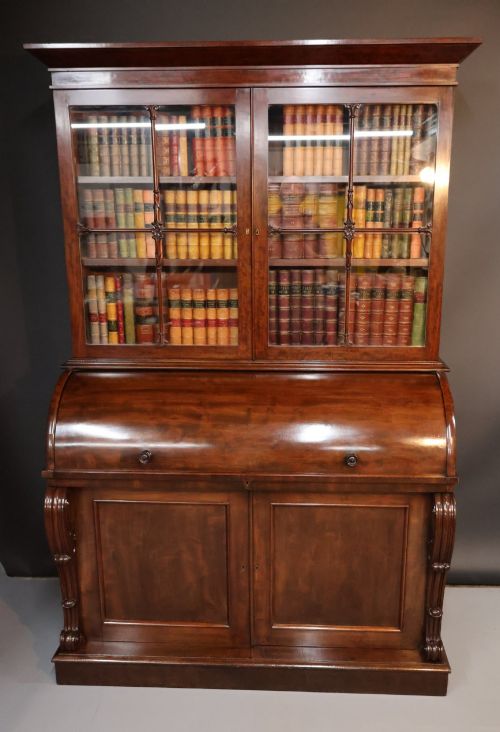
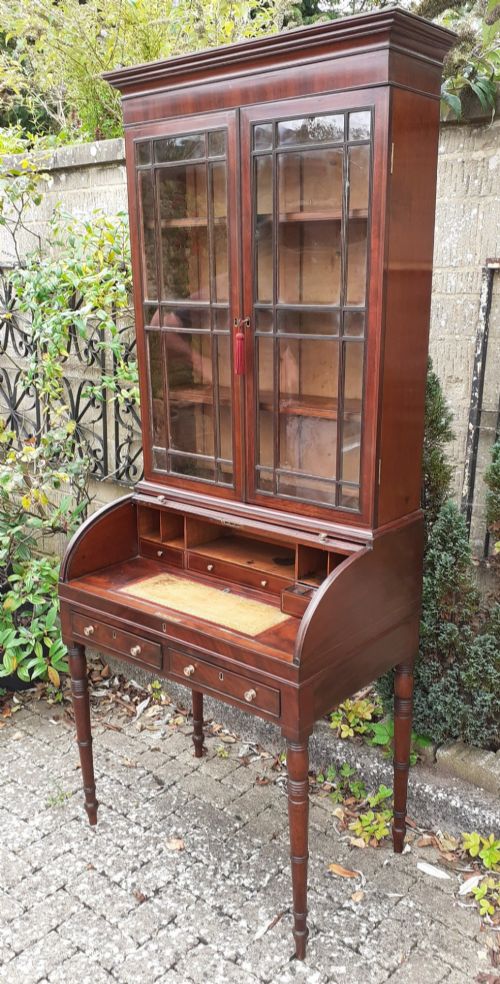
The form stretches from compact ladies writing desks up to substantial twin pedestal office desks designed for grander libraries. Alongside standard writing tables, one encounters taller bureau bookcase combinations that integrate shelving above the rolling cylinder mechanism.
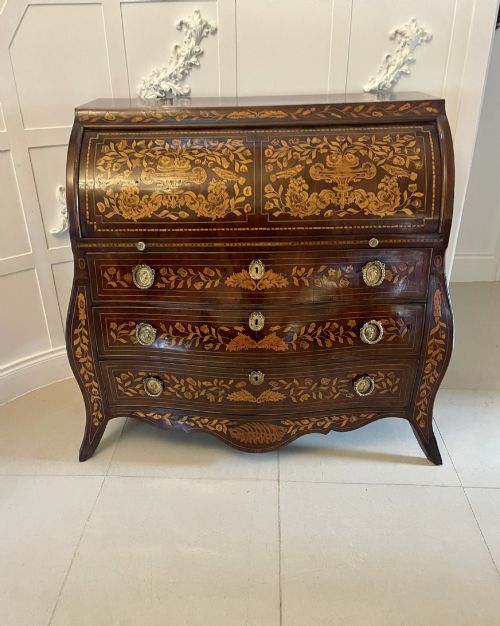
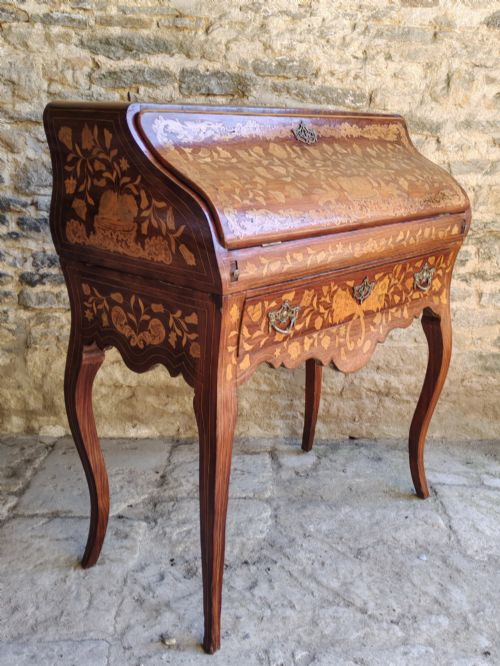
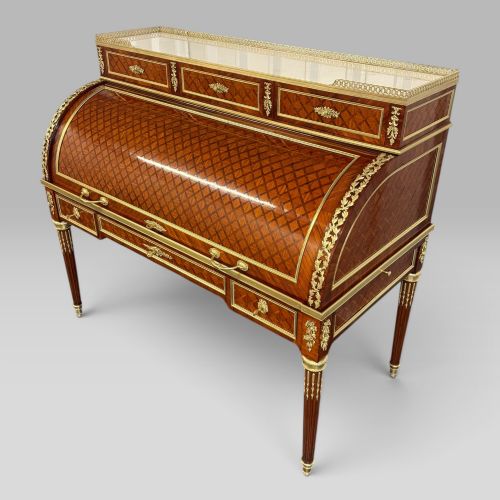
Origins vary across English workshops, Dutch marquetry traditions, and continental baroque cabinets, each bringing distinct regional proportions to the cylinder form. Mahogany remains the dominant timber, though walnut, satinwood, and oak also shape these surviving forms.
How They Were Made
Cabinet makers constructed the curved cylinder shutter from narrow vertical slats glued to a flexible fabric backing, allowing the wooden drum to glide smoothly within side tracks. Timbers such as mahogany, walnut, and satinwood were selected for their grain and frequently enhanced with intricate marquetry or contrasting string inlay.
Retail Price Guide 2026
Typical UK retail prices for cylinder top desk, calculated from the Sellingantiques database of over a million retail prices indexed since 2003. This retail price guide relies exclusively on Sellingantiques data; no external sources or auction records are used, so the figures do not describe the wider market.
Mahogany and walnut dominate the listed materials, accompanied by decorative satinwood, oak, and inlaid brass details.
What Varies in Quality
Quality rests in the precision of the rolling cylinder mechanism and the smoothness of its travel along the side grooves, which separates superior cabinetry from binding joints. The selection of veneer figures, such as burr walnut or figured mahogany, defines the visual hierarchy of the piece.
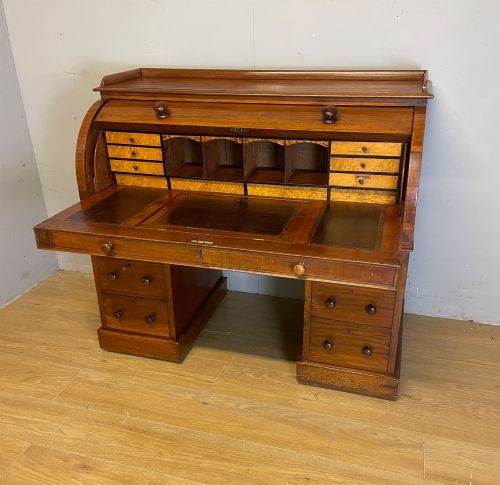
Interior complexity marks the division between standard utility desks and exceptional cabinetwork, visible in secret compartments, finely dovetailed small drawers, and fitted leather surfaces. Structural integrity in the heavy pedestal bases and the crispness of marquetry inlays further distinguish finer examples.
The Antique Cylinder Top Desk Glossary
- Cylinder top
- A rounded, quarter-circle wooden shutter that slides vertically to conceal the writing surface and pigeonholes. This mechanism replaced the traditional slant-front flap on many formal 19th-century desks.
- Pedestal desk
- A heavy writing table supported by two vertical banks of drawers rather than four distinct legs. These large configurations provide substantial storage beneath the rolling cylinder.
- Marquetry
- Decorative patterns formed by fitting small pieces of varied wood veneers into a larger surface. Dutch and continental examples frequently utilise this technique for elaborate floral motifs.
- Bureau bookcase
- A tall combination piece uniting a lower writing desk with upper shelving enclosed by glass doors. These integrate the cylinder mechanism into a larger architectural storage unit.
- Escutcheon
- A protective metal plate surrounding a keyhole, usually cast in brass. These details secure the lock mechanism while framing the primary access points on drawers and cylinder drums.
Frequently Asked Questions
How does a cylinder top mechanism operate?
The curved wooden shutter runs on concealed tracks inside the desk carcass, sliding backward into the interior housing when opened. Pulling the drawer forward or lifting a central handle guides the drum down to cover the workspace.
This enclosed design allowed owners to leave correspondence arranged inside without disturbing papers or exposing them to dust between writing sessions.
What woods were used for these desks?
Mahogany served as the primary timber throughout the Victorian period, valued for its stability and rich red-brown tone. Walnut, satinwood, and oak also appear, particularly in continental pieces or lighter Edwardian examples.
Finer desks frequently incorporated burr walnut or exotic veneers to create decorative panels across the cylinder front and drawer faces.
Are these desks suitable for daily office use?
Many surviving twin pedestal models were originally built for commercial or study use, offering sturdy workspaces and deep drawer storage. The pull-out writing surface and internal pigeonholes accommodate modern correspondence and stationery.
Care must be taken with historic leather writing inserts and delicate polish finishes when placing working equipment on antique surfaces.
How do I distinguish Edwardian from Victorian models?
Victorian examples generally feature heavier mahogany or oak timbers, darker finishes, and substantial proportions, particularly in twin pedestal formats. Edwardian desks tend to be lighter, incorporating satinwood, delicate string inlay, and refined proportions.
Style indicators like George III influences or Sheraton-style inlay provide further clues to the manufacturing decade when combined with timber analysis.