
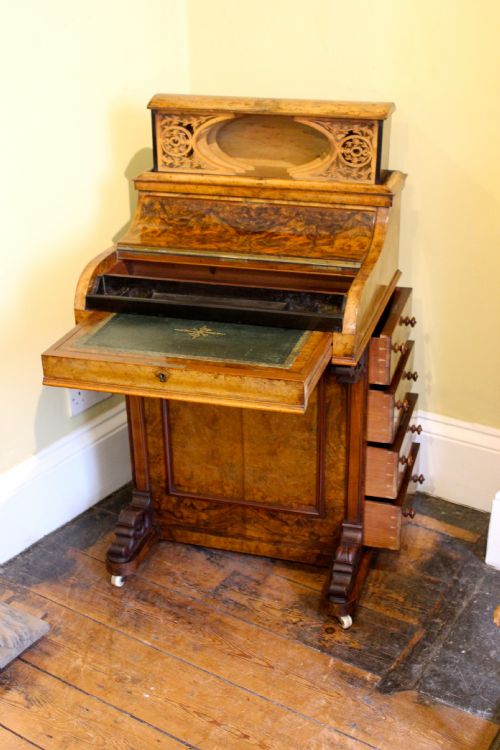


Walnut Roll Top Desk
A walnut roll top desk provides a private, enclosed workspace with fitted interior drawers behind a slatted timber screen.
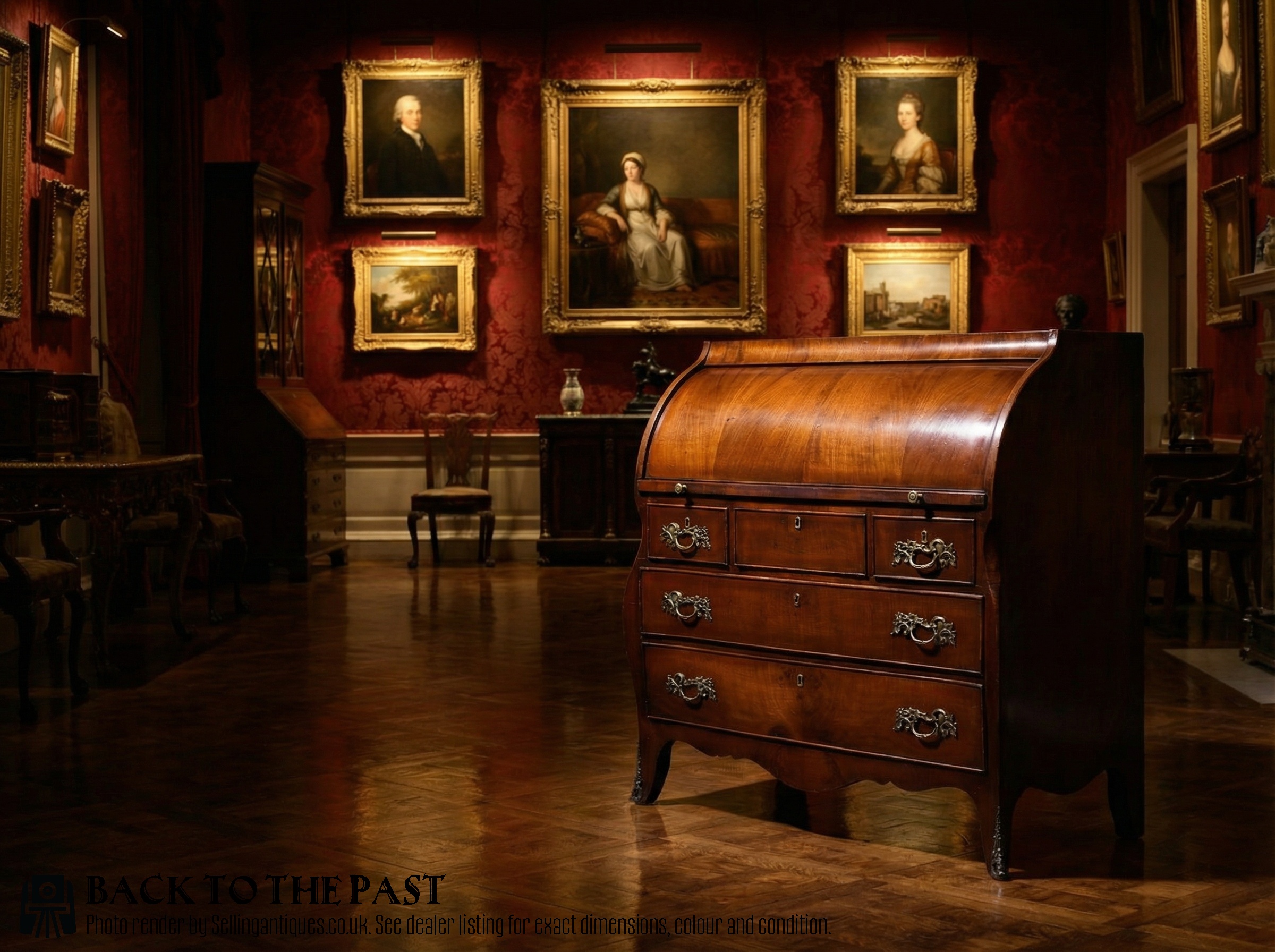
Walnut Roll Top Desk
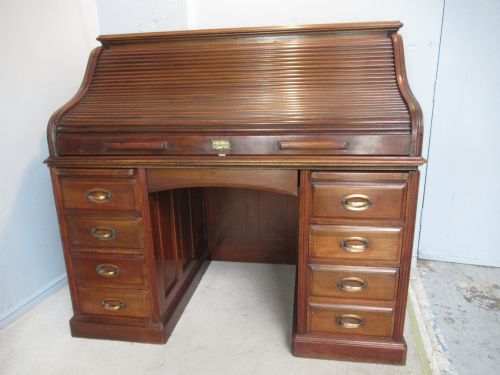
A walnut roll top desk is a robust writing and office workstation defined by a flexible tambour shutter that draws down to conceal the pigeonholes and inner drawers. You will frequently encounter Edwardian and Victorian iterations alongside earlier nineteenth-century examples and American office forms.
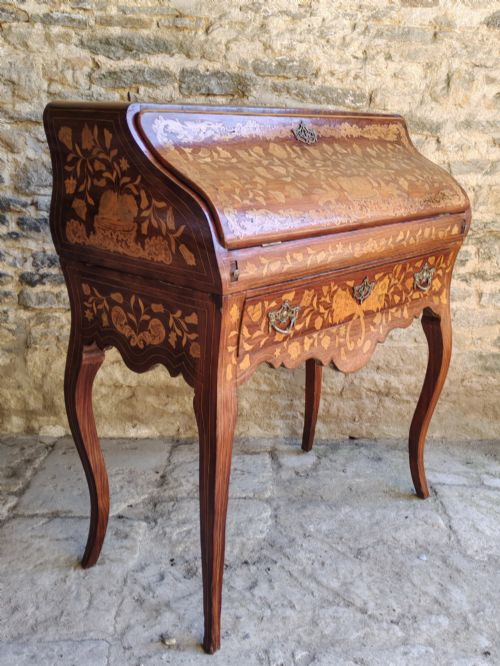
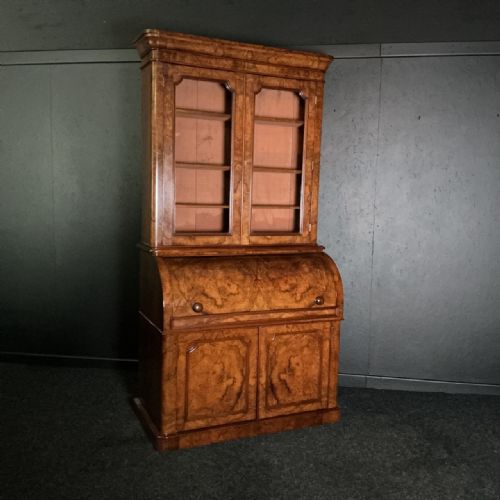
The objects span pedestal office desks, cylinder fronted bureaux, and larger library pieces incorporating glazed bookcases or filing systems. Timber variations include plain walnut, rich burr walnut, and red walnut, often paired with contrasting fruitwood inlays or applied marquetry.
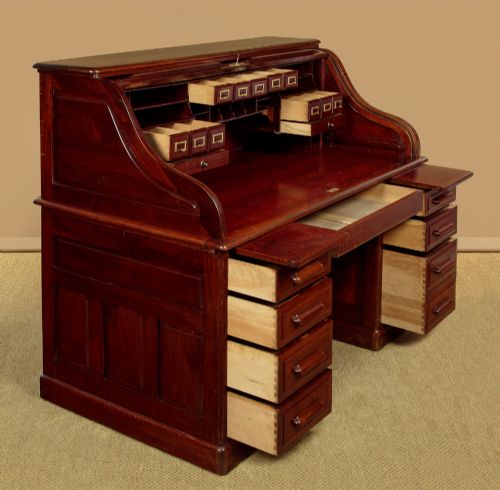
Originating in domestic and commercial settings from the eighteen-eighties through the early twentieth century, these pieces combine heavy stationery storage with a practical sliding writing surface. The configuration typically balances deep pedestal drawer banks with an upper tambour mechanism operated by a single key or latch.
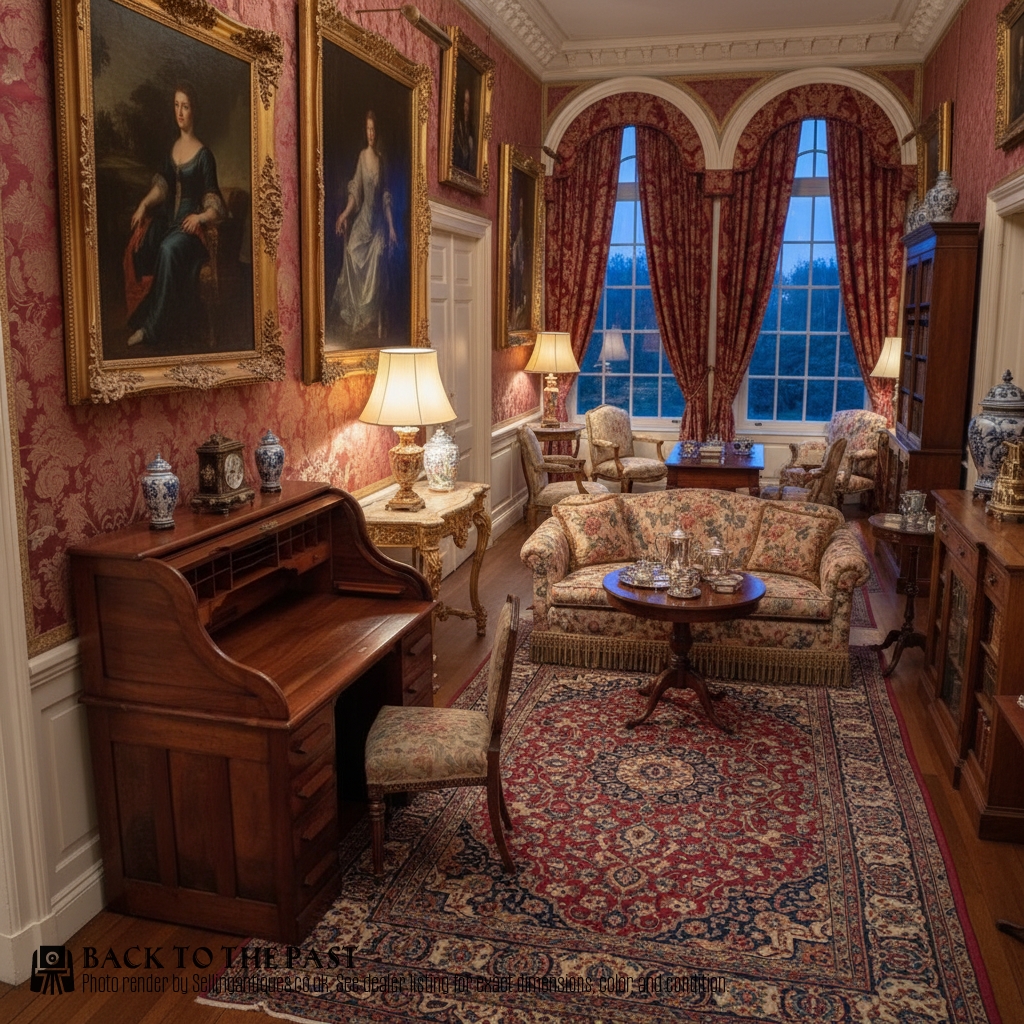
Materials and construction
Cabinetmakers constructed these desks using solid walnut and structural secondary timbers, applying burr walnut veneers to the primary exterior surfaces for decorative grain patterns. Tambour shutters were built from narrow wooden slats glued to heavy canvas or leather backing strips, allowing the flexible screen to run smoothly within curved wooden grooves.
Makers integrated brass hardware, leather writing inserts, and fruitwood or parquetry inlays to accent the drawer fronts and panels. Heavier pedestal office versions relied on panelled internal framing to support large banks of internal stationery drawers and filing mechanisms.
Walnut Roll Top Desk Retail Price Guide 2026
Typical asking prices for walnut roll top desk among the pieces listed under this phrase on Sellingantiques today, from the lower quarter to the upper quarter. They describe what is for sale here now, not the wider market.
Materials appearing across these listings include solid walnut, burr walnut, fruitwood inlay, brass, glass, marble, and leather.
What separates the best from the rest
Quality rests upon the precision of the tambour mechanism and the smoothness with which the slatted wooden shutter travels along its concealed tracks. Superior examples maintain exact alignment in the curved runners without binding or sagging when operated.
The selection of timber grain and the integrity of the fitted interior compartments dictate the tier of a piece. Elaborate marquetry detailing, carefully matched burr walnut veneers, and solid brass locks distinguish high-production office desks from simpler utilitarian variants.
Boston Chair Company·Wiggers·Angus of London·Horrocks Desk Company·Shannon Ltd·T. Inglesant & Sons of Leicester
The Walnut Roll Top Desk Glossary
- Tambour
- A flexible shutter made from narrow strips of wood glued to a fabric backing, designed to slide along tracks in order to cover a desk interior.
- Burr Walnut
- A figured wood veneer harvested from the gnarled growth of a walnut tree, prized for its swirling grain patterns and rich texture.
- Pedestal Desk
- A heavy writing table supported by two vertical banks of drawers resting on the floor, creating a central kneehole.
- Marquetry
- Decorative inlay work using various tinted woods and fruitwoods to form pictorial or floral patterns across flat surfaces.
- Cylinder Bureau
- A writing desk featuring a rotating rounded wooden cylinder that rolls backward to reveal an internal writing slide and pigeonholes.
Walnut Roll Top Desk: Frequently Asked Questions
Where were walnut roll top desks used?
These desks served as executive workstations in late nineteenth and early twentieth-century offices, government departments, and private home libraries. Their enclosed storage allowed clerks and professionals to leave paperwork secured at the end of the working day.
Many examples incorporate specialised filing inserts, card index drawers, and deep stationery compartments designed specifically for commercial administration.
How do you distinguish Victorian from Edwardian desks?
Victorian models often feature darker red walnut finishes, heavier architectural carvings, and glazed bookcase superstructures. Edwardian examples tend toward lighter timber tones, cleaner pedestal lines, and streamlined commercial filing systems.
Makers working around nineteen-ten frequently adopted mass-production hardware while retaining traditional hand-veneered exterior surfaces.
Are American and English roll top desks different?
American office desks from makers like Horrocks or the Shannon Company typically feature deeper pedestal cabinets and patented internal file dividers. English office desks produced by firms such as Angus often display slightly more compact proportions and traditional Edwardian red walnut framing.
Both traditions utilised the flexible tambour shutter, but American variants frequently incorporated heavier panelled backs designed to stand free in the middle of a room.