


Walnut Cylinder Desk
A walnut cylinder desk conceals papers behind a rolling curved shutter, combining refined cabinetmaking with practical everyday writing space.
Walnut Cylinder Desk
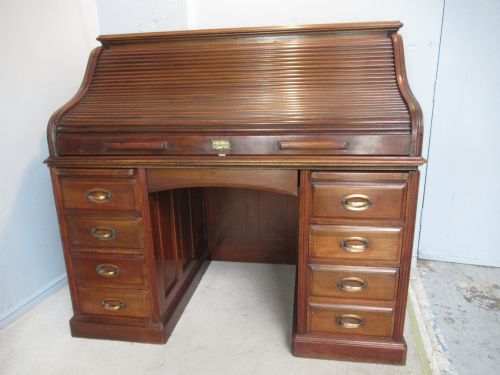
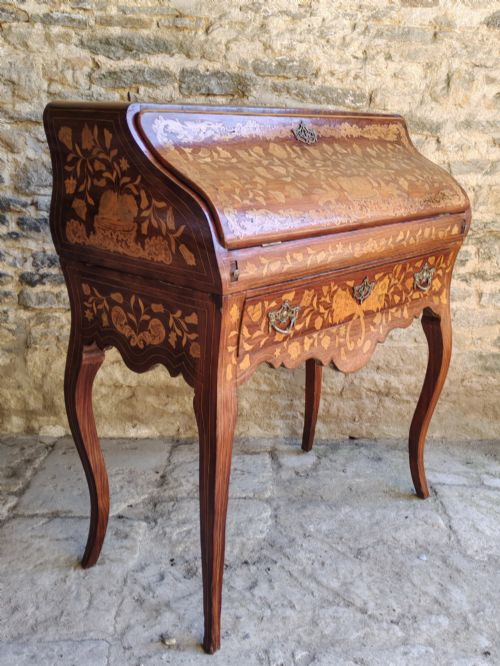
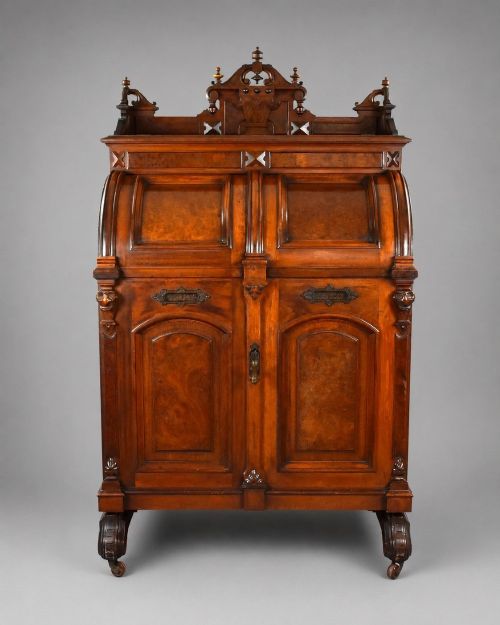
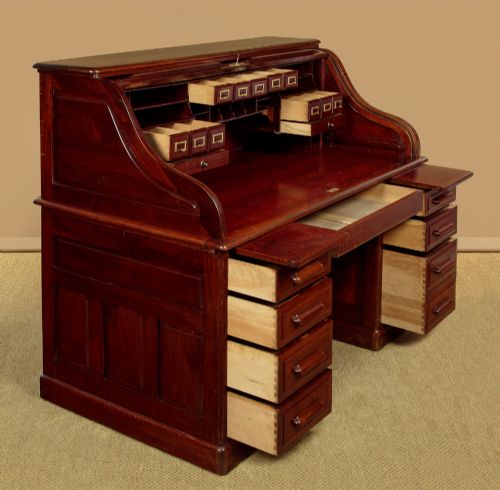
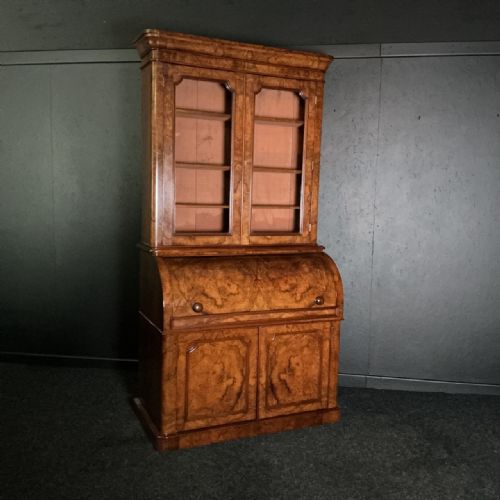
A walnut cylinder desk groups several related forms spanning the eighteenth, nineteenth, and early twentieth centuries. Buyers encounter Dutch marquetry bombes, large Victorian pedestal versions, and tall bureau bookcases fitted with glazed upper sections.
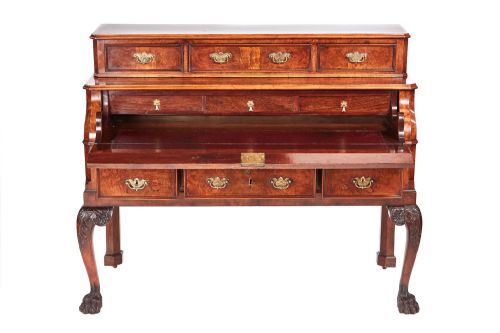
The defining mechanical feature is the rotating cylindrical shutter that retracts to expose a fitted writing surface and pigeonholes. Pieces range from modest continental miniatures to substantial double-pedestal British and American library furniture.
Assessing quality in construction and design
Quality rests on the depth of figure in the walnut veneers and the precision of the marquetry cutting. Superior pieces display continuous grain matching across the rolling cylinder and drawer fronts.
Mechanical execution distinguishes workshop tiers, where finer desks operate with silent balance and feature meticulously fitted pigeonholes with secret drawers. Heavy carcase construction using quarter-sawn oak frames further separates high-end production from standard commercial output.
Some nineteenth-century examples hide miniature pianos inside the cylinder compartment.
Maple & Co.·Boston Chair Company·Wiggers
The Walnut Cylinder Desk Glossary
- Cylinder
- A quarter-circle rotating wooden shutter that conceals the writing surface when closed.
- Marquetry
- Decorative patterns formed by fitting contrasting veneers into a prepared wooden ground.
- Burr walnut
- Wood harvested from walnut tree growths that produces intricate, swirling grain patterns.
- Bombé
- A swelling, convex furniture shape characteristic of continental eighteenth-century design.
- Bonheur de jour
- A light lady's writing desk featuring a small cabinet or shelving superstructure.
Walnut Cylinder Desk: Frequently Asked Questions
How does the cylinder mechanism work?
The curved wooden shutter runs on concealed side tracks guided by a system of internal weights or flexible slats. Pulling the writing slide forward rotates the cylinder upward into the desk body.
This movement uncovers the fitted interior compartments and extends the pull-out leather writing surface simultaneously.
Where were these desks placed?
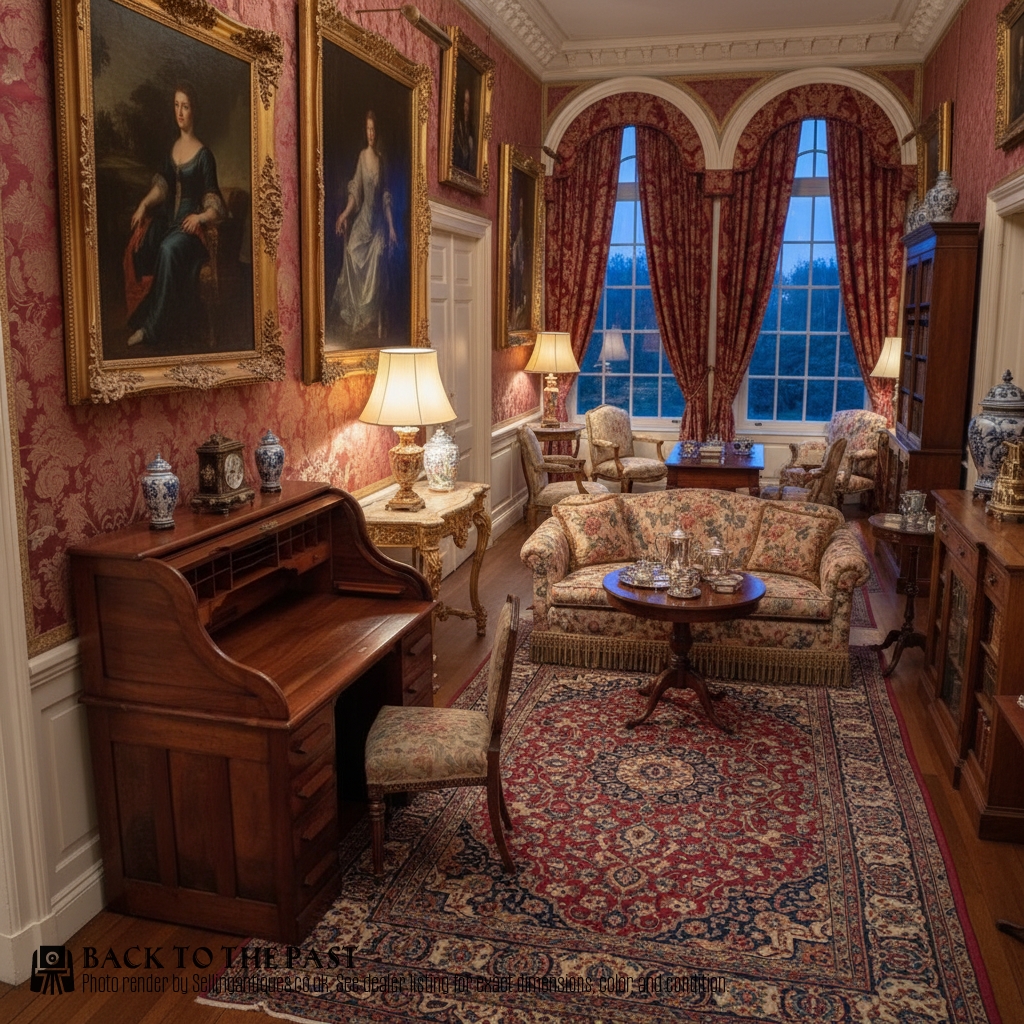
These desks served primarily in private studies, libraries, and formal drawing rooms of large residences. Their enclosed design allowed owners to leave correspondence half-finished while keeping the room tidy.
Larger pedestal variants stood centrally in offices or executive rooms, while smaller marquetry pieces functioned as ladies' writing desks.
How do I care for walnut veneer?
Walnut requires stable indoor humidity and protection from direct sunlight to prevent the timber from fading and the veneer from lifting. Regular dusting with a dry cloth preserves the finish.
A light application of traditional beeswax feeding maintains the moisture and lustre of nineteenth-century French polished surfaces.
How to tell Dutch and Victorian pieces apart?
Dutch examples frequently display elaborate floral marquetry, bombé fronts, and date from the eighteenth or early nineteenth century. They often incorporate burr walnut and fruitwood inlay.
Victorian models tend toward heavier pedestal proportions in plain or burr walnut, sometimes combining mahogany carcases with glazed bookcase tops.