


Large Home Office Desk
A large home office desk is a substantial workspace designed for serious study, built in robust timbers to anchor a room.
Large Home Office Desk
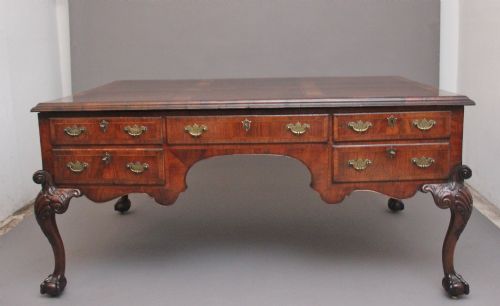
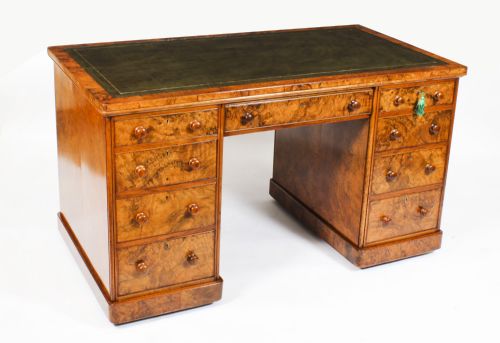
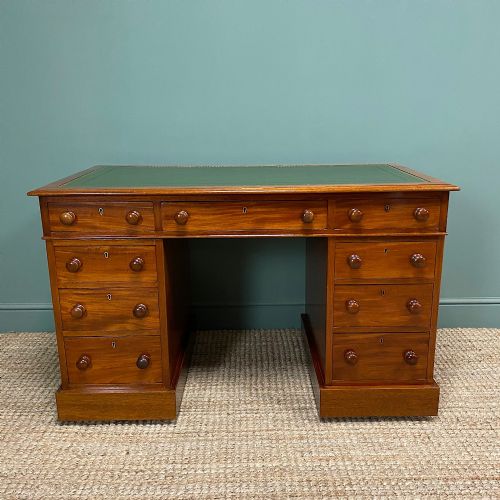
A large home office desk offers an expansive surface and generous storage, taking the form of partners desks, writing tables, and pedestal desks. These substantial pieces emerge from the nineteenth and early twentieth centuries, spanning the Victorian and Edwardian eras.
Buyers most frequently encounter robust pedestals and partners configurations designed for use from both sides. The selections span various decades around the turn of the twentieth century, providing ample kneehole space and multiple drawers.
Materials and construction
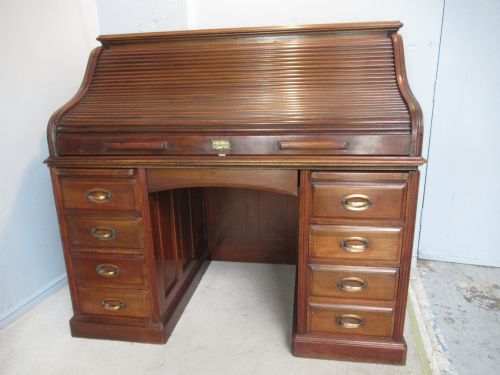
Cabinet makers utilised dense hardwoods such as mahogany, oak, and walnut, frequently selecting burr walnut veneers for striking grain patterns. Tambour and roll top mechanisms required precise wooden slat construction to glide smoothly.
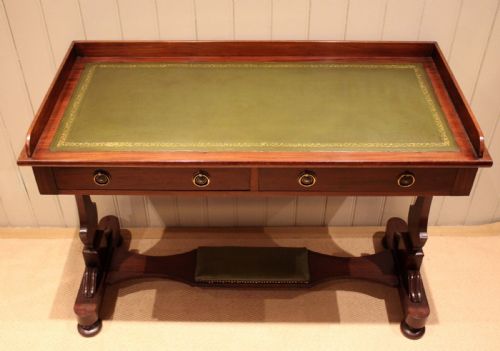
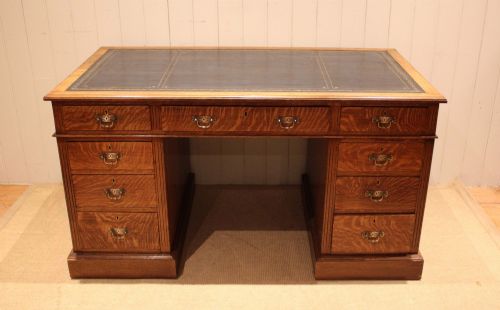
Working surfaces typically incorporate inset leather writing panels, often bordered with gilt tooling. Brass hardware, including drop handles and key escutcheons, secures the drawers and adds functional detail.
Brass hardware and leather writing surfaces appear frequently across the Victorian partners desks and pedestal forms.
Distinctions in quality
The distinction between standard and exceptional pieces rests in timber selection and the complexity of the form. Partners desks finished on all sides with matching secondary drawers demand superior carpentry compared to single-sided pedestal variations.
Subtleties in drawer construction, such as hand-cut dovetailing and original brass fixtures, elevate a piece. The depth of figure in burr walnut and the richness of the polished mahogany surface dictate the visual impact of the desk.
The Large Home Office Desk Glossary
- Partners desk
- A large pedestal desk designed with drawers and cupboards on both sides so two people can work facing each other. These double-sided configurations represent the grandest scale of nineteenth-century office furniture.
- Pedestal desk
- A heavy writing table supported by two banks of drawers reaching down to the floor. The central section provides legroom beneath the main desktop.
- Tambour top
- A flexible desktop surface made from narrow strips of wood glued to canvas, allowing it to slide along a track to conceal the writing area. This mechanism appears on roll top variations.
- Burr walnut
- Timber taken from the gnarled growth of a walnut tree, yielding complex, swirling grain patterns. Cabinet makers utilised these highly decorative veneers on prominent exterior surfaces.
Large Home Office Desk: Frequently Asked Questions
What is a partners desk?
A partners desk is a large double-sided workspace featuring drawers and cupboards accessible from both the front and the back. This configuration allowed two individuals, such as business partners or legal associates, to work opposite one another.
Such pieces demand considerable floor space and typically anchor the centre of a large study or library rather than sitting flush against a wall.
How do I maintain leather inserts?
Leather writing surfaces benefit from periodic cleaning with a damp cloth followed by a suitable leather cream or wax conditioner. Avoid excessive moisture and harsh chemical cleaners to preserve the supple texture and gilt tooling.
Using blotters or desk pads during daily writing tasks prevents ink stains and surface wear while maintaining the original hide.
What distinguishes a roll top desk?
A roll top desk incorporates a slatted wooden tambour closure that pulls down from the top to secure the pigeonholes and writing surface. This mechanism keeps correspondence out of sight when not in use.
These desks usually feature a deep pedestal base and substantial timber construction dating from the late nineteenth or early twentieth century.
How are Victorian desks dated?
Dating relies on construction methods, timber choices, and hardware styles characteristic of the reign between eighteen thirty-seven and nineteen hundred. Dovetailed drawer joints cut by hand give way to machine-cut variations toward the end of the period.
Secondary woods inside the drawers, such as oak or pine, alongside specific lock mechanisms and brass pulls, help narrow the decade of manufacture.