





Victorian Cylinder Bureau
A victorian cylinder bureau offers a curved roll enclosing a fitted writing interior, combining architectural presence with private workspace.
Victorian Cylinder Bureau
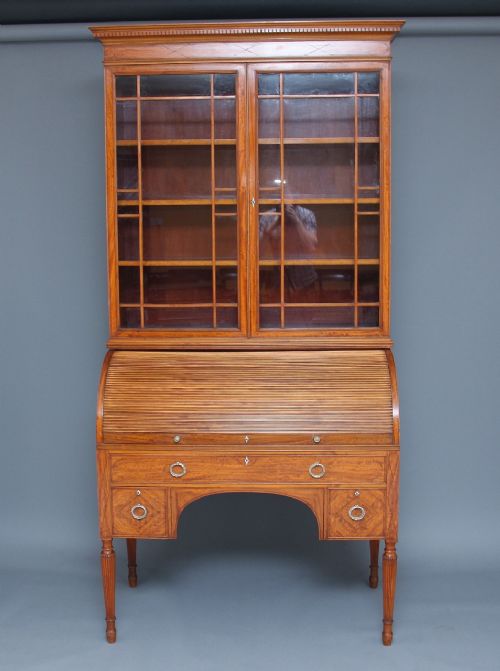
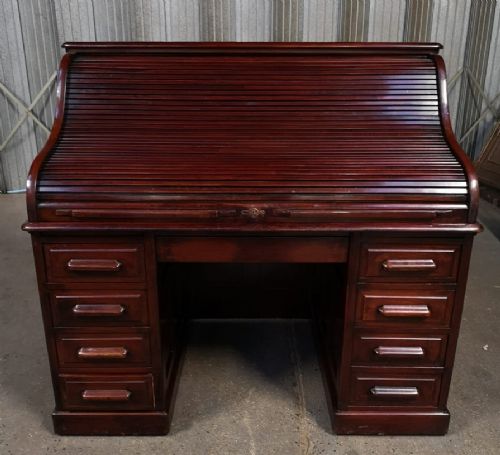
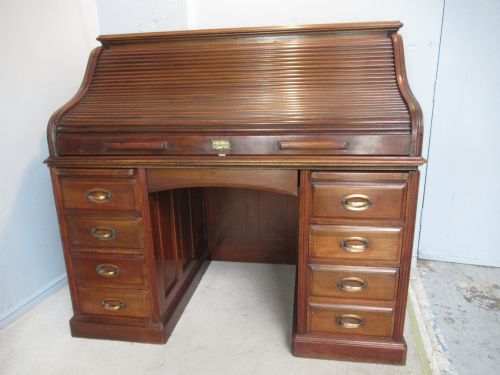
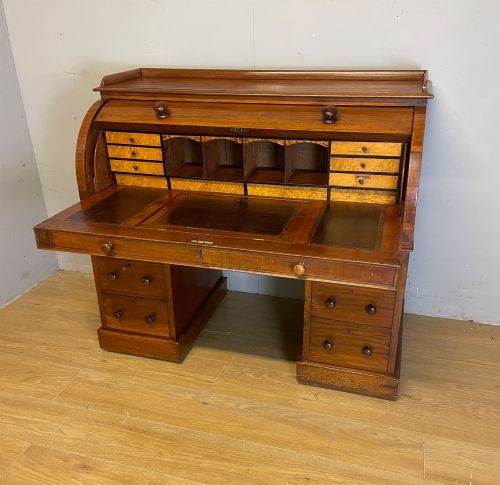
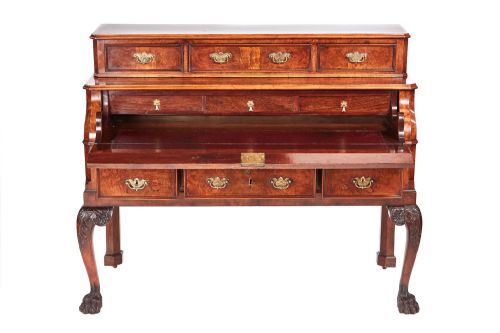
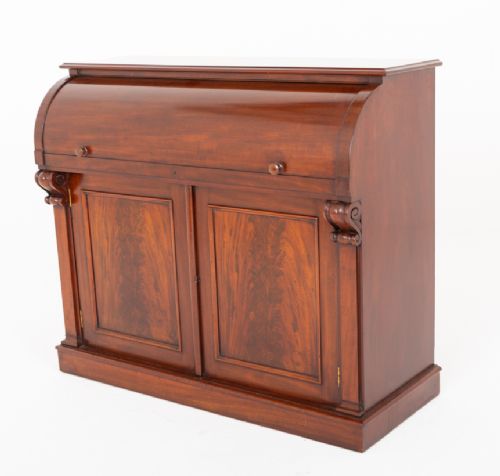
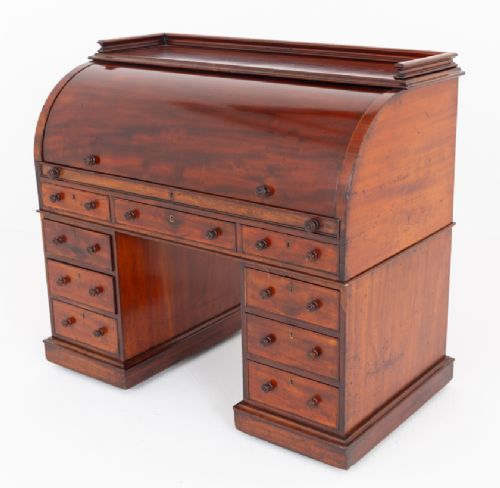
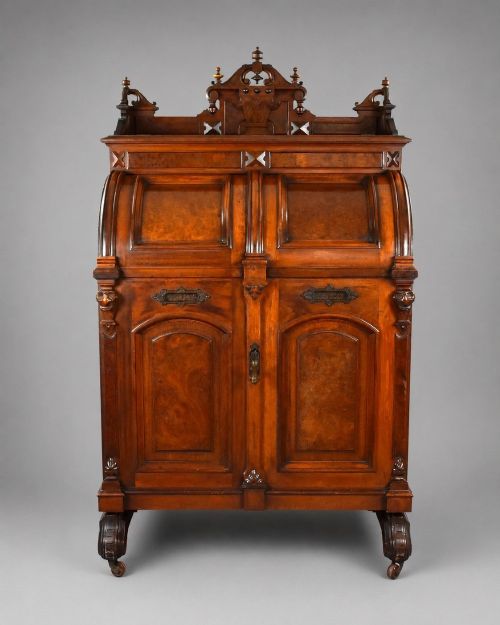
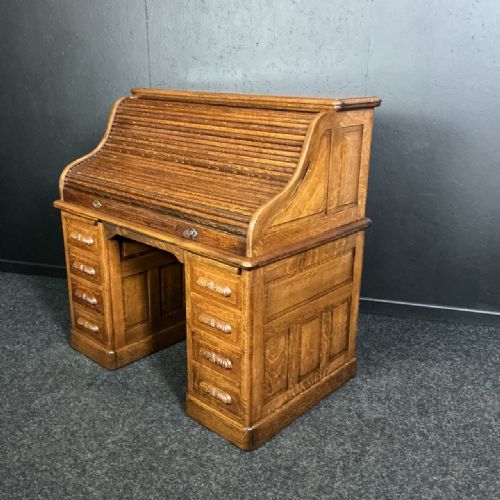
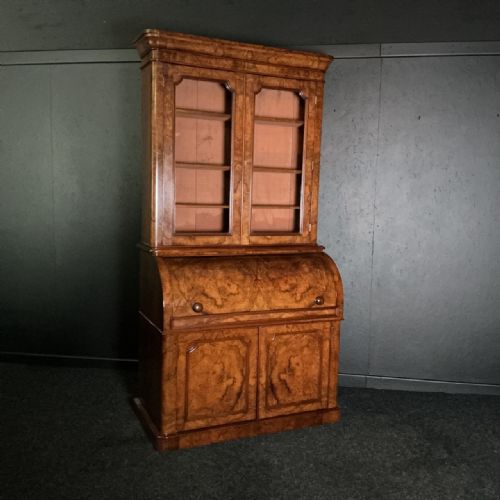
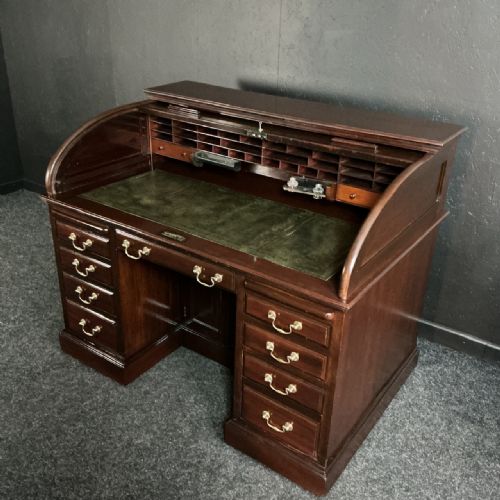
A victorian cylinder bureau is primarily encountered as a mahogany or walnut desk featuring a rounded sliding cover that conceals pigeonholes and small drawers. These pieces emerge chiefly from the nineteenth century, spanning standard pedestal formats to taller bureau bookcase combinations with glazed upper sections.
The selection extends into Edwardian examples and Sheraton Revival satinwood interpretations, alongside French Louis XVI style variants and occasional American makers. Buyers frequently select between simple writing tables and substantial three-part pedestal desks equipped with internal compartments.
Materials and Construction
Cabinetmakers utilised dense timbers such as mahogany, walnut, and burr walnut, frequently applying satinwood veneers for lighter aesthetic effects. Internal fittings integrate secondary woods alongside leather writing surfaces and brass hardware.
Structural integrity relies on the precise curving of the wooden cylinder operating smoothly within side tracks, complemented by dovetail joinery in the internal drawers and glass panelling on bookcase variants.
Victorian Cylinder Bureau Retail Price Guide 2026
Typical asking prices for victorian cylinder bureau among the pieces listed under this phrase on Sellingantiques today, from the lower quarter to the upper quarter. They describe what is for sale here now, not the wider market.
The documented pieces span the nineteenth and early twentieth centuries, incorporating Edwardian Sheraton Revival styles and French influences.
Craftsmanship and Proportion
Quality rests upon the smoothness of the cylinder mechanism and the matching of veneer grains across the curved surface. Superior examples exhibit refined inlay work, carved details like paw feet, and robust secondary framing.
The depth of the internal fittings and the integration of the upper bookcase sections distinguish standard utility pieces from grander cabinetmaker productions.
Edwards & Roberts·Henry Samuel·Boston Chair Company·Wiggers
The Victorian Cylinder Bureau Glossary
- Cylinder desk
- A writing desk featuring a rounded, quarter-circle wooden shutter that rolls back to reveal the writing surface and interior drawers. This mechanism differs from a tambour by using a solid curved panel rather than narrow slats.
- Bureau bookcase
- A combination furniture form stacking a cylinder desk base beneath a glazed bookcase top. These tall pieces provide both display space and private writing facilities.
- Pedestal desk
- A form built upon two supporting banks of drawers holding up the main writing body. These heavy items often separate into three distinct sections for transport.
- Sheraton Revival
- A late nineteenth-century style reviving the classical proportions, satinwood timbers, and delicate painted or inlaid motifs associated with eighteenth-century designer Thomas Sheraton.
- Burr walnut
- Timber taken from the warted growths of walnut trees, yielding highly figured patterns with swirling grain formations. Cabinetmakers prized this material for veneering prominent exterior surfaces.
Victorian Cylinder Bureau: Frequently Asked Questions
How does a cylinder desk work?
The curved wooden shutter runs in grooved tracks around a quarter-circle radius, sliding downward to lock away the desk interior. Pulling the writing slide forward often coordinates with the movement of the cylinder in certain designs.
This mechanical action keeps correspondence private without requiring separate keys for every internal drawer.
Were these desks used for writing?
These pieces served as private secretaries for handling correspondence, managing household accounts, and storing documents. The enclosed writing surface allowed owners to leave paperwork spread out safely.
Many examples include pull-out leather-lined surfaces adjustable to various angles for reading or drafting.
How do I fit one into a modern room?
A cylinder bureau requires sufficient clearance behind the chair for comfortable seating, though the enclosed roll top hides desktop clutter when not in use. Matching the timber tone to existing room furnishings helps integrate the substantial mass of mahogany or walnut.
Placing the desk away from direct heat sources protects the solid timbers and veneered surfaces from splitting.
How can I tell the period?
Dating relies upon timber choices, hardware styles, and construction techniques visible inside the drawers. Mid-nineteenth century pieces often feature solid flame mahogany, while later Edwardian and Sheraton Revival examples favour lighter satinwood and delicate stringing.
Maker stamps or labels inside drawer linings provide definitive evidence of origin.