

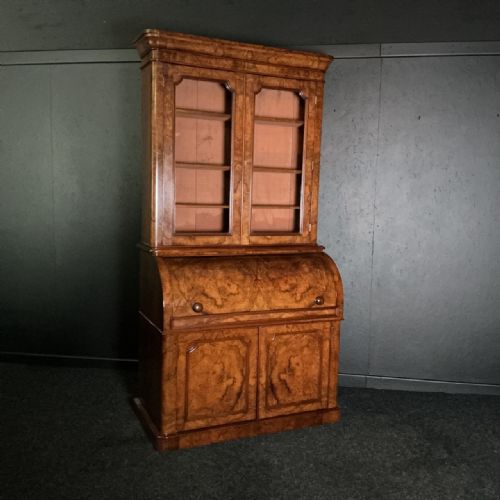


Roll Top Secretary Desk
A roll top secretary desk is a hardworking writing cabinet with a concealing cylinder lid, prized for keeping correspondence private.
Roll Top Secretary Desk
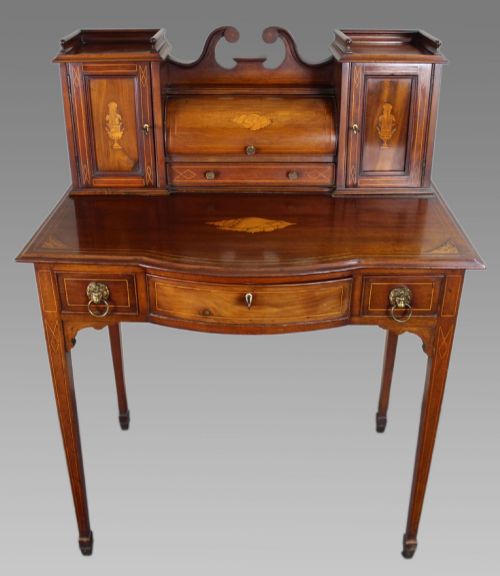
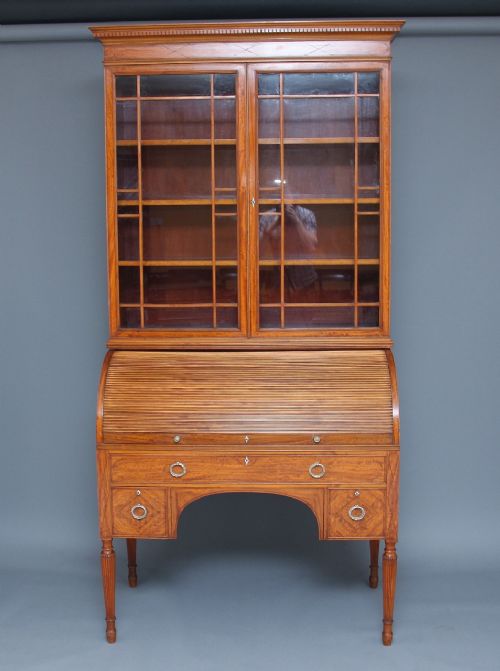
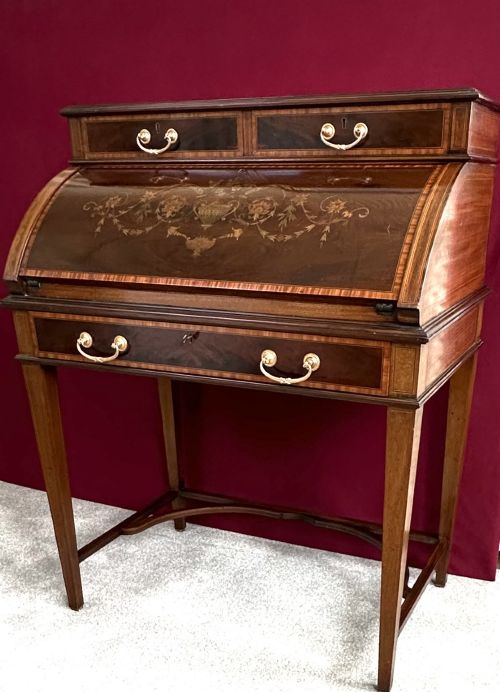
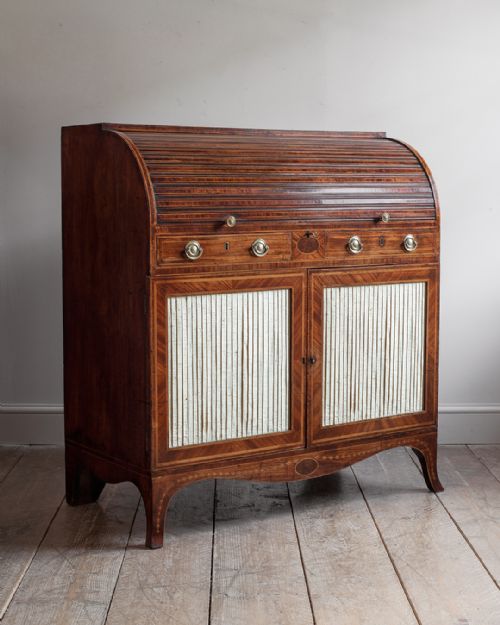
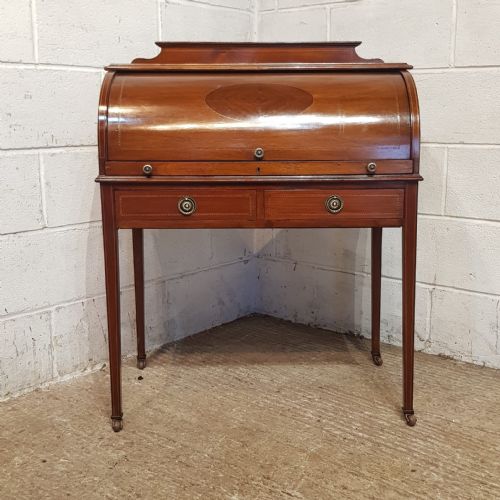
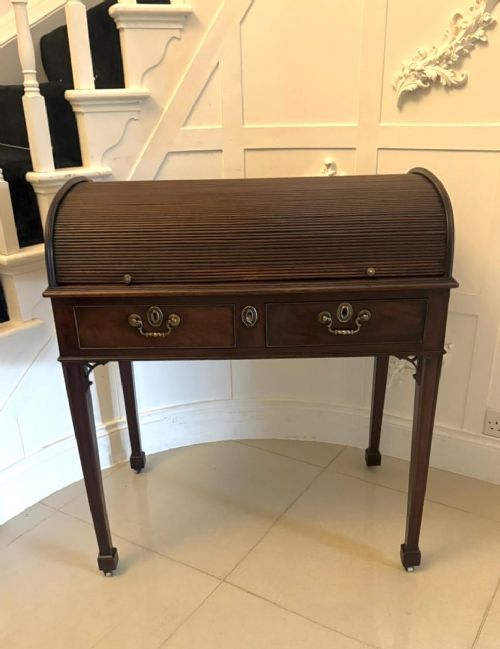
A roll top secretary desk combines a concealed writing surface with compartmented interior stationery storage beneath a curved tambour or solid cylinder shutter. When you search for a roll top secretary desk, you encounter pieces originating from the eighteenth, nineteenth, and early twentieth centuries, spanning periods from George III and Regency through to Edwardian and Victorian eras.
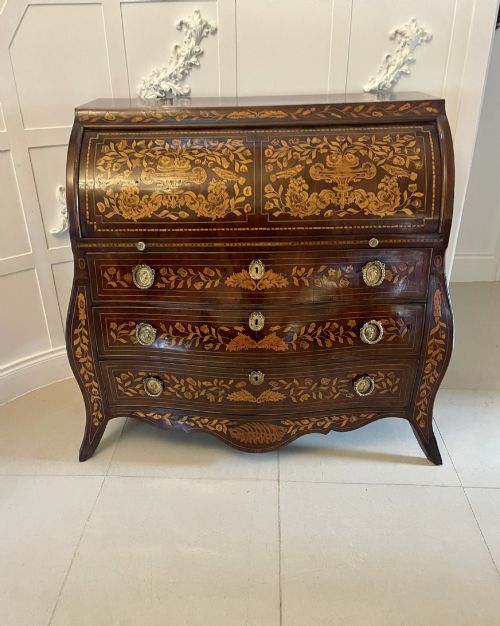
Makers and workshops across England, continental Europe, and America utilised diverse regional furniture styles, including Dutch marquetry, Sheraton revival, and Baroque designs. Each piece reflects the functional writing needs of its specific decade, from domestic estate management to bustling early office work.
How they were made
Cabinet makers constructed the curved cylinder and tambour shutters from numerous narrow wooden slats glued to flexible fabric backings so the mechanism glides smoothly along recessed tracks. The primary carcasses relied on solid timbers and stable veneers of mahogany, walnut, oak, and satinwood.
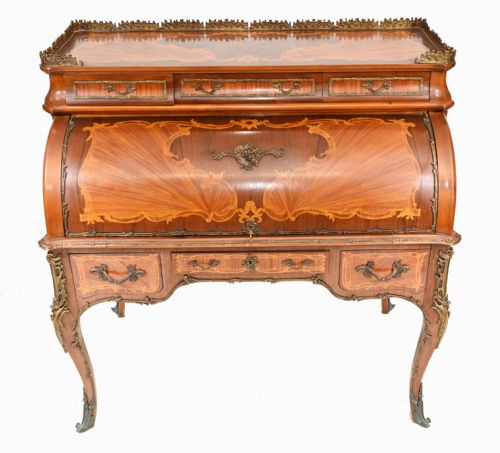
Decorative surfaces frequently incorporate intricate floral marquetry, contrasting stringing, and brass hardware such as key escutcheons and handles. Interior fittings involved fine drawer construction with hand-cut dovetails and specialised pull-out writing slides lined with leather.
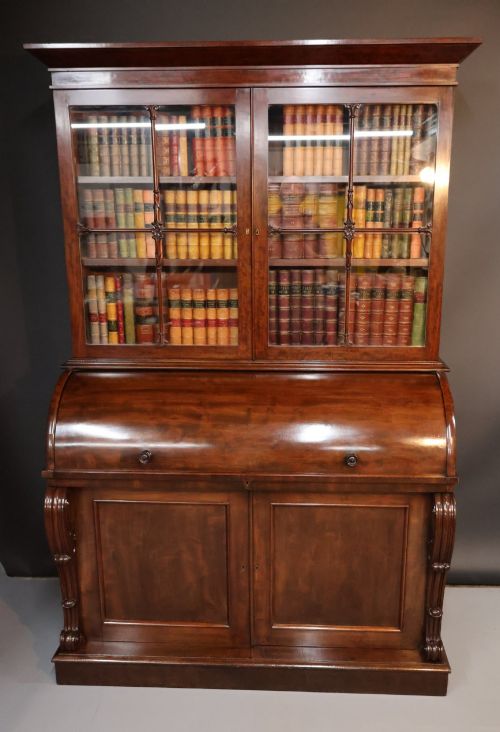
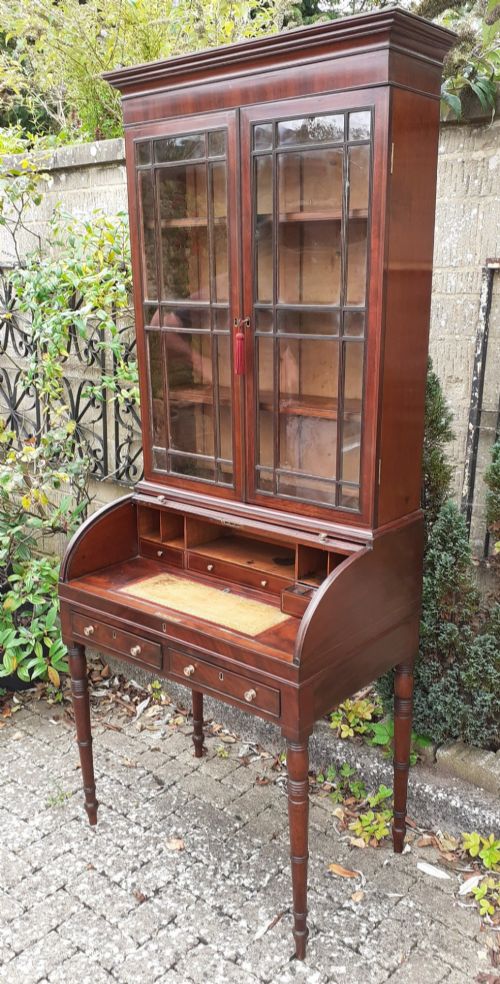
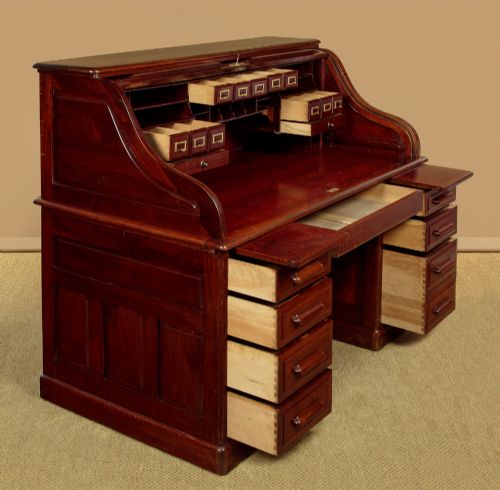
Glazed bookcase top sections feature individual wooden glazing bars holding panes of glass above the desk base, while larger office variants incorporate complex internal pigeonhole systems and typewriter returns.
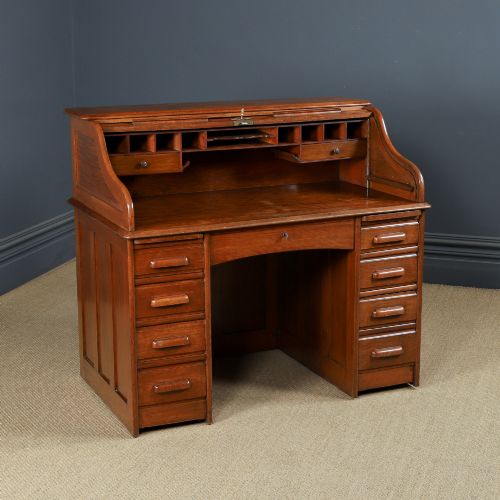
Several heavy oak examples on offer were built specifically to accommodate early twentieth-century office typewriter attachments.
What varies in quality
The smoothness of the mechanical roll top or tambour action sets finer desks apart from stiffer, binding examples that struggle along their curved tracks. Superior timber selection, such as figured burr walnut, vibrant satinwood, or richly grained mahogany, instantly elevates a piece beyond plain commercial oak.
The intricacy of internal joinery, from secret compartments to finely dovetailed accessory drawers, distinguishes bespoke workshop pieces from mass-produced factory output. Well-executed floral marquetry inlay and crisp brass mounts reveal the skill of the original cabinet maker.
Tudor and Burrey·Edwards and Roberts·Wiggers
The Roll Top Secretary Desk Glossary
- Tambour
- A flexible sliding shutter formed of narrow strips of wood glued to canvas, allowing a desk lid to follow a curved track. This clever mechanism conceals the desk interior without requiring swinging clearance space.
- Cylinder bureau
- A writing desk featuring a solid, quarter-circle rotating wooden drum that lifts to reveal a fitted interior and writing surface. Unlike slatted tambour lids, a true cylinder operates as a single rigid piece.
- Bonheur du jour
- A light, elegant ladies writing desk popular during the eighteenth century, usually featuring a small cabinet or set of shelves above the writing surface. These refined pieces often showcase delicate satinwood veneers and fine inlay.
- Pedestal desk
- A heavy, freestanding writing table supported by two banks of small drawers rather than simple legs. They provide substantial storage capacity beneath the primary writing plane.
- Marquetry
- The decorative craft of applying thin pieces of wood veneer in varying colours and grains to form pictorial or floral patterns across a surface. Master craftsmen used this technique to create ornate panels on fine cabinet doors and desk cylinders.
Roll Top Secretary Desk: Frequently Asked Questions
How do roll top desks work?
A curved wooden shutter slides smoothly along side tracks to cover the entire writing surface and pigeonholes. Pushing the shutter up reveals the desk interior while tucking away out of sight.
Most mechanisms rely on slats attached to flexible backing cloth or a solid rotating cylinder connected to an internal weighted counterbalance or locking arm.
Where were these desks used?
These desks served as private writing centres in grand estate libraries, drawing rooms, and master bedrooms. Wealthy individuals managed household accounts and personal correspondence at them.
By the late nineteenth and early twentieth centuries, larger oak variants moved into professional offices and law firms to manage expanding paperwork.
How do I care for antique wood and leather?
Keep wooden surfaces away from direct sunlight and extreme radiator heat to prevent timber shrinkage and veneer lifting. Regular dusting with a dry, soft cloth preserves the polished finish.
Condition leather writing inserts sparingly with specialised leather balms to maintain flexibility without staining the surrounding timber.
How do I identify the period of a desk?
Examine the primary woods, secondary framing timbers inside drawers, and overall design style for period markers. Georgian and Regency pieces favour rich mahogany and satinwood with neoclassical lines, while Edwardian desks often show lighter oak construction.
Hardware details, construction methods like dovetailing, and any maker stamps assist in narrowing down the exact manufacturing decade.