


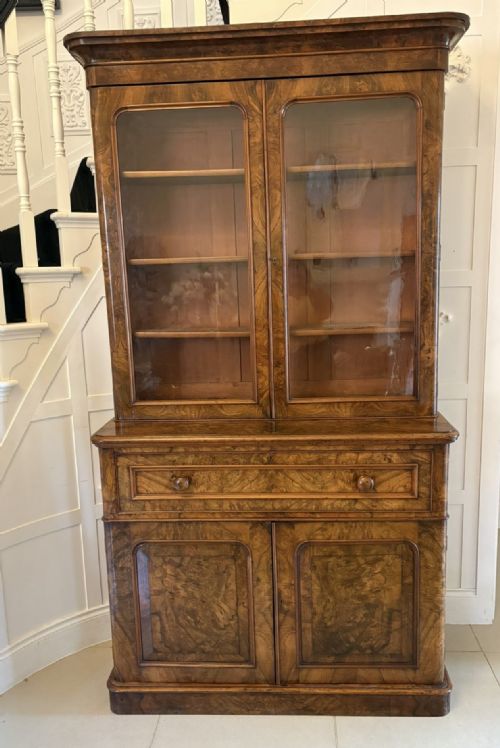


Victorian Walnut Secretary Desk
A victorian walnut secretary desk brings rich grain and practical writing space together, offering a handsome anchor for any study or drawing room.
Victorian Walnut Secretary Desk
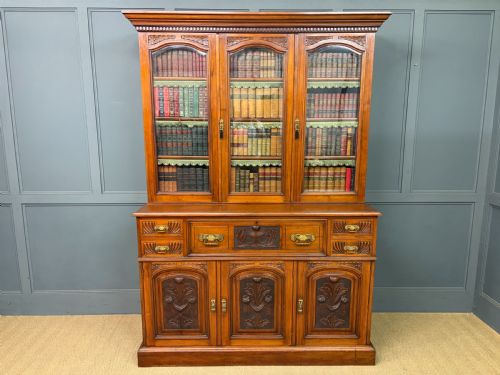
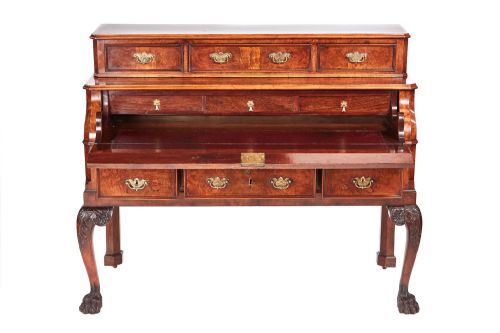
When you search for a victorian walnut secretary desk, you encounter a variety of forms designed for correspondence and storage during the nineteenth century. These pieces span compact Davenport desks, elaborate Davenport piano tops, bonheur de jour tables, and tall secretaire bookcases.
The selections on this page draw predominantly from the Victorian period, with dates clustering through the decades from eighteen fifty to eighteen ninety. You also find occasional pieces spanning into the Georgian era and nineteenth century styles.
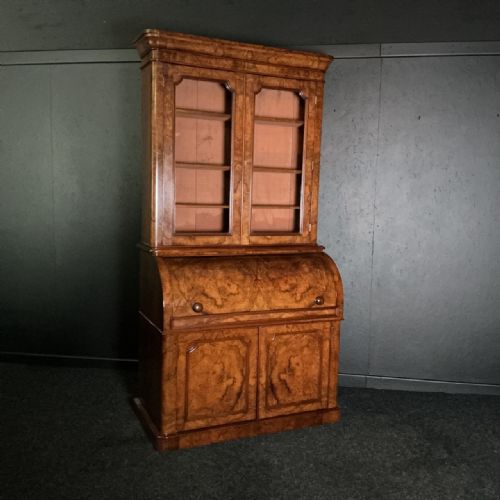
Makers utilised walnut, burr walnut, and satinwood, often embellishing the timber with brass hardware, leather writing surfaces, baize, and inlaid marquetry. Forms range from freestanding writing cabinets to cylinder roll top desks paired with glazed bookcases.
How They Were Made
Cabinet makers selected figured burr walnut veneers to create striking patterns across fall fronts and desk lids, contrasting the rich brown timber with lighter satinwood stringing and floral marquetry.
Internal fittings incorporated secondary timbers such as oak and mahogany, housing pigeonholes, small drawers, and leather or baize-lined writing slopes.
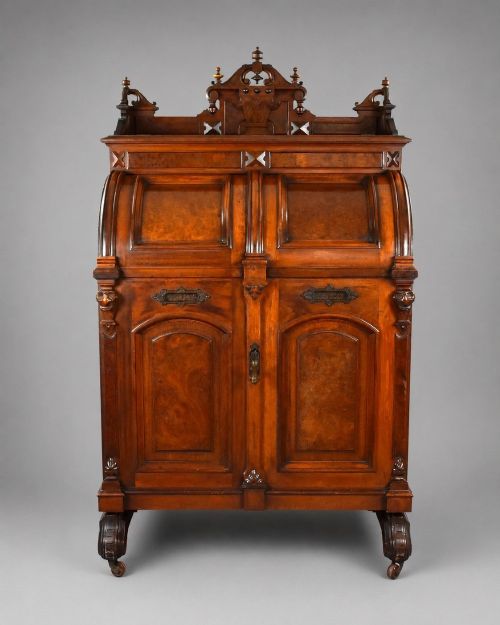
Structural elements utilised solid walnut and applied carved details, alongside brass mounts, glass panel doors for bookcases, and occasionally specialised mechanical components found in Wooton or cylinder desk designs.
Secret compartments hidden behind dummy drawers offer a charming Victorian hiding spot for love letters and stamps.
What Varies in Quality
The refinement of the burr walnut veneer and the symmetry of its grain patterns set the visual standard for these writing pieces. Stronger examples display continuous grain across drawers and panels rather than pieced patches.
Carved ornamentations, such as paw feet or floral motifs, reveal the hand of a skilled artisan through crisp depth and careful finish. Lesser pieces rely on cast decoration with softer edges.
Interior organisation and secondary woods dictate structural integrity. Superior desks incorporate solid oak or mahogany drawer linings and smoothly operating mechanisms for cylinder rolls and fall fronts.
Wiggers
The Victorian Walnut Secretary Desk Glossary
- Burr Walnut
- A timber harvested from the wart-like growths on walnut trees, yielding highly figured, swirling grain patterns prized by nineteenth-century cabinet makers. This veneer transformed simple desk surfaces into decorative centerpieces.
- Secretaire Bookcase
- A tall cabinet combining upper glass-fronted shelves for books with a lower section housing a pull-out writing drawer or drop-front desk. It serves both library and correspondence functions.
- Davenport Desk
- A compact, box-like writing desk with a sloping, hinged top over a pedestal of side drawers. It gained popularity during the Victorian era for boudoir and parlor use.
- Bonheur de Jour
- A light lady's writing desk featuring a small superstructure of drawers and pigeonholes above the main work surface. These delicate tables originated in France and appeared frequently in Victorian drawing rooms.
- Marquetry
- The art of applying decorative veneer pieces of various woods to a structure to form ornamental patterns. Floral designs frequently embellish Victorian writing furniture.
Victorian Walnut Secretary Desk: Frequently Asked Questions
What is a secretary desk?
A secretary desk is a piece of furniture that combines a storage cabinet or bookcase with a built-in writing surface. Typically, this includes a hinged flap or drawer that folds down to reveal compartments and pigeonholes for letters.
In Victorian examples, these desks range from tall bookcases to compact writing cabinets designed for specific domestic rooms.
How do I identify burr walnut?
Burr walnut is recognised by its dense, swirling grain patterns and knot clusters that create mottled, organic designs across the timber surface. Cabinet makers sliced these burls into thin veneers to display the dramatic figuring on desk lids and drawer fronts.
This material is distinct from straight-grained walnut due to its rich texture and reflective depth.
Where were these desks placed?
Victorian writing desks found homes in studies, libraries, drawing rooms, and private boudoirs. Compact forms like Davenport desks and bonheur de jour tables suited smaller receiving rooms and bedrooms.
Larger secretaire bookcases anchored formal libraries and offices where book storage and correspondence took place.