


Golden Satinwood Bureau
These golden satinwood bureau pieces bring luminous figured timber and fine inlay directly into a room, offering both a compact writing surface and enduring craftsmanship.
What a golden satinwood bureau represents
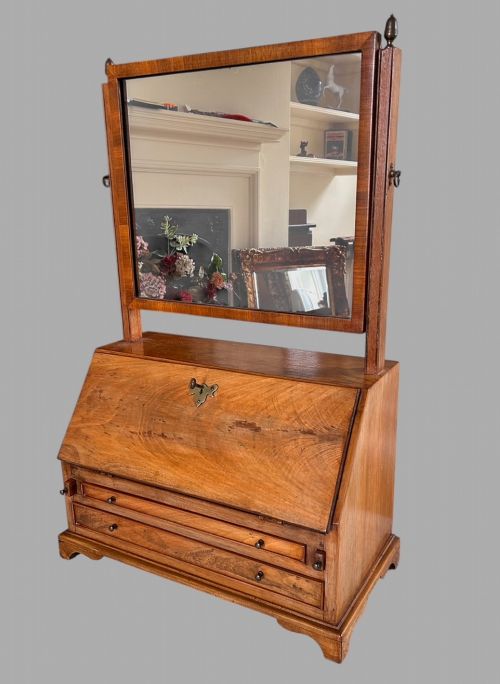
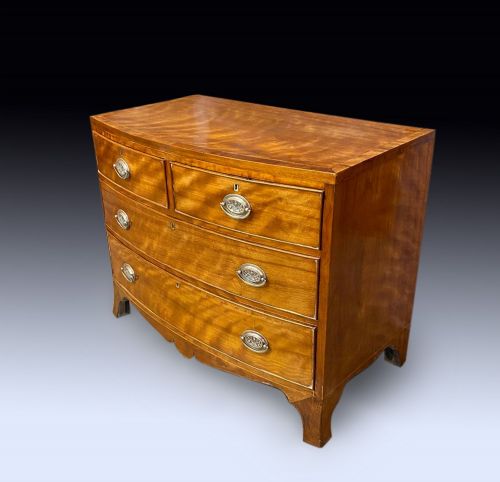
A golden satinwood bureau embodies the lighter aesthetic that emerged during the Georgian and Regency eras, shifting interior tastes away from heavier mahogany. The selection here spans periods from George III and the late Victorian Sheraton Revival through to Edwardian interpretations, capturing various expressions of this refined cabinetry.
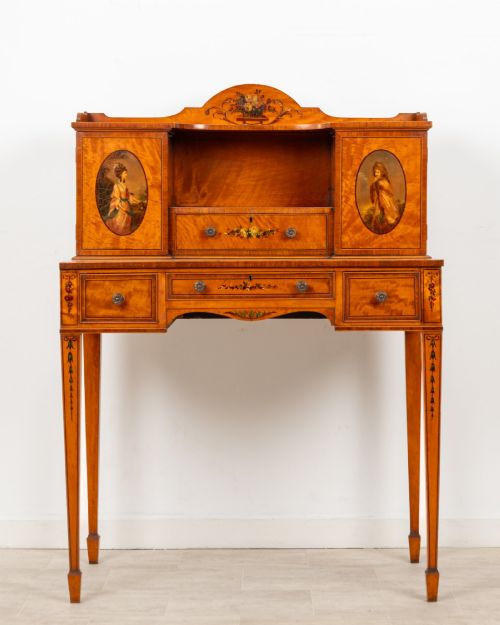
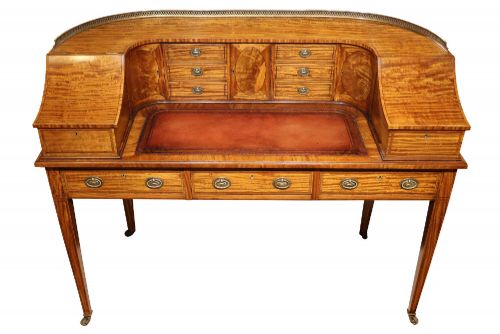
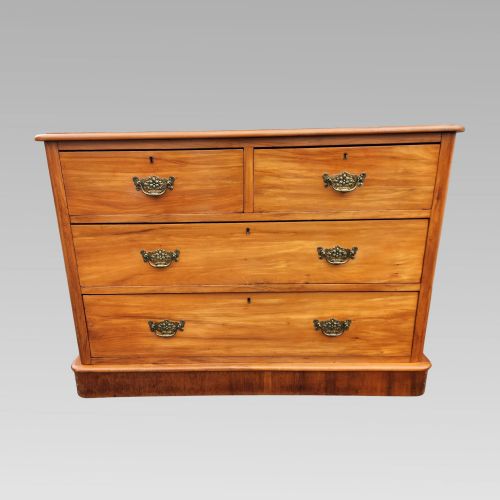
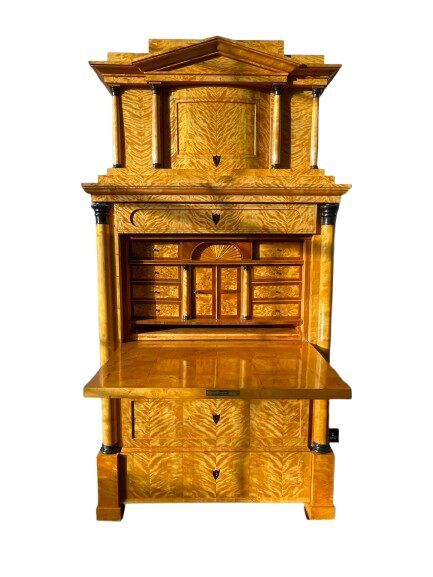
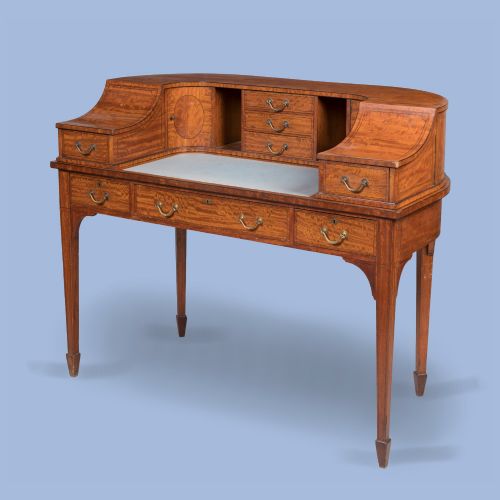
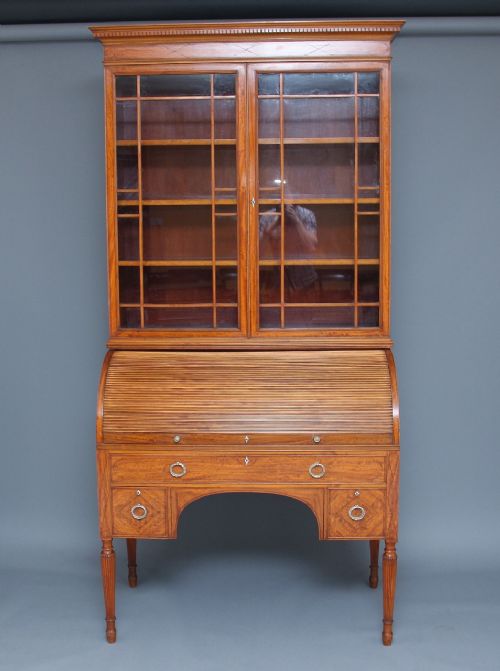
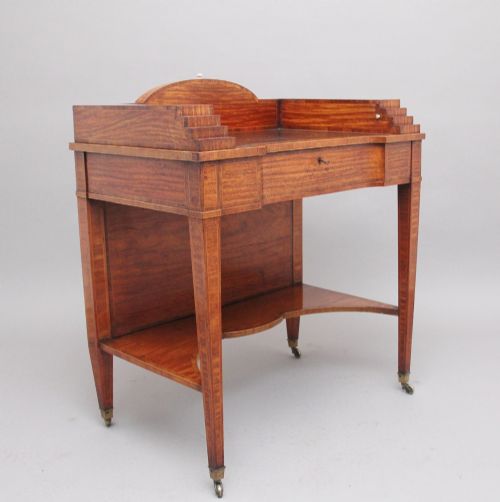
Forms on this page range from traditional fall-front bureaux and ladies' desks to Carlton House desks and cylinder cabinets. Buyers encounter pieces from the nineteenth century alongside Edwardian examples, each showcasing the distinctive pale yellow sheen and natural chatoyancy of the timber.
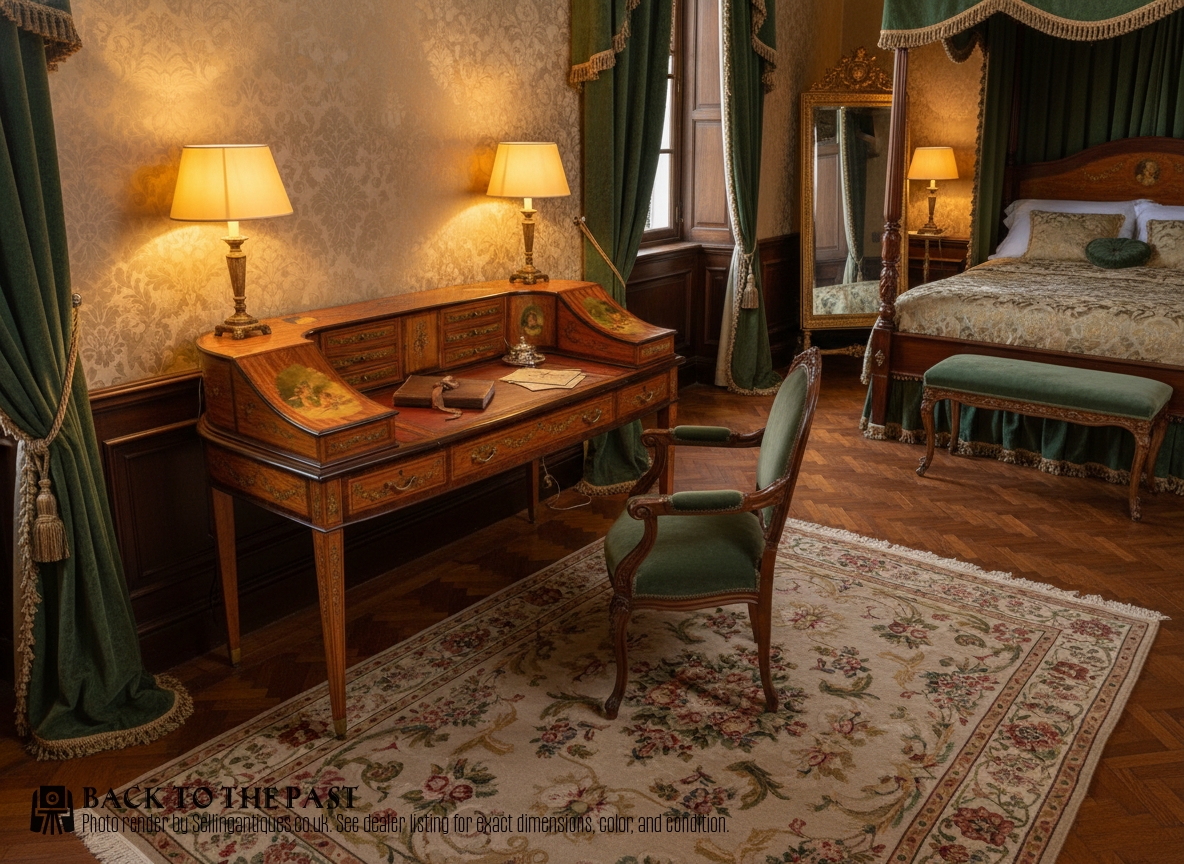
Materials and construction
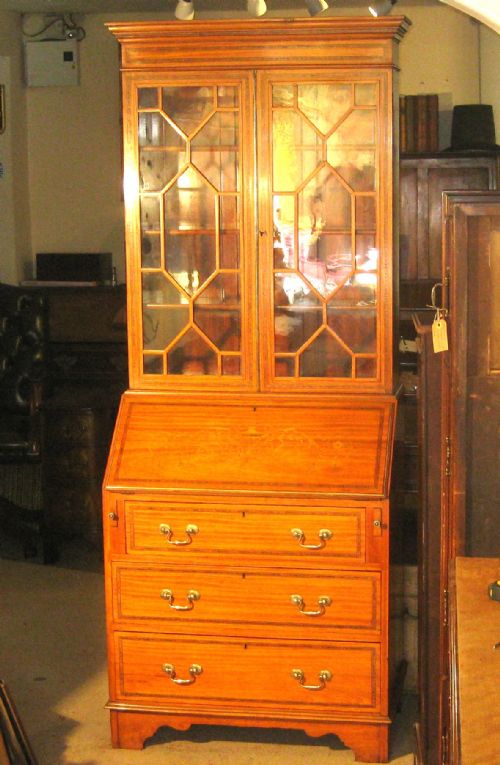
Craftsmen built these pieces using satinwood veneers applied over secondary woods, frequently enhancing the design with contrasting boxwood and rosewood inlay. Brass hardware, such as handles, castors and gallery rails, often complements the golden timber.
Writing surfaces frequently integrate lined leather panels, while internal compartments and cabinetry organise correspondence and stationery. Wood inlay and stringing define the geometric panels and borders characteristic of Sheraton and Sheraton Revival styling.
Retail Price Guide 2026
Typical UK retail prices for golden satinwood bureau, calculated from the Sellingantiques database of over a million retail prices indexed since 2003. This retail price guide relies exclusively on Sellingantiques data; no external sources or auction records are used, so the figures do not describe the wider market.
Some nineteenth-century cabinetmakers lined secret compartments with wallpaper remnants, leaving hidden paper patterns inside walnut and satinwood drawers.
Judging quality in satinwood furniture
Quality rests in the selection of the satinwood veneer, where superior examples display a vibrant, shimmering grain that catches the light from every angle. The precision of the contrasting inlay and the subtlety of any floral or neoclassical motifs further distinguish finer workshops.
Construction integrity shows in the dovetailing of drawers and the preservation of original brass fittings and leather inserts. Pieces that retain their warm golden colour without excessive darkening or sun-bleaching represent the better end of the survival rate.
The Golden Satinwood Bureau Glossary
- Satinwood
- A lustrous tropical hardwood native to Ceylon and the West Indies, prized for its pale golden colour and reflective, chatoyant grain.
- Carlton House Desk
- A distinctive form of writing desk featuring a curved superstructure of small drawers and compartments enclosing the writing surface on three sides.
- Sheraton Revival
- A late nineteenth-century design movement inspired by the neoclassical furniture of Thomas Sheraton, heavily utilising satinwood and delicate inlay.
- Stringing
- Narrow inlaid lines of contrasting timber, such as boxwood or ebony, used to outline panels and drawers on finer cabinet work.
- Cylinder Cabinet
- A piece of furniture featuring a rolling cylindrical shutter that conceals a fitted interior of pigeonholes and small drawers.
Frequently Asked Questions
How do I care for satinwood furniture?
Satinwood benefits from placement away from direct sunlight and heat sources to prevent the timber from fading or drying out. Gentle dusting with a dry, soft cloth maintains the surface.
Applying microcrystalline wax occasionally helps nourish the wood and preserve the natural sheen of the veneer without building up a heavy residue.
Are these desks practical for daily use?
Many of these pieces offer functional writing spaces and internal storage compartments suitable for contemporary laptops and stationery. The fitted interiors provide useful organisation for modern working needs.
Care should be taken to protect antique leather writing surfaces from ink spills and heavy impact by using a blotter or writing pad.
How do I distinguish George III from Sheraton Revival?
George III pieces date from the eighteenth and early nineteenth centuries, displaying period construction methods, hand-cut dovetails, and genuine age in the timber. They represent the original period of production.
Sheraton Revival pieces date from the late nineteenth and Edwardian eras, reviving the earlier neoclassical aesthetic with slightly different secondary woods and standardised manufacturing techniques.