


Painted Satinwood Desk
A painted satinwood desk brings lightness to a room through delicate brushwork over pale timber.
Painted Satinwood Desk
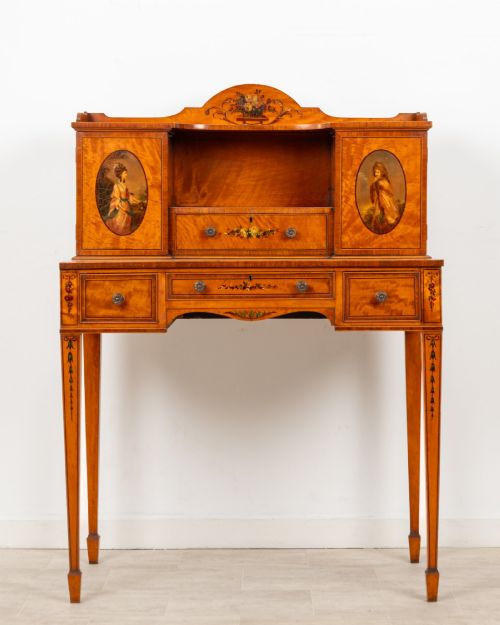
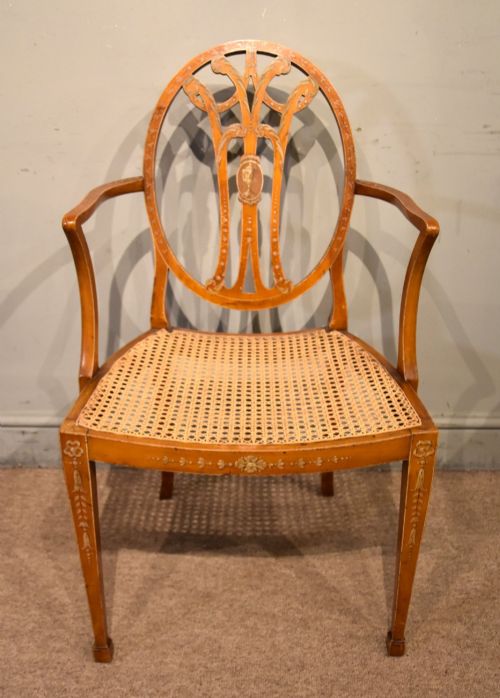
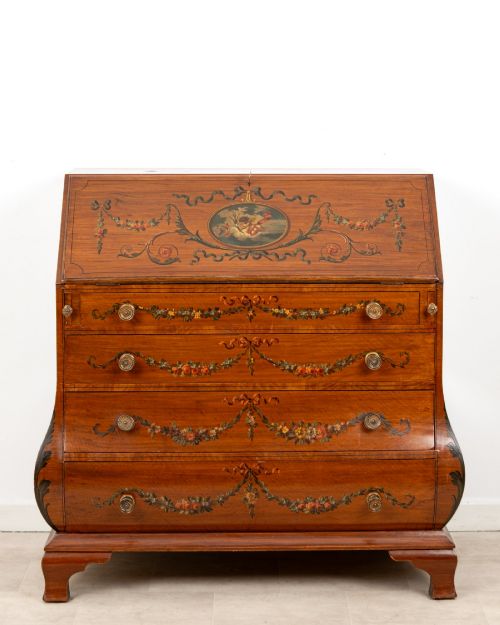
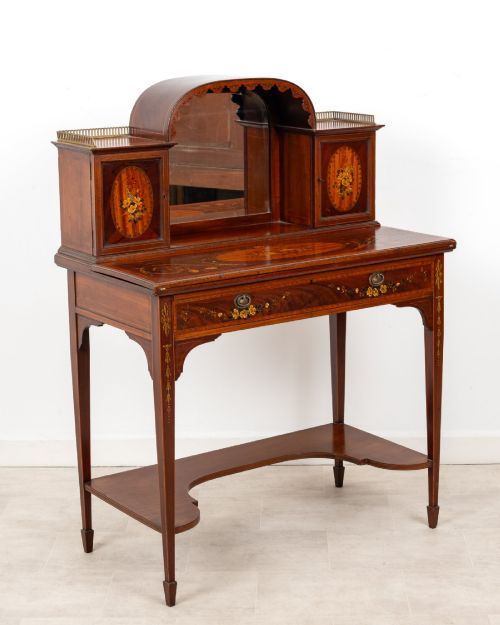
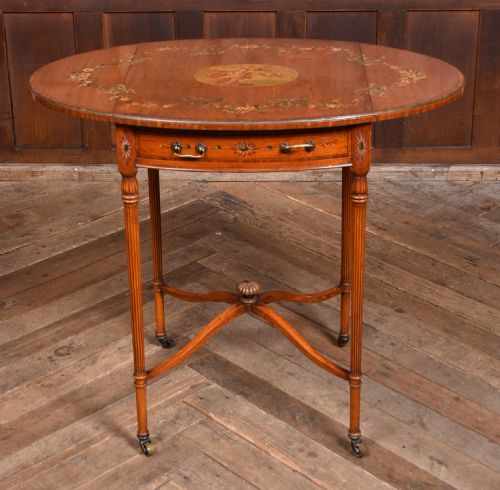
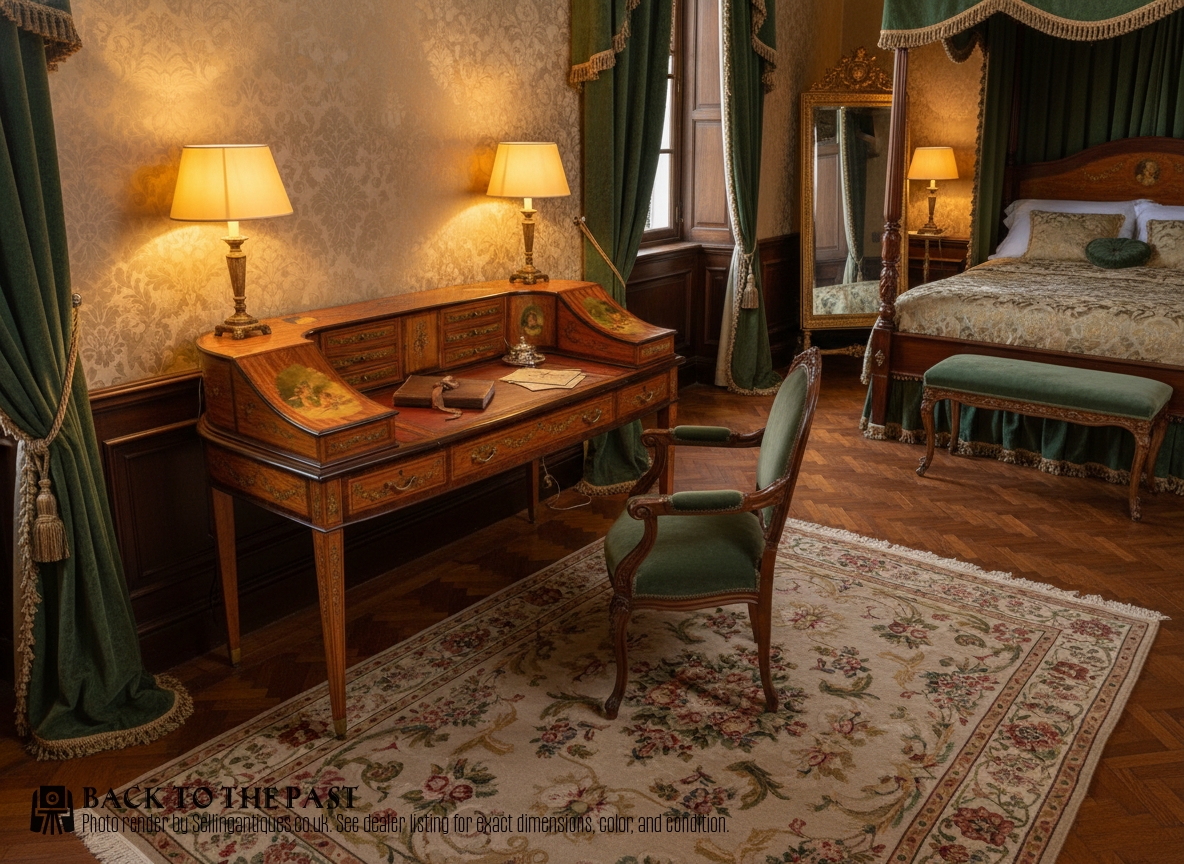
A painted satinwood desk is a fine writing piece finished with hand-painted decoration upon light timber, spanning the Victorian, Edwardian, and George III periods. These items appear primarily in Edwardian interpretations of Sheraton and Neoclassical styles, alongside nineteenth-century examples and George III bona fide pieces.
Buyers encounter writing desks, bureau chests of drawers, Carlton House desks, and bonheur du jour forms rather than simple plain tables. Many examples feature specialised writing surfaces, mirrored superstructures, or kneehole configurations designed for domestic use.
Materials and construction
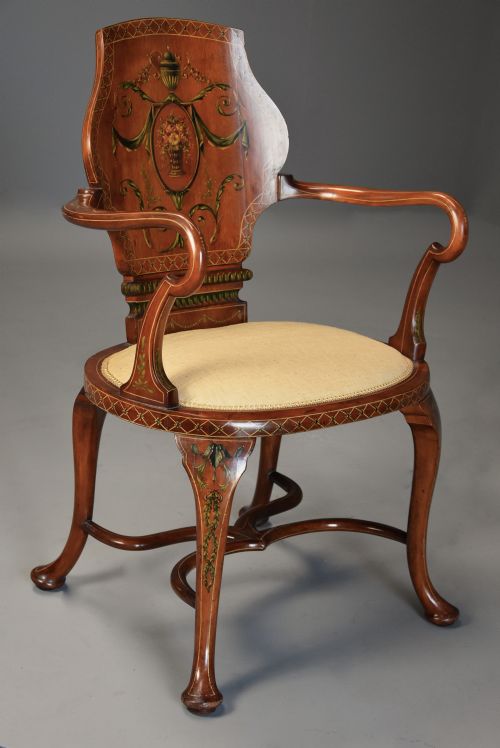
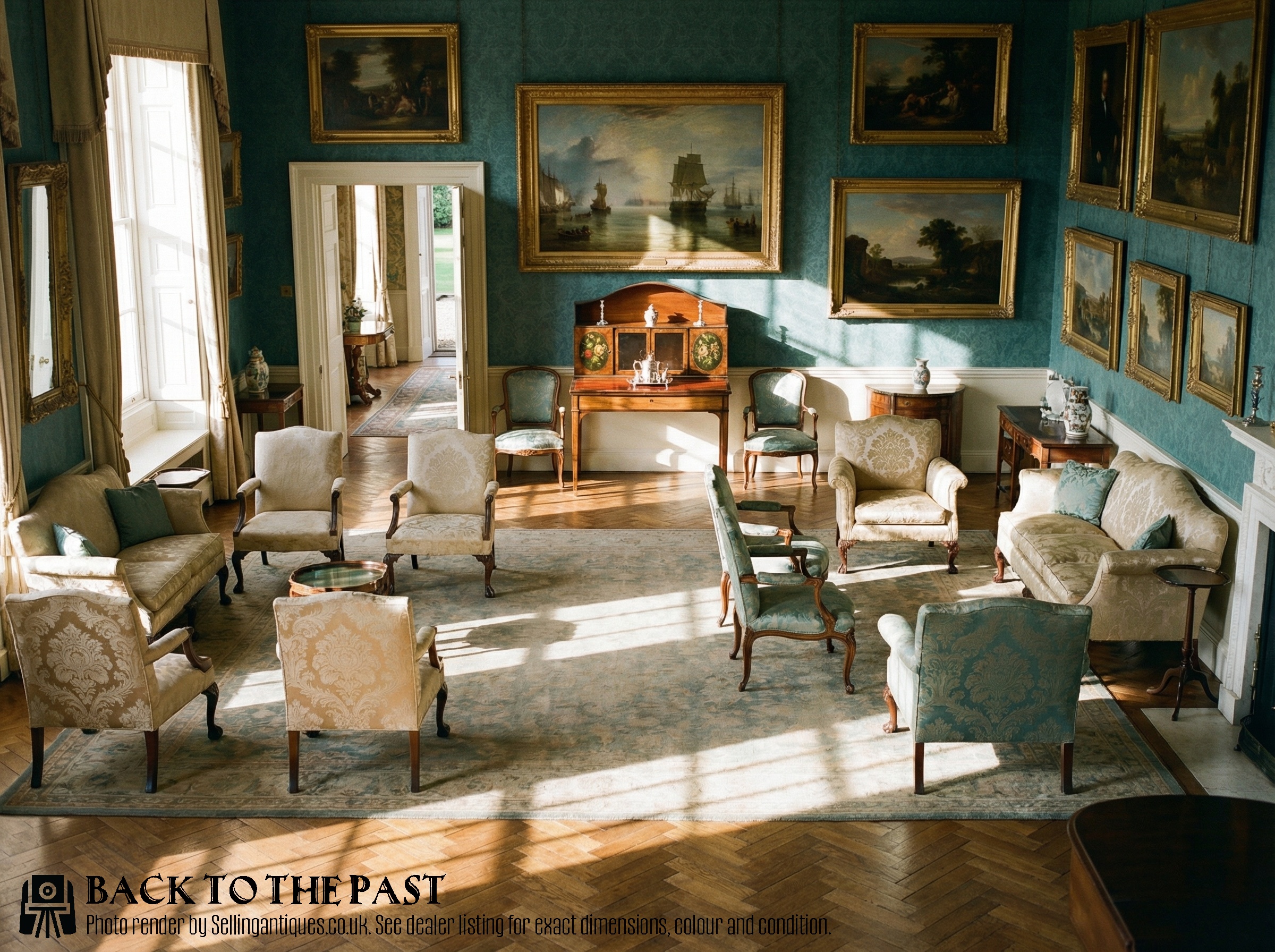
Cabinet makers utilised satinwood timber as the primary ground, often pairing the pale wood with mahogany framing, brass hardware, and inset leather writing surfaces. Painted decoration and floral motifs were applied directly to the timber surface by hand.
Construction techniques include serpentine shaping, drop-leaf mechanisms, and fitted superstructures with internal compartments, drawers, and glass elements.
Painted Satinwood Desk Retail Price Guide 2026
Typical asking prices for painted satinwood desk among the pieces listed under this phrase on Sellingantiques today, from the lower quarter to the upper quarter. They describe what is for sale here now, not the wider market.
Floral painted motifs bloom across these desks, offering a permanent springtime regardless of the British weather outside.
Judging quality
Quality rests upon the crispness of the painted decoration and the finesse of the timber grain visible beneath the finish. Pieces that retain their original painted surface without later overpainting demonstrate superior preservation.
Form and proportion dictate distinction, from simple writing tables to complex Carlton House desks with fitted superstructures and serpentine fronts.

The Painted Satinwood Desk Glossary
- Satinwood
- A lustrous tropical hardwood native to Ceylon and India, prized for its pale yellow colour and natural sheen. It provides the smooth ground for delicate painted decoration.
- Carlton House desk
- A horseshoe-shaped writing desk fitted with a raised tiered superstructure of small drawers and compartments around the back and sides. This form originated in the eighteenth century and saw revival during the Edwardian period.
- Bonheur du jour
- A small, light ladies writing desk featuring a superstructure with shelves or small drawers above the writing surface. These pieces typically stand on slender tapering legs.
- Serpentine
- A curved shape characterised by a convex centre flanked by concave ends, creating a gentle wave effect along the front of a desk or chest.
- Sheraton Revival
- A late nineteenth and early twentieth century design movement that reinterpreted the neoclassical furniture forms of George Sheraton, often incorporating painted satinwood surfaces.
Painted Satinwood Desk: Frequently Asked Questions
How do I care for satinwood?
Satinwood furniture requires gentle dusting with a soft, dry cloth and protection from direct sunlight to preserve the delicate painted decoration.
Avoid placing these items near heat sources or damp environments to prevent timber movement and cracking.
Are these desks from the eighteenth century?
While George III and eighteenth-century examples exist, the majority of painted satinwood desks date from the Edwardian period and the late nineteenth century.
Revival pieces from around nineteen hundred often replicate earlier neoclassical and Sheraton styles with great skill.
What is a bonheur du jour?
A bonheur du jour is a small, elegant writing table featuring a raised superstructure with tiny drawers and compartments above the main writing surface.
These pieces were designed for ladies to use for morning letters and personal administration.