
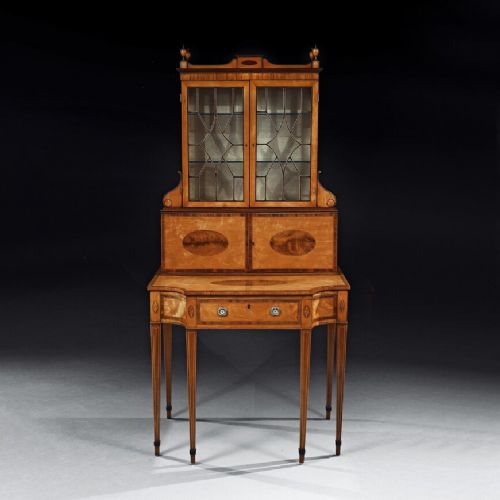
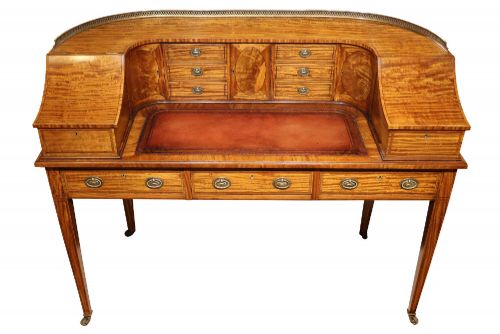

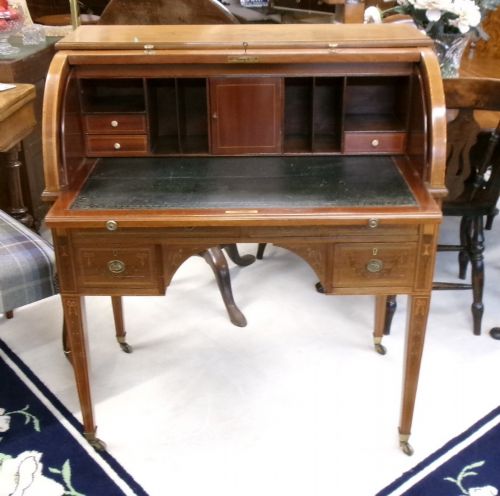
Satinwood Writing Bureau
A satinwood writing bureau brings luminous grain and refined practicality to a room, offering a dedicated writing surface wrapped in pale exotic timber.
What these pieces are
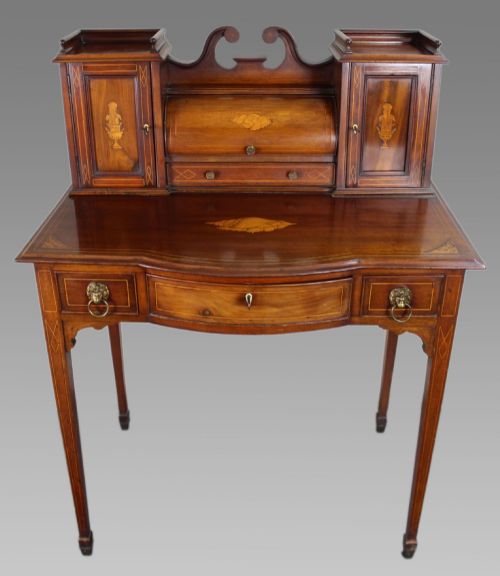
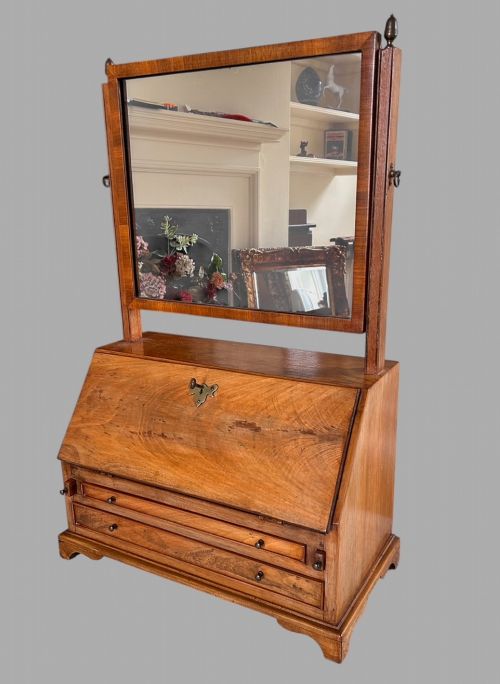
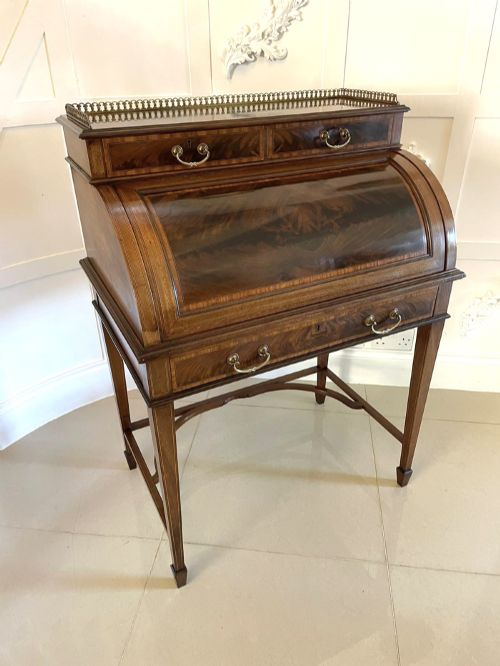
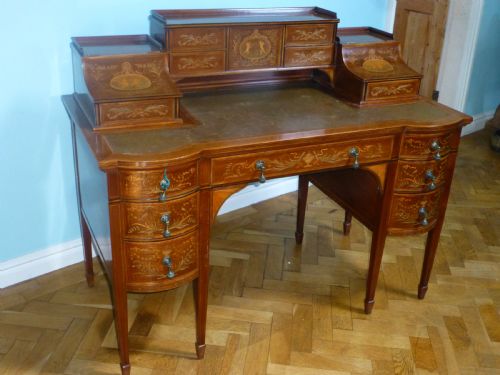
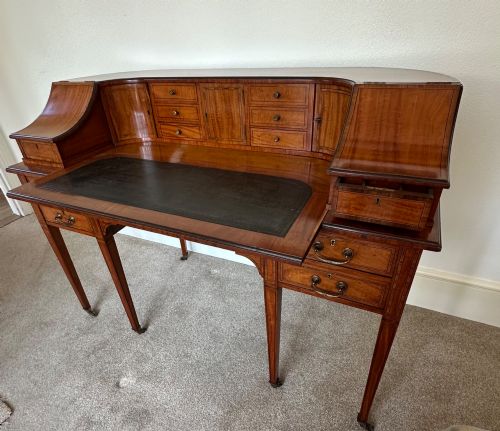
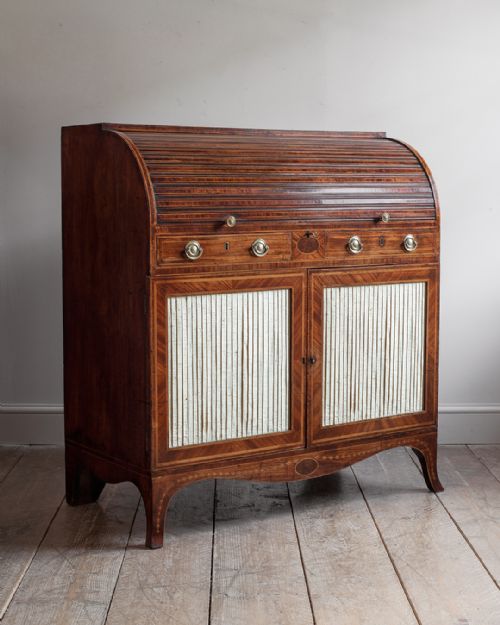
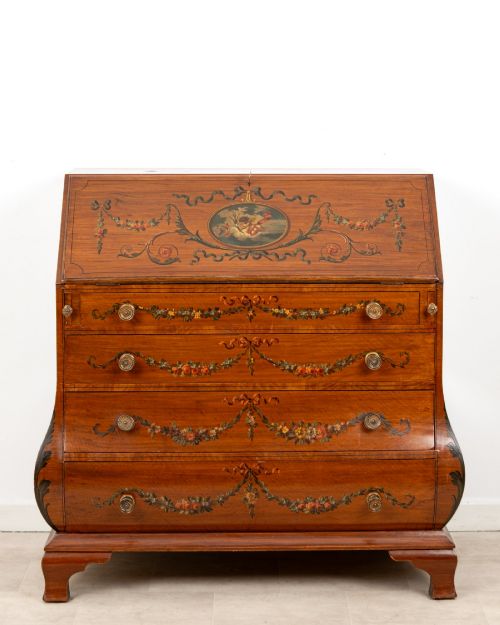
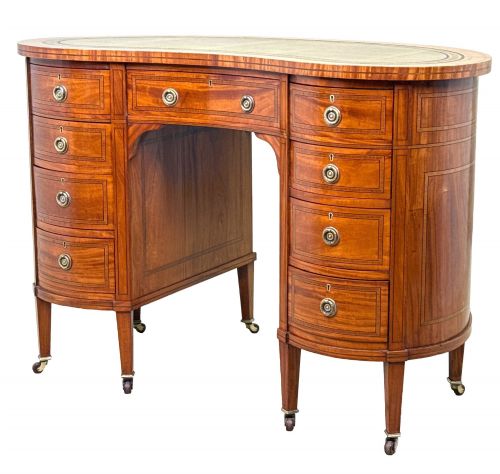
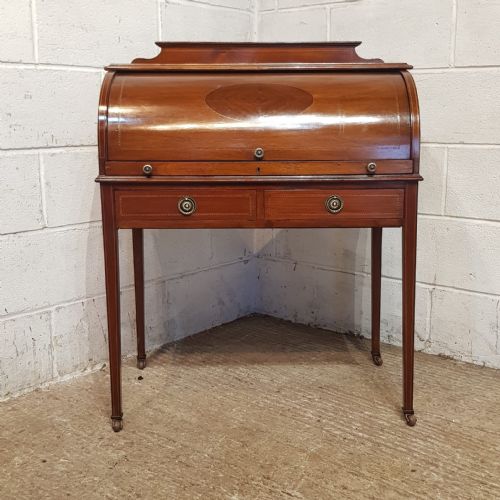
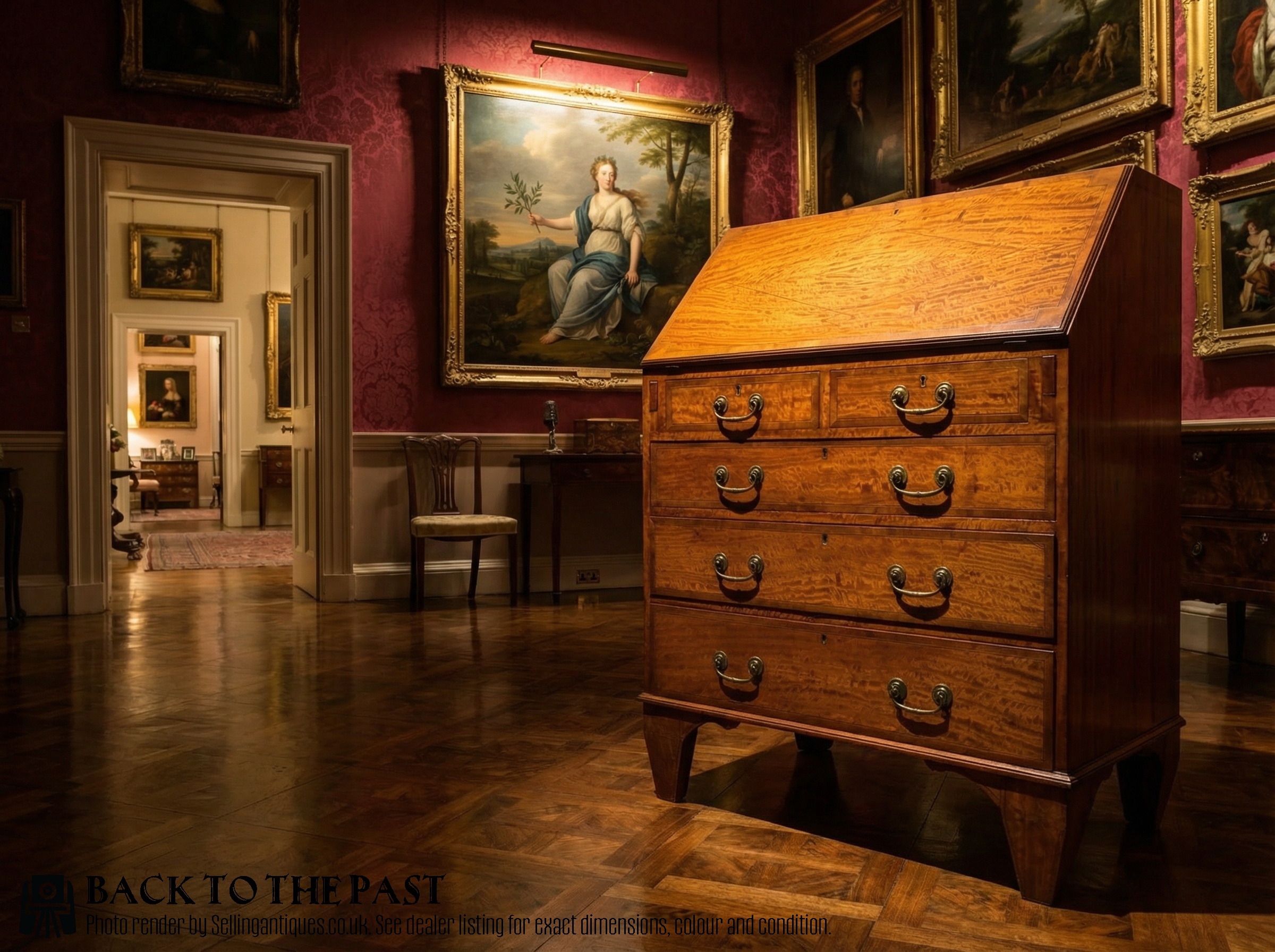
A satinwood writing bureau combines a sloping fall-front desk with functional storage drawers or shelving units beneath and above. These pieces typically emerge from the Edwardian period, late Victorian era, and around nineteen hundred, reflecting the revival of classical cabinet-making traditions.
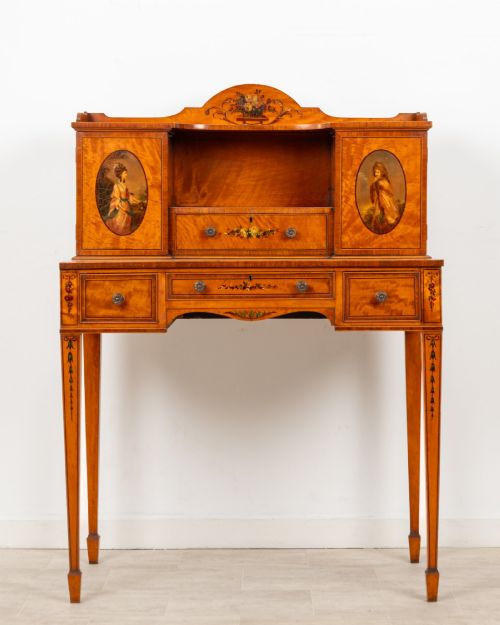
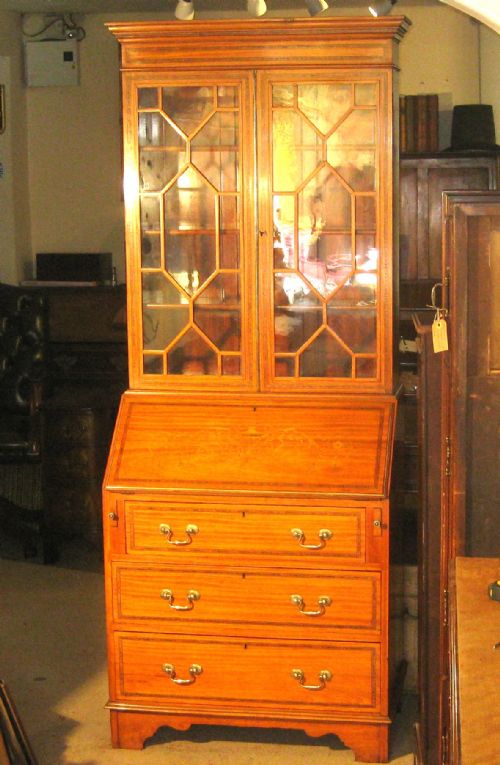
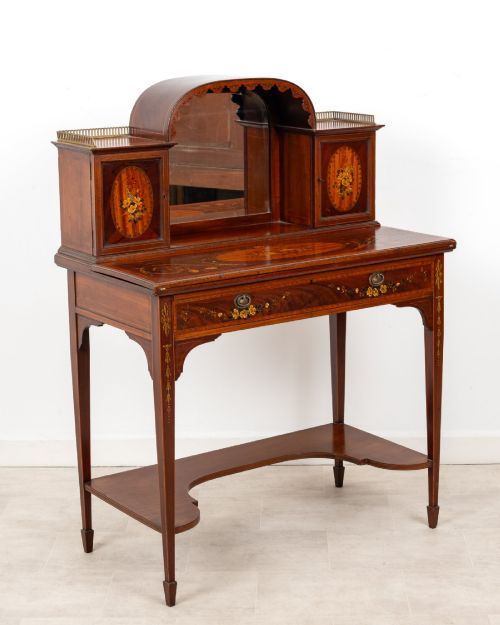
The selection ranges from compact ladies bureaux of small proportions to tall bureau bookcases fitted with glass doors. The dominant aesthetic draws heavily on Sheraton Revival motifs, alongside occasional Rococo Revival flourishes and Ceylonese craftsmanship in solid satinwood.
Makers represented in the broader record include Druce and Company of London and Morison of Edinburgh, alongside unmarked workshops producing quality English satinwood furniture. Buyers encounter both painted surface decoration and fine timber inlay on these desks and bureaux.
How they were made
Cabinet-makers constructed these items using figured satinwood veneer or solid satinwood timbers, frequently supported by secondary woods such as mahogany and walnut. The construction relies on traditional joinery methods to stabilise the light, dense timber.
Surfaces often feature intricate inlay work, hand-painted details, and polished glass panels. Hardware elements like brass handles and escutcheons complement the pale golden sheen of the wood.
Retail Price Guide 2026
Typical UK retail prices for satinwood writing bureau, calculated from the Sellingantiques database of over a million retail prices indexed since 2003. This retail price guide relies exclusively on Sellingantiques data; no external sources or auction records are used, so the figures do not describe the wider market.
Listings span the late Victorian and Edwardian eras, predominantly featuring Sheraton Revival styles alongside occasional Rococo revival pieces.
What varies in quality
The distinction between standard production and exhibition quality lies in the selection of figured satinwood veneers and the precision of the inlay. Pieces bearing documented maker attribution, such as those from Edinburgh or London workshops, generally command higher regard.
Proportion and scale also dictate quality, particularly in smaller ladies bureaux where balanced dimensions require exceptional planning. The finesse of hand-painted motifs and the integration of secondary timbers like mahogany further separate ordinary items from superior examples.
Morison of Edinburgh·Druce and Co London
The Satinwood Writing Bureau Glossary
- Satinwood
- A dense, hard timber known for its pale golden colour and characteristic shimmering chatoyancy. It serves as the primary veneer or solid material for these desks.
- Bureau bookcase
- A combined form featuring a sloping writing flap over drawers, surmounted by a glazed upper section for books. This piece provides both workspace and display storage.
- Sheraton Revival
- A late nineteenth and early twentieth century design movement inspired by the neoclassical furniture of Thomas Sheraton. It relies on symmetrical geometry, light woods, and delicate inlay.
- Figured timber
- Wood grain that displays distinctive patterns like curls or mottle due to irregular growth. Cabinet-makers select these sections for maximum visual impact on the fall-front.
- Fall-front
- The hinged sloping lid of a bureau that pulls down to form a horizontal writing surface. It conceals internal pigeonholes and small drawers when closed.
Frequently Asked Questions
How do I date an Edwardian bureau?
Dating an Edwardian bureau involves examining the construction methods, timber choices, and stylistic revivals present in the piece. Most examples date from around eighteen ninety to nineteen ten.
Look for Sheraton Revival influences, brass hardware styles, and maker labels or stamps inside the drawer linings which often provide specific chronological clues.
Where were these desks placed?
These desks traditionally served in private drawing rooms, bedrooms, or dedicated writing rooms for correspondence and household administration. Their smaller proportions suited domestic interiors.
Because they combine a closed cabinet look with a pull-down desk, they functioned well in multi-use living spaces without dominating the room visually.
How do I clean satinwood furniture?
Cleaning satinwood requires gentle dusting with a soft, dry cloth to prevent micro-scratched surfaces on the polished veneer. Avoid modern silicone sprays.
Applying a traditional microcrystalline wax occasionally helps protect the timber and maintain the characteristic golden lustre without building up heavy residues.