

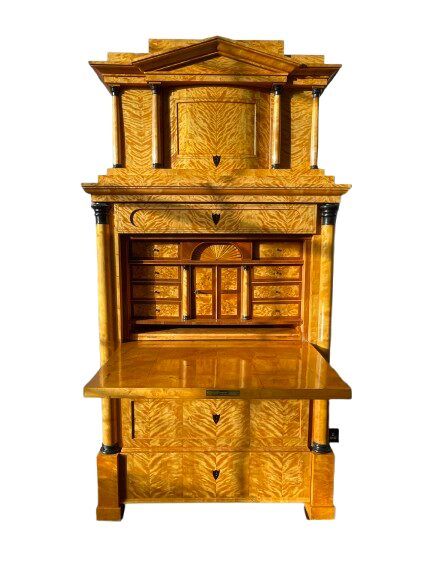


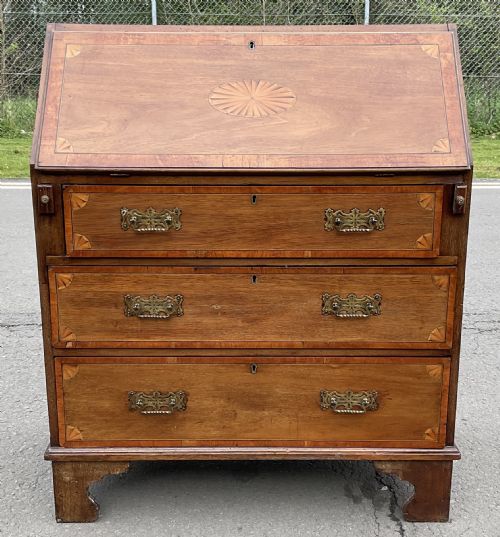


Satinwood Fall Front Desk
A satinwood fall front desk brings fine timber and neat proportions to a study, offering a polished writing surface that hides away paperwork when the day is done.
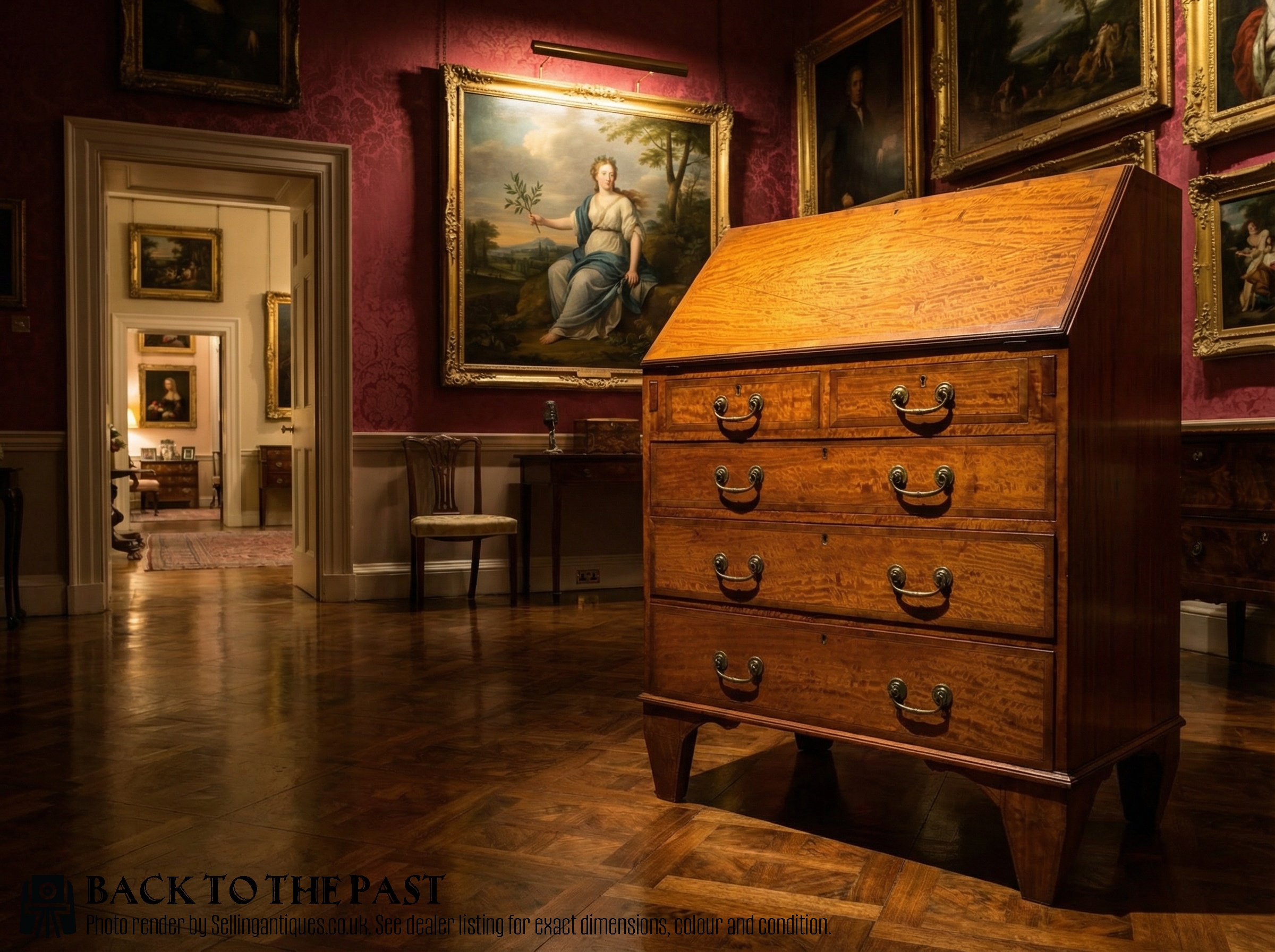
Satinwood Fall Front Desk
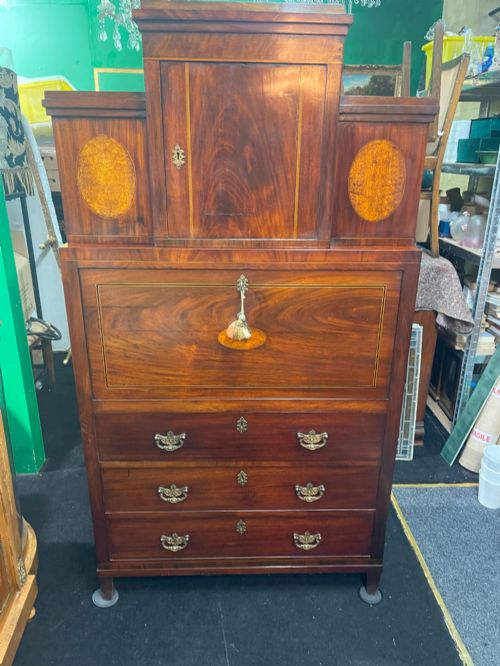
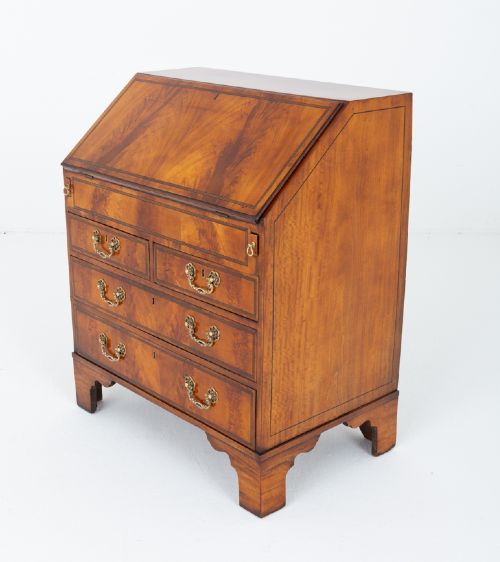
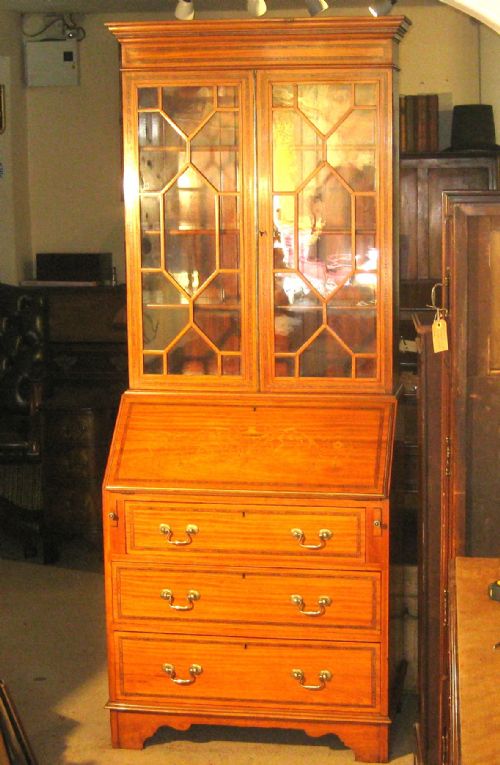
A satinwood fall front desk is primarily represented on this page by Edwardian writing bureaux and bureau bookcases, alongside earlier Georgian and George III examples. These pieces combine a downward-folding writing flap with internal pigeonholes and small drawers, creating a compact station for correspondence.
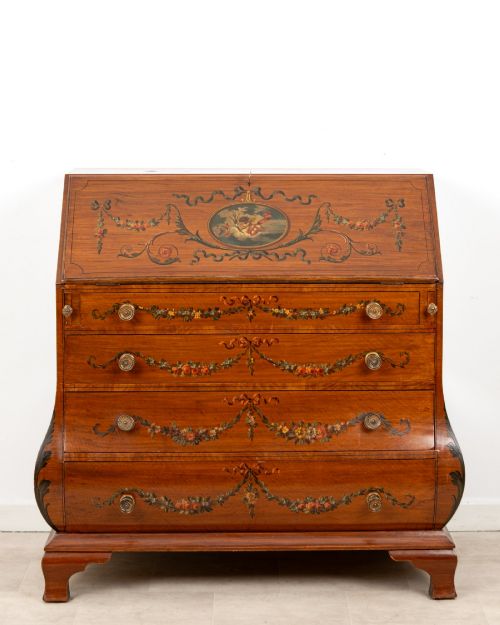
The material character shifts from solid mahogany with satinwood inlay to pieces featuring figured satinwood veneers or hand-painted decoration. Edwardian Revival and Sheraton Revival pieces provide lighter, more decorative interpretations of earlier forms.
Buyers will encounter various formats, ranging from simple ladies bureaux to taller bureau bookcases fitted with glass upper doors. Biedermeier and Victorian secrètaires also appear, offering alternative geometric lines or darker contrasting timbers like walnut.
How they were made
Cabinet makers relied on timber selection to define the visual weight of each desk, employing satinwood veneers over sturdy foundational woods such as mahogany. Stringing and contrasting crossbanding in darker woods were often inlaid to frame the main panels.
Brass handles, escutcheons and hinges were fitted to secure drawers and fall fronts, whilst interiors frequently incorporated baize-lined writing surfaces. Hand-painting and delicate floral motifs distinguish specific Edwardian pieces from plain wood finishes.
Satinwood Fall Front Desk Retail Price Guide 2026
Typical asking prices for satinwood fall front desk among the pieces listed under this phrase on Sellingantiques today, from the lower quarter to the upper quarter. They describe what is for sale here now, not the wider market.
Many Edwardian ladies bureaux hide secret compartments behind tiny internal drawers, designed for storing love letters and private notes.
What varies in quality
Quality in a satinwood fall front desk is largely determined by the crispness of the cabinet work and the figuration of the timber veneer. Desks showing symmetrical grain patterns and precise inlay demonstrate higher workshop standards than simpler constructed equivalents.
The integrity of the fall front hinges and the smoothness of the internal small drawers also dictate the standard of execution. Maker attribution, such as signed pieces from established firms, separates standard production furniture from exhibition-grade examples.
Morison of Edinburgh·Druce and Co London
The Satinwood Fall Front Desk Glossary
- Fall front
- A writing flap that hinges downward to provide a horizontal surface for letter writing. It conceals a fitted interior of pigeonholes and small drawers when closed.
- Bureaux
- The plural form of bureau, denoting a sloping-front writing desk. These pieces often incorporate drawers beneath the writing flap.
- Crossbanding
- A strip of veneer applied across the grain of the main panel to form a decorative border. It frequently uses a contrasting timber like mahogany or satinwood.
- Baize
- A coarse woollen fabric used to line writing surfaces. It provides a soft, durable layer for pen work.
- Secrètaire
- A tall cabinet or desk featuring a pull-out or drop-down writing drawer. They often include shelving or bookcase sections above.
Satinwood Fall Front Desk: Frequently Asked Questions
How do I clean satinwood?
Dust the surface regularly with a soft, dry cloth to prevent dirt accumulation on the veneer. Avoid using modern spray polishes that contain silicone, opting instead for a traditional beeswax applied sparingly.
Buff the timber gently with a clean cloth to maintain its natural sheen. Keep the desk away from direct sunlight and heat sources to prevent the satinwood from fading or splitting.
What is a bureau bookcase?
A bureau bookcase combines a sloping fall front desk at the base with an upper section enclosed by glass or wooden doors. This upper cabinet typically contains adjustable shelving for storing books and display items.
These combination pieces became popular in the eighteenth and nineteenth centuries for domestic studies and libraries. They offer substantial storage capacity while maintaining a compact floor footprint.
How do I date a desk?
Dating relies on examining construction methods, timber choices, and stylistic details such as inlay patterns and handle design. Georgian pieces generally feature heavier solid construction, whereas Edwardian revivals often utilise lighter veneers and delicate painted motifs.
Makers' stamps, paper labels, or signatures written inside the drawers can also provide specific chronological markers. Comparing the secondary woods inside the carcass helps confirm the manufacturing era.
Where should I place it?
Position the desk in a room with stable humidity and away from direct radiators or sunny windows. Satinwood is sensitive to extreme environmental changes, which can cause veneers to lift or warp.
Ensure there is adequate clearance behind the fall front when opened for comfortable seating. A well-lit corner away from heavy foot traffic protects the delicate painted or inlaid surfaces.