


Antique Writing Slant Desk
An antique writing slant desk provides a hinged writing slope and fitted interior, bringing traditional craftsmanship and practical workspace to a room.
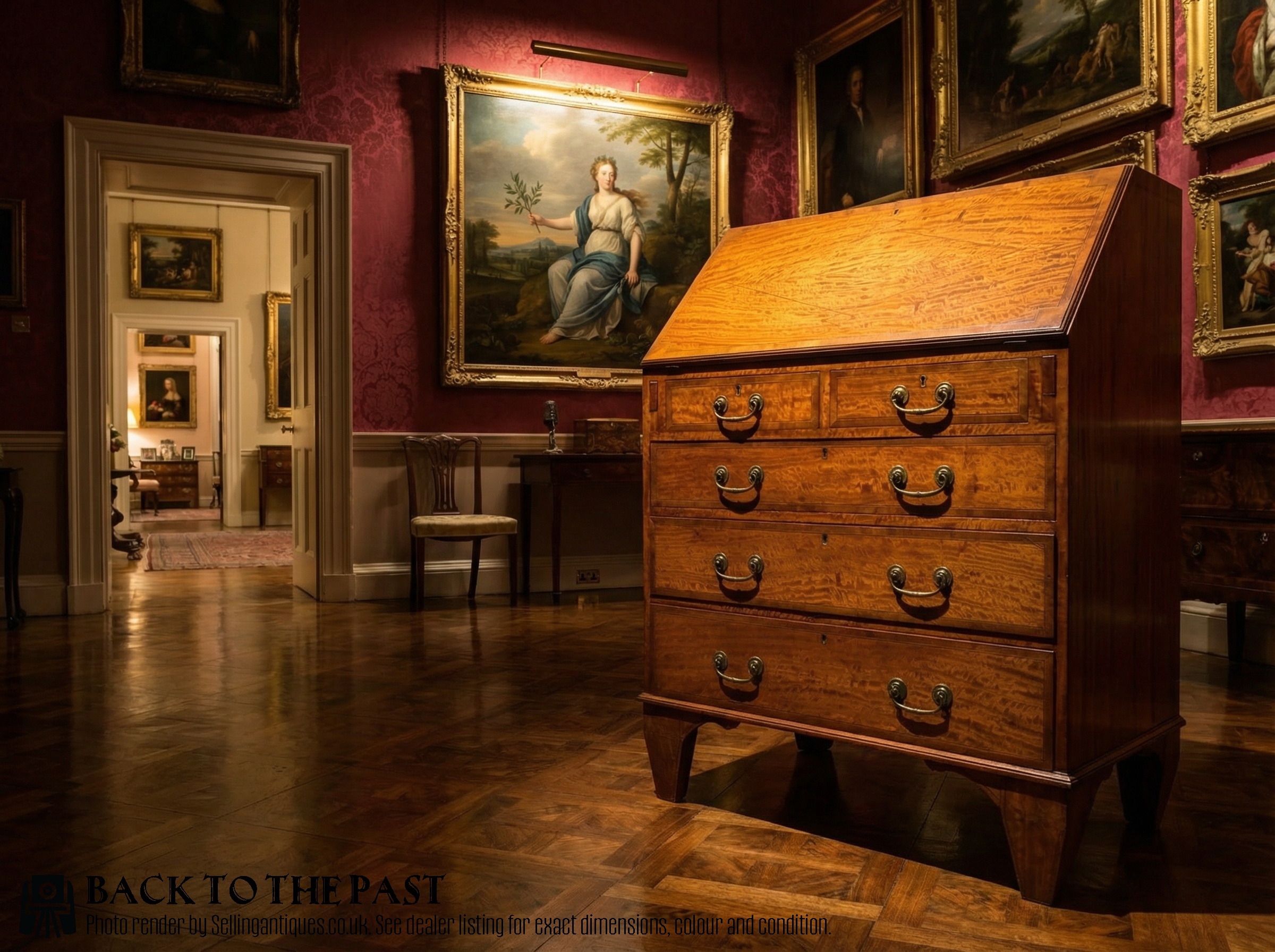
Antique Writing Slant Desk
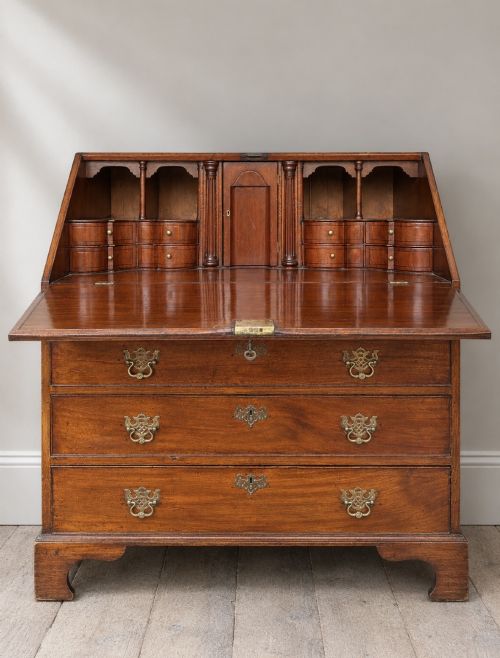
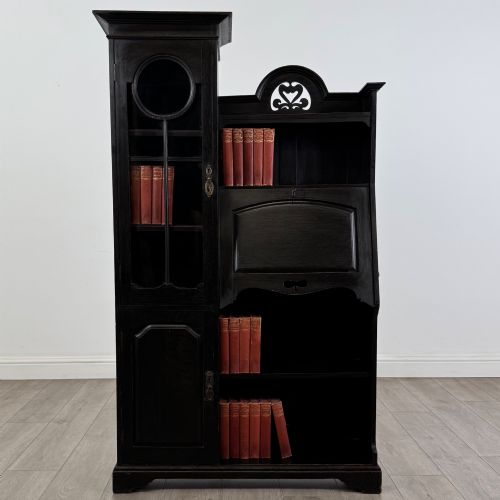
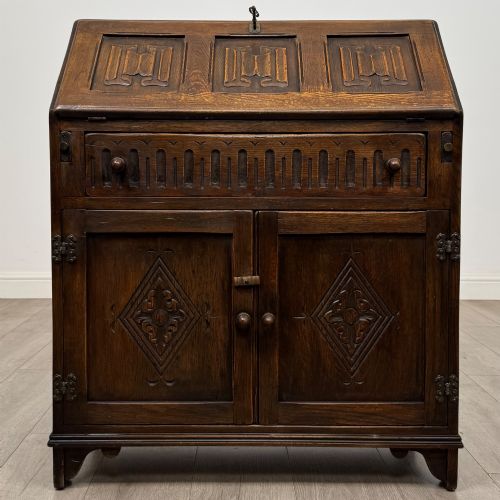
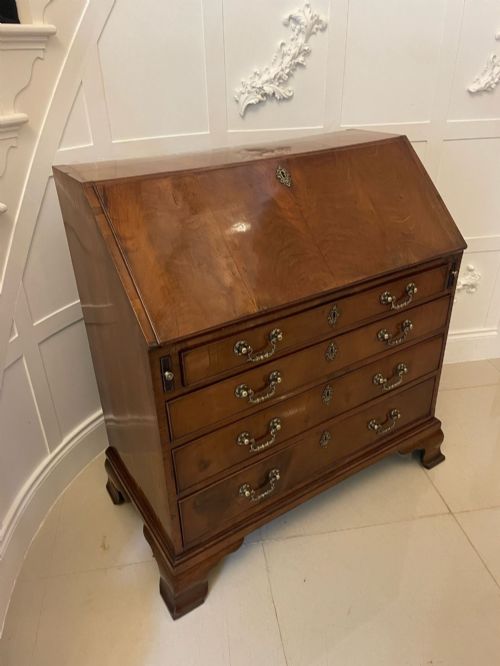
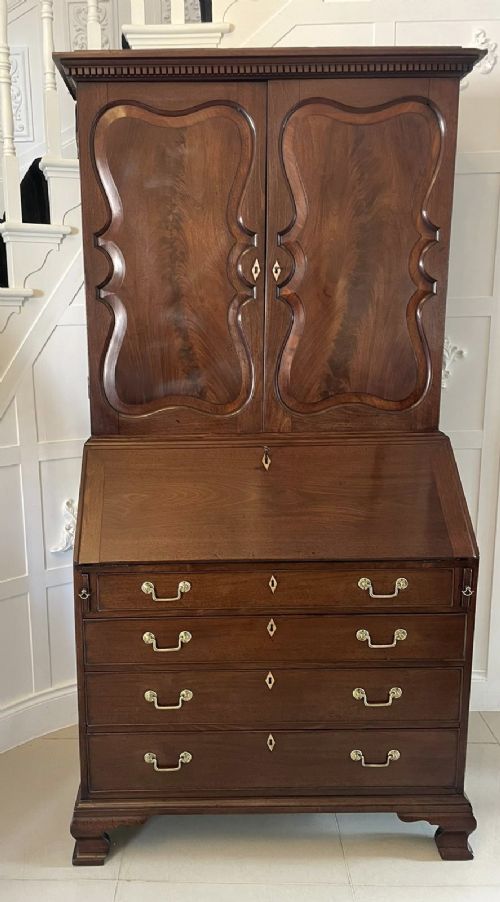
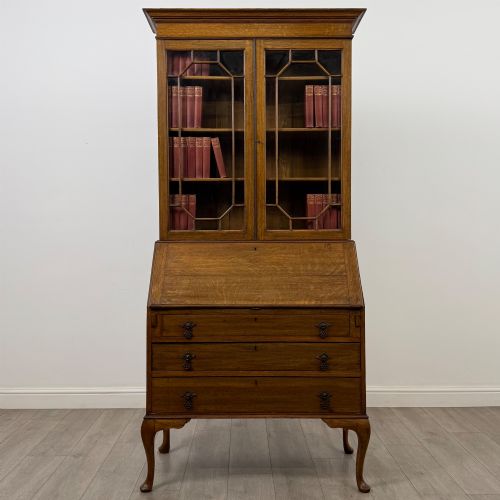
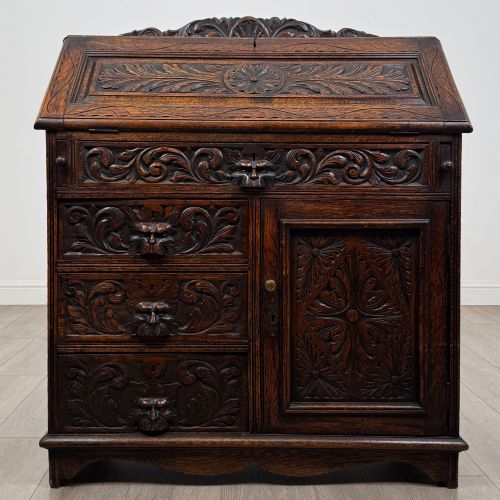
An antique writing slant desk encompasses bureau bookcases, freestanding bureaux, compact writing desks, and table-top writing slopes. These pieces span from the seventeenth century through the Edwardian period and the nineteen-twenties, incorporating oak, mahogany, and walnut variants.
Buyers commonly encounter substantial eighteenth-century mahogany and walnut bureau bookcases alongside compact Edwardian oak and walnut desks. Many examples feature fitted stepped interiors with pigeonholes and small drawers concealed beneath the sloping lid.
Materials and construction methods
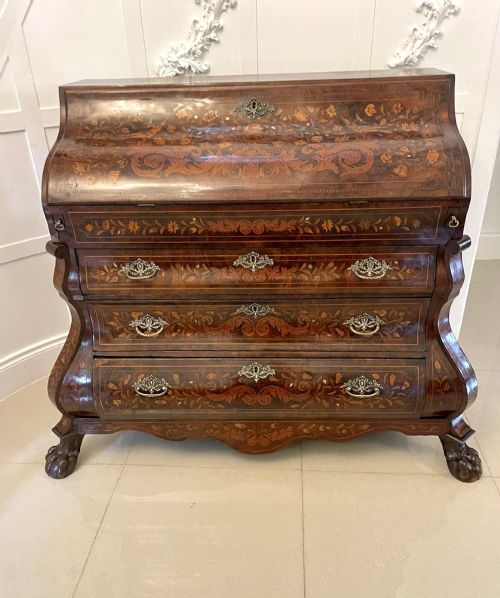
Cabinet makers utilised solid and veneered timbers including oak, mahogany, walnut, yew, and rosewood, often applying intricate floral marquetry or burr walnut figuring. Brass handles, escutcheons, and hinges secure the fall-front writing slopes and drawer fronts.
Structural joinery relies on dovetailed drawer construction and framed panels, whilst superior examples incorporate secondary woods like pine or oak within the internal partitions and drawer linings.
Listings feature oak, mahogany, walnut, and rosewood across centuries spanning from the seventeenth century to the nineteen-twenties.
Judging the quality of construction
Quality rests upon the selection of timber veneers, such as figured mahogany or matched burr walnut, and the precision of internal joinery within the stepped pigeonholes. Superior pieces maintain original brass hardware, stable bracket feet, and well-fitted writing flaps without excessive warping.
The sophistication of internal compartments and secondary detailing, such as secret drawers or inlaid parquetry, distinguishes standard production models from exceptional workshop output.
Gillows·Heals of London
The Antique Writing Slant Desk Glossary
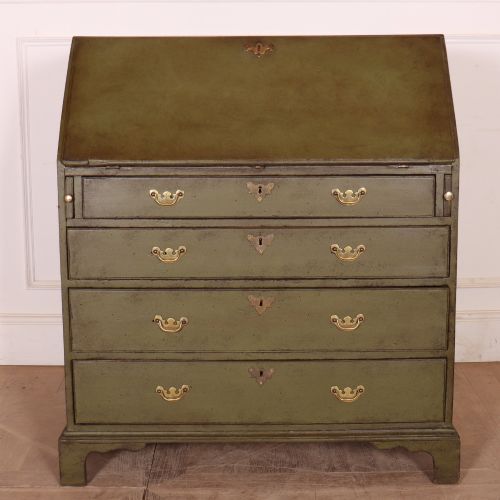
- Bureau
- A desk featuring a sloping hinged lid that opens to reveal a writing surface and internal compartments. This form evolved significantly throughout the eighteenth and nineteenth centuries.
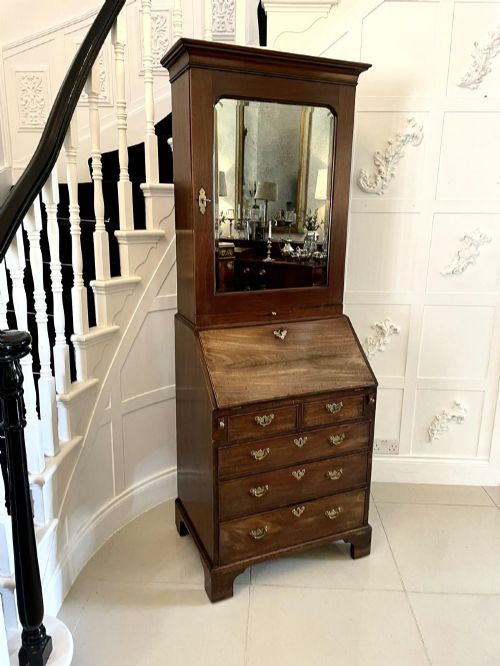
- Bureau Bookcase
- A two-part piece comprising a lower slant desk cabinet surmounted by glazed or panelled shelving doors. These tall items dominate a study or library interior.
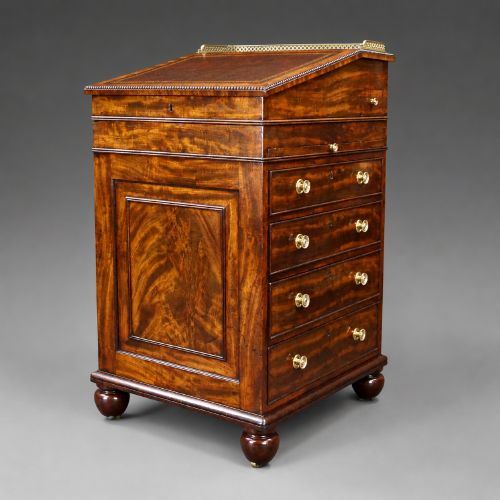
- Davenport
- A compact pedestal desk with a sloping upper writing surface and side drawers. Named after a prominent nineteenth-century commission, these units save floor space.
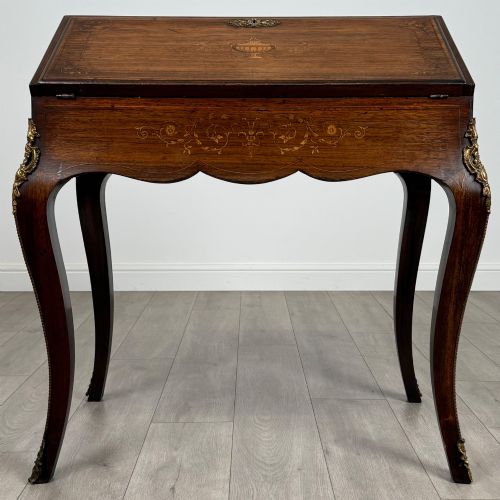
- Marquetry
- Decorative patterns formed by fitting contrasting wood veneers into a prepared background. Artisans often utilised floral and geometric motifs on eighteenth-century surfaces.
- Bracket Feet
- Small, stable furniture feet formed by two mitred pieces meeting at a corner. They support many Georgian case pieces.
Antique Writing Slant Desk: Frequently Asked Questions
What is an antique writing slant desk?
An antique writing slant desk is a traditional form of furniture designed for correspondence, featuring a sloping board that opens for writing and conceals small drawers.
These pieces range from massive bureau bookcases down to portable writing boxes and compact Edwardian tables.
How do I date an antique writing slant desk?
Dating relies on observing timber choices, construction techniques, and hardware styles across different periods. Eighteenth-century examples often display finely figured mahogany or walnut veneers with dovetailing, while later Victorian and Edwardian pieces show machine-cut elements.
Examining secondary woods inside drawer linings and the formation of bracket or plinth feet further clarifies the manufacturing era.
How were these desks used originally?
These desks served as private workstations for letter writing, record keeping, and managing household accounts. The sloping lid kept documents concealed and protected from dust when not in use.
Internal compartments and small drawers stored inkwells, sealing wax, pens, and personal papers securely behind locked falls.
Where should I place a slant desk?
An antique writing slant desk suits studies, living rooms, and bedrooms where floor space permits a distinctive focal point. Freestanding bureau bookcases require adequate wall clearance to accommodate their height and depth.
Positioning them away from direct sunlight and heat sources protects delicate wood veneers and leather writing surfaces from drying out.